

Testing & Validation Services
This stage is part of Yijin Solution’s full New Product Development Services.
Yijin Solution’s testing and validation stage moves a working prototype toward production readiness. Pilot runs, bill of materials cost review, quality control planning, capacity alignment, and logistics preparation are completed before mass production is committed. Process, cost, and supply chain risks are exposed while changes are still practical to make.
Why Testing & Validation Matters in Product Development
Many teams assume that once the prototype works, the product is ready for production. A working prototype only confirms that the design can work. You still need to confirm that the product can be manufactured consistently, at the target cost, with acceptable quality, at scale. That’s what this stage resolves.
Clarifies product direction
Confirms whether the product is truly ready to move forward.
Surfaces issues earlier
Reveals structural, assembly, process, and cost problems before they reach production, where fixes are far more expensive.
Improves build quality
Makes pilot runs, quality planning, and production preparation more grounded.
Supports a smoother next stage
Helps the product move more cleanly into pilot production, supply chain setup, and full-scale manufacturing introduction.
What We Help Validate Before Production
We help customers assess not only the product itself, but the overall readiness needed to manufacture it reliably. Six support areas make up the Testing and Validation stage.
Pilot run planning
Small-batch trial production evaluates production rhythm, assembly flow, and process stability before formal mass production begins. We check whether the workflow is smooth and surface execution issues at a manageable scale.
Key outputs:
- Trial build report
- Assembly sequence evaluation
- Process stability assessment
Cost review and BOM optimization
We review the bill of materials from the angles of material selection, structural complexity, process routing, and supply chain availability. High-cost points and unnecessary complexity are identified before the production process is locked.
Key outputs:
- BOM cost analysis
- Material substitution recommendations
- Complexity reduction opportunities
Program management
We coordinate validation-stage progress, issue tracking, revision cycles, and cross-team alignment. The focus is on closing open issues and moving decisions forward, not just tracking status.
Key outputs:
- Issue resolution log
- Revision tracking
- Milestone alignment across engineering and manufacturing
Capacity forecasting
We assess whether expected demand, manufacturing routes, and key process capacity are aligned with the production plan. This builds an earlier, clearer view of resources and production rhythm before scale-up.
Key outputs:
- Capacity gap analysis
- Resource planning input
- Production scheduling baseline
Logistics optimization
We review packaging methods, shipping requirements, delivery rhythm, and supply chain coordination in advance. The goal is to reduce execution problems caused by poor packaging, transportation planning, or logistics misalignment.
Key outputs:
- Packaging review
- Logistics flow assessment
- Delivery readiness recommendations
Quality control planning
We define the quality control logic needed before production. Critical dimensions, assembly checkpoints, inspection methods, and risk areas are all set up at this stage.
Key outputs:
- Quality control plan
- Critical-to-Quality (CTQ) definition
- Inspection method specification
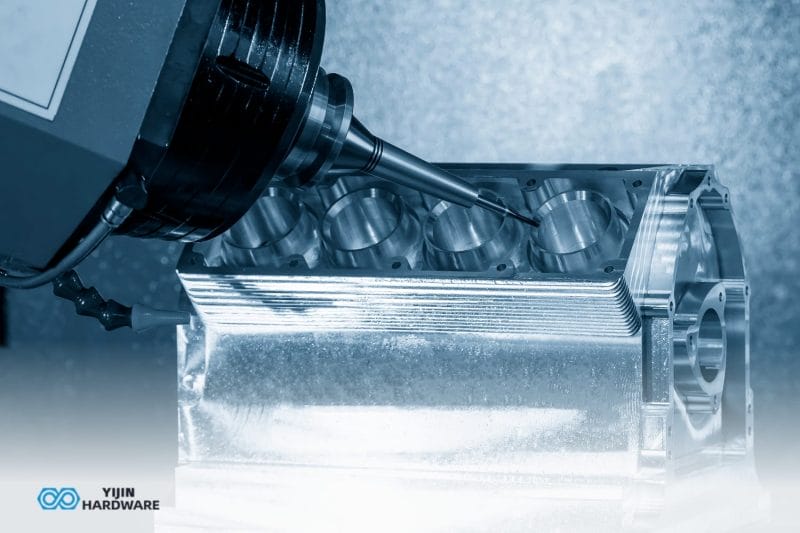
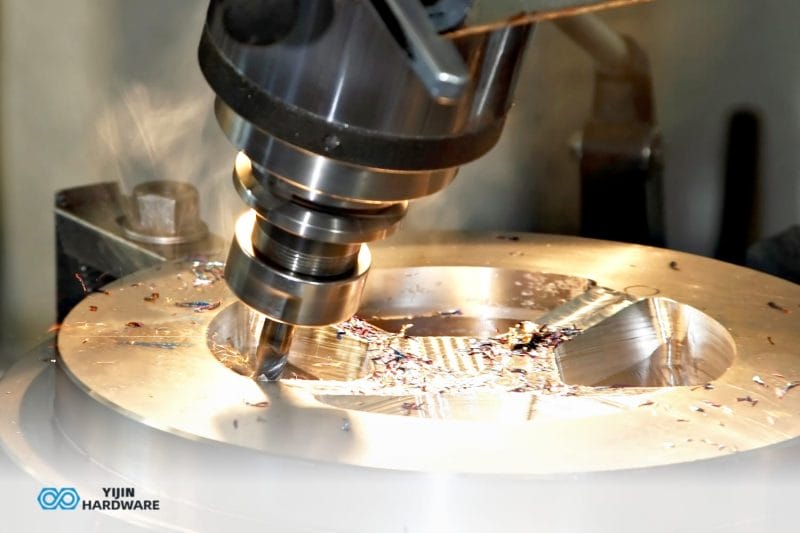
Precision CNC machining built for metal and plastic parts, from one-off prototypes through high-volume production. 136+ machining centers and 278 lathes cover 3-axis, 4-axis, 5-axis, and Swiss-type turning in the same facility, so part complexity and batch size stay flexible across the full run.
- Standard tolerances of ±0.05 mm, precision work down to ±0.01 mm, surface finishes from Ra 0.8 to 3.2 µm
- Aluminum 6061/7075, 316L and 304 stainless, Ti6Al4V titanium, brass, copper, and engineering plastics including PEEK and Delrin
- Prototypes ship in 3–7 days with free DFM review; AS9100D, IATF 16949, and ISO 13485 certified

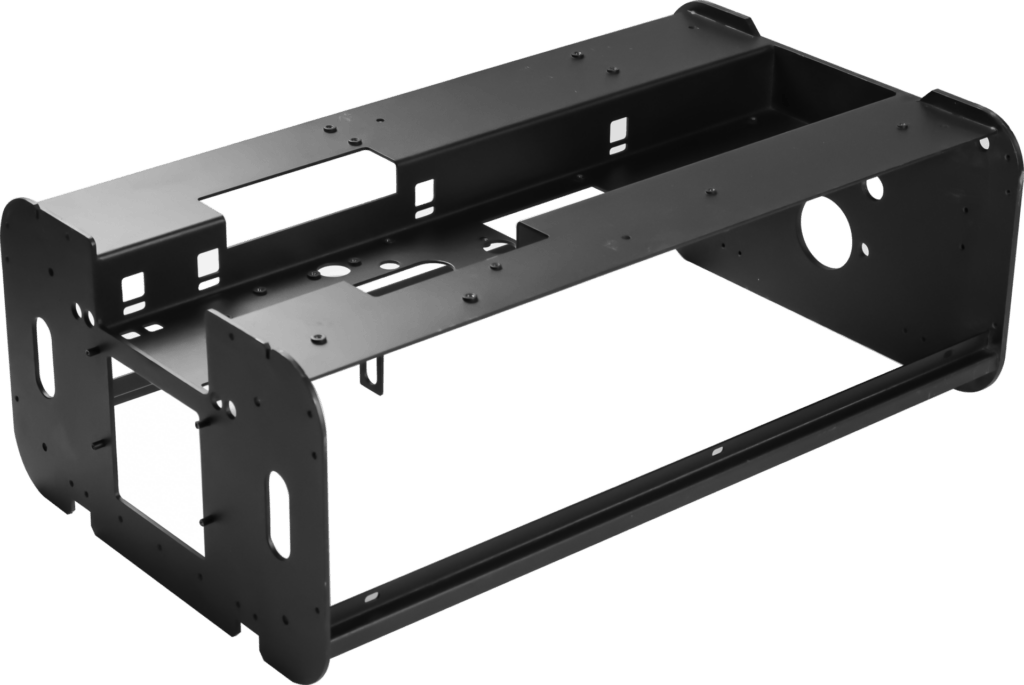
Custom sheet metal parts for prototypes and production runs. 30 fiber laser machines, CNC press brakes, and in-house finishing run under one roof so cutting, bending, and surface treatment stay on the same quality system.
- Laser cutting to ±0.02 mm on steel up to 20 mm; CNC bending ±0.05 mm on 0.5–6 mm material, work envelope 2440 × 1220mm
- Steel, 304/316L stainless, 6061-T6 aluminum, copper, and brass, with anodizing, powder coating, plating, and passivation in-house
- Upload CAD for a DFM review and quote within 24 hours; prototypes ship in 3–7 days, AS9100D and IATF 16949 certified
Turn your CAD files into physical prototypes or end-use parts with industrial 3D printing run entirely in-house. FDM, SLA, SLS, MJF, and DMLS metal printing all sit under one roof, so material choice and finish stay matched to the part’s function.
- Build volumes up to 300 × 300 × 300 mm with layer heights from 0.05 mm (SLA) to 0.3 mm (FDM)
- 50+ engineering-grade materials, from ABS and Nylon 12 to Ti6Al4V titanium and 316L stainless steel
- Prototypes ship in 3–7 days with dimensional inspection and DFM review before production

Custom plastic injection molding from prototype tools to multi-million-unit production programs. Presses from 30 to 1,800 tons run commodity, engineering, high-performance, and elastomer resins, with an in-house mold shop designing and cutting the tooling that runs the parts.
- 100+ resin grades in stock, from ABS and PP through PC-ABS, Nylon 66 GF30, PEEK, PEI, and medical-grade LSR
- General tolerance ±0.1 mm on features up to 50 mm; scientific molding holds tighter classes down to ±0.025 mm
- Tooling in 15–45 days with T1 samples 3–7 days after; production runs 2–4 weeks, IATF 16949 and ISO 13485 certified

Aluminum, zinc, and magnesium die casting services for automotive, electronics, and industrial programs with 30,000+ shots per tool. tolerances held to ±0.05 mm.
- High-pressure die casting (HPDC) with tolerances to ±0.05 mm
- Cold chamber and hot chamber processes, tooling built in-house
- Secondary operations: CNC machining, surface finishing, assembly
- Full documentation: FAIR, material certs, and dimensional reports
- OEM & ODM orders are supported

Custom fasteners in stainless steel, carbon steel, and specialty alloys for automotive, electronics, and industrial programs. Cold heading plus precision turning on 150 cold heading machines and 80+ Swiss-type lathes.
- Cold heading and CNC/Swiss turning with tolerances to ±0.02 mm
- Multi-station forming, secondary threading, and precision rolling
- Heat treatment, plating, passivation, and 100% optical sorting
- PPAP documentation: material certs, dimensional reports, and capability studies
- OEM & ODM supported, IATF 16949 and ISO 9001 certified

Mechanical assembly and surface finishing to take parts through to delivery-ready condition. In-house assembly cells, finishing lines, and packaging support across all manufacturing processes.
- Mechanical assembly, hardware insertion, sub-assembly, and full product build
- Surface finishing: anodizing, plating, powder coating, painting, PVD, polishing, brushing
- Deburring, sandblasting, passivation, and silkscreen printing
- Functional testing, dimensional inspection, and 100% optical sorting
- Custom packaging, kitting, and delivery preparation
How We Work in the Testing & Validation Stage
This stage follows a structured, four-step process. Each step builds on the previous one and prepares the product for production introduction.
Review the current prototype status
We begin by reviewing what has already been validated during prototyping, what remains unresolved, and what risks still exist before production. This review establishes the starting point for all validation work.
Plan key validation priorities
Based on the current project status, we define the main validation priorities. These cover pilot runs, cost structure, quality planning, capacity alignment, and delivery readiness. The plan is specific to where the product actually stands, not a generic checklist.
Manage issues and revisions
Findings move into review, revision, and cross-team alignment. We work to close issues and drive practical decisions, not just document problems.
Prepare for production readiness
Based on validation results, we build a clearer path toward pilot production, process setup, supply chain coordination, and manufacturing introduction. The product exits this stage with a defined route into production.
These case studies show how Yijin Solution’s production support model works in real projects.
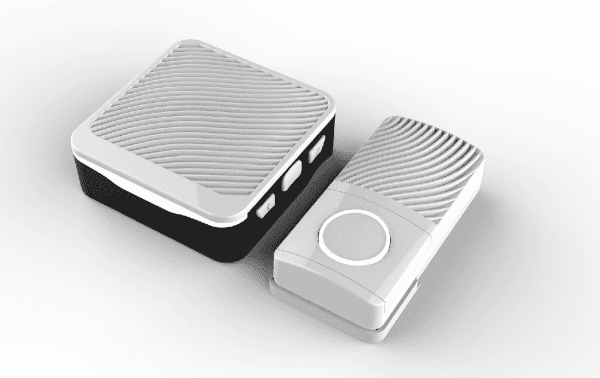
A consumer electronics product requiring injection-molded housings, electronic assembly, and multi-part coordination. Yijin managed the full BOM, tooling, assembly, finishing, and delivery as a full service contract manufacturer.
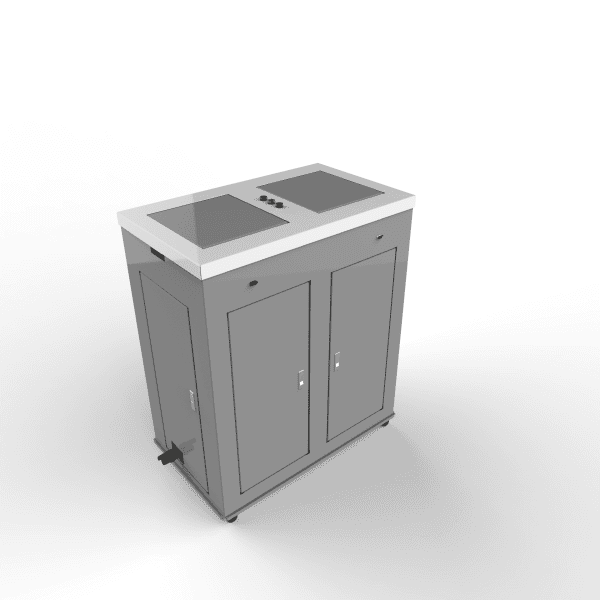
An IoT-enabled product with sheet metal, injection-molded, and electronic components. Production support covered manufacturing coordination, assembly sequencing, and quality control across multiple processes.
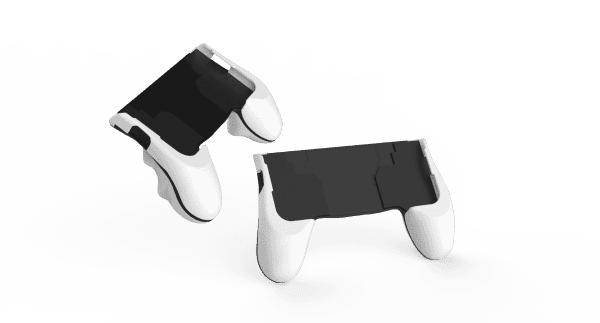
A compact consumer device with tight tolerances and appearance-critical finishing. Production support included mold optimization, assembly process validation, and packaging coordination for retail-ready delivery.
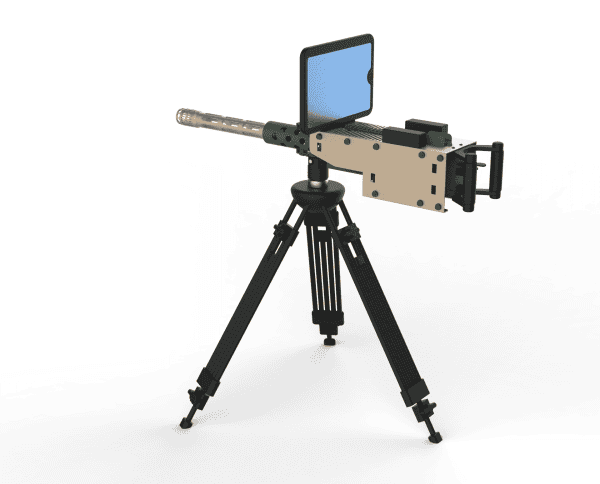
A complex electromechanical product involving multiple materials, electronic subsystems, and ergonomic assembly requirements. Yijin provided contract research and manufacturing services covering pilot production, quality stabilization, and volume ramp-up.


Why Choose Yijin Solution for Validation

Validation judgments are made against real manufacturing, assembly, and downstream production conditions, not paper-based analysis alone.

Work completed at this stage carries directly into pilot runs, production planning, and later mass production support, with no handoff gap between teams.

Cost, quality, and delivery risks are identified and resolved before production is scaled up, while changes are still practical to make.

Validation can be supported across CNC machining, sheet metal fabrication, 3D printing, injection molding, and die casting within a single development path.
Not Sure Where to Start? Get a Free Consultation
Whether you’re starting with an idea or a CAD file that needs manufacturing support, the next step is a conversation. Tell us about your product’s current state and what it needs to become.
Testing & Validation Services FAQs
Prototyping is about building physical samples to answer specific engineering questions. Does the mechanism work? Does the assembly hold? Does the material behave as expected? Testing and validation are about confirming that the product, the process, and the supporting systems are ready for production. A prototype proves that the design can work. Validation proves it can be manufactured consistently.
Yes, a working prototype confirms design intent, but it does not confirm production readiness. Questions about process stability, cost optimization, quality control logic, capacity, and logistics are still open. This stage exists to close those gaps before production commitment.
Yes, pilot run planning is a core part of our validation support. We help plan and execute small-batch trial production to evaluate assembly flow, process stability, and production rhythm before formal scale-up.
Yes, cost review and BOM optimization is one of our six validation support areas. We review the bill of materials across material, structure, process routing, and supply chain to identify cost reduction opportunities before the production process is locked.
We help define the quality control plan needed before production. This includes critical dimensions, assembly checkpoints, inspection methods, and risk areas. The goal is a quality framework that production teams can execute from day one.
Yes, validation can be supported by a range of manufacturing processes within Yijin’s capabilities. These include injection molding, die casting, CNC machining, sheet metal fabrication, and assembly. The manufacturing process relevant to your product is factored into the validation plan from the start.
Get a Free Consultation
Whether your project is coming from a completed prototype development stage or you have a product that is ready for production-readiness validation, the next step is a conversation. Tell us about your product’s current state and what it needs. You can also explore our full new product development services to see how each stage connects.