ABS CNC Machining Service for Custom Plastic Parts
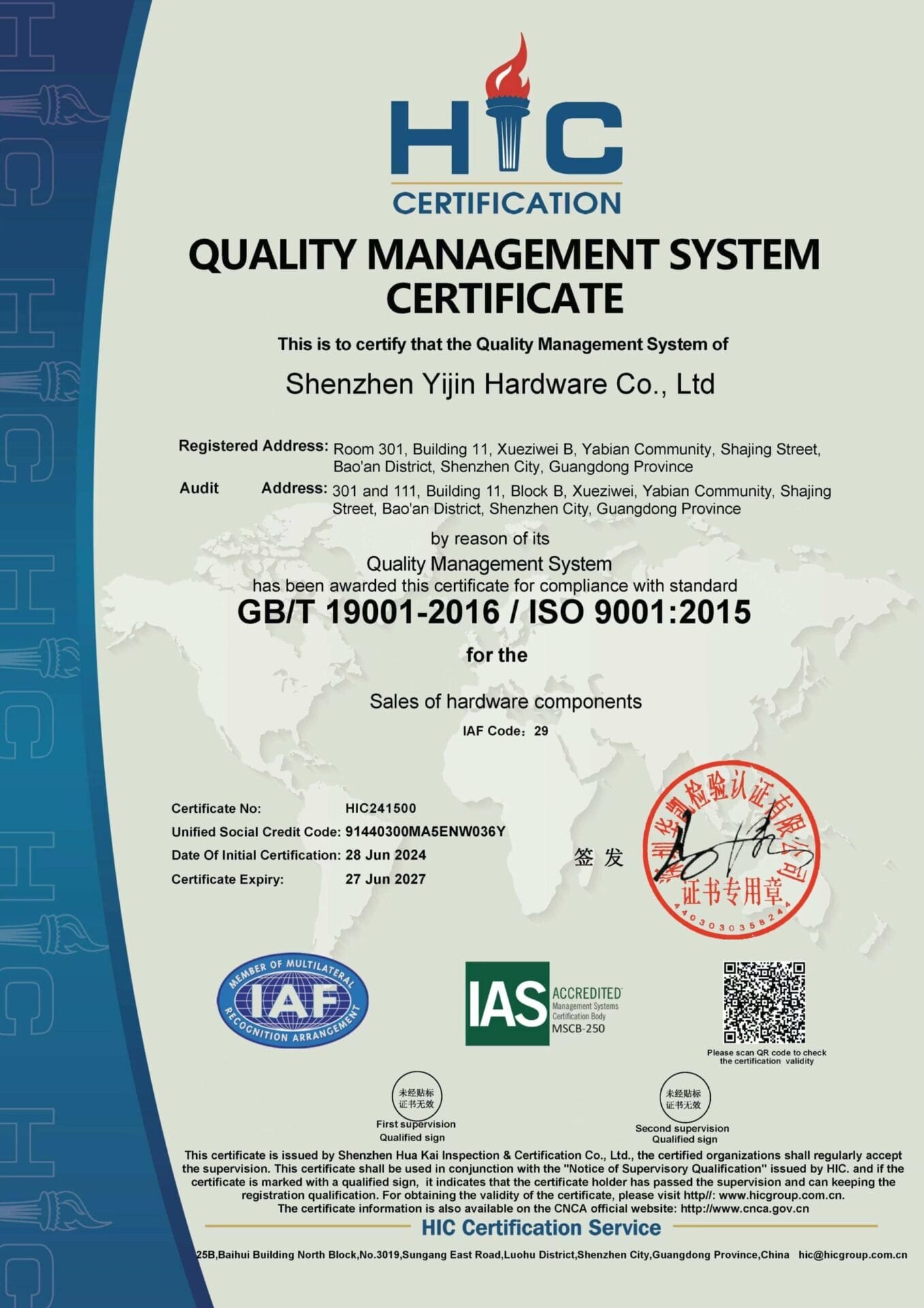
ABS CNC machining service for enclosures, brackets, and functional prototypes in general purpose, high-impact, flame-retardant, and ABS/PC blend grades. Milling and turning centers at our ISO 9001 certified facility in Shenzhen cut ABS to tight, repeatable tolerances.
Upload your STEP, IGES, DWG, PDF, or STL file to receive a quote and manufacturability review within 24 hours.
- Prototype lead time 3 to 5 business days, production 2 to 3 weeks
- Tolerances ±0.125 mm general, ±0.05 mm on critical features
- General purpose, high-impact, flame-retardant, and ABS/PC blend stock
- No minimum order. Single prototypes through production runs
Join 3000+ companies who work with Yijin Solution


ABS CNC Machining Manufacturing Capabilities
These specifications apply across our milling and turning centers running ABS. Exact tolerance and finish depend on part geometry and wall thickness.
| Feature | Description |
|---|---|
| General Tolerance | ±0.125 mm (±0.005 in) on standard features |
| Tight Tolerance | ±0.05 mm on critical features with secondary fixturing |
| Surface Finish | Ra 1.6–3.2 μm as-machined, smoother with sanding or vapor polishing |
| Lead Time and Part Size | Prototypes 3 to 5 days, production 2 to 3 weeks, parts up to 600 x 400 x 300 mm |
ABS Material Grades
We stock and machine several ABS grades, chosen for impact resistance, flame rating, or heat performance.
General Purpose ABS
Standard black or natural ABS with tensile strength around 30 MPa, flexural modulus 2,300 MPa, and heat resistance to 100 °C. The default choice for enclosures, brackets, and functional prototypes.
High-Impact ABS
Impact-modified ABS with higher rubber content for parts exposed to repeated drops or shock loads, trading a small amount of stiffness for toughness in housings and protective covers.
Flame-Retardant ABS
UL94 V-0 rated ABS for electrical enclosures and components near heat sources, meeting flammability requirements without a secondary coating.
ABS/PC Blend
ABS blended with polycarbonate for higher heat resistance and impact strength than standard ABS, used where a part needs extra toughness or a higher continuous-use temperature.
ABS Surface Finishes
We apply these finishes in-house to control quality and lead time on every ABS part.
Surface Finish
SPECIFICATION

As-Machined
Parts ship directly off the machine with deburred edges and visible tool marks. Standard finish for prototypes and internal components.

Sanding
Progressive grit sanding smooths tool marks and prepares the surface for painting or bonding.

Vapor Polishing
Solvent vapor melts the surface layer to close tool marks, producing a glossy, near-injection-molded finish.

Texturing
Bead blasting or media finishing adds a uniform matte or textured surface for grip or cosmetic appearance.

Painting
Primer and topcoat in custom colors, including Pantone and RAL matching, for cosmetic parts and enclosures.

Electroplating
Chrome, nickel, or copper plating on ABS for decorative trim and parts that need a metallic appearance.
Types of ABS CNC Machining We Offer
We run ABS parts through the same production system as our metal machining, tuned to plastic-specific feeds and speeds.

CNC Milling
3-axis and multi-axis milling centers cut ABS blocks and sheet stock into enclosures, brackets, and panels, holding ±0.125 mm on standard features.

CNC Turning
Live-tooling lathes machine round ABS parts such as bushings, spacers, and knobs in a single setup, including cross-drilled and threaded features.

Prototyping and Production
The same programs and fixtures take a part from a single prototype through low and mid-volume production runs without re-qualification.
Applications of ABS CNC Machining
Device enclosures, connector housings, and internal brackets that need impact resistance and a clean cosmetic finish.
Interior trim panels, dashboard components, and clip housings machined for fit-testing before tooling commits to production.
Non-implant housings, diagnostic equipment covers, and bench-top device enclosures that need repeat sterilization cleaning.
Control panel housings, knobs, and internal brackets for household and commercial appliances.
Machine guards, control boxes, and panel inserts where ABS's impact resistance holds up to workshop handling.
Functional prototypes and low-volume production parts for consumer products that need durable, paintable plastic.
Lightweight chassis panels, sensor housings, and mounting brackets for mobile and desktop robotics platforms.
Custom retail fixtures and display components machined to exact dimensions for branded point-of-sale programs.
Duct fittings, vent housings, and airflow components that need ABS's heat resistance up to 100 °C.
Yijin Solution ABS CNC Machining Factory
Yijin Solution operates a 25,000+ m² manufacturing facility in Shenzhen, China. The plastics machining cell runs the same 3-axis and multi-axis milling and turning centers as our metal production lines, set up with ABS-specific feeds, speeds, and fixturing to control heat buildup and chip evacuation.
Calipers, CMMs, and surface comparators verify every batch against ISO 9001 quality systems, with material certificates available for general purpose, high-impact, flame-retardant, and ABS/PC blend grades.
What's ABS CNC Machining
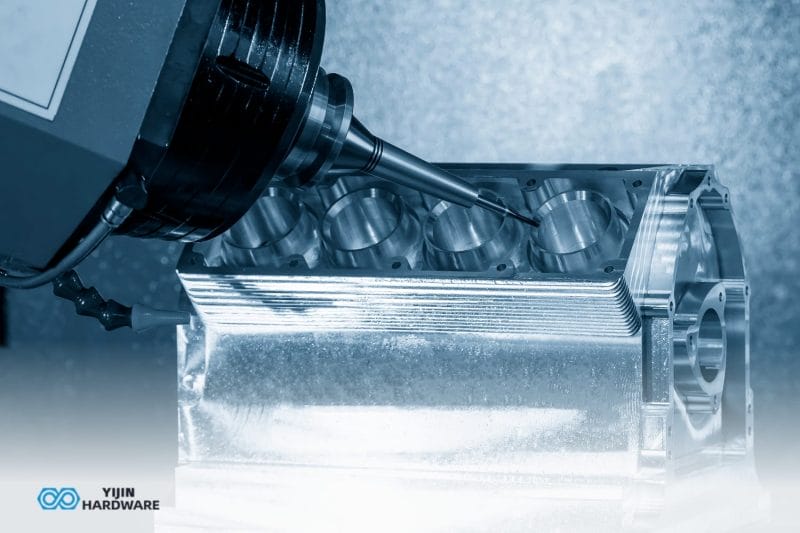
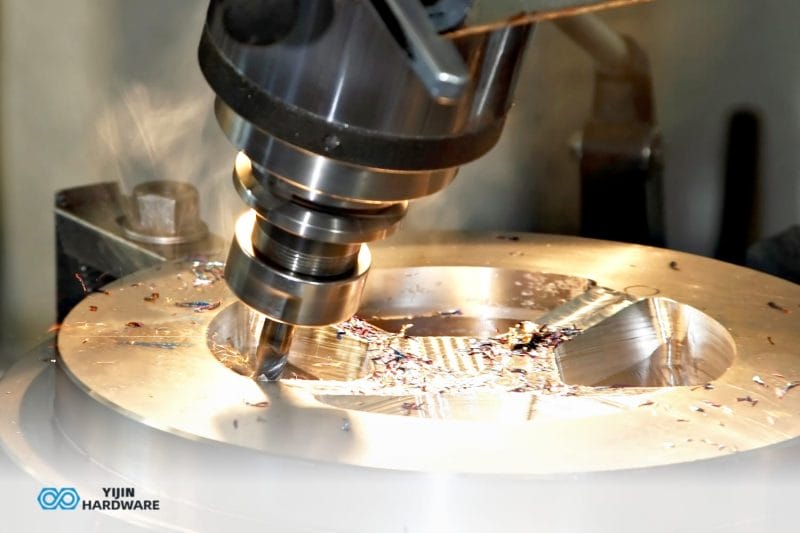
ABS CNC machining shapes solid blocks or sheets of ABS plastic into finished parts by cutting away material with rotating tools, the same subtractive process used on metal but run at plastic-specific speeds to avoid melting the material.
ABS (acrylonitrile butadiene styrene) machines cleanly, holds tight tolerances, and accepts painting, plating, and bonding, making it a common substitute for injection-molded parts during prototyping and low-volume production.
How ABS CNC Machining Works
ABS CNC machining follows four steps from a digital design to a finished part.
- Design to program: CAM software converts your CAD file into tool paths, choosing feeds and speeds that limit heat buildup in the plastic.
- Machining: 3-axis or multi-axis centers cut the part from solid ABS stock, using sharp single-flute or two-flute tools to keep chips clearing cleanly.
- Deburring and finishing: edges are deburred and the part is sanded, vapor polished, textured, painted, or plated as specified.
- Inspection: critical dimensions are checked against the drawing before the part ships.
Why Choose Yijin Solution for ABS CNC Machining
We control every step of ABS machining from programming through finishing and inspection.

CMMs and surface comparators verify every critical batch. Parts hold ±0.125 mm general and ±0.05 mm on critical machined features.

Prototypes ship in 3 to 5 business days and production runs in 2 to 3 weeks, run on the same centers as our metal production.

Single-piece prototypes and production runs of thousands of parts go through the same machining centers and inspection standards.

General purpose, high-impact, flame-retardant, and ABS/PC blend stock, chosen for the strength, heat, or flammability rating your part needs.

Direct factory pricing without broker margins. ABS machines quickly compared to metal, keeping per-part cost low for prototypes and short runs.

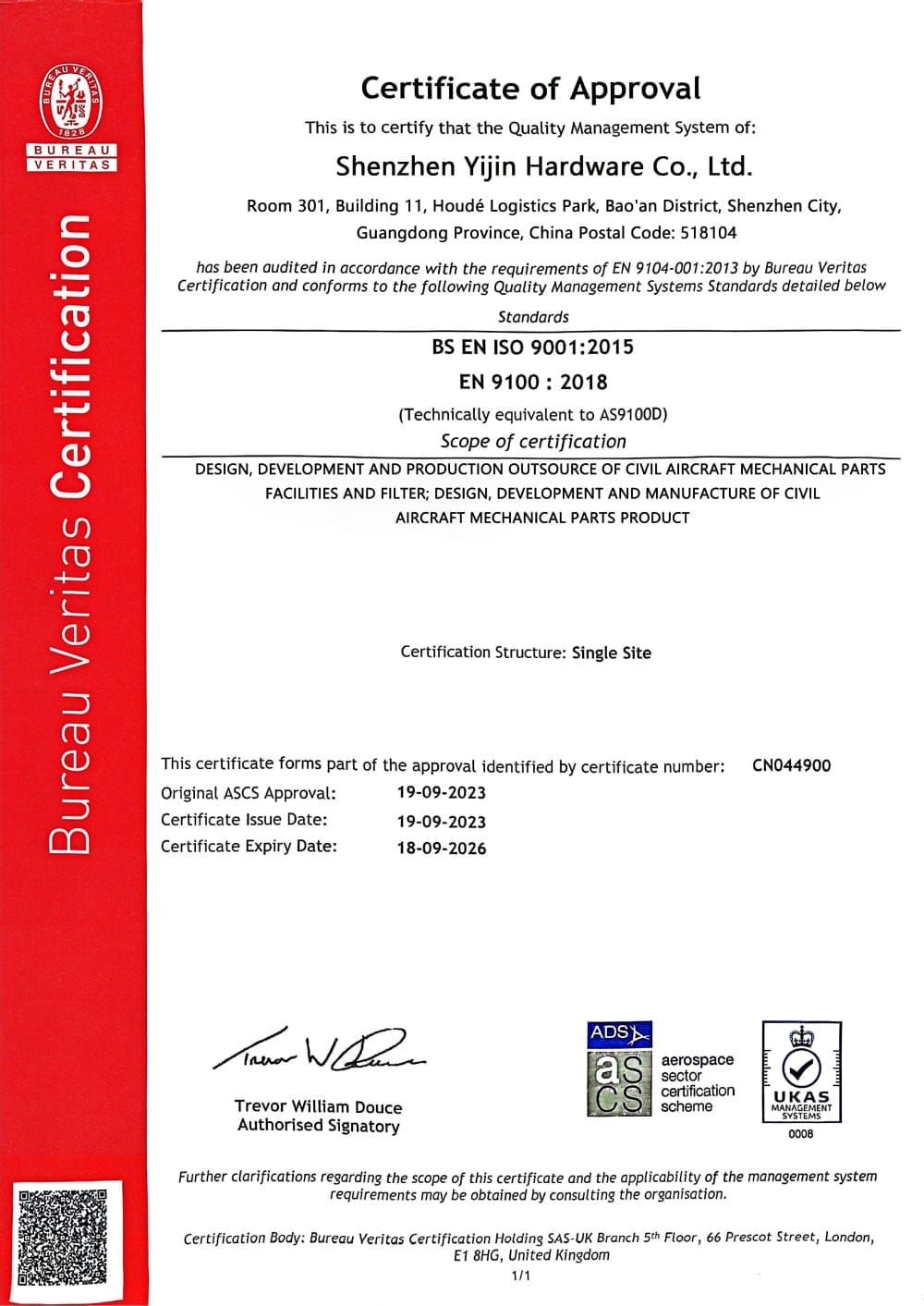
ISO 9001 certified production with material certificates and dimensional reports available on every order.
FAQs About ABS CNC Machining
What Is ABS CNC Machining Service?
ABS CNC machining service uses computer-controlled milling and turning centers to cut custom parts from solid ABS plastic stock. It suits prototypes and end-use parts that need the durability, impact resistance, and low cost of ABS without injection tooling.
What Are the Benefits of ABS for CNC Machining?
ABS offers durability, impact resistance, and stiffness at a lower material cost than engineering plastics like PEEK or POM, while still accepting painting, plating, and bonding. It is a practical default for structural enclosures and functional prototypes.
What Tolerances Can ABS CNC Machining Achieve?
Standard ABS CNC machining holds ±0.125 mm (±0.005 in) on general features, with ±0.05 mm achievable on critical features using secondary fixturing and finishing passes. Wall thickness and part geometry affect what is realistic for a given design.
What Industries Use ABS CNC Machined Parts?
OEMs across consumer electronics, automotive interiors, medical device housings, appliances, and industrial equipment use ABS CNC machined parts for enclosures, brackets, panels, and functional prototypes.
Can ABS CNC Machining Handle Both Prototypes and Production?
Yes. The same programs and fixtures that cut a single prototype scale to low and mid-volume production runs without re-qualification, with no minimum order quantity.
What Surface Finishes Are Available for ABS CNC Parts?
We offer as-machined, sanding, vapor polishing, texturing, painting, and electroplating finishes in-house, chosen for cosmetic appearance, grip, or bonding preparation.
What Lead Times Should I Expect for ABS CNC Machining?
Prototype orders typically ship in 3 to 5 business days and production runs in 2 to 3 weeks, depending on part complexity and finish requirements.
What CAD File Formats Do You Accept for a Quote?
Upload STEP, IGES, DWG, PDF, or STL files, individually or compressed as a ZIP or RAR archive, for an instant quote and manufacturability review.
ABS CNC Machining Guides

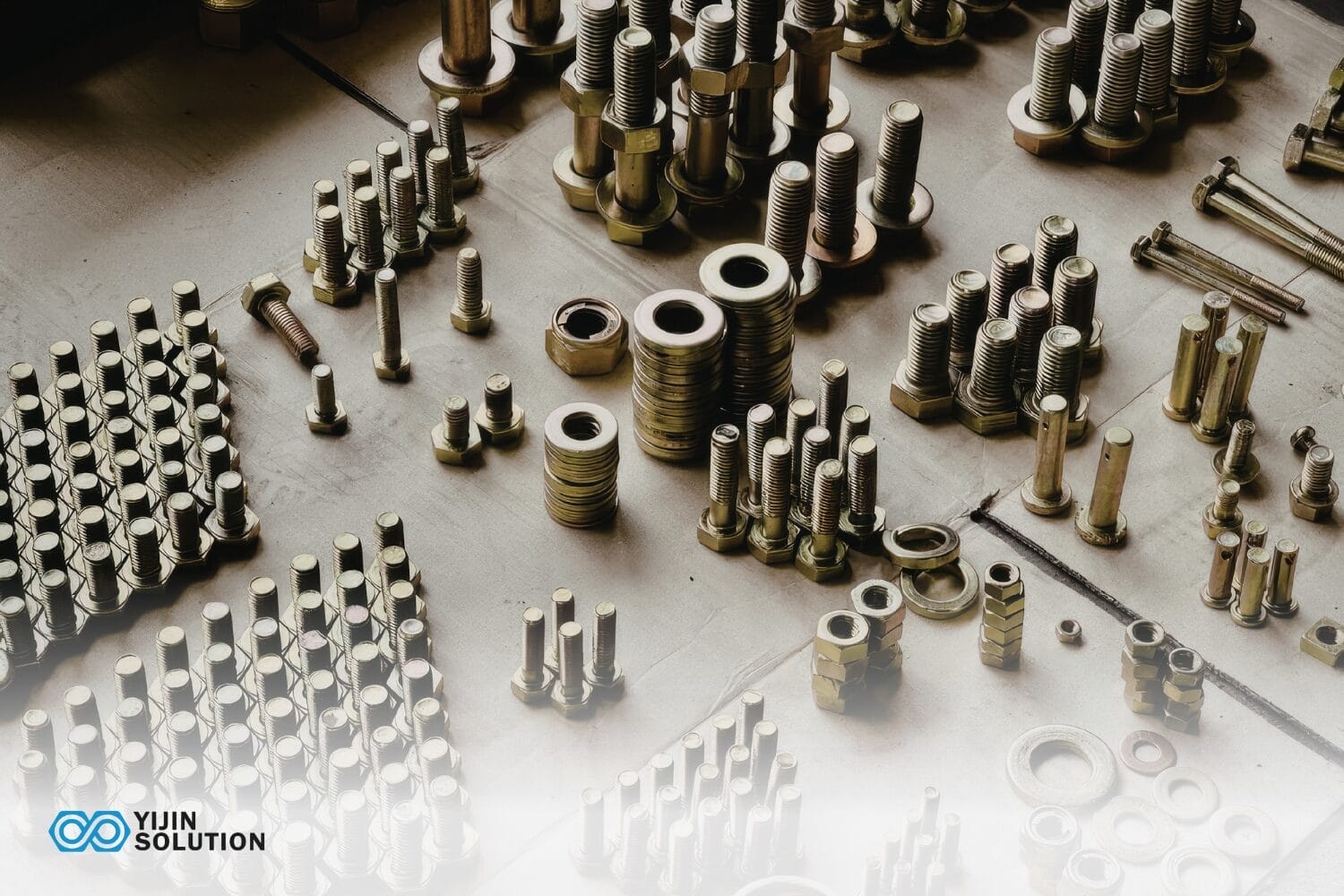
12 Types of Bolts With Pictures & Names
A bolt is a threaded fastener that passes through a part and is held by a nut on the other
Types of Sheet Metal Fasteners: A Complete Selection Guide
Every sheet metal assembly depends on its fasteners. The joint type you specify will determine how the assembly performs under
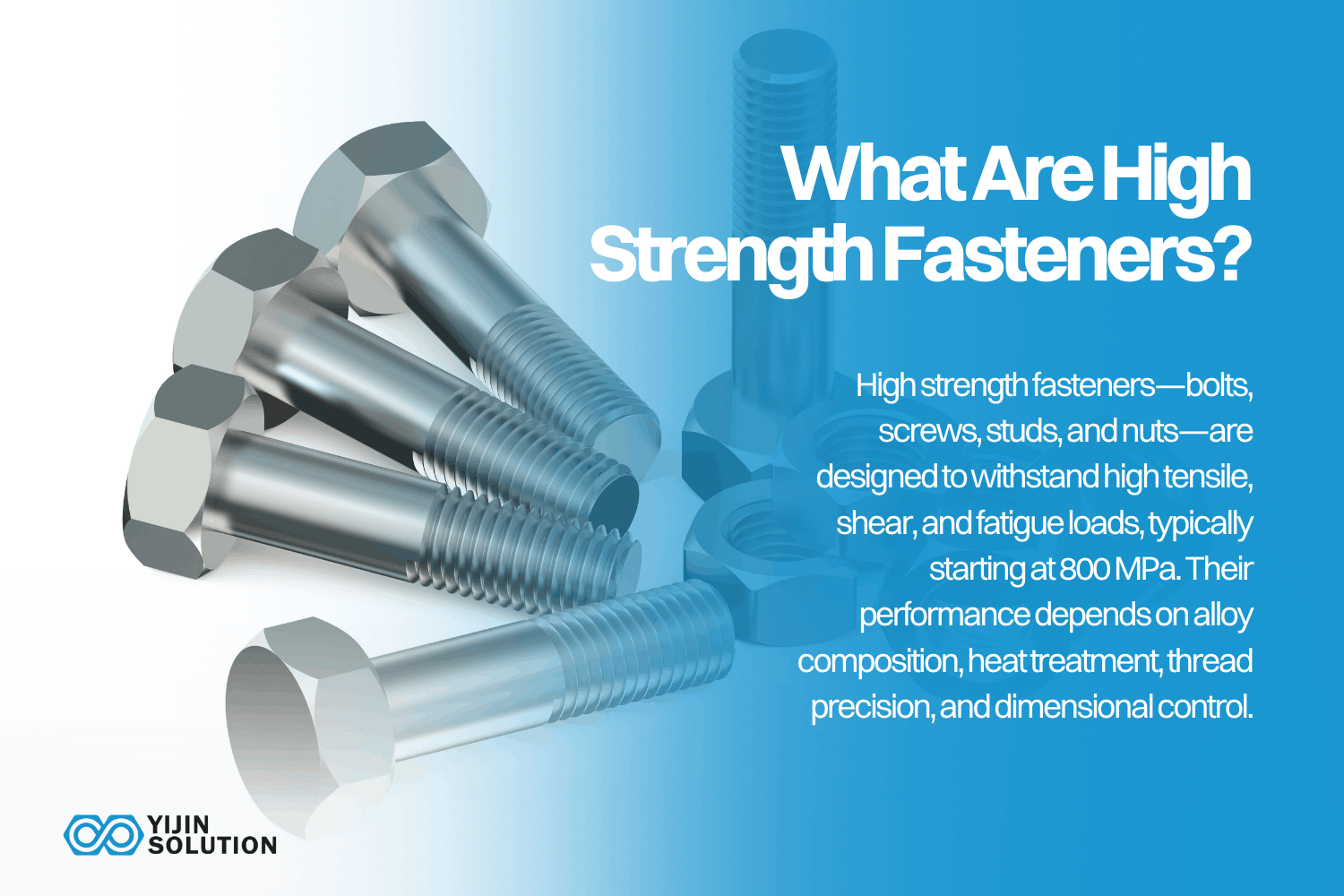
What are High Strength Fasteners? Types, Grades & How to Select the Right One
High-strength fasteners span a wide spectrum from SAE Grade 8 hex bolts and metric Class 10.9 socket heads to fully

Start today. Get parts made fast.
Free Machined Parts Design to Your Projects with Reduced Lead Times Times.