


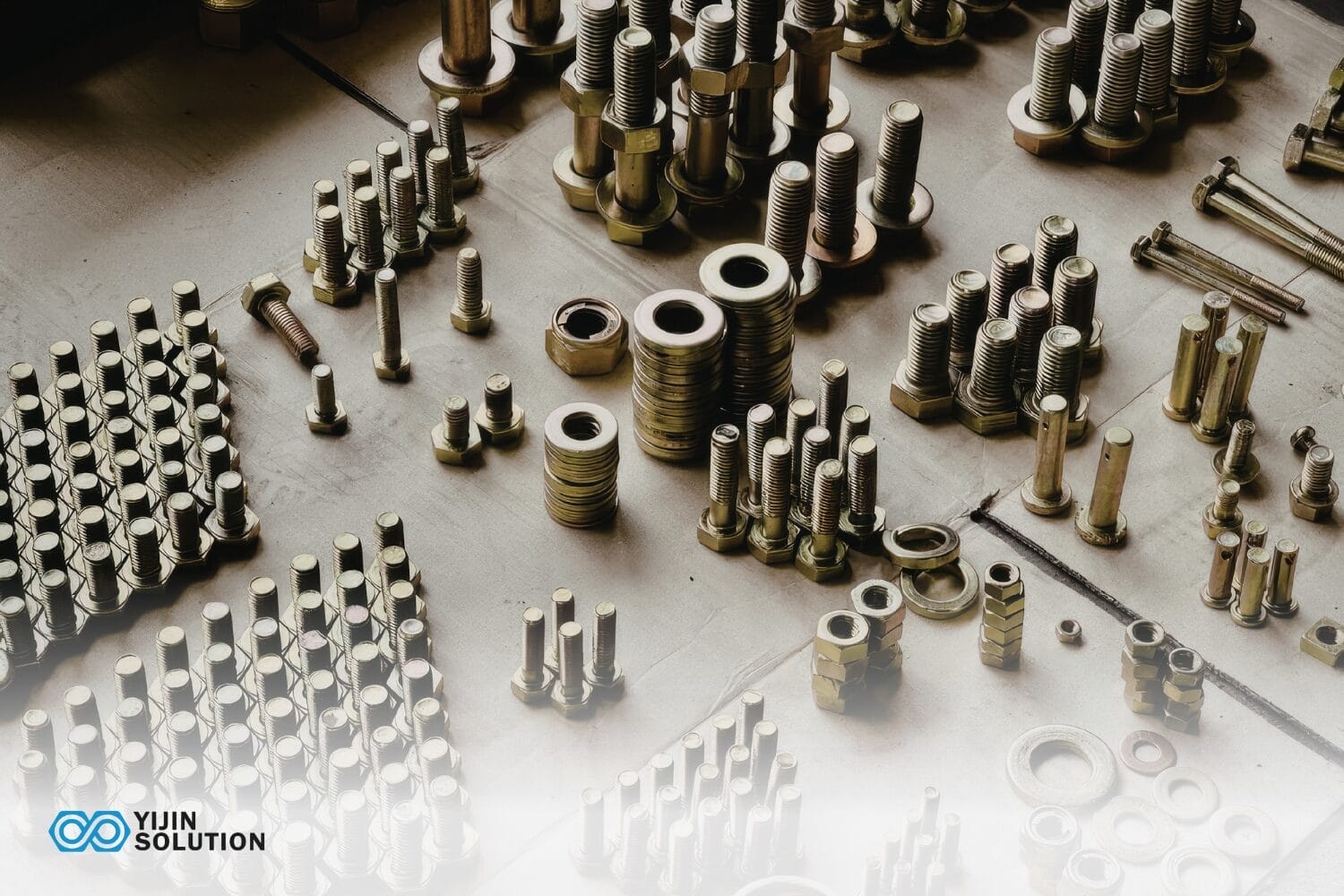
A bolt is a threaded fastener that passes through a part and is held by a nut on the other side, unlike a screw, which threads directly into the material. Below are the 12 most common types of bolts, what each one looks like, and where it is used. For custom production, see our threaded fasteners service.
Bolt Types at a Glance
| Bolt Type | Am besten für | Key Identifier | Material (Common) | Needs Nut? | |
|---|---|---|---|---|---|
 | Anchor Bolt | Concrete & masonry anchoring | Expansion or wedge end | Carbon Steel, SS 304/316 | Ja |
 | Arbor Bolt | Power tool blades (saws) | Attached washer, reverse thread | Carbon / Alloy Steel | Nein |
 | Blind Bolt | Limited-access joints | Expanding sleeve, one-side fit | Carbon Steel, SS | Nein |
 | Carriage Bolt | Wood-to-metal connections | Domed head, square neck | Carbon Steel, SS | Ja |
 | Elevator Bolt | Conveyor & elevator systems | Flat head, square neck | Carbon Steel, SS | Ja |
 | Eyebolt | Lifting & rigging | Loop (eye) head | Carbon Steel, SS 304/316 | Ja |
 | Flange Bolt | High-load flange assemblies | Built-in washer flange | Alloy Steel, SS | Ja |
 | Sechskantschraube | General purpose fastening | Hexagonal head, partial thread | Carbon Steel, SS 304/316 | Ja |
 | J-Bolt | Foundation & structural anchoring | J-shaped hook end | Carbon Steel, SS | Ja |
 | Lag Bolt | Heavy-duty wood fastening | Large hex head, coarse thread | Carbon Steel (zinc) | Nein |
 | Maschinenbolzen | Metal-to-metal fastening | Square / hex head, full thread | Carbon Steel, SS | Ja |
 | Hanger Bolt | Furniture legs & fixtures | Double-ended, no head | Carbon Steel, SS | Yes (one end) |
Arten von Bolzen
Each bolt below lists its common size range, typical grade or standard, and a practical fitting note. Use these specs to match a bolt to your load, the materials being joined, and how the joint is accessed.
1. Ankerbolzen
Fastens structural and non-structural parts to concrete and carries both tensile and shear loads, as with steel columns on a reinforced concrete base. See the Lieferanten von Schrauben und Muttern we recommend and the Top 10 Schrauben und Muttern Hersteller in China.
- Size: M6–M48 (1/4″–2″)
- Grade: ASTM F1554 (Gr. 36/55/105), A307
- Install: Cast-in-place before the pour, or post-installed in cured concrete
2. Arbor Bolt
Holds blades on power tools such as miter saws, identifiable by its attached washer and reverse thread, usually in a dark finish. Pick the right alloy with our CNC-Materialliste.
- Size: 5/16″–1/2″ (M8–M12)
- Grade: Carbon or alloy steel, often left-hand thread
- Install: Threads against blade rotation so it self-tightens
3. Blind Bolt
A structural fastener for limited-access joints where Nieten or hex bolts will not fit, common in manufacturing and construction.
- Size: M6–M20 (1/4″–3/4″)
- Grade: Carbon steel or stainless, Class 8.8 common
- Install: Fits and expands from one side of the joint
4. Schlittenbolzen
Has a smooth domed head and a square section beneath it that locks into the material so it tightens from one side, common for fastening wood to metal.
- Size: 3/16″–3/4″ (M5–M20)
- Grade: Grade 5 / A307, zinc or galvanized
- Install: Square neck seats into the hole; tighten the nut only
5. Elevator Bolt
A thin, flat-headed bolt with a square or ribbed neck that resists rotation, used in tight spaces on conveyor belts and elevators.
- Size: 1/4″–1/2″ (M6–M12)
- Grade: Carbon steel or stainless
- Install: Flat head sits flush; square neck stops rotation
6. Ringschraube
A threaded shaft topped with a ring for rope, cable, or lifting gear; rated lifting eyes need precise machining for their safe working load, which our CNC-Bearbeitungsservice China provides.
- Size: 1/4″–1″ (M6–M24)
- Grade: Forged alloy or stainless, rated by working load limit
- Install: Use shoulder eyebolts for angled loads; never side-load a plain eye
7. Flange Bolt
A hex bolt with a built-in flange that spreads the clamping load like a washer, common in automotive joints such as transmission to engine, a focus of our Herstellung kundenspezifischer Autoteile.
- Size: 1/4″–3/4″ (M5–M20)
- Grade: Class 8.8/10.9, Grade 5/8
- Install: Built-in flange spreads load; serrated type resists loosening
8. Sechskantschraube
The most common bolt, with a six-sided head tightened by a wrench and paired with a nut, used across construction, machinery, and repair.
- Size: 1/4″–4″ (M5–M64)
- Grade: Grade 2/5/8, Class 8.8/10.9/12.9
- Install: Pair with a matching nut and washer; torque to grade
9. J-Bolt
A J-shaped bolt threaded on the straight end, used as a concrete anchor and to attach walls and roofing.
- Size: 1/4″–1″ (M6–M24)
- Grade: Carbon steel, A307 / F1554
- Install: Hook embeds in concrete; nut goes on the threaded end
10. Lag Bolt
A heavy-duty wood fastener, at least 1 inch long and 1/4 inch in diameter, for joining timber under high load with no nut required.
- Size: 1/4″–3/4″ dia, 1″–6″+ length
- Grade: Carbon steel, zinc or hot-dip galvanized
- Install: Pre-drill a pilot hole, then drive with a wrench, no nut
11. Maschinenbolzen
Joins two metal parts with a square or hex head and no chamfer or washer face, secured with a matching nut.
- Size: 1/4″–3″ (M6–M48)
- Grade: ASTM A307 Grade A/B
- Install: Threads into a tapped hole or takes a nut
12. Hanger Bolt
A double-ended bolt with wood thread on one end and machine thread on the other, used to attach legs to furniture.
- Size: 1/4″–1/2″ (M6–M12)
- Grade: Carbon steel or stainless
- Install: Wood-thread end drives into a pilot hole; machine end takes a nut
Bolt Head Styles
The head shape sets how a bolt sits against the surface and how it spreads its clamping load. These are the styles you will specify most often.
Countersunk head that sits flush with the surface.
Countersunk head with a rounded top, part flush and part raised.
Slightly rounded head with short vertical sides.
Domed head that sits above the surface.
Extra-wide, low rounded head that spreads the bearing load.
Six-sided head driven by a wrench.
Cylindrical head driven by an Allen (hex) key.
Low-profile rounded head with a socket drive.
Bolt Drive Types
The drive is the recess the tool engages. The right drive transfers torque cleanly and resists cam-out.
Cross-shaped recess, the most common drive.
A single straight slot.
Hexagonal socket driven by an Allen key.
Six-point star recess that resists cam-out.
Square recess for high torque with low slip.
Accepts both slotted and Phillips drivers.
Bolt Materials and Finishes
Material sets a bolt’s strength and corrosion resistance. The finish adds a protective layer on top of it. Match both to the load and to the environment the joint will see.
Common bolt materials and where each one fits:
| Material | Key properties | Korrosionsbeständigkeit | Am besten für |
|---|---|---|---|
| Kohlenstoffstahl | High strength, low cost | Low, needs a coating | General and structural fastening |
| Legierter Stahl | Highest strength, heat-treatable | Low, needs a coating | Grade 8 and Class 12.9 high-load joints |
| Rostfreier Stahl 304 | Strong, non-magnetic | Excellent, not for chlorides | Outdoor, food, and general corrosion service |
| Rostfreier Stahl 316 | Adds molybdenum for pitting resistance | Excellent, handles chlorides | Marine, chemical, and coastal use |
| Messing | Soft, conductive, non-sparking | Gut | Electrical, plumbing, and decorative work |
| Titan | High strength-to-weight, lightweight | Ausgezeichnet | Aerospace and medical parts |
Common bolt finishes, ranked by the protection they add:
| Finish | Prozess | Korrosionsbeständigkeit | Am besten für |
|---|---|---|---|
| Plain / black oxide | Bare or lightly oiled steel | Niedrig | Dry indoor use and tooling |
| Zinc plated | Thin electroplated zinc | Mäßig | Indoor and light outdoor use |
| Hot-dip galvanized | Thick molten-zinc dip | Hoch | Outdoor and structural steel |
| Zinc-nickel | Alloy electroplate | Sehr hoch | Automotive and harsh-service joints |
| Passivated stainless | Cleaned, stable oxide layer | Sehr hoch | Corrosive and washdown environments |
We finish custom fasteners in-house with zinc plating, hot-dip galvanizing, black oxide, and passivation. Compare material and finish options on our kundenspezifische Befestigungen service.
Bolt Grades and Strength
A bolt’s grade tells you its strength, and the head marking lets you read that grade at a glance. You will meet two systems: SAE grades in inches and metric property classes.
Common bolt grades and their tensile strength:
| Grade / Class | Standard | Material | Zugfestigkeit | Head marking | Typical use |
|---|---|---|---|---|---|
| SAE Grade 2 | SAE J429 | Low or medium carbon | ~74,000 psi | No marks | Light-duty fastening |
| SAE Grade 5 | SAE J429 | Medium carbon, quenched & tempered | ~120,000 psi | 3 radial lines | Automotive and machinery |
| SAE Grade 8 | SAE J429 | Alloy steel, quenched & tempered | ~150,000 psi | 6 radial lines | High-stress structural joints |
| Class 8.8 | ISO 898-1 | Medium carbon, quenched & tempered | ~800 MPa | “8.8” | General structural assemblies |
| Klasse 10.9 | ISO 898-1 | Alloy steel, quenched & tempered | ~1,040 MPa | “10.9” | High-strength assemblies |
| Klasse 12.9 | ISO 898-1 | Alloy steel, quenched & tempered | ~1,220 MPa | “12.9” | Socket cap screws, top loads |
Torque follows the grade, diameter, thread pitch, and lubrication. As a reference, a dry 1/2-13 Grade 5 bolt seats at about 75 ft-lb, while the same size in Grade 8 takes about 105 ft-lb. Confirm the exact value against a torque chart for your size and finish. The strength grades above are defined in SAE J429 und ISO 898-1.
Häufig gestellte Fragen
These cover the questions buyers ask most when specifying bolts for a custom build.
How do I choose the right bolt type?
Bolt selection comes down to four factors: the load, the materials being joined, the joint access, and the environment. Match high tensile and shear loads to hex or flange bolts in Grade 8 or Class 10.9. Use anchor or J-bolts for concrete, carriage or lag bolts for wood, and blind bolts where you can reach only one side.
What bolt grade do I need?
Match the grade to the calculated load. Grade 5 or Class 8.8 handles most automotive and machinery work. Grade 8 or Class 10.9 suits high-stress structural joints. Over-specifying a grade adds cost without benefit, so size the grade to the load the joint actually sees.
Which bolt material resists corrosion best?
Stainless Steel 316 gives the best corrosion resistance for marine and chemical exposure. Stainless Steel 304 covers most outdoor use. For carbon steel bolts, hot-dip galvanizing is the most durable protective finish for outdoor and structural work.
How are bolts measured?
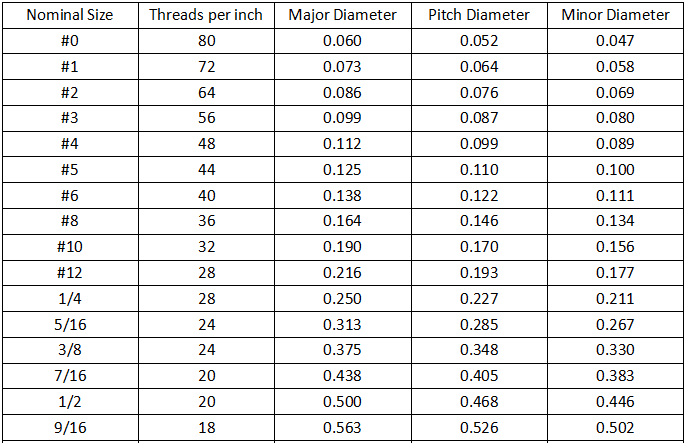
A bolt is specified by diameter, thread pitch, and length. A metric bolt reads as M10 x 1.5 x 40: 10 mm diameter, 1.5 mm pitch, 40 mm long. An imperial bolt reads as 1/2-13 x 2: 1/2 inch diameter, 13 threads per inch, 2 inches long.
Can I get custom bolts manufactured to spec?
Yes. We produce custom bolts by cold heading and CNC machining in carbon steel, stainless steel, alloy steel, and titanium, with tolerances down to ±0.02 mm. We cover prototype quantities through high-volume runs and finish in-house. Upload your drawing for a free DFM review and quote on our kundenspezifische Befestigungen service.
Schlussfolgerung
The main difference between a bolt and a screw is that a bolt passes through a part and is held by a nut, while a screw threads directly into the material. Choosing the right bolt type, head style, and drive comes down to the load, the materials being joined, and how the joint is accessed.
Zurück zum Anfang: 12 Arten von Bolzen mit Bildern und Namen




 English
  Spanish
  German
  French