Medical Device Custom Parts Manufacturing
Medical device OEMs and contract manufacturers need part-level material traceability and dimensional records that hold up under audit, from the first validated prototype onward. Yijin Solution machines, molds, and fabricates precision components for surgical instruments, diagnostic equipment, and device sub-assemblies under a certified quality system.
Join 3000+ companies who work with Yijin Solution


Industrien, die wir bedienen
Medical device OEMs, contract manufacturers, and design engineering firms source precision components for diagnostic equipment, surgical instruments, and device sub-assemblies. These buyers manage tight tolerance stacks, mixed-material builds, and documentation requirements that follow the part through every production stage. Audit readiness rests on the supplier record, not on the finished assembly alone. The manufacturing partnership resolves the documentation and process-control gaps that arise when validation and production are handled by separate vendors.
Manufacturing Capabilities for Medical Devices
Medical device parts mix precision machined components, molded housings, formed enclosures, and small fasteners within a single assembly. Tolerance and material documentation are specified per part number rather than per assembly, so process selection follows the part.

CNC-Bearbeitung
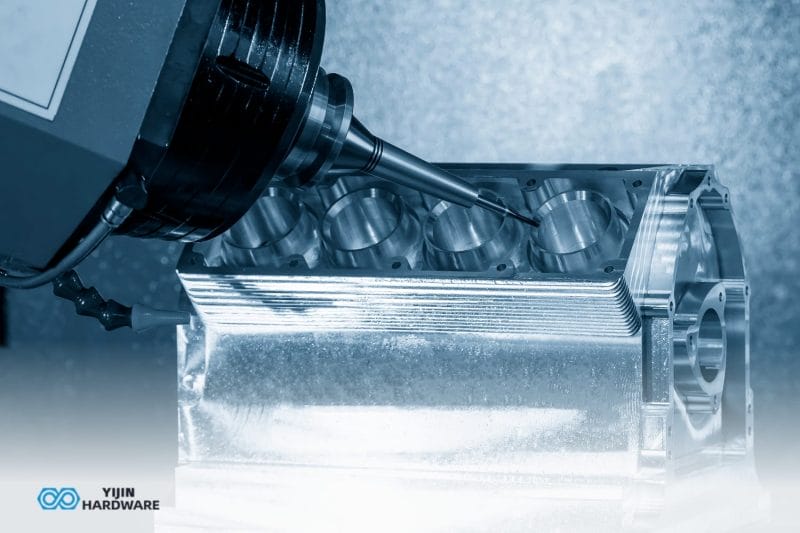
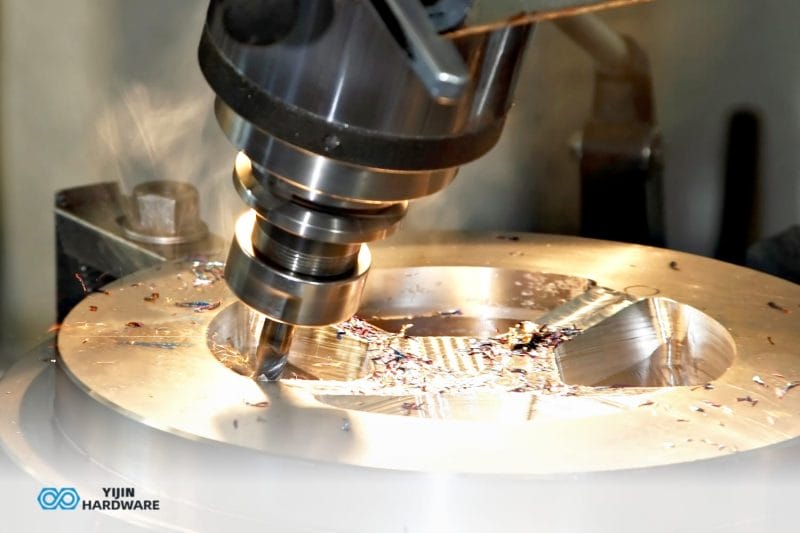
CNC machining produces tight-tolerance components in stainless steel, titanium, and PEEK for surgical instrument handles, connector bodies, and diagnostic equipment housings. Precision features hold tolerances as tight as plus or minus 0.01 mm, with general dimensions referenced to ISO 2768.

Herstellung von Blechen
Sheet metal fabrication forms stainless steel and aluminum enclosures, chassis panels, and structural brackets for diagnostic and laboratory equipment. Standard tolerances hold to plus or minus 0.30 mm across formed and welded features.

SpritzgieΓen
Injection molding produces plastic housings, buttons, and connector bodies in medical-grade resins for handheld devices, diagnostic instruments, and disposable components. Standard tolerances hold to plus or minus 0.10 to 0.20 mm, depending on resin and wall section.

Kundenspezifische Befestigungen
Custom fasteners in stainless steel and titanium alloys support surgical instrument and device sub-assembly builds, produced by cold heading and CNC turning. Precision tolerances hold to plus or minus 0.02 to 0.05 mm.
Parts We Make for Medical Devices
Part types vary by device category, but tolerance and documentation requirements stay consistent across every part number. Components span machined instruments, molded housings, formed enclosures, and precision fasteners.
| Komponente | Beschreibung |
|---|---|
| Surgical instrument handles and housings | CNC-machined stainless steel or titanium, electropolished finish |
| Diagnostic equipment enclosures | Sheet metal stainless steel, formed and passivated |
| Handheld device housings | Injection-molded medical-grade resin, tight wall-thickness control |
| Endoscope and instrument shaft components | CNC-turned stainless steel, tight cylindricity tolerance |
| Implant trial and prototype components | CNC-machined titanium alloy, full dimensional inspection report |
| Fluid handling manifold blocks | CNC-machined stainless steel or PEEK, pressure-rated port geometry |
| Implant-grade fasteners | Stainless steel or titanium alloy, cold-headed and CNC turned |
| Connector and coupling bodies | CNC-turned stainless steel or brass, threaded configurations |
| Device sub-assembly brackets | CNC-machined or sheet metal aluminum, multiple finish options |
| Drill guide and instrument tray components | CNC-machined stainless steel, tight positional tolerance |
From Idea to Production
Medical device programs move through design validation, prototype iteration, and production scale-up before a part reaches the assembly line. A design for manufacturability review catches tolerance and material issues before tooling is cut. The same process controls apply at every stage, so a part carries the same documentation from first sample to final batch. Programs moving from validated prototype to volume can begin through Yijin’s new product development services.

Nickel
Corrosion resistance and wear resistance. Versatile across most substrates and commonly used as an underlayer for chrome or gold.

Chrome
Hard chrome for wear surfaces such as hydraulic cylinders and valve bodies; decorative chrome for cosmetic applications including consumer hardware and automotive trim.

Zink
Cost-effective corrosion protection for steel parts, often paired with chromate or trivalent passivation.

Zinc-Nickel
High-performance corrosion protection for aerospace fasteners and structural fittings, and the modern replacement for cadmium plating.

Gold
Electrical conductivity and contact reliability for connectors, semiconductor components, and aerospace electronics.

Kupfer
Undercoat for adhesion and uniformity, or standalone for EMI shielding and electrical conductivity.

Tin
Solderability and corrosion resistance for electronic component leads and food-contact hardware.

Silver
High electrical and thermal conductivity for specialized electronic and aerospace applications.
Kohlenstoffstahl
The most common substrate for black oxide. Produces the deepest, most uniform black. Machined or media-blasted surfaces give the best results. Standard for fasteners, tooling, fixtures, and machine components.
Why Medical Device Manufacturers Choose Yijin

PrΓ€zision und QualitΓ€t
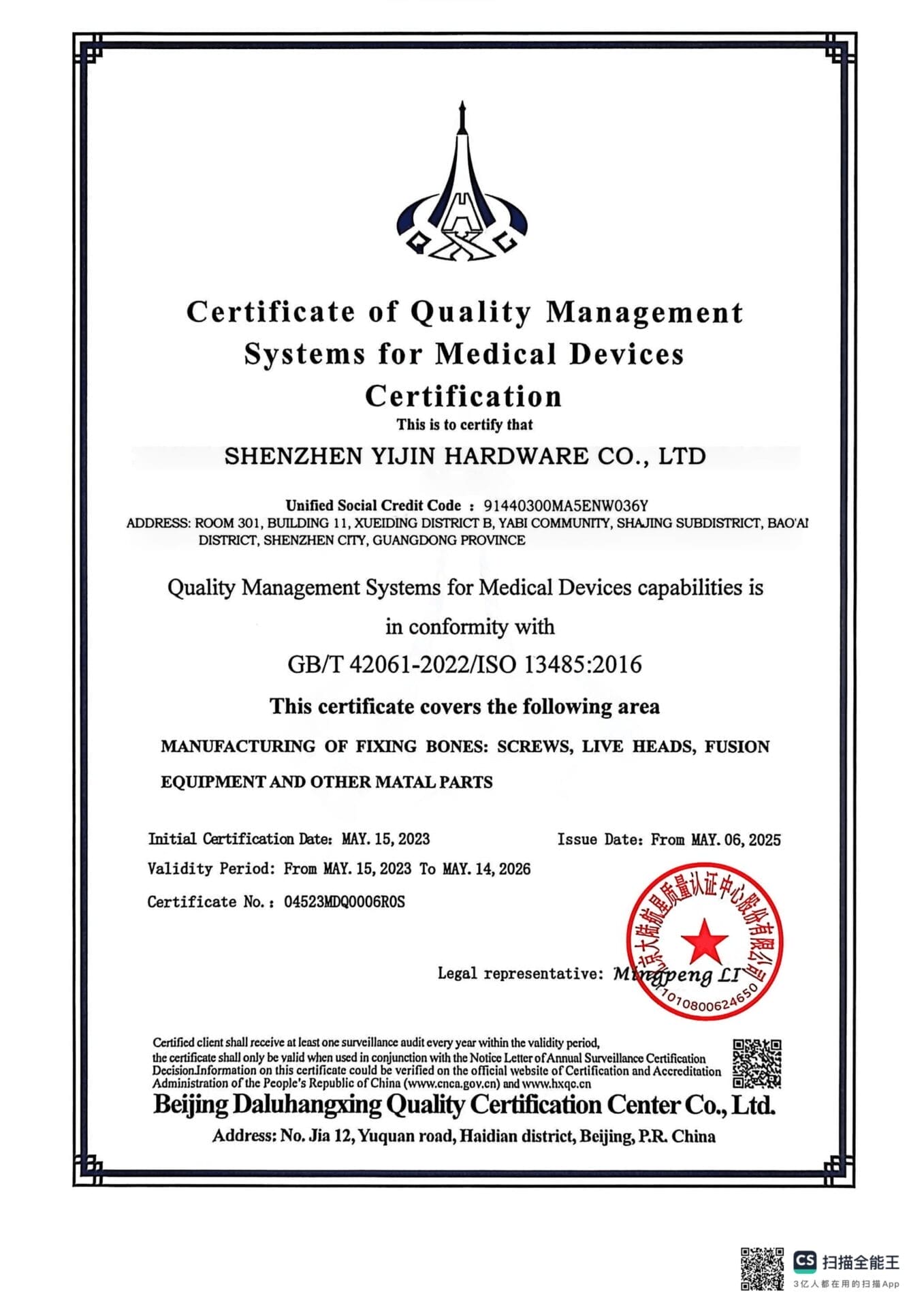
Medical components are produced under an ISO 13485-certified quality system, with dimensional inspection records issued at the part level.

Schneller Turnaround
CNC machined prototypes ship in 3 to 7 days, and production orders run 2 to 4 weeks depending on part complexity.

Order Any Size
Order volumes range from single validated prototypes to production batches, inspected under the same quality system at every volume.

Prototyping to Production
Process controls and material documentation established at prototype validation carry forward unchanged into full production volume.

Material Breadth
Machining and molding cover stainless steel, titanium alloy, aluminum, PEEK, and medical-grade resins.

Medical Device Custom Parts Gallery
Medical Device Custom Parts Manufacturing FAQs
What quality certifications apply to medical device parts manufactured in China?
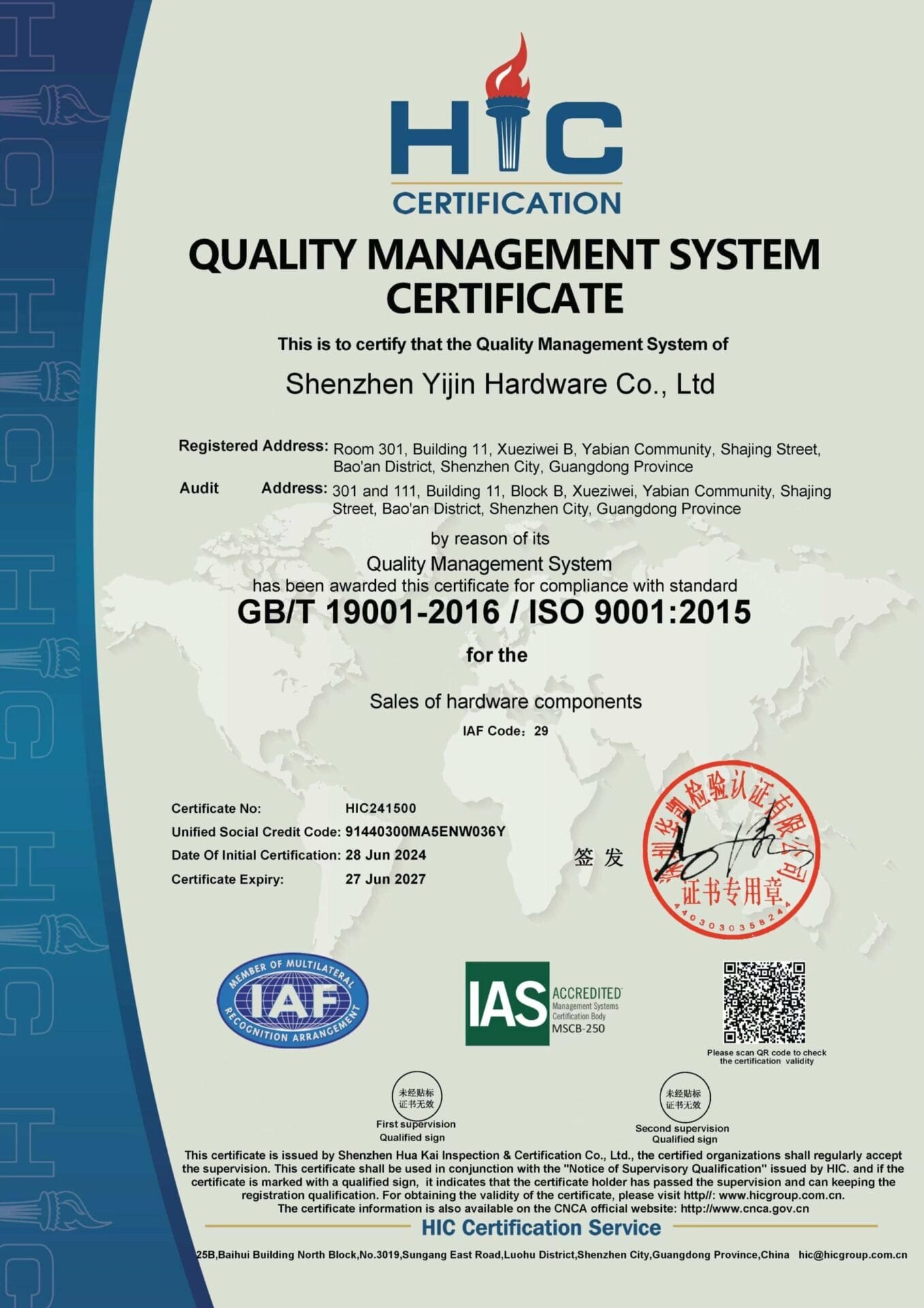
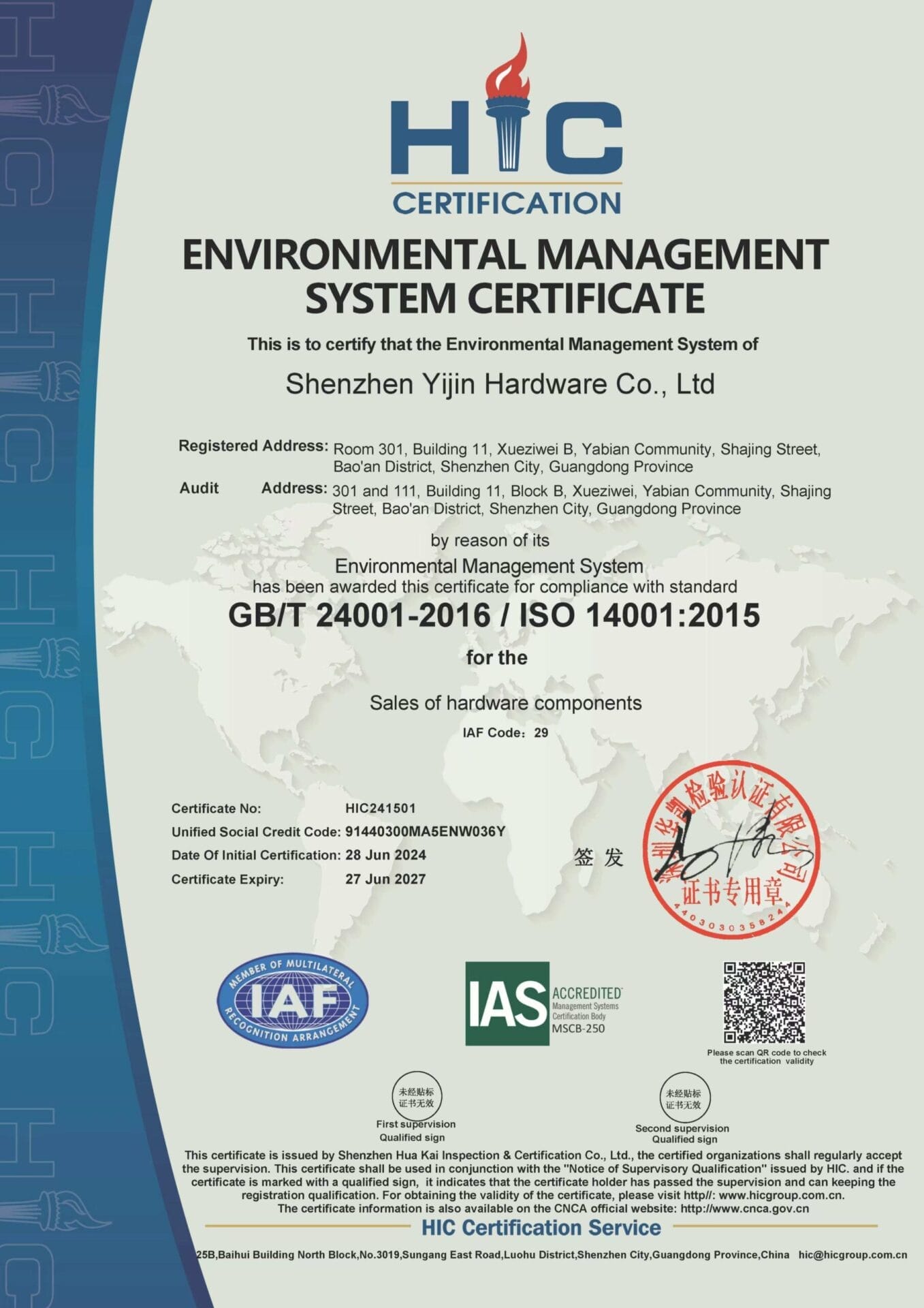
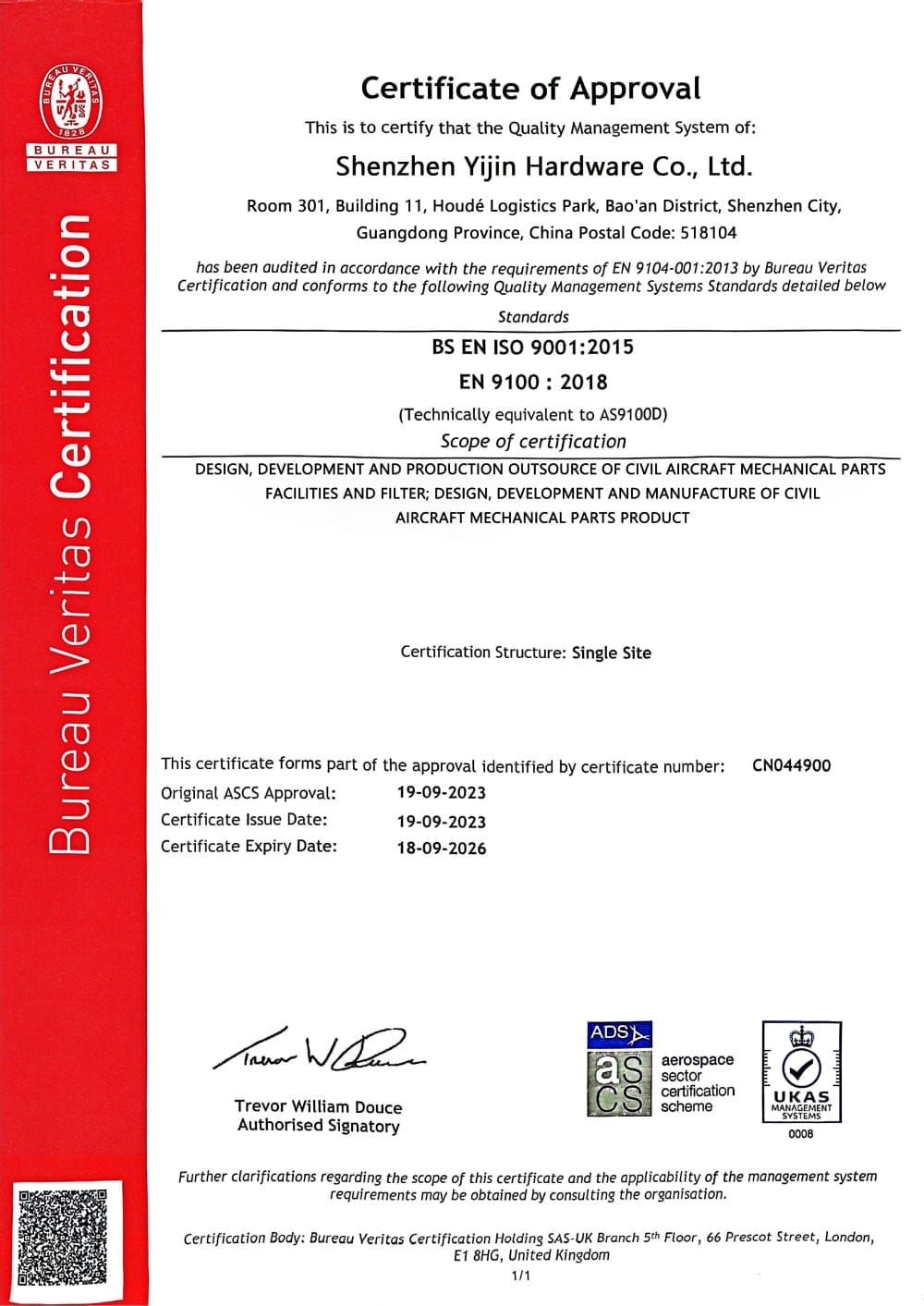
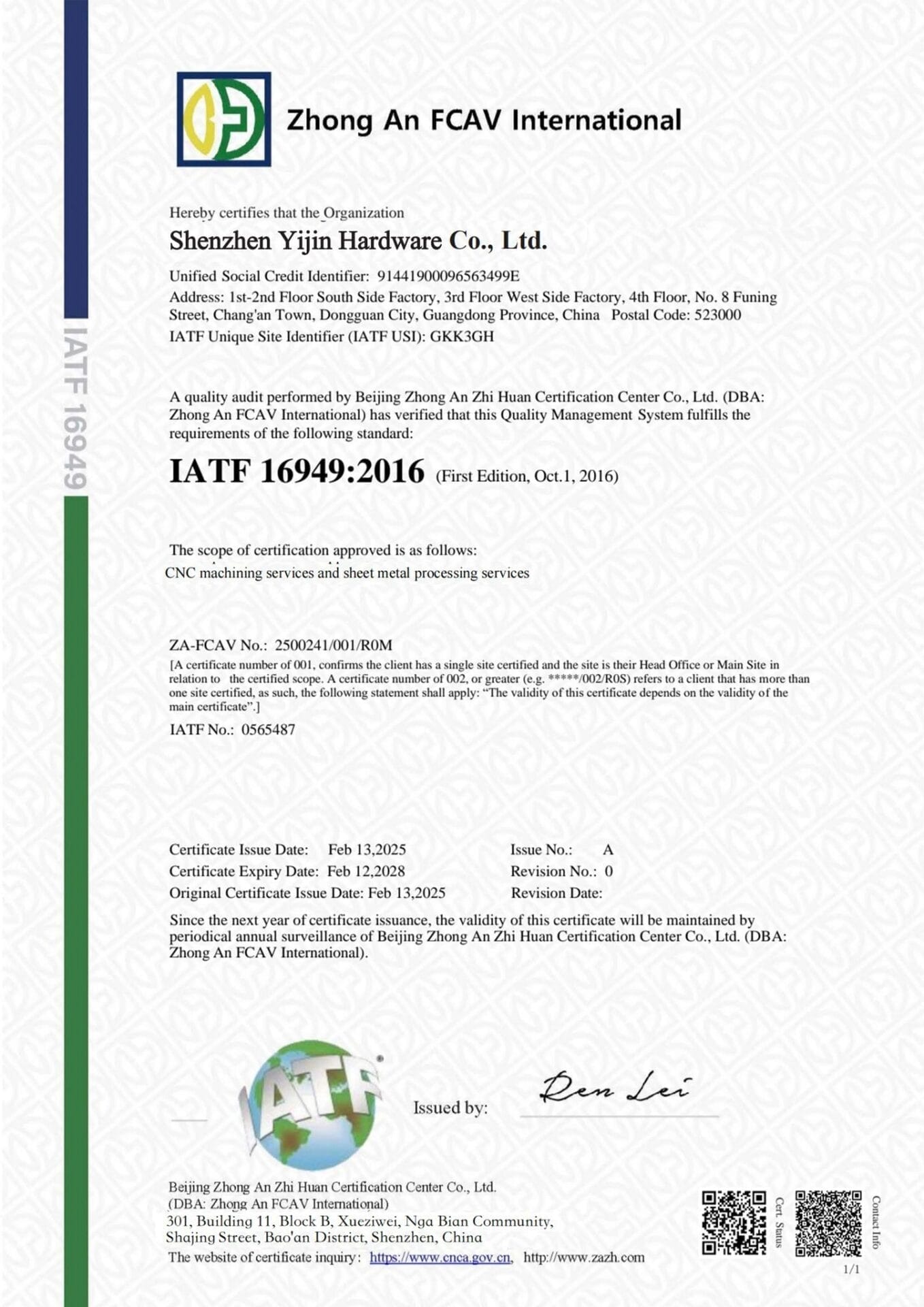
The facility holds ISO 13485, ISO 9001, ISO 14001, and IATF 16949 certifications. Current certificate copies are available on request.
What material traceability documentation is provided for medical components?
Each production lot carries material certificates and dimensional inspection records tied to the part number. Documentation covers raw material source, in-process measurements, and final inspection results, and is issued with the shipment.
Can implant-grade titanium and stainless steel be machined?
Titanium alloy and 316L stainless steel are both machined for implant trial and surgical instrument applications. Full dimensional inspection reports accompany implant trial and prototype components.
How is First Article Inspection handled for medical device parts?
The first part off a new tool or program is measured against the full drawing specification before the remaining batch runs. Results are recorded in a written report covering dimensions, material certification, and any noted deviations.
What lead times apply to sheet metal, molded, and fastener components?
Sheet metal prototypes typically ship in 3 to 7 days, with production runs of 7 to 15 days. Molded parts require 25 to 35 days for tooling and first samples. Fastener samples run 7 to 15 days.
Who is responsible for regulatory submissions such as FDA clearance or CE marking?
Regulatory submission and market clearance remain the responsibility of the device OEM. Components are supplied with dimensional and material documentation for use in the customerβs submission package.

China vs US Manufacturing: CNC Costs, Reshoring, and How to Decide
A US shop and a China shop can quote the same CNC part two to three times apart. Buyers pause

IP Protection When Outsourcing CNC Machining to China
A buyer shares a full set of CAD drawings with a new supplier in China. Weeks later, a near-identical product

China CNC Machining Quality Control: AS9100 and ISO Realities
A certificate list on a supplier’s homepage does not prove much by itself. Anyone can post logos for ISO 9001,
Medical device programs move through design review and audit on the strength of supplier documentation, and gaps in that record surface late.
Yijin Solution manufactures medical device components under a certified quality system, with material certificates and dimensional inspection records issued at the part level.
Submit a part drawing for a free DFM review and a lead-time estimate before the next design freeze.