
Ideation & Concept Development Services
This stage is the first part of Yijin Solution’s full New Product Development Services.
Yijin Solution helps you move from scattered early thinking to a defined concept direction. You don’t need complete engineering drawings to begin. You need a clear enough picture of what you’re building and why. That’s what this stage delivers.

Why This Stage Matters
Ideation isn’t an optional pre-step. The decisions made here directly affect the efficiency of design, prototyping, validation, and production.
Clear direction before development
Product direction, core functional requirements, and development priorities should be defined before committing engineering hours. The ideation stage sets that direction. Downstream work then starts from a stronger foundation, not from decisions that were never properly made.
Fewer delays from unclear inputs
When projects stall, the root cause is often traced back to the front end. Requirements were assumed, not confirmed. Constraints were discovered only after CAD was underway. The ideation stage forces those conversations earlier, when they are still cheap to resolve.
Better early-stage alignment
Functions, use scenarios, cost expectations, and feasibility questions all need to be aligned before moving forward. When stakeholders carry different assumptions into design, the result is rework.
Stronger foundation for what comes next
The ideation stage builds a structured concept foundation that feeds directly into product design and engineering. Clear inputs at this stage mean fewer false starts at every stage that follows.

What We Support in the Ideation Stage
Six support areas make up the Ideation stage. They move from understanding the market and users, through shaping concept direction, to assessing feasibility and risks.
Market and competitive direction analysis
An outside-in view of the target market clarifies direction and boundaries before concepts get shaped in isolation.
What you get:
- A clearer view of the opportunity space
- Competitive reference points that show how to move closer to the market and how to differentiate


User needs and usage scenario understanding
Real usage scenarios replace internal assumptions: who the product is for, how they’ll use it, and which pain points matter most.
What you get:
- Clearer user expectations
- Key use scenarios identified
- Early experience priorities that guide concept definition
Product direction and product line planning support
Defining how a single concept fits within the broader product plan helps the direction account for immediate goals and future extension.
What you get:
- Clearer product positioning
- Better portfolio alignment
- A stronger starting point for downstream development


Concept clarification and visual expression
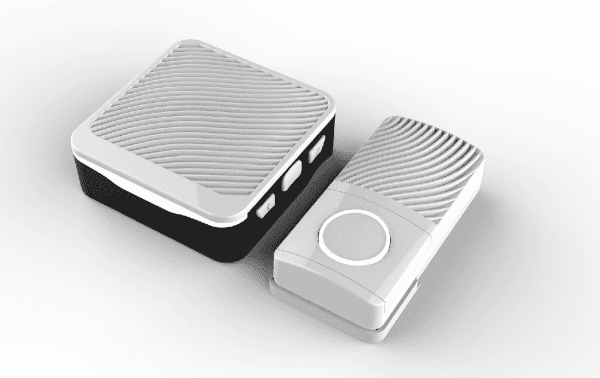
Scattered early ideas get organized into a clear concept structure with key functions, selling points, and an initial form for discussion. This is clarification, not industrial design.
What you get:
- A more structured concept direction
- Clearer communication of core ideas
- A concept foundation that’s easier to review and refine
Initial structural logic and manufacturing feasibility thinking
Structural logic, internal layout, manufacturing route, material paths, assembly approach, and cost implications get evaluated while the concept is still fluid. The alternative happens much later and costs significantly more.
What you get:
- Early structure input
- Initial manufacturability considerations
- Fewer major design changes when the project moves into engineering and detailed design


Early risk identification
We identify potential risk points while the project is still at the concept stage. That includes structural execution, safety issues, cost control, assembly difficulty, supply chain feasibility, and production stability. The goal is to surface risks while adjustment is still cheap.
What you get:
- Earlier visibility into possible issues
- Clearer development constraints
- Better preparation for Prototyping und validation

From Ideation to Production
Ideation isn’t a standalone consulting engagement. It’s the first stage in Yijin Solution’s full new product development process. Everything built here carries forward.
Concept development (you are here)
Define the product concept, validate feasibility, and build a clear direction ready for engineering.
Produktdesign
Translate the validated concept into a complete, manufacturable product definition. CAD models, engineering drawings, material specifications, and assembly documentation.
Entwicklung von Prototypen
Build functional prototypes that answer specific engineering and production questions, including snap-fit durability, assembly time, and seal integrity.
Testing and validation
Prove the product meets performance requirements, regulatory standards, and can be manufactured consistently.
Produktion
Scale from validated design to consistent, repeatable manufacturing. Tooling, supply chain qualification, pilot runs, and ramp to volume.
The engineering context built during ideation carries forward through every stage. No re-briefing, no lost knowledge, no translation gaps between vendors.
Fallstudien
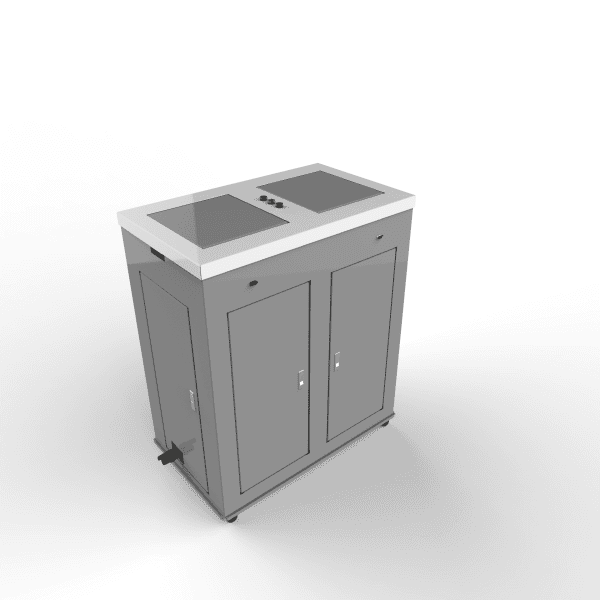
A consumer electronics team had a working circuit design but no enclosure, no manufacturing plan, and a retail launch deadline. Yijin Solution developed the product housing through three rapid prototype iterations. We resolved an antenna interference issue caused by the original enclosure geometry. We designed the injection mold tooling and managed the production ramp to volume. The product met its retail launch deadline and moved into stable volume production.
An Internet of Things (IoT) startup needed to integrate sensor modules, motorized sorting mechanisms, and a user interface into one consumer-facing enclosure. The critical challenge was designing the sorting mechanism to survive 50,000+ cycles while keeping unit cost within the target range. The ultimate design met both the cycle life requirement and the client’s unit cost target.
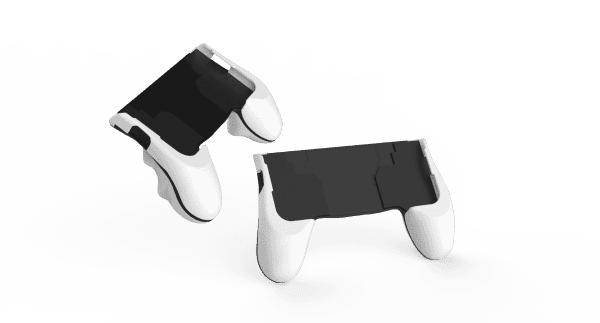
A gaming accessories company needed a controller built for ergonomic comfort during extended use. Tactile button feedback had to match console-grade controllers. The project required precision tooling for tight-tolerance button assemblies and a snap-fit housing without fasteners. The controller entered production with consistent button feel and zero-fastener assembly.
A VR hardware company needed a handheld device with embedded sensors, haptic feedback motors, and a rechargeable battery. The housing had to feel realistic while meeting consumer electronics safety standards across multiple markets. The device passed multi-market safety certification and moved into volume production.
Why Yijin Solution for Ideation
Yijin Solution is a manufacturing-first product development partner, not an industrial design consultancy. Four things make that distinction matter at the ideation stage.

Most design consultancies bring manufacturing thinking in after the concept is formed. Yijin Solution brings it in during concept formation.

Early concept decisions are made with downstream execution in mind. Material selection and cost structure are considered alongside the product direction, not after it.

Fewer disconnects between concept, design, prototyping, validation, and production. One team, one engineering context, one development path.

Problems surfaced at the concept stage cost a fraction of what they cost after tooling is committed or production has started.
Get a Free Consultation
Whether your project is coming from a completed product design stage or you have a design that is ready for physical prototyping, the next step is a conversation. Tell us about your product’s current state and what it needs. You can also explore our full new product development services to see how each stage connects.


Telefon

Chat on Whatsapp
Ideation & Concept Development Services FAQs
Yes. The ideation stage is designed for exactly this. You need a clear enough description of what the product should do, who it’s for, and any known constraints. If all you have is a problem you want to solve and a rough sense of the product, that’s a valid starting point.
You get a validated concept direction and a preliminary feasibility analysis covering manufacturing approach and estimated cost range. These outputs give you a clear basis for deciding whether to proceed into product design.
Ideation defines what you’re building and confirms it’s viable. Product design defines how it gets built. The ideation stage produces a concept direction, feasibility assessment, and development roadmap. The design stage produces CAD models, engineering drawings, material specifications, and assembly documentation.
We work alongside your team as a development partner, not as passive consultants who hand over a report. Involvement may include market and user direction analysis, concept structuring, feasibility assessment, risk identification, and development planning. The level of involvement scales to what the project needs.
Yes. Our new product development services cover the full path: ideation, design, prototype development, testing and validation, and production. Most clients continue through the full cycle because the engineering context built during ideation carries forward.
This is precisely the right time. The biggest cost-saving decisions in product development happen during concept and early design. We bring manufacturing engineers into the conversation at the ideation stage. That’s when their input has the highest leverage.
From Idea to Production
You do not need a finished design to start. If you already have an idea, a product goal, or a rough concept, we can help shape it into a clearer starting point for development.