

Metallpulverspritzguss und Druckgießen erzeugen beide komplexe Metallteile in hoher Stückzahl, gelten aber für nahezu völlig unterschiedliche konstruktive Situationen. Die Legierung, die das Teil erfordert, seine Größe und Geometrie sowie das jährliche Produktionsvolumen sind die drei Faktoren, die bestimmen, welches Verfahren für ein gegebenes Programm passt.
Dieser Vergleich behandelt Toleranzen, Kostenstrukturen, Materialgrenzen, Volumenschwellen und Designbeschränkungen für beide Verfahren. Zu verstehen, wo jedes Verfahren seine Kosten- und Leistungsvorteile bietet, hilft Ingenieuren und Einkaufsteams, Werkzeuginvestitionen nicht in die falsche Richtung zu lenken.
Metallpulverspritzguss vs. Druckguss: Auf einen Blick
Metallpulverspritzguss eignet sich für kleine, komplexe Teile unter etwa 100 g aus Eisenlegierungen oder Titan bei Stückzahlen über etwa 5.000 Einheiten pro Jahr.
Druckguss eignet sich für Aluminium, Zink und Magnesium Teile mit ähnlichen Stückzahlschwellen, bei denen Bauteilgröße oder Legierung die Komponente außerhalb des praktikablen Bereichs von MIM platzieren.
| Attribut | Metallpulverspritzguss | Druckgießen |
|---|---|---|
| Verfahrensart | Pulvermetallurgie: Metallpulver plus Bindemittel, spritzgegossen, entbindert, gesintert | Hochdruckguss: flüssige Nichteisenlegierung wird in eine gehärtete Stahlform gespritzt |
| Typische Toleranzen | ±0,3 bis 0,5 % der Maßtoleranz im Sinterzustand; ±0,05 mm mit nachträglicher CNC-Bearbeitung | ±0,1 bis 0,3 mm im Gusszustand; ±0,05 mm mit Nachbearbeitung |
| Oberflächengüte | Ra 0,4 bis 1,6 µm im Sinterzustand bei geeigneten Teilen | Ra 1,6 bis 3,2 µm im Gusszustand; variiert je nach Legierung und Formzustand |
| Werkzeugkosten | Mittel bis hoch: MIM-Form sowie Rüsten für Entbinderung und Sintern | Hoch: gehärteter Stahl als Form, höher bei Schiebern und komplexer Geometrie |
| Stückkosten bei Serie | Wettbewerbsfähig ab 5.000 bis 10.000 Stück für kleine Teile | Günstigerer Stückpreis ab 5.000 bis 20.000 Stück bei Nichteisenmetallen |
| Ideale Produktionsmenge | 5.000 bis 500.000+ Stück pro Jahr | 5.000 bis 500.000+ Stück pro Serie |
| Lieferzeit, Werkzeuge plus erste Teile | 10 bis 20 Wochen, inklusive Werkzeug, Entbindern und Sinteriteration | 8 bis 16 Wochen inklusive Werkzeugerprobung und thermischer Validierung |
| Materialien | Edelstähle, Werkzeugstähle, Titan, Kobalt-Chrom, Kupferlegierungen | Aluminium, Zink, Magnesium, begrenzt Kupferlegierungen |
| Gewichtsbereich der Teile | Typisch 0,1 bis 100 g; die meisten Teile unter 50 g | 30 g bis 10+ kg |
| Dichte und Porosität | 96 bis 99,8 % theoretische Dichte; minimale Restporosität | 85 bis 95 % Dichte typisch beim HPDC; Gasporosität häufig |
| Nachbearbeitung erforderlich? | Selten für die Geometrie; manchmal für kritische Passflächen | Üblich für eng tolerierte Merkmale, Gewinde, Dichtflächen |
| Konstruktionskomplexität | Hoch: interne Kanäle, Hinterschneidungen, feine Oberflächendetails realisierbar | Hoch für Außengeometrie; Hinterschnitte erfordern Schieberkerne mit zusätzlichen Werkzeugkosten |
| Am besten für | Kleine, komplexe Bauteile aus Eisen oder Titan bei mittlerer bis hoher Stückzahl | Mittelgroße bis große, dünnwandige NE-Metall-Teile in hoher Stückzahl |
Was ist Metall-Spritzgießen?
Metallpulverspritzguss kombiniert feine Metallpulver, typischerweise mit einer Partikelgröße von 2 bis 15 µm, mit einem thermoplastischen oder Wachs-Bindemittel zu einem Feedstock, der wie Kunststoff spritzgegossen wird. Für Edelstahl liegen die Sintertemperaturen bei etwa 1.200 bis 1.400 °C. Während des Sinterns schrumpft das Teil um etwa 15 bis 20 %. Die endgültige Dichte und Maßhaltigkeit hängen von der Konsistenz des Feedstocks, der Gleichmäßigkeit der Bindemittelentfernung, der Sinteratmosphäre und der Teilegeometrie ab.
MIM erzeugt kleine bis mittlere Teile, typischerweise 0,1 bis 100 g, mit komplexer Geometrie aus Eisen- und Sonderlegierungen, bei Stückzahlen ab etwa 5.000 Einheiten pro Jahr. Komponenten für chirurgische Instrumente, Einspritzgehäuse und Satellitenkomponenten sind typische Ergebnisse.
Das Verfahren bietet hervorragende Designfreiheit für komplexe Geometrien, eine starke Oberfläche im Sinterzustand und Zugang zu Materialien wie 17-4 PH Edelstahl und Ti-6Al-4V, die im Druckguss nicht verarbeitet werden können.
Eine Investition in MIM-Werkzeuge ist unter etwa 5.000 Stück pro Jahr wirtschaftlich nicht gerechtfertigt. Die Sinterschwindung erfordert Präzision Formdesign. Für größere Teile oder Nichteisenlegierungen bietet der Druckguss eine bessere Wirtschaftlichkeit und sollte zuerst bewertet werden.
Was ist Druckguss?
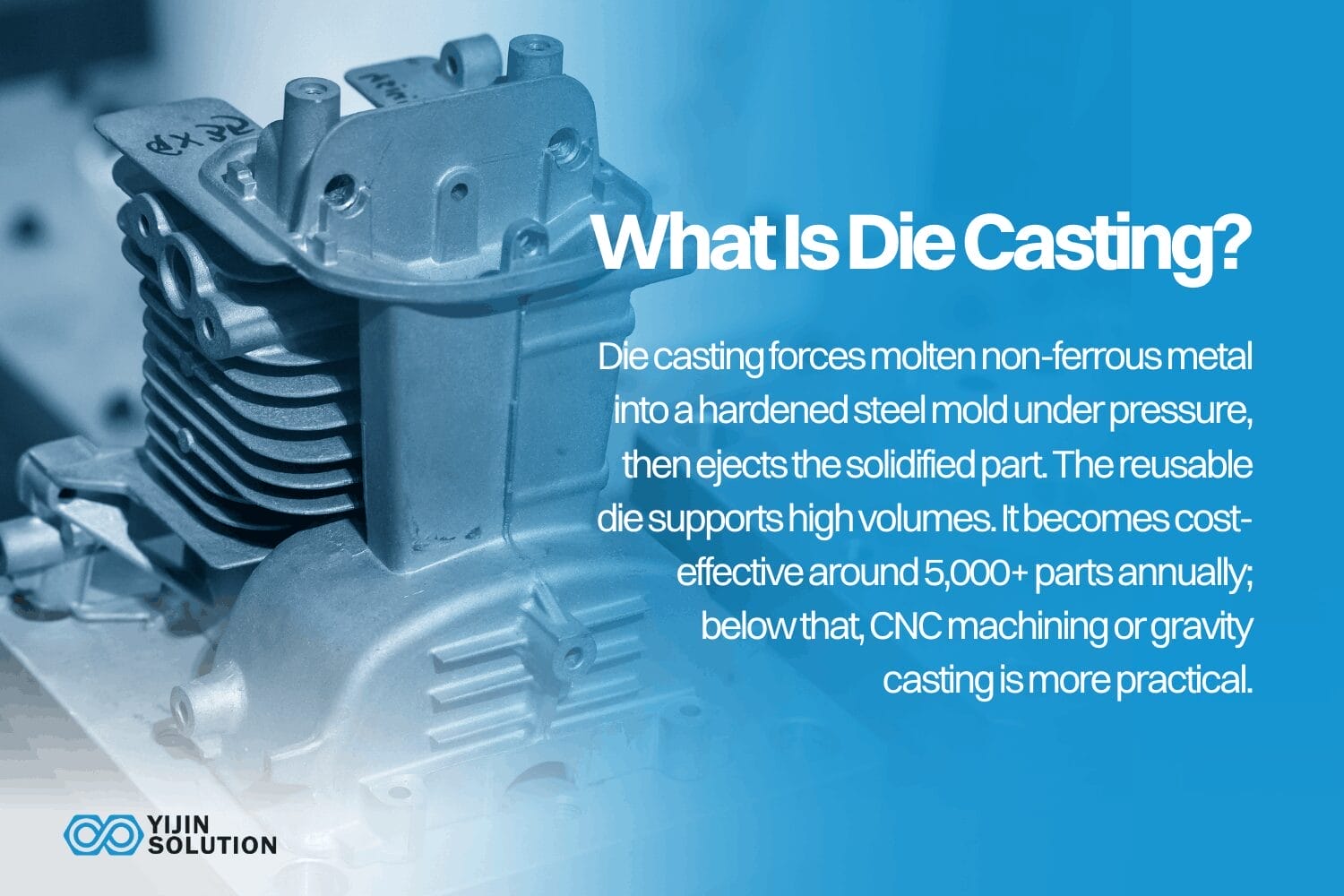
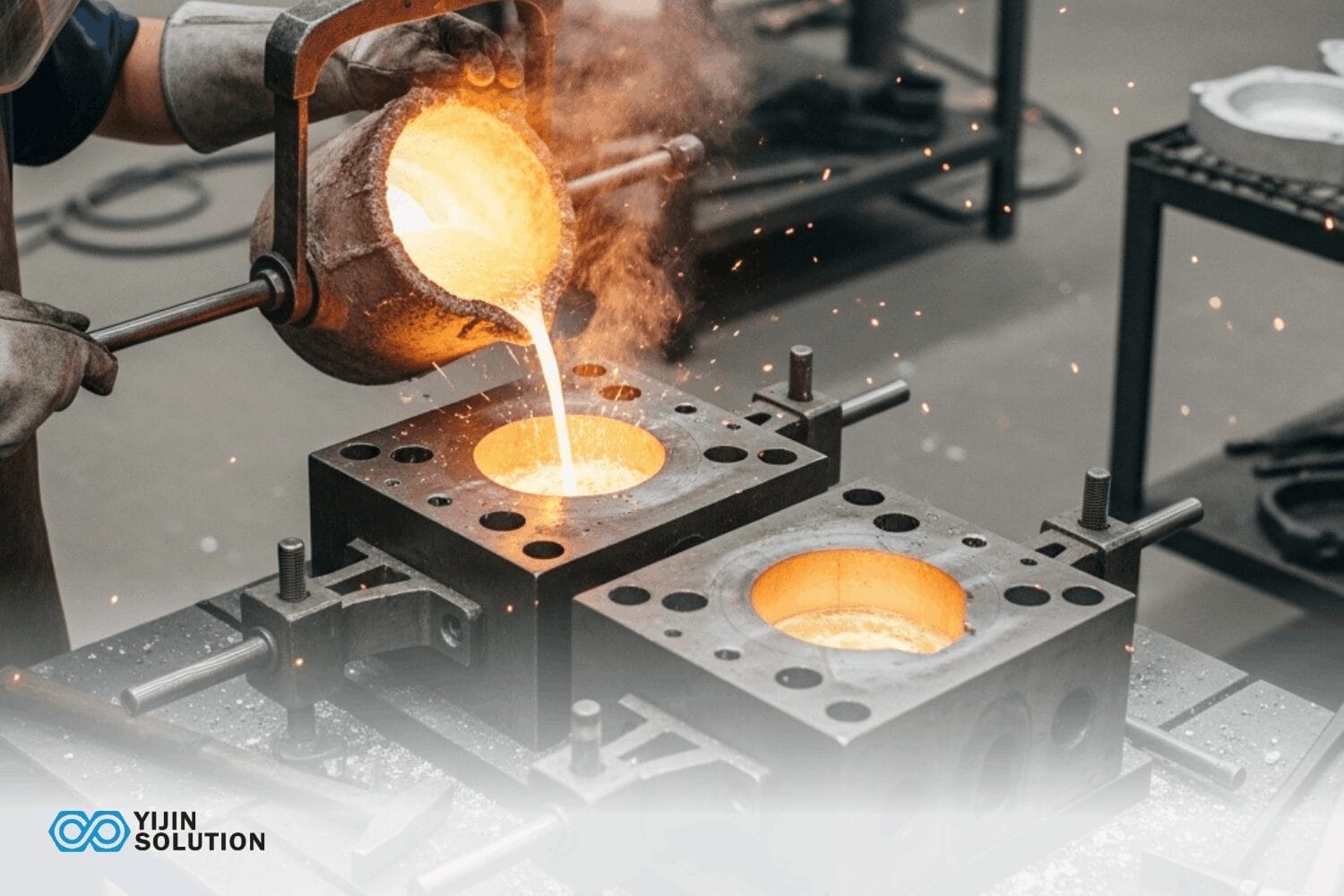
Beim Hochdruckguss (HPDC) wird geschmolzene Nichteisenlegierung mit Drücken von 10 bis 175 MPa und Einspritzgeschwindigkeiten von 30 bis 100 m/s in eine gehärtete Stahlform gepresst. Das geschmolzene Metall füllt den Formhohlraum in Millisekunden, erstarrt unter Druck und wird als endkonturnahes Teil ausgeworfen. Die Zykluszeiten liegen je nach Teilegröße und Legierung zwischen 15 Sekunden und mehreren Minuten.
Die Prozessphysik erklärt sowohl die Stärke als auch die Einschränkung: Hochgeschwindigkeitsinjektion erzeugt einen außergewöhnlichen Durchsatz und die Fähigkeit zu dünnen Wänden, schließt aber auch Gas während des Füllens ein. Diese Gaseinschlüsse erzeugen Mikroporosität, die die Wärmebehandelbarkeit und die Ermüdungsfestigkeit des fertigen Teils einschränkt.
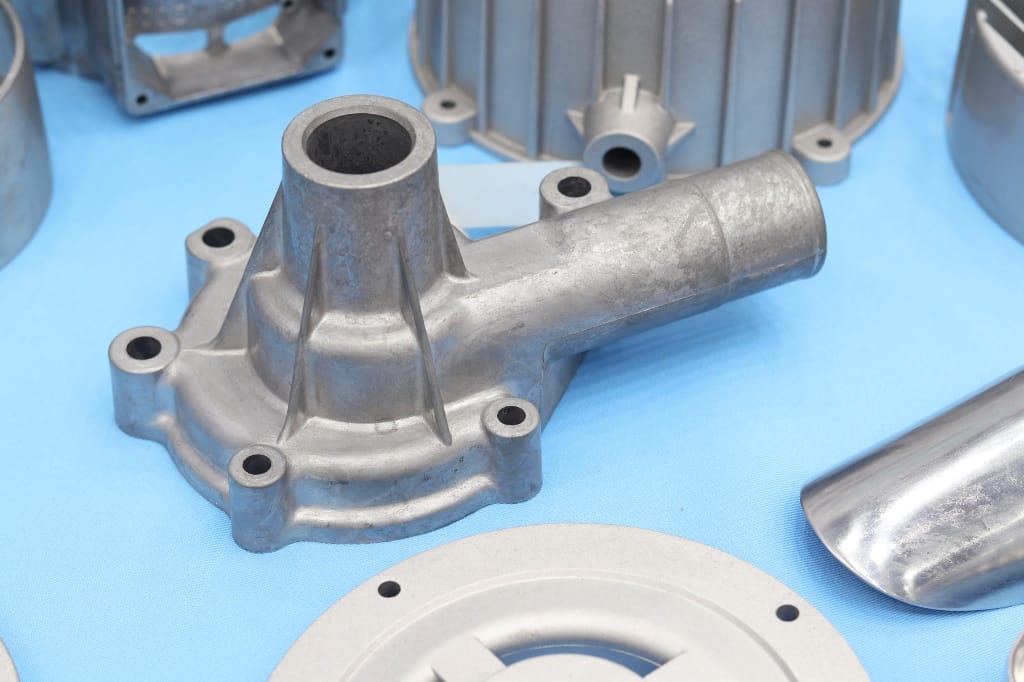
Das Druckgießen erzeugt Aluminium-, Zink- und Magnesiumbauteile im mittleren bis großen Größenbereich, typischerweise für Stückzahlen von 5.000 bis über 500.000 Einheiten. Automobil-Getriebegehäuse, Gehäuse für Unterhaltungselektronik und industrielle Pumpenkörper sind Standardanwendungen.
Das Druckgießen bietet kurze Zykluszeiten, hervorragende Leistung bei dünnen Wänden und niedrige Stückkosten bei hohen Stückzahlen. Zu den Einschränkungen gehören die Beschränkung auf Nichteisenlegierungen, die HPDC-Porosität, die eine Wärmebehandlung einschränkt, hohe Werkzeugkosten für Kleinserien und Hinterschnitte, die Seitenkerne zu zusätzlichen Werkzeugkosten erfordern.
Die wichtigsten Unterschiede zwischen Metallpulverspritzguss und Druckguss

Kostenvergleich
Die MIM-Werkzeugkosten variieren stark je nach Bauteilkomplexität, aber Formen für serientaugliche MIM-Teile liegen typischerweise zwischen einigen tausend Dollar für einfachere Geometrien und 15.000 $ oder mehr für Mehrfachformen mit komplexen Merkmalen. Druckgusswerkzeuge sind in der Regel teurer, da gehärtete Stahlformen der Injektion von geschmolzenem Metall unter hohem Druck standhalten müssen. Einfache Druckgussformen beginnen in einem ähnlichen Bereich, aber komplexe Formen mit Schiebekernen und thermischen Managementkanälen können 30.000 bis 50.000 $ überschreiten.
Die Stückkosten verschieben sich bei hohen Stückzahlen. Bei kleinen, komplexen Bauteilen aus Eisenwerkstoffen unter etwa 50 g wird MIM ab einer Jahresstückzahl von 5.000 bis 10.000 Einheiten wirtschaftlich. Darunter, CNC-Bearbeitung ist fast immer günstiger. Druckguss erreicht seinen Stückkostenvorteil für Nichteisenmetallteile in einem ähnlichen Volumenbereich, etwa 5.000 bis 20.000 Stück, aber die Stückkosteneinsparungen skalieren bei größeren Aluminium- oder Zinkbauteilen schneller, da der Prozess das Entbindern und Sintern vollständig überspringt.
Der Break-even hängt von Teilgröße, Legierung und Komplexität ab. Bei einem 20 g schweren Edelstahlbauteil mit feinen Innenmerkmalen unterbietet MIM bei 10.000 Stück pro Jahr die CNC-Bearbeitung deutlich. Bei einem 500 g schweren Aluminiumgehäuse liefert Druckguss bei 10.000 Stück die niedrigsten Stückkosten aller verfügbaren Verfahren. Ein direkter Kostenvergleich zwischen MIM und Druckguss ist nur sinnvoll, wenn Legierung und Geometrie des Teils im Überschneidungsbereich liegen: kleine Nichteisen-Teile im Bereich von 10 bis 50 g.
Toleranz- und Oberflächengüte-Kapazitäten
MIM erreicht Toleranzen im gesinterten Zustand von etwa ±0,3 bis 0,5 % des Nennmaßes. Bei einem 10 mm großen Merkmal entspricht das ±0,03 bis 0,05 mm. Engere Toleranzen, die bei bestimmten Merkmalen bis zu ±0,05 mm erreichen, sind bei einfachen Teilen mit gleichmäßigem Querschnitt und streng kontrollierten Sinterprofilen machbar. Die Variablen, die MIM-Toleranzen beeinflussen, sind Partikelgrößenverteilung des Ausgangsmaterials, Bindemittelverhältnis, Gleichmäßigkeit der Bindemittelentfernung, Sintertemperatur und -atmosphäre sowie unterschiedliche Schwindung bei Teilen mit variierender Wandstärke.
Druckguss erreicht Gussrohtoleranzen von ±0,1 bis 0,3 mm bei den meisten Merkmalen. Engere Werte, die sich ±0,1 mm annähern, erfordern eine enge Prozesskontrolle und regelmäßige Formeninspektion, um thermische Drift und Formenverschleiß über Serien hinweg zu berücksichtigen. Die Faktoren, die die Druckgusstoleranz bestimmen, umfassen Formtemperatur beim Einspritzen, Schussdruck und Einspritzgeschwindigkeit, Angussdesign, Formenentlüftung und fortschreitenden Formenverschleiß.
Beide Verfahren erzielen im Fertigungszustand akzeptable Oberflächen. MIM erreicht Ra 0,4 bis 1,6 µm bei geeigneten Teilen, während Druckguss im Gusszustand Ra 1,6 bis 3,2 µm erzeugt. Baugruppen, die ±0,02 mm auf einer Dichtfläche erfordern, benötigen unabhängig vom Gussverfahren eine nachträgliche CNC-Bearbeitung. Nachträglich Bearbeitungsaufwand sollte ab der Konstruktionsphase in das Kostenmodell des Prozesses einfließen.
Produktionsvolumen
Weder MIM noch Druckguss sind bei Prototypenstückzahlen wirtschaftlich. Für Erstmuster und Designvalidierung bleibt die CNC-Bearbeitung der praktische Weg. Die MIM-Werkzeugherstellung dauert 10 bis 20 Wochen, und die Entbinderungs- und Sinteriteration fügt Zeit hinzu, die Prototypenzeitpläne selten zulassen. Die Druckguss-Werkzeugerprobung und thermische Validierung dauern 8 bis 16 Wochen.
Der optimale Bereich für MIM liegt bei 5.000 bis 500.000+ kleinen, komplexen Teilen pro Jahr. Bei diesen Stückzahlen amortisiert sich die Werkzeugausstattung gut, und das endkonturnahe Verfahren eliminiert den größten Teil der Nachbearbeitung. Der optimale Bereich für Druckguss ist auf der Stückzahlachse ähnlich, unterscheidet sich jedoch auf der Bauteilgrößenachse: mittlere bis große Nichteisenmetallteile, 50 g bis 10+ kg, bei 5.000 bis 500.000+ Stück pro Serie. Der Überschneidungsbereich, in dem beide Verfahren wirtschaftlich konkurrieren, beschränkt sich auf kleine Nichteisenmetallteile im Bereich von 10 bis 50 g bei Stückzahlen über 10.000.
Vorlaufzeit
Die MIM-Lieferzeit gliedert sich in zwei Phasen. Werkzeug- und Prozessentwicklung, einschließlich Formenbau, Feedstock-Qualifizierung, Entbinderungsversuchen und Sinteriteration, dauern 10 bis 20 Wochen. Die Lieferzeit nach Werkzeugfreigabe hängt von der Losgröße und der Sinterkapazität ab, wobei typische Serien in 3 bis 6 Wochen versandt werden.
Die Lieferzeit beim Druckguss teilt sich ebenfalls in Werkzeugbau und Fertigung auf. Werkzeugherstellung und Erprobung, einschließlich thermischer Validierung und Maßqualifizierung, dauern 8 bis 16 Wochen. Die Fertigungszyklen sind pro Teil schneller, oft 30 Sekunden bis einige Minuten pro Schuss, sodass die Lieferzeiten beim Druckguss nach Freigabe des Werkzeugs in der Regel kürzer sind als bei MIM.
Wenn Erstmuster in weniger als 8 Wochen benötigt werden, ist keines der beiden Verfahren ohne vorherige Investition in Werkzeuge realisierbar. CNC-Bearbeitung schließt diese Lücke für eisenhaltige und nicht eisenhaltige Prototypen.
Konstruktionskomplexität und geometrische Machbarkeit
Für kleine Teile liefert MIM mehr geometrische Komplexität pro Werkzeugkosten als der Druckguss. Das Verfahren erzeugt interne Kanäle, Hinterschnitte, dünne Wandstärken bis 0,5 mm und feine Oberflächendetails ohne Schieber oder zusätzliche Arbeitsgänge, die beim Druckguss Kosten verursachen. Das Teilegewicht ist die Hauptbeschränkung: MIM ist bis etwa 100 g praktikabel, wobei die meisten Serienteile unter 50 g liegen. Darüber wird die gleichmäßige Kontrolle von Bindemittelentfernung und Sinterungsschwund schwieriger.
Der Druckguss bewältigt größere Teile, von 50 g bis deutlich über 10 kg, und erzeugt dünne Wandstärken bis hinunter zu etwa 0,75 bis 1,5 mm bei Aluminium. Die Außengeometrie kann komplex sein, aber Hinterschnitte erfordern Schieber, die die Formkosten um 2.000 bis 8.000 US-Dollar oder mehr pro Schieber erhöhen. Die Innengeometrie ist durch die Notwendigkeit von Kernstiften eingeschränkt, die nach der Erstarrung entnommen werden können.
Für einen 15 g schweren Edelstahl-Halter mit drei internen Kanälen fertigt MIM das Teil in einem Schritt. Das entsprechende Teil im Druckguss würde eine andere Legierung, mindestens zwei Schieberkerne und eine Nachbearbeitung der internen Merkmale erfordern.
Materialoptionen
Dies ist die entscheidende Grenze zwischen den beiden Verfahren. MIM verarbeitet Eisenlegierungen: Edelstähle wie 316L und 17-4 PH, niedriglegierte Stähle, Werkzeugstähle, Titanlegierungen einschließlich Ti-6Al-4V, Kobalt-Chrom und Kupferlegierungen. Druckguss ist auf Nichteisenmetalle beschränkt: Aluminiumlegierungen wie A380 und ADC12, Zinklegierungen, Magnesium und eine kleine Auswahl an Kupferlegierungen.
Eisenlegierungen und Titan sind nicht druckgießbar. Dies ist eine Einschränkung der Prozessphysik, keine Fähigkeitslücke, die ein Lieferant umgehen kann. Die Schmelzpunkte übersteigen das, was Druckgussformen überstehen können. Eine chirurgische Komponente aus 17-4 PH Edelstahl schließt Druckguss bereits in der Konstruktionsphase aus. Umgekehrt bietet Druckguss für Aluminium- und Zinkteile schnellere Zykluszeiten und niedrigere Stückkosten als MIM bei gleicher Geometrie.
Festigkeit und mechanische Eigenschaften
MIM-Teile erreichen bei ordnungsgemäßer Sinterung 96 bis 99,8 % der theoretischen Dichte. Bei diesen Dichtewerten nähern sich die mechanischen Eigenschaften denen von Schmiedewerkstoffen an. MPIF Standard 35 bietet die Referenzdaten für die Materialeigenschaften von MIM über Edelstähle, niedriglegierte Stähle und Titanlegierungen hinweg. Die Enddichte hängt von der Partikelgrößenverteilung des Pulvers, der Vollständigkeit des Bindemittelausbrands, der Sintertemperatur und -atmosphäre sowie der Haltezeit ab. Teile mit unterschiedlicher Wandstärke können ungleichmäßig sintern, was zu lokalen Dichteschwankungen führt.
HPDC-Teile erreichen in der Regel 85 bis 95 % der theoretischen Dichte. Die Lücke entsteht durch Gasporosität, die beim Hochgeschwindigkeits-Einspritzen entsteht. Diese Porosität hat Folgen: Sie begrenzt die Dauerfestigkeit und verhindert im Standard-HPDC eine konventionelle Wärmebehandlung, weil eingeschlossenes Gas sich beim Erhitzen ausdehnt und die Oberfläche aufbläht. Vakuumunterstütztes Druckgießen reduziert die Porosität deutlich, erhöht jedoch Prozesskosten und Komplexität. Das Porositätsniveau hängt von Einspritzgeschwindigkeit, Angussgestaltung, Entlüftung, Formtemperatur und Legierungsauswahl ab.
Für strukturelle Bauteile, die zyklischen Belastungen ausgesetzt sind oder Ermüdungstests erfordern, ist die nahezu volle Dichte von MIM ein bedeutender Vorteil. HPDC-Gussteile in strukturellen Luft- und Raumfahrt- oder Automobilanwendungen setzen zunehmend auf Vakuumunterstützung, um diese Porositätslücke zu verringern.
Wie Sie zwischen Metallpulverspritzguss und Druckguss wählen
Wählen Sie Metallpulverspritzguss, wenn …
- Ihr Teil ist klein, unter 100 g, mit hoher geometrischer Komplexität einschließlich Innenkonturen, Hinterschneidungen oder feinen Details.
- Die Legierungsspezifikation ist eisenhaltig: Edelstahl, Werkzeugstahl oder Titan. Der Druckguss kann diese Materialien nicht verarbeiten.
- Ihre Anwendung erfordert strukturelle Integrität mit minimaler Porosität, ohne die Einschränkungen, die durch den Gaseinschluss beim HPDC entstehen.
- Das Produktionsvolumen übersteigt etwa 5.000 bis 10.000 Stück pro Jahr und rechtfertigt MIM-Werkzeuge und das Rüsten zum Sintern.
- Die Oberflächenbeschaffenheit ist im gefertigten Zustand spezifikationskritisch. MIM erreicht Ra 0,4 bis 1,6 µm bei qualifizierten Teilen unter kontrollierten Bedingungen.
Wählen Sie Druckguss, wenn …
- Ihre Legierung ist Aluminium, Zink oder Magnesium. Das sind die Kernwerkstoffe des Druckgusses.
- Ihr Teil ist mittelgroß bis groß, typischerweise 50 g bis 10 kg, mit dünnen Wänden und äußerer Komplexität.
- Die Stückzahl liegt bei etwa 5.000 bis 20.000 Einheiten pro Serie und die Stückkosten sind der entscheidende Faktor.
- Eine Wärmebehandlung ist für die Anwendung nicht erforderlich. Die übliche Porosität beim HPDC verhindert eine konventionelle Lösungsglühung.
- Die Anwendung ist Automobilbau, Unterhaltungselektronik oder Industrieausrüstung, wo das Gewicht und die thermischen Eigenschaften von Aluminium gefordert sind.
Wann beides sinnvoll ist: hybride Ansätze
In vielen Baugruppen tragen beide Verfahren bei. MIM übernimmt kleine, präzise eisenhaltige Komponenten wie Verriegelungsmechanismen, Zahnradsätze oder Sensorgehäuse. Druckguss produziert die größeren Nichteisen-Gehäuse, Halter und Strukturrahmen, in die sie montiert werden. Die beiden Verfahren adressieren unterschiedliche Teile derselben Stückliste.
Ein hybrider Workflow beginnt mit der DFM-Analyse für jedes Bauteil, durchläuft die Prozessplanung und koordiniert die Gussproduktion mit der nachgelagerten CNC-Bearbeitung von Passflächen und Gewindemerkmalen, um den Toleranzstapel über die Baugruppe hinweg zu kontrollieren.
In vielen Projekten hängt der richtige Prozess davon ab, welcher Teil der Stückliste gerade geprüft wird. Yijin Solution fertigt Präzisionsbauteile mit beiden Verfahren Metallpulverspritzguss und Druckguss-Dienstleistungen als Direktlieferant ab Werk, mit einer kostenlosen DFM-Analyse vor jeder Werkzeugverpflichtung. Unsere Ingenieure bewerten Legierung, Geometrie und Stückzahl, um das richtige Verfahren zu empfehlen, bevor der erste Euro in Werkzeuge investiert wird.
Laden Sie Ihre CAD-Datei für eine kostenlose Prüfung und Empfehlung innerhalb von 24 Stunden hoch.
Fragen und Antworten zu Metallpulverspritzguss vs. Druckguss
Ist Metallspritzguss günstiger als Druckguss?
Für kleine Eisenmetallteile unter 50 g unterbietet MIM die CNC-Bearbeitung typischerweise deutlich ab 5.000 bis 10.000 Stück pro Jahr. Für Nichteisenmetallteile liefert Druckguss in vergleichbaren Stückzahlen in der Regel 20 bis 30 % niedrigere Stückkosten, da Entbinderung und Sintern entfallen. Wenn das Teil aus Edelstahl oder Titan ist, ist Druckguss bei keiner Stückzahl und keinem Preisniveau eine verfügbare Option.
Können MIM und Druckguss in derselben Baugruppe kombiniert werden?
Ja. In vielen Baugruppen fertigt MIM kleine, präzise Eisenbauteile wie Verriegelungsstifte, Zahnräder oder Sensorhalter, während Druckguss die größeren Aluminium- oder Zinkgehäuse herstellt, in die sie montiert werden. Eine DFM-Analyse, die prozessübergreifende Baugruppen abdeckt, koordiniert die Fertigung über beide Verfahren, um den Toleranzstapel zwischen Paarungsteilen zu kontrollieren.
Welches Verfahren liefert die ersten Teile schneller?
Druckguss ist in der Regel schneller bei den ersten Teilen. Formenherstellung und Erprobung dauern 8 bis 16 Wochen, verglichen mit 10 bis 20 Wochen bei MIM, was Formenherstellung, Feedstock-Qualifizierung und Sinteriteration umfasst. Für echtes Prototyping ist keiner der beiden Prozesse schnell. CNC-Bearbeitung produziert erste Teile in 1 bis 3 Wochen für Eisen- und Nichteisenlegierungen und bleibt der Standardweg für die Designvalidierung.
Welche Toleranzen kann ich mit MIM im Vergleich zum Druckguss erreichen?
MIM erreicht im gesinterten Zustand Toleranzen von etwa ±0,3 bis 0,5 % des Nennmaßes. Druckguss erreicht ±0,1 bis 0,3 mm im Gusszustand. Beide Verfahren können bei bestimmten Merkmalen durch nachträgliche CNC-Bearbeitung engere Werte erreichen. Der erreichbare Grenzwert hängt von der Bauteilgeometrie, der Gleichmäßigkeit der Wandstärke und dem Material ab: Die Variabilität der Sinterschwindung bei MIM und die thermische Drift beim Druckguss treiben die Ergebnisse bei komplexen Geometrien beide zum weiteren Ende.
Was ist das maximale Teilegewicht für MIM?
MIM ist für Teile bis etwa 100 g praktikabel, wobei die meisten Serienteile unter 50 g wiegen. Größere Teile stoßen bei der Gleichmäßigkeit der Bindemittelentfernung und der Kontrolle des Sinterungsschwunds zunehmend an Grenzen. Über 100 g kann eine ungleichmäßige Bindemittelentfernung Restkohlenstoff hinterlassen, der die Materialeigenschaften beeinträchtigt, und unterschiedlicher Schwund über dicke Querschnitte wird schwerer vorherzusagen. Für Teile über dieser Schwelle sind Druckguss oder CNC-Bearbeitung die geeigneteren Verfahren.
Zurück zum Anfang: Metall-Spritzgießen vs. Druckgießen: Was ist das Richtige für Ihre Anwendung?




 English
  Spanish
  German
  French