Aufregende Neuigkeiten! Yijin Hardware wird umbenannt in Yijin Solution. Read more →

No Drawings? No Problem. From concept to production, our designers and engineers handle everything in between. Explore Our New Services

Large Format 3D Printing Capabilities

These specifications apply across our large format printers. Specific build volume, accuracy, and lead time depend on process, material, and part geometry. Engineering review is available on request.

Merkmal Beschreibung
Maximales Bauvolumen Up to 3' × 2' × 3' (914 × 610 × 914 mm) polymer; up to 228 mm metal via DMLS
MaĂźgenauigkeit ±0.1% of nominal, minimum ±0.2 mm; layer heights 0.025 to 0.8 mm
Oberflächenbehandlung 100 to 600 μm Ra depending on process and layer height
Vorlaufzeit Prototypes 2–7 days; custom production runs 4–14 days

Large Format 3D Printing Materials

We stock and print thermoplastics, high-performance polymers, photopolymer resins, and metal alloys across FDM, SLA, and DMLS systems. Material selection follows the part’s mechanical load, build volume, surface finish target, and budget.

Engineering Thermoplastics

Typ Common Materialien
Standard and Durable PLA, ABS, PETG, HDPE
Engineering Grade Nylon, PC, PC-ABS
TypCommon Materialien
High-TemperaturePEEK, ULTEM (PEI)
CompositeCarbon and glass fiber-reinforced blends

TypCommon Klassen
General and ToughGeneral purpose, tough, flexible
SpezialitätHeat-resistant, ceramic-filled, biocompatible

TypCommon Klassen
Aluminium6061, 7075
Stainless and Superalloy316L, 17-4 PH, Inconel, titanium, tool steel

Welche Materialien können für den großformatigen 3D-Druck verwendet werden?

Large Format 3D Printing Finishes

We apply post-processing in-house to control quality and lead time. Each finish below improves surface appearance, mechanical properties, or dimensional accuracy of the printed part.

Oberflächenbehandlung

SPEZIFIKATION

As-Printed Large Format Part

As-Printed

Parts ship straight off the machine with visible layer lines and support removal marks. Standard finish for functional prototypes, jigs, and fixtures where appearance is secondary. Surface finish 150 to 600 ÎĽm Ra depending on process.

Sanding a Large Format 3D Printed Part

Sanding and Media Blasting

Manual sanding or bead blasting smooths layer lines and support witness marks. Default prep step before painting or vapor smoothing on FDM and SLA parts.

Vapor Smoothed 3D Printed Part

Vapor Smoothing

Solvent vapor melts the outer layer of ABS and nylon parts to seal the surface and remove visible layer lines. Improves water resistance and cosmetic appearance without adding significant dimension.

Painting a Large Format 3D Printed Part

Painting and Priming

Primer plus color topcoat for cosmetic prototypes, display models, and consumer-facing parts. Color matched to RAL or Pantone references on request.

Dyed Nylon 3D Printed Parts

Dyeing (Nylon Parts)

Immersion dyeing colors porous nylon and MJF parts throughout the material, not just the surface, so scuffs and light machining do not expose a different base color.

Metal Post-Processing for 3D Printed Parts

Metal Post-Processing

DMLS metal parts receive stress relief heat treatment, bead blasting, and CNC machining of critical mating features and tolerances that additive alone cannot hold.

Types of Large Format 3D Printing We Offer

We run large format printing under one roof across polymer and metal platforms plus in-house finishing. Below are the main process variants and the scenarios each is suited for.

Large Format FDM 3D Printing

Large Format FDM

Fused deposition modeling extrudes thermoplastic filament layer by layer on a large-format gantry. Handles PLA, ABS, PETG, and Nylon at build volumes up to 3' x 2' x 3'. Layer heights 0.1 to 0.8 mm.

Large Format SLA 3D Printing

Large Format SLA

Stereolithography cures liquid photopolymer resin with UV light layer by layer. Delivers fine feature resolution down to 0.1 mm and a smooth surface, at build volumes up to 1.5' x 1' x 1.5'.

Large Format DMLS Metal 3D Printing

Large Format DMLS

Direct metal laser sintering fuses metal powder layer by layer into functional metal parts in aluminum, stainless steel, titanium, and Inconel. Build volume to 228 mm per side, followed by stress relief and machining.

Applications of Large Format 3D Printing

Luft- und Raumfahrt

Ducting, brackets, tooling, and low-volume structural parts in engineering plastics and titanium. Rapid iteration cuts design-to-test cycles ahead of certification testing.

Automobilindustrie

Full-size fixtures, jigs, dashboard mockups, and functional prototypes. Large format printing replaces machined tooling for low-volume validation builds.

Bauwesen

Architectural models, formwork, and large-scale prototypes for building components. Cuts tooling cost on one-off and short-run construction hardware.

Entertainment

Themed environment props, display models, and large-scale set pieces. Extended build volumes print full-size components without seams or assembly.

Verteidigung

Field-deployable fixtures, replacement parts, and prototype housings in engineering plastics and metal alloys. Rapid turnaround supports mission-specific, low-volume builds.

Herstellung

Jigs, fixtures, gauges, and tooling aids printed in-house to support production lines without machining lead time.

Medizinische Geräte

Anatomical models, surgical guides, and device housings in biocompatible resins and engineering plastics for validation and low-volume production.

Architektur

Full-scale design mockups, furniture prototypes, and lighting fixtures. Extended build volumes print complex geometries in one piece.

KonsumgĂĽter

Large housings, enclosures, and display prototypes for product development, reducing tooling investment before committing to injection molding.

Yijin Solution Large Format 3D Printing Factory

Yijin Solution operates a 25,000+ m² manufacturing facility in Shenzhen, China. The additive manufacturing cell runs large-format FDM, SLA, and DMLS metal systems alongside 281 inspection instruments including CMMs and optical comparators, so printed parts move through printing, post-processing, and inspection without leaving the facility.

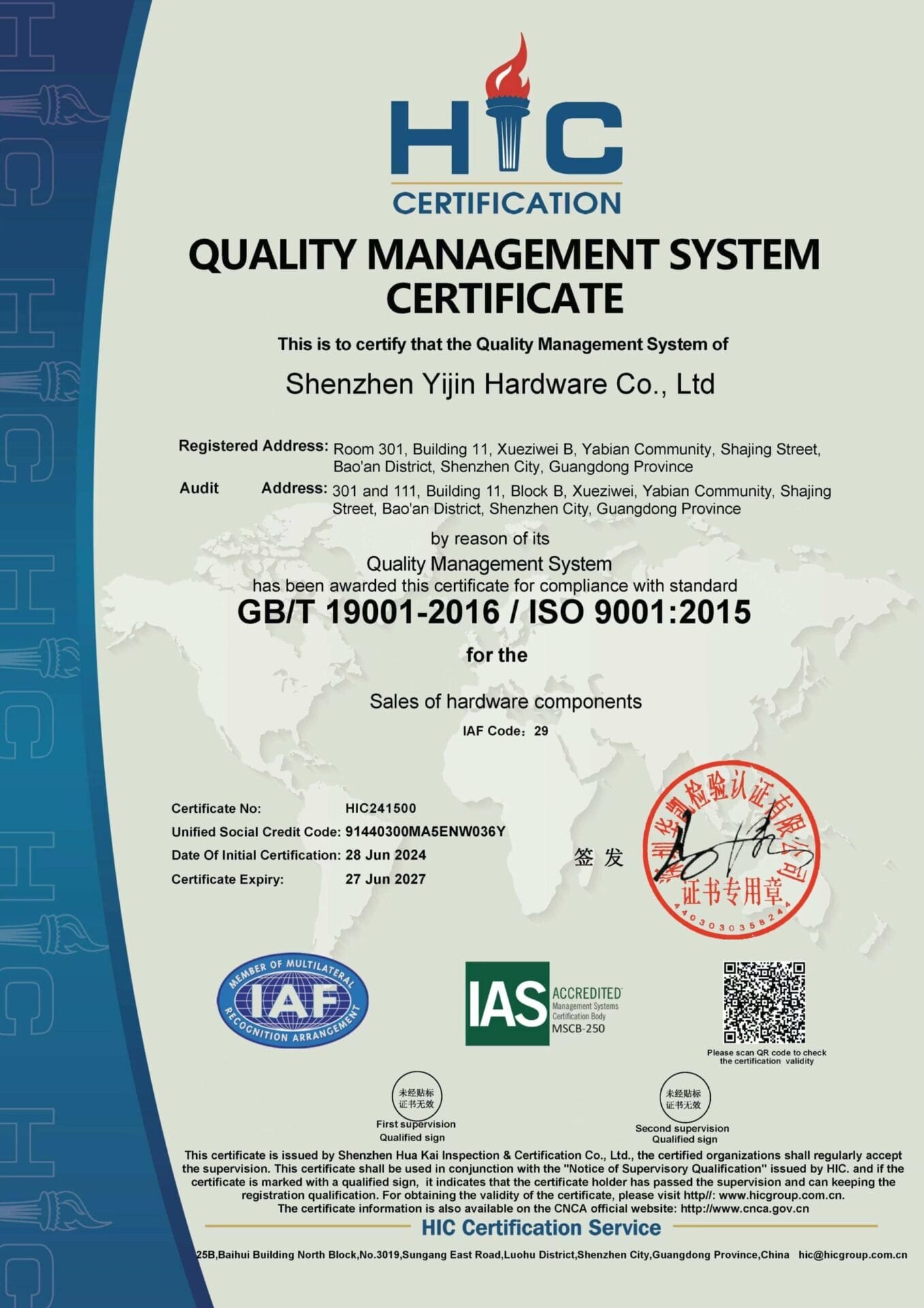
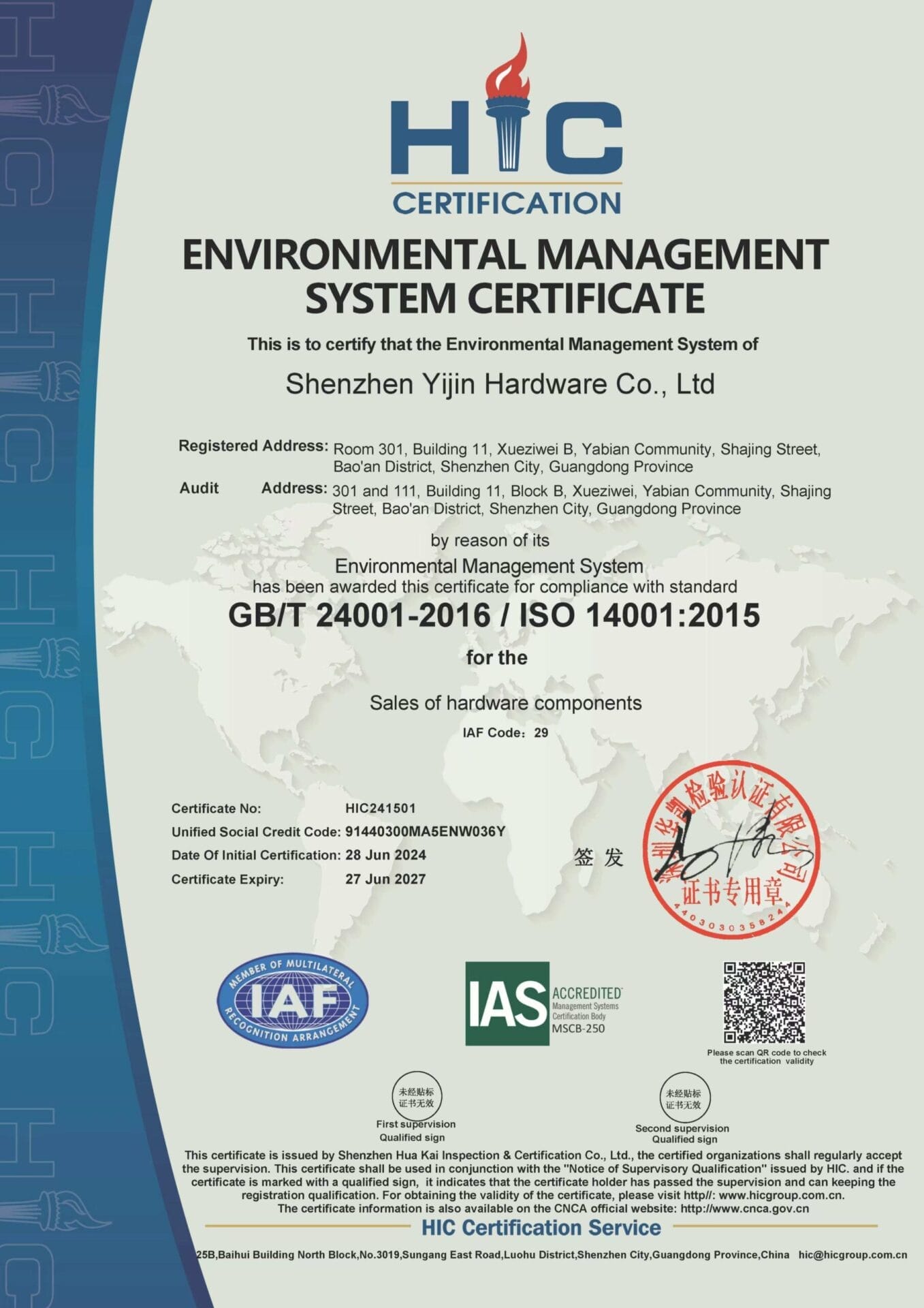
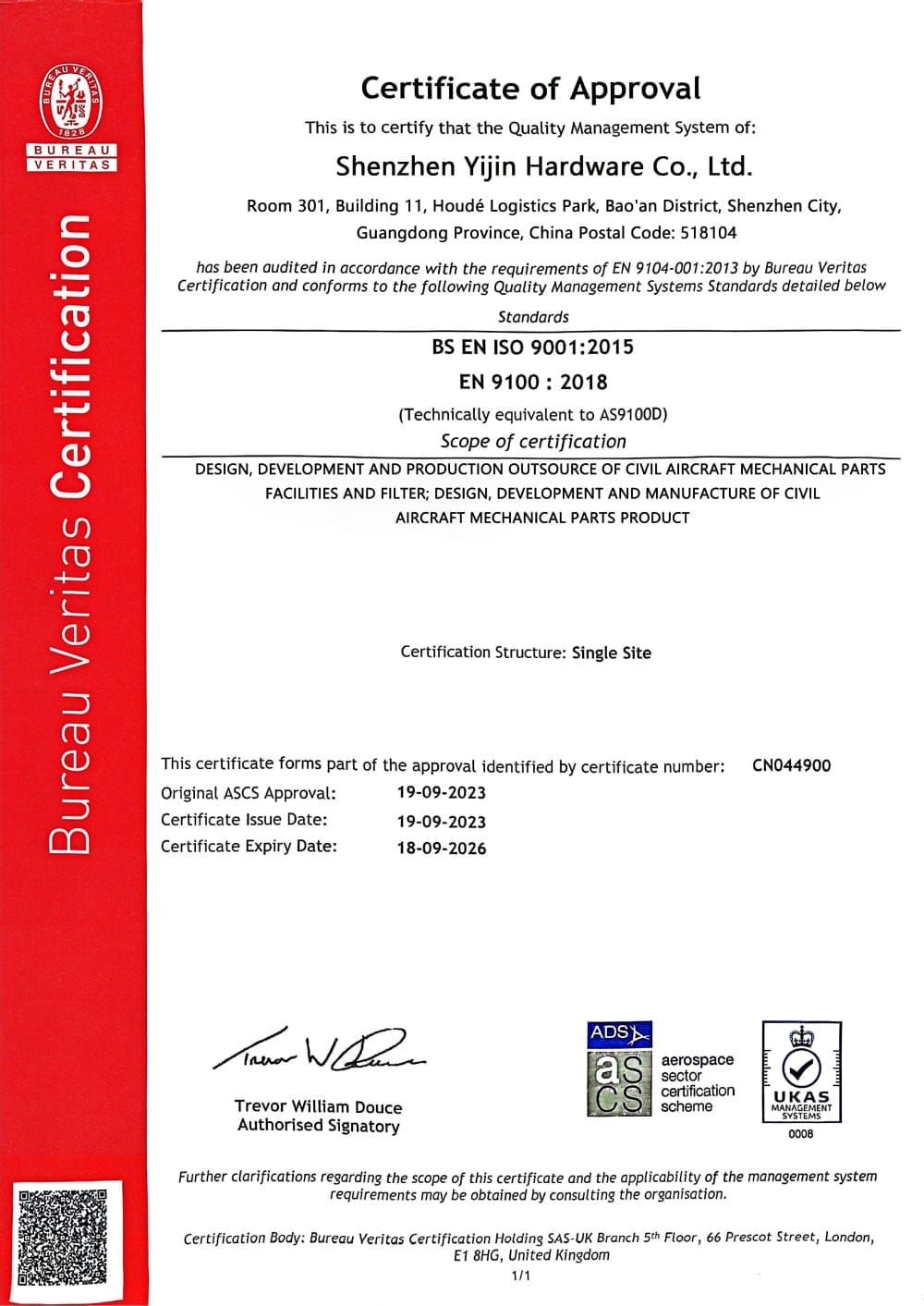
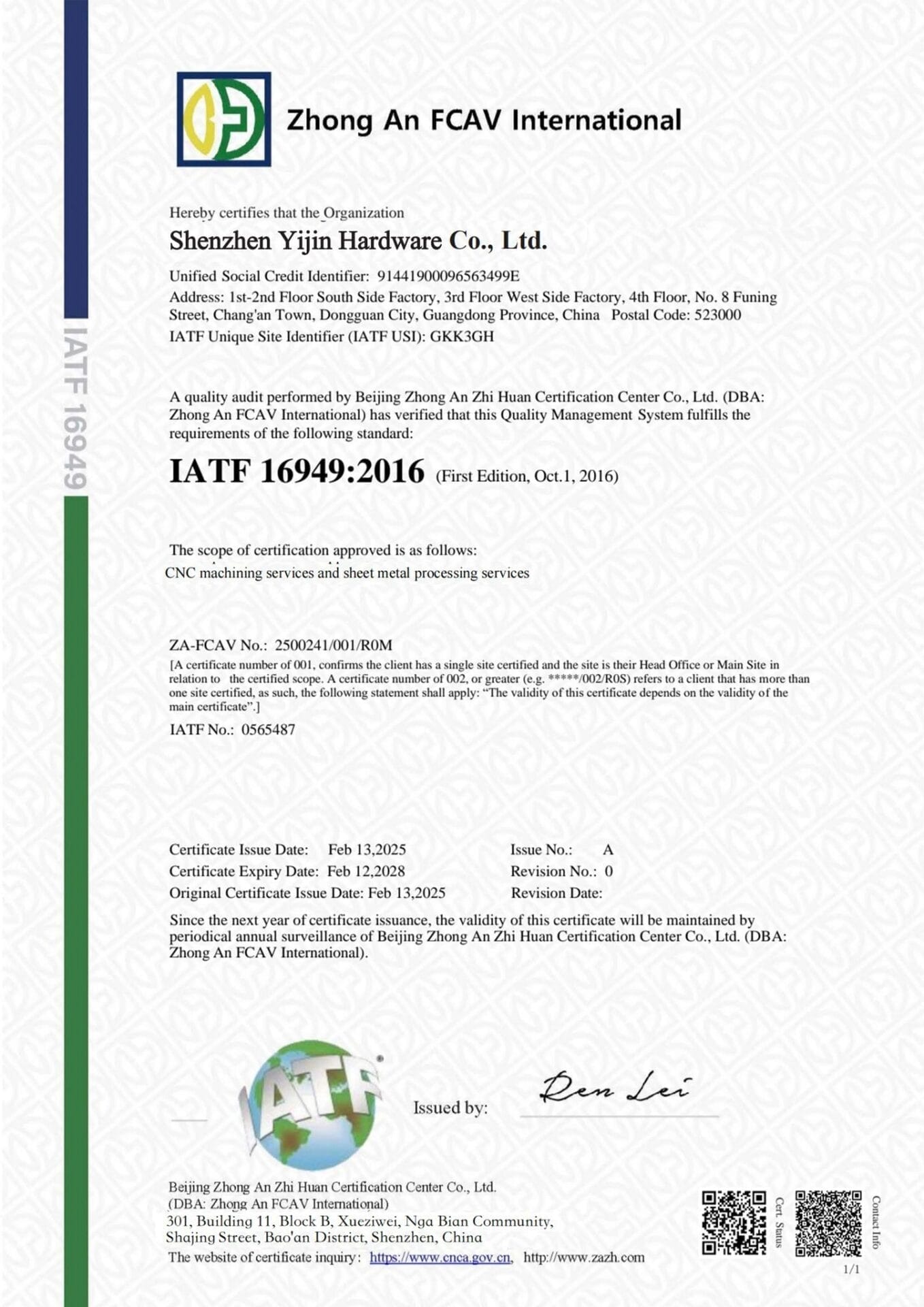
We serve clients across North America, Europe, and Asia-Pacific. Every order ships with dimensional inspection reports and material documentation, and production runs under ISO 9001, ISO 14001, and ISO 13485 quality management systems.

Unsere Zertifizierungen

What's Large Format 3D Printing

Large format 3D printing builds parts too big for a standard printer’s chamber, using machines with extended-travel gantries or delta frames. The additive process is the same, whether FDM, SLA, or DMLS, it just runs on a larger machine.

It covers plastics and metals in one facility, from PLA and nylon prototypes to DMLS titanium and stainless steel parts, so a single supplier can print a full-size enclosure or a small functional metal bracket without switching suppliers.

What Is Large Format 3D Printing
How Large Format 3D Printing Works

How Large Format 3D Printing Works

Large format 3D printing follows four steps from a digital design to a finished part.

  1. Design to slicing. Slicing software converts your 3D CAD model into layers and toolpaths, setting wall thickness, infill, and support structures for the part’s geometry.
  2. Setup. The operator loads filament, resin, or metal powder, heats the build chamber or bed where the process requires it, and homes the gantry or delta motion system.
  3. Building. The machine extrudes, cures, or sinters material layer by layer, one cross-section at a time, until the part reaches full height.
  4. Post-processing and inspection. The operator removes supports, applies any specified finish such as vapor smoothing or heat treatment, and verifies critical dimensions before shipping.

A typical prototype cycle takes 2 to 7 days. Custom production runs take 4 to 14 days.

Why Choose Yijin Solution for Large Format 3D Printing

We control every step of large format 3D printing from slicing through printing, post-processing, and inspection. That vertical integration means shorter lead times, consistent part quality, and direct factory pricing without broker margins.

precision and quality
Präzision und Qualität

CMMs and optical comparators verify every critical build. Parts hold ±0.1% dimensional accuracy, minimum ±0.2 mm. Inspection reports and material documentation standard on production runs.

fast turnaround
Schneller Turnaround

Prototypes ship in 2 to 7 business days and custom production in 4 to 14 days. In-house post-processing keeps parts moving without supplier handoffs.

order any size
Order Any Size

Single prototypes and short-run production go through the same printers and the same inspection standards. No minimum order quantity. Volume does not change quality gates.

prototyping to production
Prototyping to Production

Your prototype and production parts come off the same large format printers with the same slicing profiles. No re-qualification and no process variation when you scale up.

wide range materials
Material Breadth

Thermoplastics, high-performance polymers, photopolymer resins, and metal alloys in one facility. Every metal order ships with material documentation and traceability.

cost effective
KostengĂĽnstig

Direct factory pricing without broker margins. Our engineering team reviews your file before printing to find orientation and support changes that cut material use and cost.

FAQs About Large Format 3D Printing

Common questions about large format 3D printing processes, materials, and our production system.

Large format 3D printing uses the same additive processes as standard printers, just scaled up to a bigger build chamber.

Standard desktop and industrial printers typically cap build volume near 300 x 300 x 300 mm. Large format machines extend that to 3′ x 2′ x 3′ in polymer and up to 228 mm per side in metal via DMLS, so a single print produces a full-size part instead of splitting it into sections and bonding them.

The trade-off is print time and cost per build. Larger chambers take longer to heat, print, and cool, so large format runs suit parts that genuinely need one-piece scale, not every project.

Process choice should match part geometry, material requirement, and surface finish target.

Large format FDM is the cost leader for functional prototypes, jigs, and fixtures in PLA, ABS, PETG, and nylon. Layer heights 0.1 to 0.8 mm keep cost and print time down.

Large format SLA suits parts needing fine feature resolution and a smooth surface, down to 0.1 mm detail, in photopolymer resins.

Large format DMLS is required when the part must be a functional metal component in aluminum, stainless steel, titanium, or Inconel rather than a plastic stand-in.

Our engineering team can recommend the right process during the DFM review.

Large format 3D printing covers thermoplastics, high-performance polymers, photopolymer resins, and metal alloys.

Thermoplastics (PLA, ABS, PETG, HDPE, Nylon, PC, PC-ABS) cover most functional prototypes and tooling.

High-performance polymers (PEEK, ULTEM) and fiber-reinforced composites handle elevated temperature and structural load.

Photopolymer resins (general purpose, tough, flexible, heat-resistant, ceramic-filled, biocompatible) suit fine-detail and cosmetic parts.

Metal alloys (aluminum 6061 and 7075, stainless steel 316L and 17-4 PH, titanium, Inconel, tool steel) print through DMLS for functional metal parts.

Accuracy depends on process, layer height, and whether the part is post-machined.

Dimensional accuracy holds ±0.1% of nominal, minimum ±0.2 mm, across FDM, SLA, and DMLS platforms. Layer heights range 0.025 to 0.8 mm depending on process and speed setting.

Surface finish ranges from 600 ÎĽm Ra (fast FDM roughing layers) down to 100 ÎĽm Ra (fine SLA layers). Vapor smoothing or media blasting improves finish further on FDM and MJF parts.

Flag critical dimensions on your file so they can be reviewed for the right process and layer height before printing starts.

Yes. Direct metal laser sintering (DMLS) fuses metal powder layer by layer to build functional metal parts, not just plastic prototypes.

Our DMLS systems handle aluminum 6061 and 7075, stainless steel 316L and 17-4 PH, titanium, Inconel, and tool steel, at build volumes up to 228 mm per side.

Metal prints require stress relief heat treatment and CNC machining of critical mating features and tolerances that additive alone cannot hold, so plan for a short post-processing step after the print finishes.

Our polymer printers cap build volume at 3′ x 2′ x 3′ (914 x 610 x 914 mm) on FDM systems and 1.5′ x 1′ x 1.5′ on SLA systems. Larger parts can be split and bonded if the application allows.

Metal parts through DMLS cap at 228 mm per side due to the smaller, tightly controlled build chamber metal sintering requires.

Parts near the maximum envelope should be reviewed during the DFM stage for warping risk and support strategy.

Cost depends on part volume, material, process, and post-processing, so pricing is quoted per file rather than per hour.

Large format FDM in standard thermoplastics is the lowest cost per part. SLA resin and DMLS metal cost more due to material price and required post-processing.

Upload your STEP, STL, or IGES file for a DFM review and instant quote. There is no minimum order, so single prototypes and short production runs are quoted the same way.

Most production parts get at least one post-processing step after printing.

Sanding and media blasting smooth layer lines on FDM and SLA parts before painting or vapor smoothing.

Vapor smoothing seals the surface of ABS and nylon parts and removes visible layer lines.

Dyeing colors nylon and MJF parts throughout the material rather than just the surface.

Metal DMLS parts receive stress relief heat treatment, bead blasting, and CNC machining of critical features.

Decide on finish requirements during the DFM review since some finishes affect achievable tolerance.

Large parts are more prone to warping, bed adhesion loss, and long print times than small ones, so we control these upfront rather than after a failed build.

Warping is managed with heated build chambers up to 200 °C, controlled cooling rates, and part orientation planned during the DFM review.

Bed adhesion uses heated beds, adhesion aids, and brim or raft structures sized to the part’s footprint.

Long print times on large parts are reduced by choosing the coarsest layer height the application allows and by running multiple parts in one build where geometry permits.

Large format 3D printing wins on part count and complex one-piece geometry. CNC machining wins on tolerance, surface finish, and wrought material strength.

Choose large format 3D printing when the part is large, complex, or needed as a single prototype or short run, and plastic or additive metal properties meet the application.

Choose CNC machining when tolerance below ±0.1 mm is required, or the material must be a wrought grade whose mechanical properties differ from the printable version.

Many programs use hybrid manufacturing: 3D print the full-size enclosure, then CNC mill the critical mating features. Our engineering team can recommend the right split during DFM review.

Large Format 3D Printing Guides

Beginnen Sie noch heute. Teile schnell herstellen lassen.

Free Machined Parts Design to Your Projects with Reduced Lead Times Times.

Laden Sie Ihre 2D-Zeichnungen und mindestens eine 3D-CAD-Datei hoch, um ein schnelleres und genaueres Angebot zu erhalten. Wenn Sie mehrere Dateien haben, komprimieren Sie diese bitte in ein .zip- oder .rar-Format. Bevorzugen Sie E-Mail? Senden Sie Ihr RFQ an info@yijinsolution.com.

Dateien ziehen und ablegen,, Dateien zum Hochladen auswählen Du kannst bis zu 15 Dateien hochladen.
Kontrollkästchen
Dateien ziehen und ablegen,, Dateien zum Hochladen auswählen Du kannst bis zu 15 Dateien hochladen.
1 / 2 DIENSTLEISTUNG

Angebot anfordern

Laden Sie Ihre Konstruktionsdateien hoch, um ein schnelles Angebot, genaue Lieferzeiten und eine kostenlose DFM-Analyse zu erhalten.

Kontrollkästchen
Dateien ziehen und ablegen,, Dateien zum Hochladen auswählen Du kannst bis zu 15 Dateien hochladen.

Bitte fügen Sie Ihre 2D-CAD-Zeichnungen und 3D-CAD-Modelle in jedem Format bei, einschließlich STEP, IGES, DWG, PDF, STL usw. Wenn Sie mehrere Dateien haben, komprimieren Sie diese in ein ZIP- oder RAR-Format. Alternativ können Sie Ihre Anfrage auch per E-Mail senden an info@yijinsolution.com.