
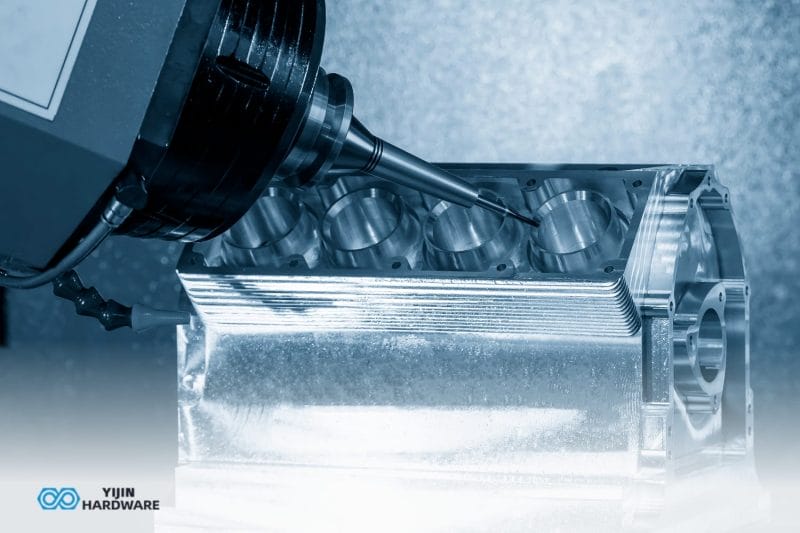
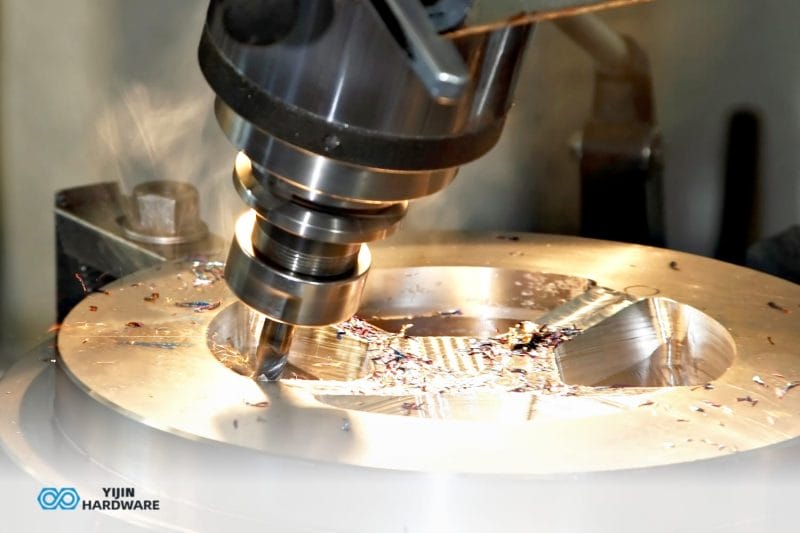


The reliability and performance of aerospace equipment directly depend on the machining accuracy and stability of core components. Yijin Solution is a key carrier of aerospace structural components, so we know the processing level of precision sheet metal has become a key factor restricting breakthroughs in aerospace engineering. Compared to civilian sheet metal, aerospace-grade processing requires breakthroughs in extreme environmental adaptability, dimensional accuracy, and mechanical properties.
This white paper systematically outlines the technical requirements, solutions, and innovative directions for aerospace-grade precision sheet metal processing through typical case studies, providing practical references for the industry.
What are the Core Technical Requirements for Aerospace-grade Precision Sheet Metal Processing?
| Category | Summary |
|---|---|
| Precision Control | Aerospace sheet metal parts require ultra-tight tolerances and flatness ≤0.02 mm/m², achieved through closed-loop processing and high-precision inspection tools. |
| Material Adaptation | Titanium, aluminum, and high-temperature alloys are used, requiring solutions for forming difficulty, rebound, and welding cracks. |
| Process Standard | Parts must be defect-free, with weld strength ≥90% of the base material and surfaces meeting anti-oxidation and Ra ≤ 0.8 μm standards. |
Precision Control
Aerospace sheet metal parts must maintain dimensional tolerances within ±0.05 mm, with key components (such as docking interfaces) requiring accuracy of ±0.01 mm and flatness errors of ≤0.02 mm/m². This requires a closed-loop “processing-inspection-correction” process, using equipment such as coordinate measuring machines (with 0.001 mm accuracy) and laser interferometers for real-time monitoring.
Material Adaptation
Mainstream materials include titanium alloy (TC4, resistant to -196℃~600℃, compressive strength ≥800MPa), high-strength aluminum alloy (2A12, lightweight and corrosion-resistant), and high-temperature alloy (GH4169, resistant to high temperatures above 800℃). Problems such as difficulty in material forming, such as low elastic modulus and easy rebound of titanium alloy, and easy cracking during welding need to be solved.
Process Standard
Cracks, pores and other defects are prohibited, and the weld strength must reach more than 90% of the base material (such as stir friction welding); the surface treatment must meet the requirements of anti-oxidation (such as anodizing) and low roughness (Ra≤0.8μm) to ensure the stable operation of the spacecraft in the space environment.


Analysis of Typical Application Cases
Case 1: Low-orbit Satellite Bearing Frame Processing
Demand pain points: The frame needs to achieve the dual goals of “lightweight + high strength” (weight ≤ 5 kg, compressive strength ≥ 750MPa), and must be compatible with multi-component docking, with hole coaxiality error ≤ 0.03 mm.
Solution:
- The material used is TC4 titanium alloy sheet (thickness 2-3 mm), and complex contour cutting is achieved through laser cutting (accuracy ±0.05 mm);
- Use CNC bending machine (angle accuracy ±0.1°) to form in steps, and fix with special fixture after each process to avoid springback;
- The key docking holes are drilled using a five-axis machining center (hole tolerance H7), and the internal quality is tested by ultrasonic testing;
- The welding adopts stir friction welding technology to reduce thermal deformation, and vibration aging is used to eliminate stress after welding.
Implementation effect: The frame weighs 4.8 kg, the hole coaxiality is 0.02 mm, and after mechanical testing, it can withstand 1.5 times the design load, meeting the requirements of satellite launch and on-orbit operation.
Case 2: Launch Vehicle Engine Cabin Processing
Pain points: The cabin must withstand the high temperature (above 600 °C) and high pressure (1.2MPa) during engine operation. The weld sealing requirements require a leakage rate of ≤1×10⁻⁹ Pa・m³/s and an overall roundness error of ≤0.1 mm/m.
Solution:
- The material used is GH4169 high-temperature alloy (thickness 4-5 mm), and incremental forming technology is used (the deformation of each pass is controlled within 5%) to achieve cylindrical surface forming and avoid material cracking;
- The longitudinal seam is welded using electron beam welding (operated in a vacuum environment, with a weld depth-to-width ratio of 8:1), and defects are detected by X-ray inspection after welding;
- The flanges at both ends of the cabin are processed by CNC lathe machining to ensure coaxiality with the cabin;
- The sealing test uses a helium mass spectrometer leak detector to conduct a comprehensive inspection of the welds and flange interfaces.
Implementation results : The cabin roundness error is 0.08 mm/m, the leakage rate is 5×10⁻¹⁰ Pa・m³/s, and there is no deformation after 10 thermal cycle tests (-50℃~600℃), meeting the requirements for rocket launch.
Case 3: Spacecraft Antenna Reflector Processing
Demand pain points: The reflective surface needs to achieve ultra-high surface accuracy (flatness ≤ 0.02 mm/m²) to ensure signal reception efficiency, and must have anti-space radiation performance, with a surface roughness Ra ≤ 0.4μm.
Solution:
- The material is 2A12 aluminum alloy sheet (thickness 1.5 mm), using precision stretching technology (stretching speed 5 mm/min, temperature 200℃), and customized molds to control the forming accuracy;
- After forming, shot peening (shot diameter 0.1 mm) is used to increase surface hardness (HV ≥ 120) and reduce on-track deformation;
- The surface treatment adopts hard anodizing (film thickness 15-20μm), and the flatness is detected by laser interferometer;
- The edges are joined to the base material by laser welding and then ground smooth with a precision grinding wheel.
Implementation effect: The flatness of the reflecting surface is 0.018 mm/m², the surface roughness Ra=0.3μm, and the signal reception efficiency is improved by 15% compared with traditional processes, meeting the requirements of deep space exploration missions.
What are Key Technology Breakthroughs and Innovations in Aerospace Precision Sheet Metal?
Innovation in precision molding technology
We have achieved breakthroughs in the “low-stress forming” technology for difficult-to-process materials such as titanium alloys and high-temperature alloys. By optimizing forming parameters (such as temperature and deformation rate) through finite element simulation, we have reduced springback errors and increased the forming accuracy of complex structural parts by 20%.
Special welding process application
The large-scale application of technologies such as stir friction welding and electron beam welding has solved the problems of large thermal deformation and unstable weld quality in traditional arc welding, and increased the welding qualification rate of aerospace sheet metal parts from 85% to 99.5%.
Digital detection closed loop
By building a digital system of “processing-inspection-data feedback-process correction”, and combining digital twin technology to simulate the processing process, errors can be predicted in advance, thereby increasing the first-piece qualification rate of products to over 90% and shortening the R&D cycle by 30%.
What does the Future Hold For Aerospace-grade Precision Sheet Metal?
In the future, we will promote AI-assisted process planning (such as optimizing bending paths based on machine learning) and flexible production lines (to adapt to the needs of small batches of multiple varieties), while accelerating the domestic substitution of high-end equipment (such as high-precision CNC bending machines) and materials (such as domestically produced GH4169) to reduce dependence on foreign countries.
Deep space exploration (such as Mars exploration) places higher demands on sheet metal parts, such as low-temperature tolerance of -200 °C and strong radiation protection, requiring the development of new composite materials (such as metal-based ceramic coatings) and processing technologies; in addition, the batch demand of commercial aerospace also requires balancing “precision” and “cost” and promoting process standardization.
Final Thoughts
Aerospace-grade precision sheet metal processing is a critical step in aerospace engineering, from design to implementation. Its technological breakthroughs directly support the leapfrog development of my country’s aerospace industry. In the future, through a combination of technological innovation and industrial collaboration, we will continuously improve processing accuracy, material compatibility, and intelligent capabilities. This will provide more reliable core components for satellites, rockets, deep space probes, and other equipment, helping my country advance from a “space power” to a “space superpower.”
Back to Top: Aerospace-Grade Precision Sheet Metal Processing Case White Paper






 English
  Spanish
  German
  French