
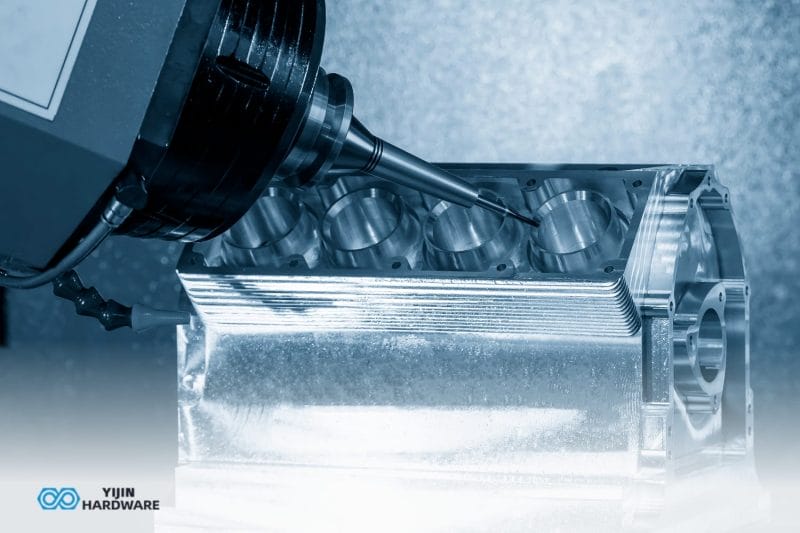
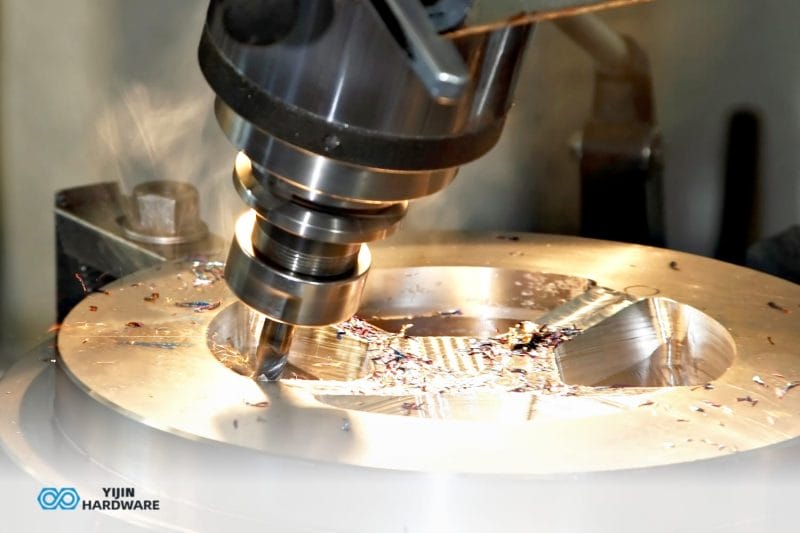

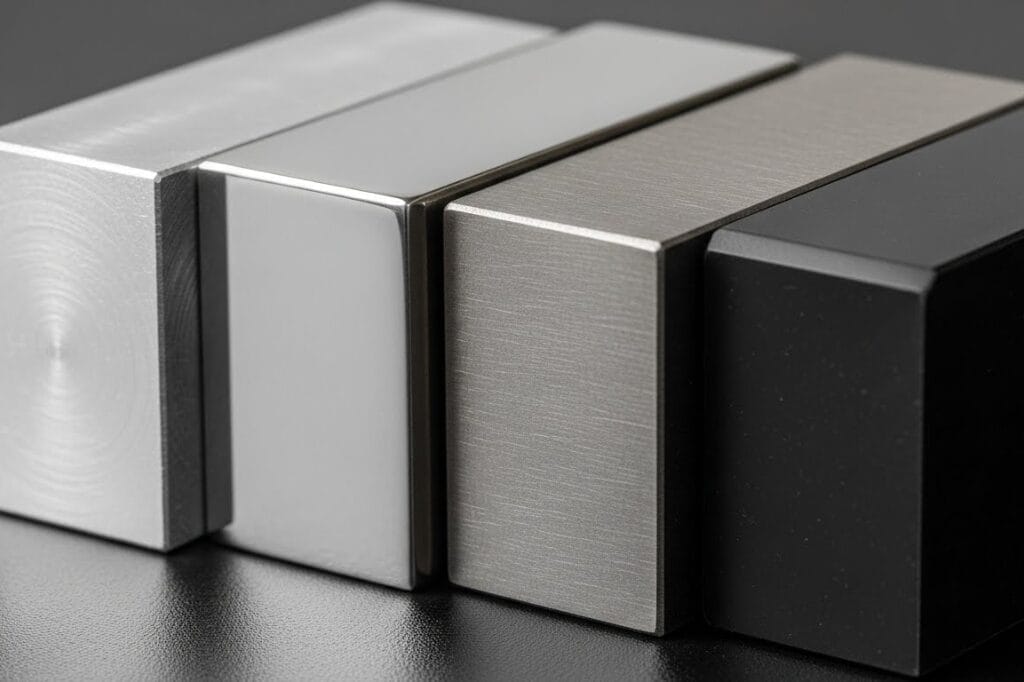
An aluminum alloy combines aluminum with elements like copper, magnesium, or zinc. These additions boost strength while keeping the material lightweight. Aluminum alloys serve industries from aerospace to consumer electronics. Series numbers and temper designations classify each alloy by composition and by treatment.
We’re Yijin Solution, custom CNC machining and sheet metal fabrication experts. We’ve worked extensively with aluminum alloys across many industries. This guide breaks down alloy types, wrought versus cast classification, and how to choose the right grade for your project.
Key Takeaways
- Aluminum alloys combine pure aluminum with other elements to boost strength, machinability, and corrosion resistance while keeping the material lightweight
- They are classified by standardized series and temper designations that guide selection for specific performance and machining requirements
- Their superior mechanical, thermal, and chemical properties make them indispensable for high-precision CNC machining in diverse industries
- Aluminum alloys split into wrought and cast families, each with its own numbering system and typical strength level
- Beyond CNC machining, the same alloy series serve packaging, construction, and marine industries
What is an Aluminum Alloy?

Aluminum alloy is a metal in which aluminum (Al) serves as the predominant element combined with other elements to enhance specific properties. Pure aluminum is soft, ductile, corrosion-resistant, and electrically conductive, but lacks strength for structural applications. Alloying with elements like copper, magnesium, silicon, manganese, and zinc overcomes this limitation.
Aluminum alloys fall into two production families, wrought and cast, each with its own numbering system. Series and temper designations classify each alloy further, by primary alloying element and by heat or mechanical treatment. The next section covers both classifications, then shows how to match a series to your CNC project.
Wrought vs. Cast Aluminum Alloys: What’s the Difference?
Aluminum alloys split into two production families before any series number applies. Wrought alloys start as cast ingots, then get rolled, extruded, or forged into bar, plate, or sheet. Cast alloys go straight from molten metal into a mold, taking the mold’s final shape.
The two families use different numbering systems. Wrought alloys use a four-digit code, the 1000 through 8000 series covered below. Cast alloys use a different four-digit code with a decimal point, such as 356.0 or 380.0, under the same Aluminum Association naming convention.
| Aspect | Wrought Alloys | Cast Alloys |
|---|---|---|
| Production method | Rolled, extruded, or forged from solid billet | Poured molten into a mold |
| Numbering system | Four-digit code, 1xxx to 8xxx | Four-digit code with a decimal, such as 3xx.x |
| Typical mechanical strength | Generally higher tensile strength and fatigue life | Generally lower strength, more prone to porosity |
| Shape complexity | Best for bar, plate, sheet, and simple profiles | Best for complex, near-net shapes in one step |
| Common CNC role | Primary stock for milled and turned parts | Cast blank, then CNC-finished at critical features |
Most CNC-machined aluminum parts start as wrought bar or plate stock. That’s why the series below, 1000 through 8000, cover wrought alloys. Cast alloys still matter for housings and brackets, which often need a CNC pass on bores, bosses, or mating faces after casting.

How are Aluminum Alloys Classified?
Aluminum alloys are classified using a standardized classification system that provides immediate information about their composition and characteristics. 1000 series alloys are the purest type of aluminum alloy, with 99+% pure aluminum composition. 2000 to 8000 series designations tell you the primary alloying material the aluminum is created with.
| Series | Primary Alloying Element | Key Characteristics |
|---|---|---|
| 1xxx | None (99%+ pure aluminum) | Excellent corrosion resistance, high electrical conductivity, limited strength |
| 2xxx | Copper | High strength, heat-treatable, used in aerospace applications |
| 3xxx | Manganese | Moderate strength, good formability, used in cookware and heat exchangers |
| 4xxx | Silicon | Lower melting point, good flow properties, used as welding and brazing materials |
| 5xxx | Magnesium | Excellent corrosion resistance, good weldability, used in marine applications |
| 6xxx | Magnesium and Silicon | Good formability, corrosion resistance, medium strength, excellent extrudability |
| 7xxx | Zinc | Highest strength aluminum alloys, used in aerospace and high-stress applications |
| 8xxx | Other elements | Specialized alloys, including lithium-containing aerospace materials |
Beyond these numeral series characterisations, temper designations further classify aluminum alloys by their mechanical or thermal treatments:
- F: As fabricated
- O: Annealed (maximum ductility)
- H: Strain hardened (strengthened through cold working)
- T: Heat treated (thermally treated for stable properties)
- T4: Solution heat-treated and naturally aged
- T6: Solution heat-treated and artificially aged (peak strength)
For example, 6061-T6 indicates a 6061 alloy that has been solution heat-treated and artificially aged to achieve peak mechanical properties.
How Do You Choose the Right Aluminum Alloy for CNC Machining?
Alloy selection balances strength, machinability, corrosion resistance, and cost. The classifications above narrow the field. This matrix maps common project priorities to the alloy series and specific grades that satisfy them.
| Requirement Priority | Recommended Alloy Series | Specific Alloy Examples |
|---|---|---|
| Maximum strength | 7xxx series | 7075-T6, 7068-T6511 |
| Excellent machinability | 2xxx, 6xxx series | 2024-T351, 6061-T6 |
| Corrosion resistance | 5xxx, 6xxx series | 5052-H32, 6061-T6 |
| Complex geometry | 6xxx series | 6061-T6, 6063-T5 |
| Thin-wall machining | 6xxx series | 6061-T6 |
| High temperature stability | 2xxx, 7xxx series | 2024-T351, 7075-T6 |
| Anodizing quality | 6xxx series | 6061-T6, 6063-T5 |
| Electrical applications | 1xxx, 6xxx series | 1100-H14, 6101-T6 |
| Cost-effective general purpose | 6xxx series | 6061-T6 |
The properties and machining data further down this guide explain why each series behaves this way. Our CNC precision machining guide covers how tolerance requirements affect that choice too.
Need a grade recommendation for your part? Yijin Solution reviews your CAD file and confirms the right aluminum alloy before quoting.

Why are Aluminum Alloys Essential in Modern Manufacturing?
Aluminum alloys are cornerstone materials in modern manufacturing. Global demand reaches approximately 29 million tons annually, according to Dalsteel Metals Pty Limited. About 22 million tons come from new production, and 7 million tons from recycling.
These versatile materials address key manufacturing challenges. They provide:
- Weight reduction without sacrificing structural integrity
- Excellent machinability for complex geometries
- Superior corrosion resistance
- Good thermal and electrical conductivity
- Recyclability with minimal property degradation
For CNC machining, aluminum alloys offer real advantages in processing speed, tool life, and dimensional accuracy. Beyond machining, the same alloys serve packaging, construction, and marine industries. Later sections cover each in more depth.
Aluminum Alloy Properties and Why They Suit CNC Machining
The mechanical, physical, and chemical properties of aluminum alloys make them well suited to CNC machining. Each property below explains part of why aluminum machines fast, holds tight tolerances, and lasts in service across many industries.
Mechanical Properties
Aluminum alloys offer remarkable versatility in their mechanical properties, allowing engineers to select the appropriate alloy based on specific application requirements:
| Property | Range | Examples |
|---|---|---|
| Ultimate Tensile Strength | 90-710 MPa (13-103 ksi) |
|
| Brinell Hardness |
|
|
| Elongation (Ductility) | 9-35% |
|
These alloys demonstrate excellent machinability characteristics, including high cutting speeds, good surface finish quality, and relatively low tool wear compared to many other metals. When properly machined, aluminum alloys can achieve excellent surface finishes down to mirror-like quality, making them ideal for applications requiring both precision and aesthetic appeal.
Physical Properties
Aluminum alloys weigh about one-third as much as steel for the same volume, 2.7 g/cm³ against 7.85 g/cm³ for steel. Our steel properties guide covers that comparison in full. This weight advantage matters most in transportation, aerospace, automotive, and consumer electronics.
Their thermal conductivity is approximately three times greater than steel, which offers two key advantages:
- Facilitates efficient chip removal during machining
- Enhances heat dissipation, maintaining dimensional accuracy by preventing localized heating issues
Electrical conductivity in aluminum alloys ranges between 30-59% of the International Annealed Copper Standard (IACS), making them suitable for electrical applications while offering substantial weight advantages over copper.
Chemical Properties
Aluminum alloys naturally form a protective oxide layer on their surface, providing good corrosion resistance in many environments without additional treatments. This self-healing layer continuously reforms when damaged, offering ongoing protection against environmental factors.
Most aluminum alloys can be anodized to enhance:
- Surface hardness
- Wear resistance
- Corrosion protection
- Aesthetic appearance through various coloring options
These materials generally demonstrate good resistance to many chemicals, though they do have specific vulnerabilities to certain substances that must be considered in application-specific environments, particularly in settings involving strong acids or alkalis.
The combination of these verified properties makes aluminum alloys an exceptional choice for CNC machining operations across diverse industries, from aerospace and automotive to medical devices and consumer products.
Which Aluminum Alloys Perform Best in CNC Machining Applications?
Nearly all aluminum alloys are a popular choice for CNC machining, but 6061, 7075, and 2024 are often the most popular choices for machining. This table outlines the primary alloying elements and mechanical properties that help along the CNC machining process.
| Alloy | Primary Alloying Elements | Mechanical Properties (Temper) |
|---|---|---|
| 6061 | Magnesium, Silicon |
|
| 7075 | Zinc, Magnesium, Copper |
|
| 2024 | Copper, Magnesium, Manganese |
|
| 5052 | Magnesium |
|
| 7068 | Zinc, Magnesium, Copper, Zirconium |
|
What Cutting Parameters and Tooling Work Best for Machining Aluminum Alloys?
Aluminum’s low hardness and high thermal conductivity let CNC machines run faster on it than on steel or titanium. Consistent results still depend on matching tooling, coolant, and cutting strategy to the specific alloy and temper.
Tool coatings and geometry
Uncoated, polished carbide tooling suits most aluminum grades. Aluminum tends to smear onto a cutting edge, so a highly polished flute controls that built-up edge better than many hard coatings do. High-silicon alloys and cast tooling plate are the exception. Their abrasive silicon particles wear standard carbide quickly, so PCD or diamond-coated tooling extends tool life on those grades.
Chip formation by temper
Soft, annealed tempers like 1100-O form long, stringy chips that can wrap around the tool or workpiece. Heat-treated tempers like 6061-T6 and 7075-T6 cut into short, segmented chips that clear the tool path cleanly. Climb milling, rather than conventional milling, produces cleaner edges and fewer burrs on both chip types.
Coolant and surface finish
Flood coolant or a lubricant mist controls heat and helps clear chips from deep pockets. Confirm expected tolerances and finish targets against our CNC machining tolerances guide before finalizing a cutting strategy.
How Do Machinability and Cost Compare Across Common CNC Aluminum Alloys?
Machinability and cost move in different directions across the alloys CNC shops use most. This table ranks the five grades already covered above against each factor, for a quick side-by-side comparison.
| Alloy | Relative Machinability | Relative Material Cost | Weldability | Corrosion Resistance |
|---|---|---|---|---|
| 6061 | High | Low | Good | Good |
| 5052 | Medium | Low | Good | Excellent |
| 2024 | Medium | Medium | Poor | Fair |
| 7075 | Medium | High | Poor | Fair |
| 7068 | Medium | High | Poor | Fair |
6061 remains the default choice for general CNC work. Its balance of machinability and cost is hard to beat. 7075 and 7068 earn their higher cost only when a project genuinely needs maximum strength.
Where are Aluminum Alloys Used in Real-World Applications?

Aluminum alloys are used in the aerospace, automotive, electronics, and medical industries. No matter the industry, various aluminum alloys are a staple material for CNC machining applications.
Aerospace Industry
The aerospace sector relies heavily on aluminum alloys for critical components due to their exceptional strength-to-weight ratio. Aircraft structures extensively utilize 2024 and 7075 alloys for fuselage frames and wing spars, where their high strength provides the necessary structural integrity while minimizing weight.
In space applications, specialized aluminum-lithium alloys are preferred for fuel tanks and structural elements, offering additional weight savings while maintaining properties necessary for aerospace performance. These alloys continue to be fundamental materials in both commercial and military aircraft, despite increasing use of composite materials in modern designs.
Automotive Engineering
Automotive manufacturers increasingly incorporate aluminum alloys to reduce vehicle weight and improve fuel efficiency without compromising safety or performance. Engine components frequently employ 356 and A380 cast alloys for blocks and cylinder heads, while 4032 alloy is preferred for pistons because of its thermal properties. For body structures, 5000 and 6000 series alloys are widely utilized in panels and frames, enabling weight reductions of up to 40% compared to steel equivalents.
This weight saving translates directly to improved fuel economy and reduced emissions, making aluminum alloys strategically important in modern vehicle design, particularly as electrification increases demand for lightweight construction.
Electronics and Telecommunications
The electronics industry leverages aluminum alloys’ thermal and electrical properties for various critical applications. Heat sinks manufactured from 6061 and 6063 alloys provide efficient thermal management for components in computers, power supplies, and LED lighting systems, dissipating heat that could otherwise damage sensitive electronics.
For device enclosures, 5052 and 6061 alloys are extensively used, offering multiple advantages including effective electromagnetic interference (EMI) shielding, impact resistance, and heat dissipation. The combination of functional properties and aesthetic appeal makes aluminum alloys particularly valuable in consumer electronics, where performance and design are equally important considerations.
Medical Equipment
Aluminum alloys play an essential role in medical device manufacturing. Their lightweight properties and corrosion resistance provide real advantages. Imaging equipment such as MRI and CT scanner frames commonly use 6061 and 5052 alloys. Both offer solid structural support while remaining completely non-magnetic, a critical requirement for magnetic resonance imaging systems.
For surgical tools, 6061 and 7075 alloys are common choices for instrument handles and non-implant devices. They provide ergonomic benefits while withstanding sterilization processes. This versatility makes aluminum valuable across diagnostic equipment, surgical instruments, and hospital furnishings.
Packaging Industry
Packaging relies on the 1000 and 3000 series for their corrosion resistance and formability. Rolled into thin foil or sheet, these alloys wrap food, pharmaceuticals, and beverage cans without reacting with their contents.
Aluminum’s natural oxide layer keeps packaged goods sealed and protected. That same layer, combined with easy recycling, keeps aluminum packaging cost-competitive against plastic and steel alternatives.
Construction and Architecture
The 6000 series dominates architectural aluminum. Its excellent extrudability shapes window frames, door frames, railings, and curtain wall systems into precise, repeatable profiles.
Anodized 6063 gives building facades a consistent, weather-resistant finish. Its light weight also simplifies installation on tall structures compared to steel framing.
Marine and Shipbuilding
The 5000 series is the standard marine-grade aluminum. Its magnesium content resists saltwater corrosion better than most other series, without needing a protective coating.
Boat hulls, deck fittings, and offshore structural components commonly use 5052 or 5083 for this reason. Both alloys also weld reliably, an important property for hull fabrication.
FAQs on Aluminum Alloys
Is aluminum alloy good quality?
Aluminum alloys offer excellent quality for numerous applications due to their unique combination of lightweight properties, corrosion resistance, and good machinability. Different aluminum alloys provide varying levels of strength, with options ranging from 90 MPa for annealed 1100 to 710 MPa for 7068-T6511, allowing engineers to select the appropriate alloy based on specific performance requirements. Their quality is further demonstrated through widespread use in demanding industries including aerospace, automotive, and medical equipment manufacturing.
What is the difference between aluminium and aluminium alloy?
Pure aluminum is a soft, lightweight metal containing at least 99% aluminum content, while aluminum alloys combine aluminum with specific amounts of other elements such as copper, magnesium, zinc, or silicon to enhance particular properties. This alloying process significantly improves mechanical properties like strength and hardness, which are relatively limited in pure aluminum, while maintaining beneficial characteristics such as low density and corrosion resistance. While pure aluminum provides excellent electrical conductivity and corrosion resistance, aluminum alloys offer greater strength and versatility across a wider range of applications.
What’s the downside of aluminum alloys?
The primary limitations of aluminum alloys include lower strength compared to steel or titanium, susceptibility to deformation under heavy loads, and relatively low melting points that restrict use in high-temperature environments. Certain aluminum alloys can be challenging to weld due to their high thermal conductivity and susceptibility to cracking, while their lower hardness compared to some other metals limits applications requiring exceptional wear resistance. Additionally, some aluminum alloys are vulnerable to galvanic corrosion when in contact with dissimilar metals, requiring proper protective measures in certain environments.
What is the strongest aluminum alloy?
7068-T6511 is the strongest aluminum alloy in common use, with a tensile strength around 710 MPa, or 103 ksi. That places it above 7075-T6, which reaches about 572 MPa, or 83 ksi. Both come from the 7000 series, where zinc drives the highest strength available in aluminum.
What’s the difference between 6061 and 7075 aluminum?
6061 balances machinability, weldability, and cost for general CNC parts. 7075 trades some of that machinability and weldability for higher strength, reaching roughly 503 MPa yield strength against 276 MPa for 6061. Choose 7075 when a part needs maximum strength at minimum weight, and 6061 for nearly everything else.
What is the minimum order quantity for CNC machined aluminum parts?
Yijin Solution has no fixed minimum order quantity for CNC machined aluminum parts. We accept orders from single prototypes through full production runs. Per-part cost simply favors higher volumes, since setup and tooling amortize across more units.
How fast can Yijin Solution machine aluminum parts?
Yijin Solution typically ships aluminum prototypes in 3–7 days. Full production runs usually take 2–4 weeks, depending on part complexity and volume. Confirm exact timing when you request a quote.
Back to Top: What are Aluminum Alloys? | Aluminum Alloy Types Explained




 English
  Spanish
  German
  French