
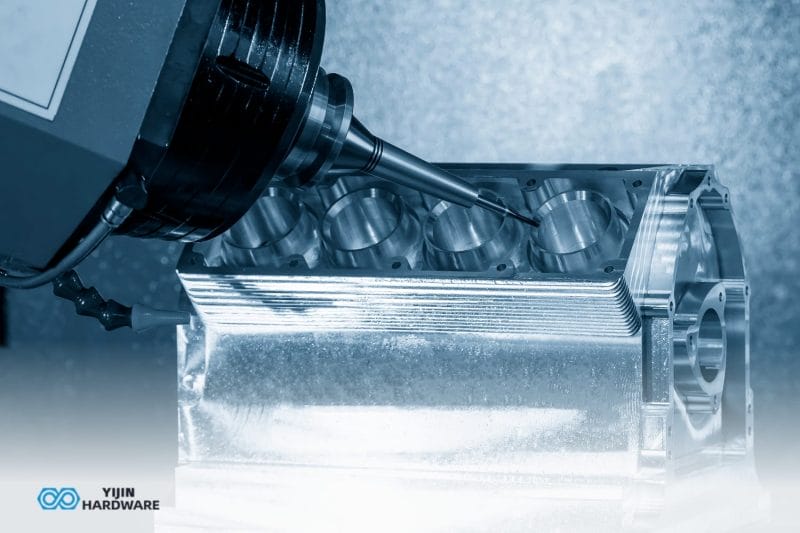
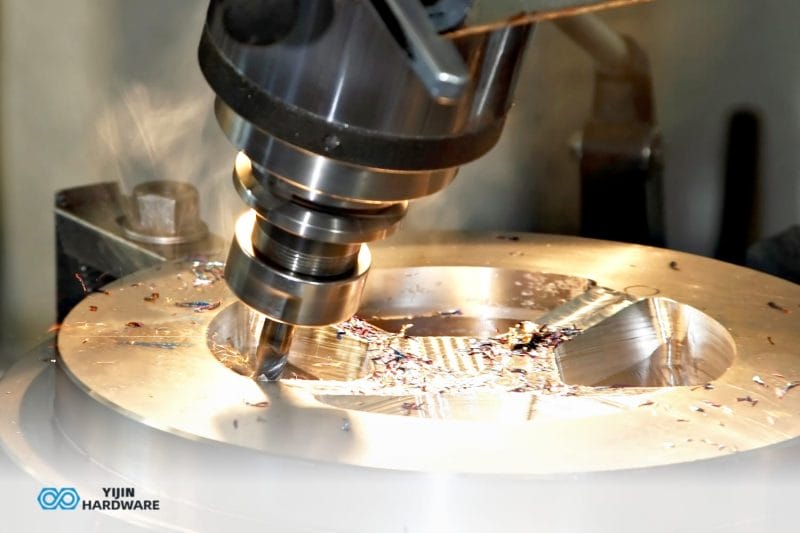

CNC precision machining is a sophisticated manufacturing process that uses computer-controlled machines to remove material from a workpiece with extreme accuracy, typically achieving tolerances as tight as ±0.0001 inches (2.54 microns). This advanced subtractive manufacturing technique relies on pre-programmed computer software to dictate the movement of factory machinery.
This ensures consistent, highly precise production of complex three-dimensional parts across various industries including aerospace, automotive, medical, and electronics. Yijin Solution specializes in precision CNC machining, offering top-quality components for various industries. Our advanced technology and skilled operators ensure exceptional accuracy and consistency in every part we produce, meeting the demands of modern manufacturing.
Key Takeaways
- CNC precision machining employs advanced computer-controlled machinery to achieve extremely tight tolerances (as fine as ±0.0001 inches) enabling the production of complex three-dimensional parts for critical applications across industries such as aerospace, automotive and medical.
- The digital-to-physical workflow starts with a CAD design transformed into precise G-code instructions via CAM software guiding multi-axis machines to remove material with consistent accuracy and repeatability.
- Key advantages include high accuracy, repeatability and efficiency, while ongoing innovations like AI-powered optimization, hybrid manufacturing and IoT-enabled predictive maintenance address challenges and drive future trends.
How does CNC Precision Machining Work?
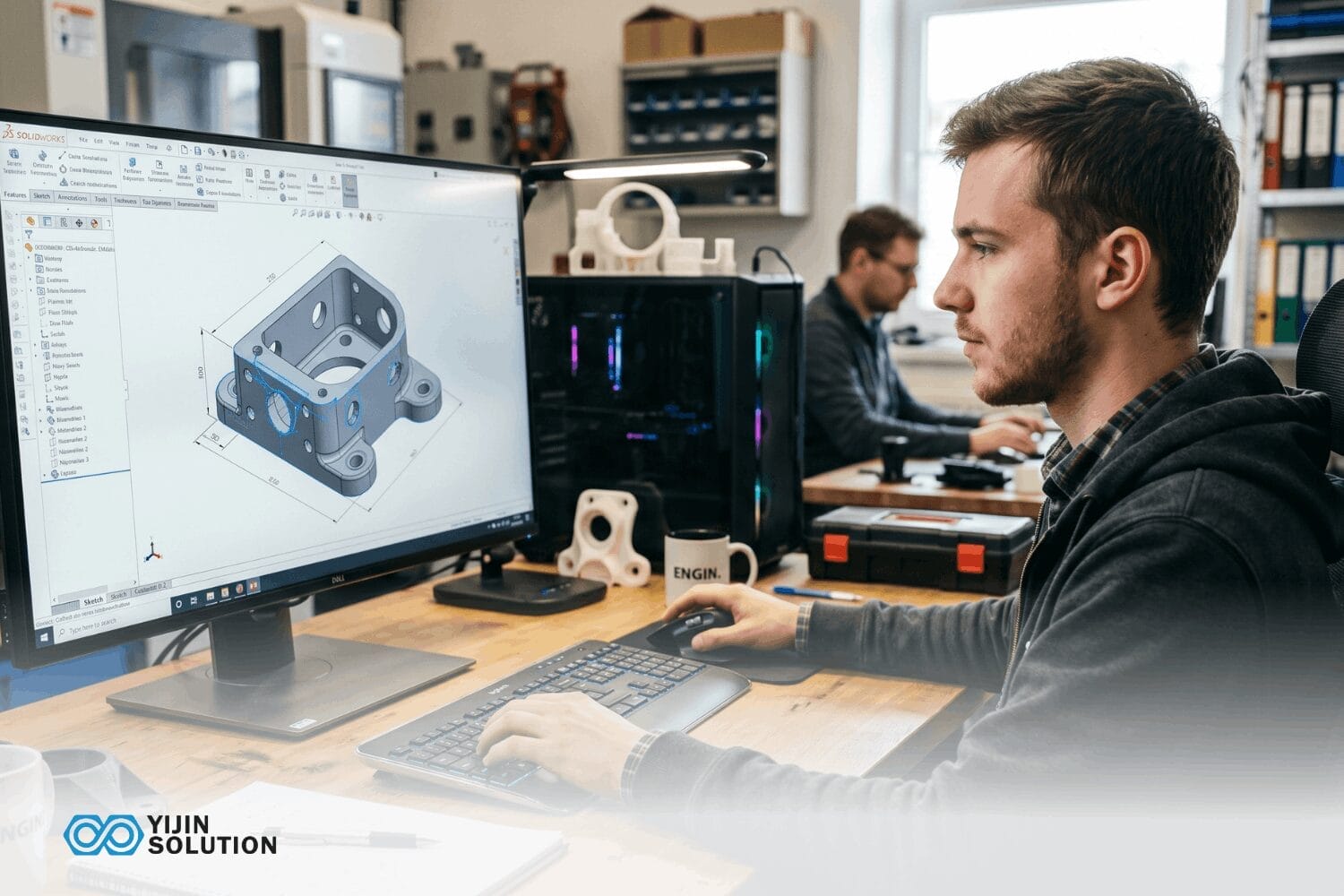
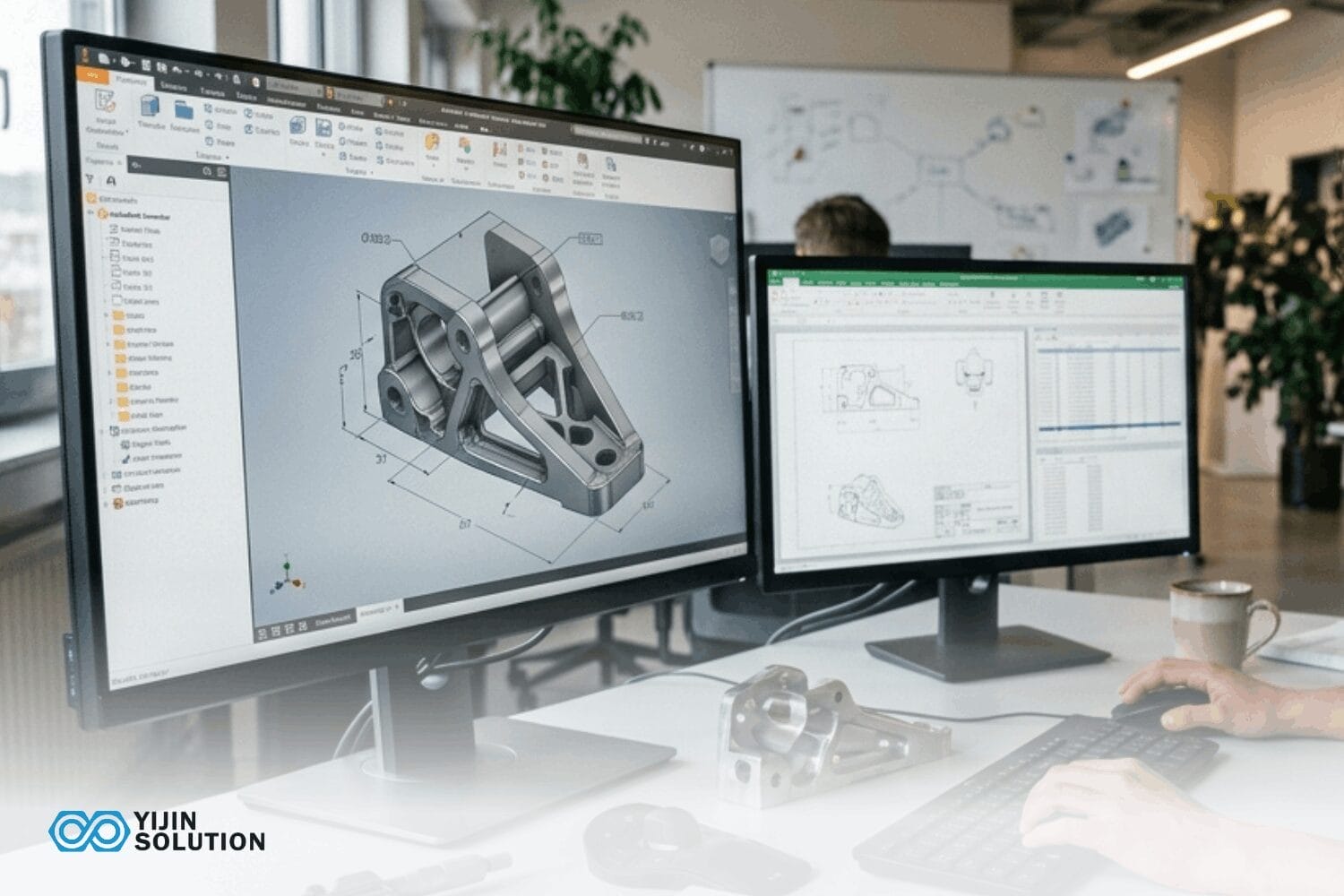
CNC precision machining works through a digital-to-physical workflow where computer-controlled machines remove material with extreme accuracy. First, engineers create a 3D model using CAD software, which is converted to G-code instructions by CAM software. The CNC controller then executes these instructions, precisely guiding cutting tools along multiple axes to progressively remove material from the workpiece until the final geometry is achieved, typically achieving tolerances as tight as ±0.0001 inches.
What are the Different Types of CNC Precision Machining?
CNC precision machining encompasses several specialized processes, each suited to particular manufacturing requirements. The table below details the major types with their capabilities and applications:
| Type | Process Description | Key Capabilities |
|---|---|---|
| CNC Milling | Rotating cutting tools remove material from stationary workpiece | Creates flat surfaces, contours, slots, holes, and complex 3D shapes |
| CNC Turning | Rotates workpiece against stationary cutting tools | Excels at producing rotationally symmetric components |
| CNC Grinding | Uses abrasive wheels to remove material with extreme precision | Achieves superior surface finishes and dimensional accuracy on hardened materials |
| CNC EDM (Electrical Discharge Machining) | Uses electrical discharges (sparks) to erode material | Machines extremely hard materials and intricate features impossible with conventional cutting |
| Multi-Axis Machining | Controls 5 or more axes simultaneously | Approaches workpiece from virtually any angle, producing complex geometries in a single setup |
| CNC Swiss Turning | Uses guide bushing to support workpiece close to cutting operation | Minimizes deflection for long, slender parts with exceptional precision |
| CNC Jig Grinding | Combines precision grinding with coordinated motion | Produces highly accurate holes and bores in hardened materials |
If you’re seeking high-precision CNC milling China or CNC turning services, our expert team at Yijin Solution is equipped to deliver exceptional results with unmatched accuracy and reliability.
Which Materials are used in CNC Precision Machining?
CNC precision machining can work with an extensive range of materials, each with distinct properties and machining characteristics:
| Material Category | Examples | Key Properties | Typical Applications | Achievable Tolerance |
|---|---|---|---|---|
| Aluminum Alloys | 6061, 7075, 2024 | Lightweight, excellent machinability, corrosion-resistant | Aerospace components, electronics enclosures, prototypes | ±0.001″ (25.4μm) |
| Steels | 1018, 4140, 316L stainless | High strength, wear resistance, corrosion resistance (stainless) | Automotive parts, industrial machinery, food processing equipment | ±0.0005″ (12.7μm) |
| Titanium Alloys | Ti-6Al-4V, Ti-6Al-2Sn-4Zr-2Mo | Exceptional strength-to-weight ratio, biocompatible, corrosion-resistant | Medical implants, aerospace components, chemical processing equipment | ±0.0005″ (12.7μm) |
| Plastics | Delrin (POM), PEEK, ABS, Nylon | Lightweight, chemical resistant, electrical insulation properties | Medical devices, electronics components, consumer products | ±0.002″ (50.8μm) |
| Superalloys | Inconel 718, Hastelloy, Waspaloy | Extreme heat and corrosion resistance, high strength at elevated temperatures | Gas turbine components, chemical processing equipment, nuclear applications | ±0.0005″ (12.7μm) |
| Copper Alloys | Brass, Bronze, Beryllium Copper | Excellent thermal and electrical conductivity, non-sparking | Electrical components, marine hardware, non-sparking tools | ±0.001″ (25.4μm) |
| Exotic Materials | Tungsten, Molybdenum, Kovar | Specialized thermal, electrical, and mechanical properties | Semiconductor components, aerospace applications, scientific instruments | ±0.0005″ (12.7μm) |
What are the Advantages of CNC Precision Machining?

Here’s an updated key advantages table for CNC precision machining that focuses on the specific advantages you’ve outlined:
| Advantage | Description | Impact |
|---|---|---|
| Higher Accuracy | CNC machines consistently achieve tolerances as tight as ±0.0001 inches (2.54 microns) | Enables production of components with extreme precision necessary for critical applications in aerospace, medical devices, and semiconductor manufacturing |
| Consistency | Computer control eliminates human variability in the production process | Ensures uniform quality across production runs, minimizing dimensional variations between the first and thousandth part produced |
| Complex Geometries | Multi-axis CNC machines produce intricate components impossible to manufacture manually | 5-axis simultaneous machining enables undercuts, compound angles, and complex contours that would require multiple setups with conventional methods |
| Efficiency | Once programmed, CNC machines operate continuously with minimal intervention | Reduces production time by up to 70% compared to manual machining methods; automated tool changes and pallet systems further enhance throughput |
| Versatility | Works effectively with virtually any solid material—from soft plastics to hardened steel and exotic alloys | Provides engineers with extensive design flexibility and material selection options for varied applications across industries |
| Repeatability | Programmed operations can be executed identically thousands of times | Ensures consistent production of identical parts over extended production runs, critical for components that must be interchangeable across assemblies |
What are the Applications of CNC Precision Machining?
CNC precision machining is used across various sectors, including aerospace and automotive, contributing to advancements in multiple fields:
Aerospace
The aerospace industry depends on CNC precision machining to produce critical components with extraordinary accuracy and consistency. These parts include turbine blades, structural components, landing gear components, and fluid system manifolds, where tolerances as tight as ±0.0001 inches are common. During development phases, aerospace manufacturers often utilize metal prototype fabrication to validate enclosure designs and structural housings before committing to production tooling. Materials like titanium, Inconel, and aluminum alloys are precision-machined to achieve the optimal balance of strength and weight reduction essential for aircraft performance and fuel efficiency.
Medical
Medical device manufacturing leverages CNC precision machining to create implants, surgical instruments, and diagnostic equipment components. The biocompatibility of materials like titanium, combined with the ability to achieve mirror-like surface finishes (as low as 4 microinches Ra), makes precision machining ideal for orthopedic implants, dental components, and surgical tools. The FDA’s stringent requirements for medical devices make the repeatability and documentation capabilities of CNC processes particularly valuable.
Automotive
The automotive industry utilizes CNC precision machining for engine components, transmission parts, and specialized performance components. Modern vehicles contain hundreds of precision-machined parts, from brake system components to fuel injection systems, all requiring tight tolerances to ensure proper function and reliability. High-volume production capabilities make CNC machining economically viable for automotive applications.
Electronics
Consumer electronics and semiconductor manufacturing rely on CNC precision machining for component housings, heat sinks, and precision fixtures. The ability to achieve extremely fine surface finishes and tight tolerances makes CNC machining essential for components like computer chassis, camera bodies, and precision test fixtures used in electronics production.
Oil and Gas
The demanding environments in oil and gas applications require components manufactured to exacting standards. CNC precision machining produces downhole tools, pump components, and valve bodies capable of withstanding extreme pressures and harsh chemicals. Materials like Inconel, duplex stainless steels, and specialized alloys can be machined to tight tolerances despite their challenging properties.
Defense and Military
Defense applications require extraordinary precision and reliability. CNC precision machining produces firearm components, optical mounting systems, and specialized hardware for military vehicles and equipment. The ability to work with ballistic materials and produce parts with exceptional consistency makes CNC machining invaluable in defense manufacturing.
What is the CNC Precision Machining Process?
The CNC precision machining process involves several steps, each crucial for producing high-quality parts:
- Design: Create a 3D model using CAD software, defining all part specifications
- Programming: Convert the design into machine instructions using CAM software
- Setup: Prepare the CNC machine, select and install cutting tools, and secure raw material
- Machining: Execute the program to create the part, with the machine following precise instructions
- Inspection: Check the finished part for accuracy using precision measurement tools
- Finishing: Apply any necessary surface treatments or additional processes
This systematic process ensures high-quality results for each machined part, maintaining consistency across production runs.
What Factors Affect CNC Precision?
Factors affecting CNC precision include machine rigidity, tool selection and condition, cutting parameters (speed, feed rate, depth of cut), thermal stability, material properties, fixture design, machining strategy, coolant application, vibration control, and calibration accuracy. Environmental factors like temperature fluctuations and humidity can also impact dimensional stability. Modern CNC machines incorporate thermal compensation, advanced sensors, and feedback systems to maintain precision despite these variables.
How does CNC Precision Compare to Conventional Machining?
CNC precision machining offers superior accuracy and consistency for complex parts, making it ideal for modern manufacturing needs.
| Aspect | CNC Precision Machining | Conventional Machining |
|---|---|---|
| Accuracy | Very high (±0.0001 “) | Moderate (±0.005 “) |
| Consistency | Excellent across large batches | Varies with operator skill |
| Complexity | Handles intricate designs easily | Limited by manual skills and tooling |
| Speed | Fast for large batches, efficient setup | Slower, especially for complex parts |
| Cost | Higher initial investment, lower per-part cost for large runs | Lower upfront costs, higher labor costs |
| Flexibility | Quick changeovers between parts | Requires manual setup changes |
| Skill Required | Programming and machine operation | Traditional machining expertise |
What are the Challenges in CNC Precision Machining?
The primary challenges in CNC precision machining include machining complex geometries with tight tolerances, managing tool wear and deflection, optimizing cutting parameters for difficult materials like titanium and Inconel, minimizing thermal distortion during machining, achieving consistent surface finish quality. They also include reducing setup time and production costs, navigating skilled labor shortages, and balancing automation with quality control. Manufacturers overcome these challenges through advanced CAM simulation, in-process measurement, and adaptive machining strategies.
What are the Future Trends in CNC Precision Machining?

Future trends in CNC precision machining include AI-powered process optimization that automatically adjusts cutting parameters in real-time, hybrid manufacturing systems combining additive and subtractive processes, digital twin technology for virtual process validation, sustainable machining with minimal lubricant usage, lights-out manufacturing through complete automation, ultra-precision machining at the nanometer scale, cloud-based CAM solutions, and integration with IoT sensors for predictive maintenance. These advances will further enhance precision, efficiency, and capabilities while reducing environmental impact.
Yijin Solution: CNC Machining Precision Parts
Yijin Solution offers top-quality CNC precision machining services for a wide range of industries. We use advanced technology and skilled operators to produce accurate, complex parts that meet the most demanding specifications. Our capabilities span various materials and applications, from prototype development to high-volume production. Contact us today for your precision CNC machining needs and experience our commitment to excellence in every component we produce.
Precision Machining CNC FAQs
What is CNC precision technology?
CNC precision technology involves using a CNC machine to create high-precision, detailed machined components. It utilizes advanced CNC equipment to produce parts with exact specifications, ensuring high precision machining. Precision CNC machining works by controlling the machining process through computer programming, allowing for intricate design execution. This technology ensures the production of precision CNC-machined components used across industries like automotive parts and aerospace.
CNC turning vs. milling, which machining process is best for my machining project?
CNC turning and milling are both important precision machining techniques, with distinct advantages for different projects. CNC turning is ideal for cylindrical parts, while precision CNC milling machines offer more flexibility for complex geometries. Milling machines excel at producing detailed flat surfaces, holes, and slots, while turning machines focus on shaping and rotating parts. The right choice depends on your project’s geometry, material, and desired machining time.
Is CNC precision machining expensive?
CNC precision machining can be expensive, depending on factors like material, complexity, and the machining equipment used. High precision CNC machining often requires advanced CNC equipment and skilled CNC operators, which can increase costs. The initial setup cost for precision CNC machines is significant, but the precision and quality of parts justify the investment. Using CNC precision machine shops can help balance costs while achieving high-quality, precision CNC machined components.
What are the tolerance limits for CNC precision machining?
CNC precision machining provides tight tolerance limits, often achieving accuracy as fine as 0.0001 inches. High-precision CNC machining can reach tolerances that surpass traditional machining methods, ensuring perfect results for intricate components. Tolerance limits depend on factors like the machining equipment, tooling, and material used in CNC machining work. The precision CNC machine used and its capabilities, such as a 5-axis CNC, directly impact these tolerance limits.
Back to Top: What is CNC Precision Machining? | Technical Breakdown




 English
  Spanish
  German
  French