Custom Surface Finishing Services
Yijin Solution applies 15+ surface finishing processes to machined, fabricated, cast, and cold-headed components, specified alongside the part, confirmed at DFM review, and inspected before shipment.
- We support metals and engineering plastics, from aluminum and stainless steel to brass and titanium.
- Quality-controlled finishing for prototype quantities and production runs.
Join 3000+ companies who work with Yijin Solution


Surface Finishing with Yijin Solution
We apply finishing as part of the part specification rather than as a separate purchase order. Finish type, color, and masking requirements are confirmed during the free DFM review at the quote stage, and parts are inspected before shipment.
Our finishing runs alongside CNC machining, sheet metal fabrication, die casting, and custom fastener production under one quality system. Drawing revisions, inspection standards, and lot traceability stay with a single supplier throughout.
We finish components for automotive, medical device, marine, energy, consumer product, and robotics buyers. Requirements differ across those sectors: a marine fitting is specified for corrosion life, while consumer housing is specified for appearance consistency across a batch. We confirm the right finish for each application at the quote stage.
Surface Finishing Capabilities
The specifications below apply across finishing processes. Exact thickness, tolerance effect, and lead time depend on the finish, the base material, and part geometry.
| Parameter | Spezifikation |
|---|---|
| Finishes offered | As-machined, bead blasting, polishing and brushing, anodizing Type II and Type III, powder coating, electroplating, black oxide, chromate conversion, passivation, PVD |
| Materials finished | Aluminum, stainless steel, mild and alloy steel, tool steel, brass, copper, titanium, engineering plastics |
| Typical added thickness | No measurable build on passivation; 60 to 120 micrometers on powder coating, depending on finish and specifications |
| Tolerance handling | Critical features masked or machined to allow for coating build, confirmed at DFM review |
| Typical lead time added | 1 to 2 working days for passivation and black oxide, up to 5 to 10 working days for PVD, subject to finish and volume |
| Color and appearance | RAL and Pantone matching available on powder coating and painting, dyed colors on Type II anodizing |
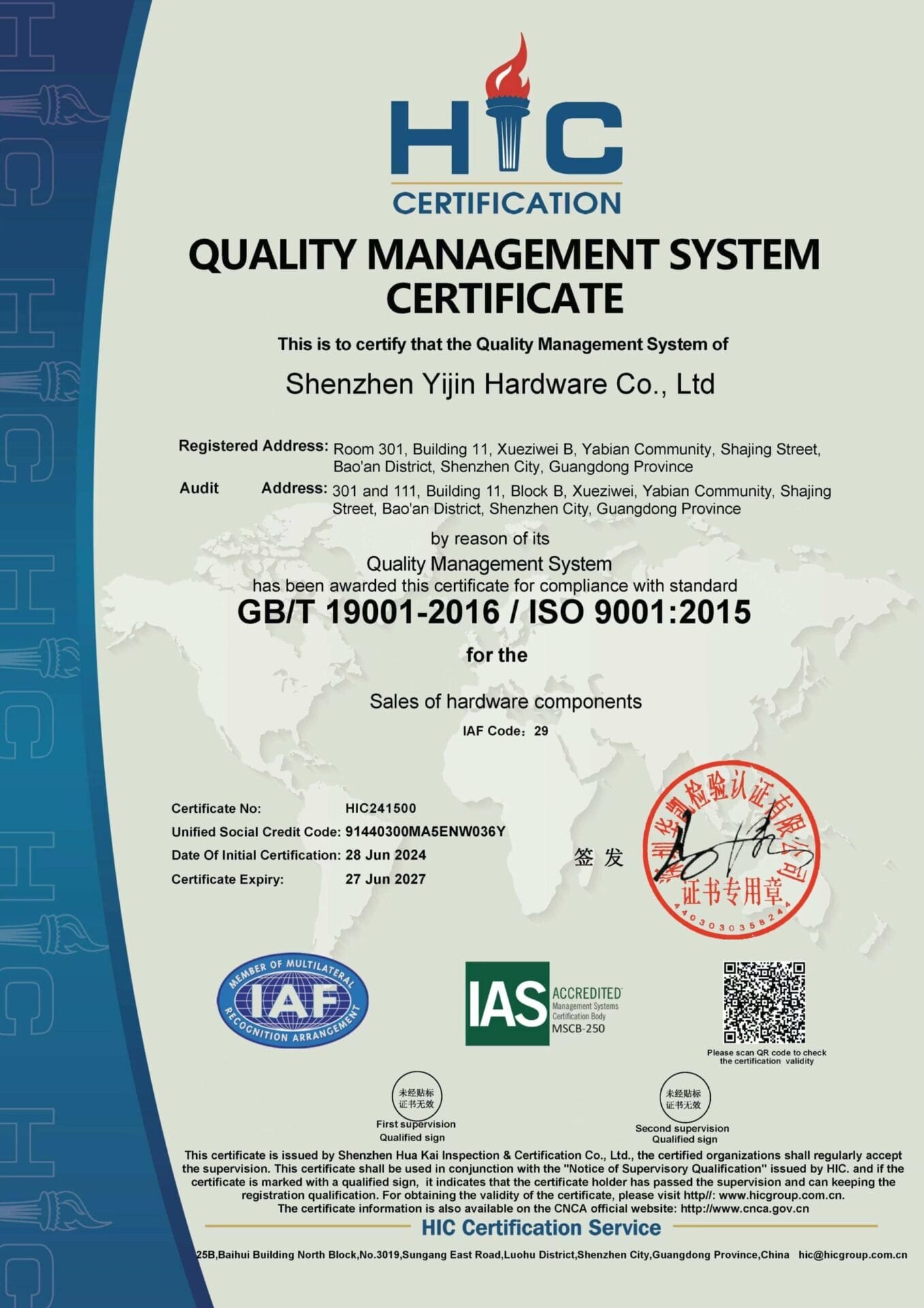
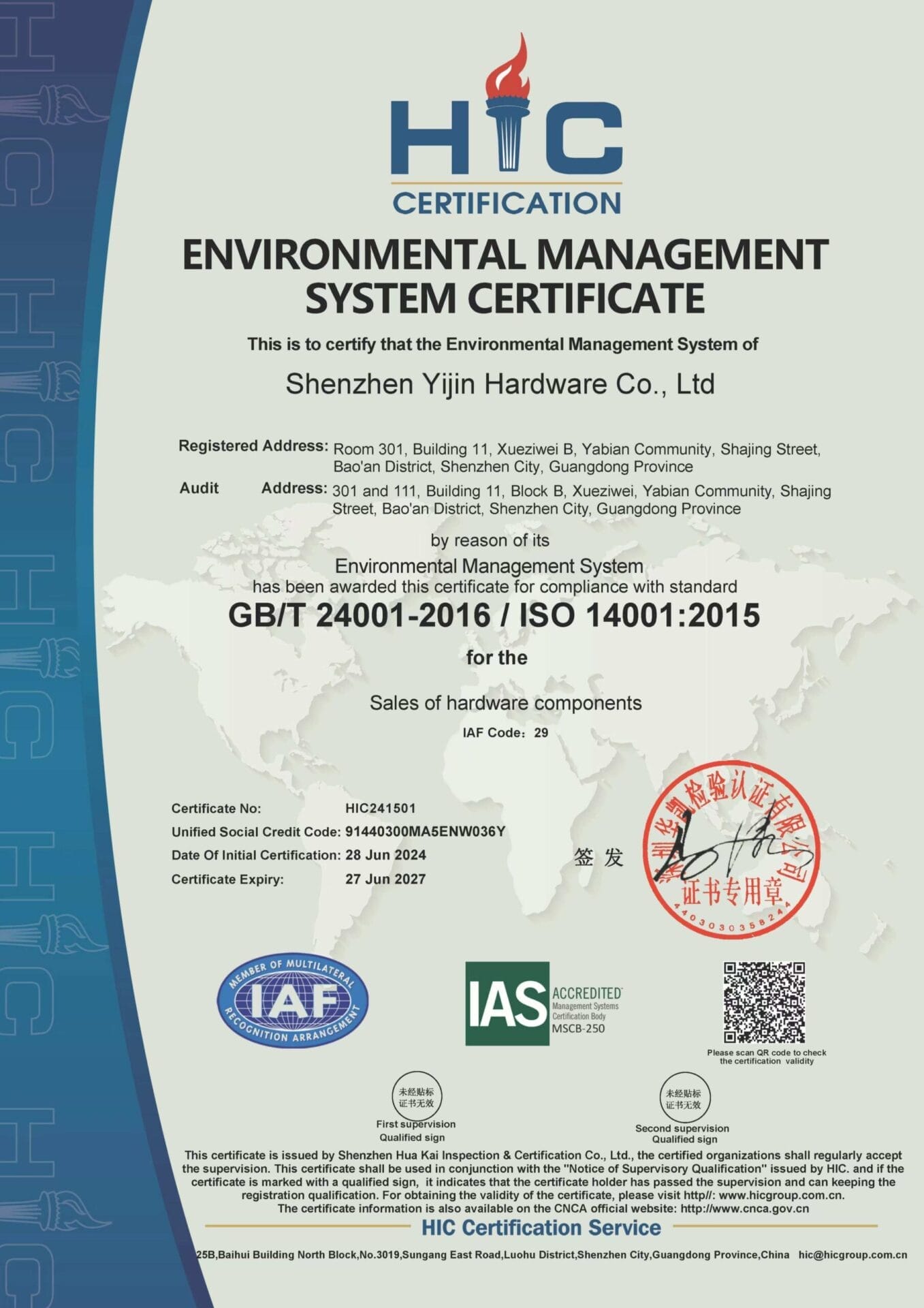
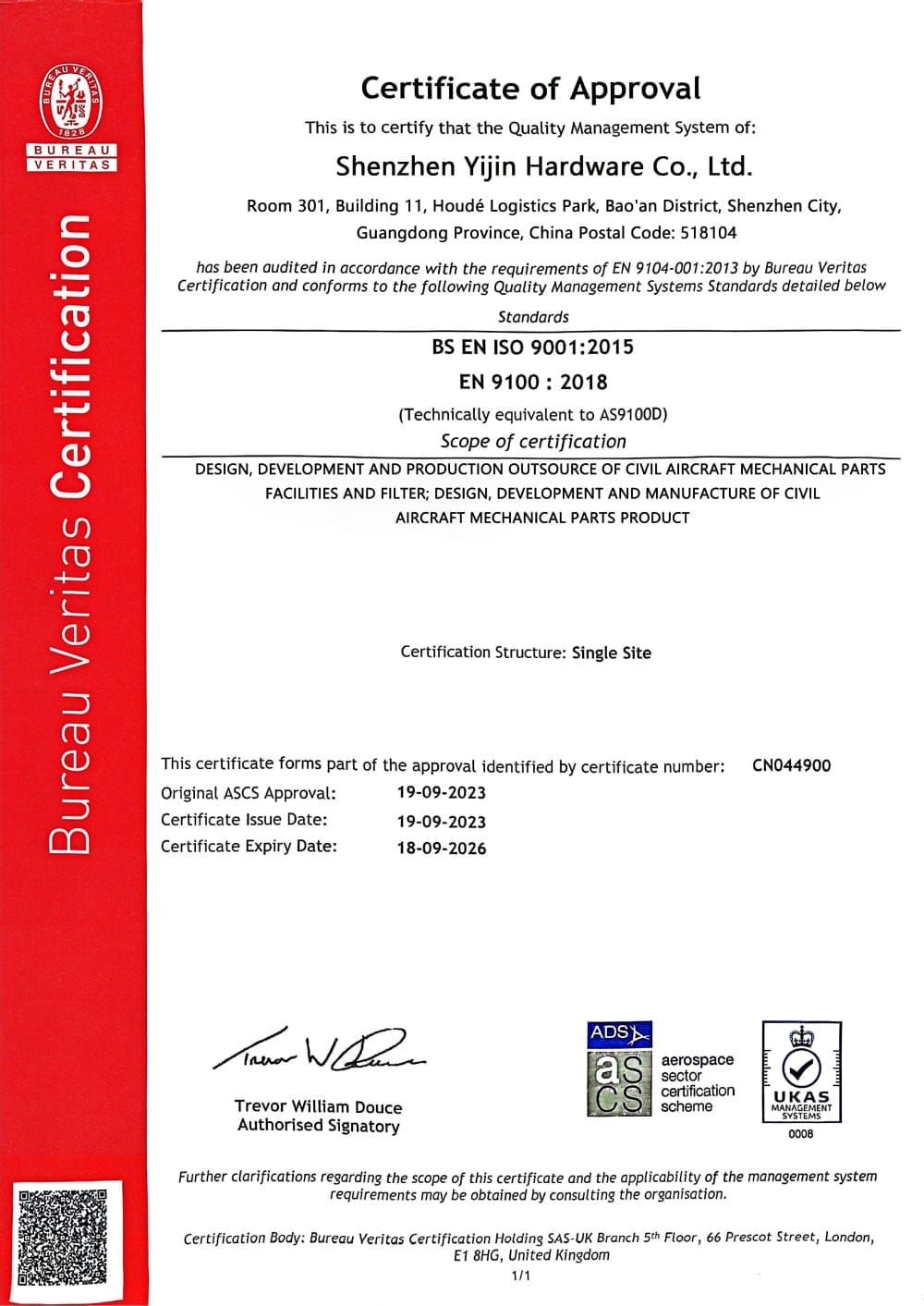
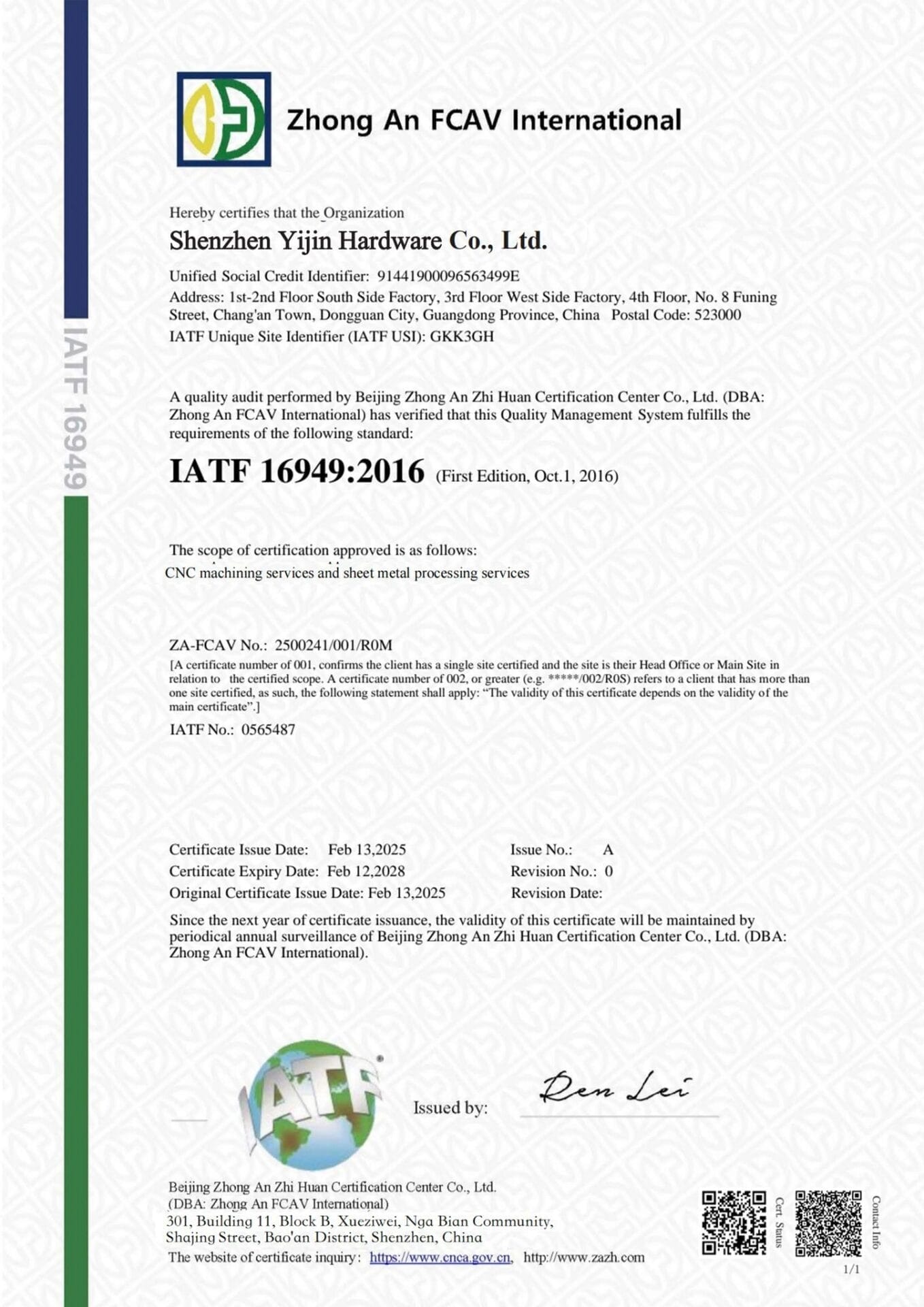
| Quality system | ISO 9001, ISO 14001, ISO 13485, IATF 16949 |
| Inspektion | Zeiss CMM dimensional verification, salt spray testing, coating thickness measurement across 281 inspection instruments |
Optionen für die Oberflächenveredelung
Each finish below is described in the same five lines, so options can be compared directly. Thickness figures are typical values under stated conditions and are confirmed against the drawing at the quote stage.

As-Machined
- Appearance: Tool marks remain visible, with a directional texture left by the cutting path.
- Protection: None beyond the corrosion behavior of the base material itself.
- Thickness and tolerance: No added thickness and no effect on machined tolerances.
- Suitable materials: All machined metals and engineering plastics.
- Typical applications: Internal components, fixtures, and parts carrying no appearance requirement. Ra 1.6 to 3.2 micrometers is typical on milled aluminum, subject to tooling and feed rate.
Deep-dive link: Comparing metal finishing processes

Perlstrahlen
- Appearance: Uniform matte texture with a fine grain. Directional tool marks disappear.
- Protection: None added. The process is surface preparation and appearance control.
- Thickness and tolerance: No meaningful build. Sharp edges soften slightly, so knife edges should be noted on the drawing.
- Suitable materials: Aluminum, stainless steel, brass, copper, steel, and most engineering plastics.
- Typical applications: Preparation before anodizing or painting, and standalone matte finishing on housings and panels.
Deep-dive link: Comparing bead blasting

Polishing and Brushing
- Appearance: Brushing leaves a unidirectional satin grain. Polishing produces a bright, mirror surface.
- Protection: None added, although a smoother surface holds less contamination.
- Thickness and tolerance: Both processes remove material rather than add it. Stock removal should be specified on the drawing.
- Suitable materials: Aluminum, stainless steel, brass, copper, and steel.
- Typical applications: Sealing faces, optical surfaces, and appearance-critical trim. Ra 0.2 to 0.8 micrometers is typical on polished faces. Both are manual operations, so batch consistency depends on documented technique.
Deep-dive link: Brushed surface finish

Anodizing, Type II and Type III
- Appearance: Type II accepts dye across a range of colors. Type III runs dark gray to black.
- Protection: Corrosion resistance on Type II and abrasion resistance on Type III hardcoat.
- Thickness and tolerance: Type II builds roughly 5 to 25 micrometers; Type III roughly 25 to 75 micrometers. Approximately half the layer grows outward, so close-fit features need allowance.
- Suitable materials: Aluminum alloys only.
- Typical applications: Type II on housings and panels, Type III on wear surfaces and moving interfaces.
Deep-dive link: Aluminum finishes

Pulverbeschichtung
- Appearance: Even color across the part in RAL and Pantone-matched shades, matte through gloss.
- Protection: Strong corrosion and UV resistance. The most physically durable of the color finishes.
- Thickness and tolerance: Roughly 60 to 120 micrometers per side. Mating faces, threads, and bearing bores are masked before coating.
- Suitable materials: Steel, stainless steel, and aluminum.
- Typical applications: Enclosures, brackets, and frames in outdoor or high-salt service.
Deep-dive link: Powder coating services

Galvanik
- Appearance: Bright metallic in zinc, nickel, chrome, or tin, depending on the deposit.
- Protection: Corrosion resistance, wear resistance, and electrical conductivity, depending on the metal selected.
- Thickness and tolerance: Roughly 5 to 30 micrometers per side, allowed for in the machined size. Electroless nickel deposits at 10 to 50 micrometers and plates bores and threads uniformly.
- Suitable materials: Steel, stainless steel, brass, copper, and aluminum with an underlayer.
- Typical applications: Fasteners, connectors, and contact surfaces.
Deep-dive link: Electroplating services

Black Oxide
- Appearance: Matte black with low reflectivity. The underlying surface texture stays visible.
- Protection: Light corrosion resistance, which improves when the part is oiled or waxed after coating.
- Thickness and tolerance: Under 1 micrometer typically, with negligible effect on machined features.
- Suitable materials: Steel, stainless steel, copper, and copper alloys.
- Typical applications: Tooling, shafts, and optical assemblies where reflection needs suppressing without dimensional change.
Deep-dive link: Black oxide coating services

Chromate Conversion
- Appearance: Clear to gold, depending on the chemistry selected.
- Protection: Corrosion resistance while retaining electrical conductivity through the coating.
- Thickness and tolerance: Sub-micrometer to roughly 1 micrometer, with negligible tolerance effect.
- Suitable materials: Aluminum alloys.
- Typical applications: Grounding surfaces, electronic enclosures, and base layers under paint or powder coating.
Deep-dive link: Aluminum finishes

Passivierung
- Appearance: No visible change to the surface.
- Protection: Restores the chromium oxide layer by removing free iron left by machining and handling.
- Thickness and tolerance: No measurable build and no tolerance effect.
- Suitable materials: Stainless steel and titanium.
- Typical applications: Medical instruments, food-contact components, and marine hardware. ASTM A967 is the specification buyers most often name on the drawing.
Deep-dive link: Passivation services

PVD
- Appearance: Metallic colors from gold through dark gray and black, depending on coating chemistry.
- Protection: High surface hardness with low friction, plus wear resistance.
- Thickness and tolerance: Roughly 0.5 to 5 micrometers, which is negligible at most engineering tolerances.
- Suitable materials: Tool steel, stainless steel, titanium, brass, and aluminum with pre-treatment.
- Typical applications: Cutting tools, wear components, and decorative hardware.
Deep-dive link: PVD coating services
Finish and Material Compatibility
We confirm finished compatibility against the base material before quoting. The table below shows what each material accepts and the note that most often decides the specification. Combinations outside this table are worth raising at the quote stage.
Aluminium
Anodizing Type II and III, chromate conversion, powder coating, bead blasting, polishing, electroplating with an underlayer, and PVD with pre-treatment. Anodizing is the default; chromate conversion applies where electrical conductivity matters.
Rostfreier Stahl
Passivation, electropolishing, bead blasting, brushing, black oxide, PVD. Passivation is the baseline rather than an upgrade. Anodizing does not apply.
Steel and Cast Iron
Zinc and nickel electroplating, powder coating, black oxide, and painting. Bare steel corrodes, so a protective finish is a functional requirement.
Messing und Kupfer
Nickel, tin, silver, and gold plating, polishing, brushing, and PVD. Not suitable for anodizing or galvanizing.
Titan
Passivation, PVD, bead blasting, polishing. Colored finishes usually come from PVD rather than dye.
Technische Kunststoffe
Painting, bead blasting, PVD on pre-plated parts. Most metal finishing chemistry does not transfer to plastics.
How We Confirm the Finish Specification
The service environment sets the protection level before any other input. Outdoor and high-salt exposure points toward powder coating or plated coatings. Washdown and food-contact service points toward passivation or electropolishing on stainless steel. Indoor dry service leaves the field open, so appearance and cost usually decide. We confirm the environment with the buyer at the quote stage and select accordingly.
Material narrows the list quickly, and we flag incompatible combinations before the order is placed. Anodizing applies to aluminum and does not transfer to stainless steel. Passivation is the stainless baseline rather than an upgrade. Bare steel corrodes without a protective finish, so the choice there is functional rather than cosmetic.
Coating build on a mating face becomes a fit problem at assembly. Powder coating at 60 to 120 micrometers will interfere with a close-clearance bore. We resolve this at the DFM review: critical features are masked or machined undersize to allow for the deposit before finishing begins.
Setup-heavy finishes such as powder coating and anodizing spread setup cost across a batch, so unit costs fall as quantity rises. Passivation and black oxide carry lower setup overhead and suit runs of 1 to 20 parts. We factor finishing lead time into the overall order schedule at the quote stage.
How Finishing Runs Alongside Manufacturing
Finishing sits inside the manufacturing sequence rather than after it. The six steps below apply to most orders.
- Quote and DFM review. Uploaded CAD files are reviewed for finish selection, color, masking requirements, and coating build on close-tolerance features.
- Part manufacturing. Components are produced by CNC machining, sheet metal fabrication, die casting, or cold heading, depending on the part family.
- Surface preparation. Parts are deburred and cleaned, then bead blasted or polished where the finish requires a specific starting roughness.
- Masking. Threads, bearing bores, mating faces, and electrical contact points are masked before the finish is applied.
- Finish application. Process parameters are recorded against the order so that repeat runs match the first article.
- Inspection before shipment. Visual checks, coating thickness measurement, adhesion or salt spray testing where specified, and dimensional verification on critical features.
Industries and Applications
Finish requirements differ by sector. The six below account for most finishing volume.
Brackets, housings, and fasteners take powder coating and zinc electroplating. Road salt exposure drives the specification, and coating life is validated by salt spray hours rather than by appearance.
Stainless instruments, trays, and housings take passivation and electropolishing. Free iron removal is the requirement, and finishing runs under the same ISO 13485 quality system as the machining.
Fittings, brackets, and deck hardware in 316 stainless and marine-grade aluminum take passivation, anodizing, and coatings. Salt spray testing verifies corrosion performance before shipment.
Fittings, connectors, and wear components take passivation and plated coatings. Corrosive service sets the requirement, and material selection carries as much weight as the finish.
Housings, trim, and enclosures take bead blasting with Type II anodizing or PVD where a metallic color is specified. Color consistency across a batch matters as much as the finish itself.
Actuator housings, structural brackets, and precision shafts take Type III anodizing and black oxide. Wear at moving interfaces drives the choice, and low added thickness protects assembly fits.
Why Yijin for Surface Finishing

Manufacturing and Finishing Under One Quality System
Parts move from machining, fabrication, or casting into finishing under one quality system and one set of drawing revisions. We manage finishing as part of the same order, with no additional handling stage, no second inspection standard, and no separate scheduling dependency.

Finish Decisions Settled at DFM Review
Masking requirements, coating build on close-tolerance features, and starting roughness targets are agreed during the free DFM review before production begins. Settling those decisions upfront prevents rework and protects the delivery schedule.

Verification Before
Shipment
Coating thickness measurement, salt spray testing, and Zeiss CMM dimensional checks run across 281 inspection instruments. Dimensional verification after coating matters most on features carrying a deposit, since the machined size and the finished size differ.

Range Across Materials and Processes
Ten finish families cover aluminum, stainless steel, mild and alloy steel, tool steel, brass, copper, titanium, and engineering plastics. A quality system certified to ISO 9001, ISO 14001, ISO 13485, and IATF 16949 applies across them.


Gallery of Finished Parts
The gallery shows finished parts across the processes above. Each caption records the part type, base material, finish, resulting appearance, and the reason that finish was specified.
Surface Finishing Services FAQs
Which finish suits an aluminum part used outdoors?
Powder coating and Type II anodizing are both common for outdoor aluminum. Powder coating adds more physical protection at 60 to 120 micrometers. Anodizing preserves tighter tolerances at 5 to 25 micrometers. The decision usually comes down to whether coating build interferes with assembly fits.
How much thickness does a finish add to a part?
Added thickness ranges from no measurable build on passivation to roughly 60 to 120 micrometers on powder coating. Anodizing sits between ‌5 and 75 micrometers depending on type. Plating adds 5 to 30 micrometers per side. Figures are confirmed at the quote stage.
Do finishing processes affect machined tolerances?
Coating processes add material per side, so features with close fits need attention. Two approaches resolve it. Critical features are masked before the finish is applied, or they are machined undersize to allow for the deposit. The approach is agreed upon during DFM review.
Can specific features be masked so they stay uncoated?
Yes; threads, bearing bores, mating faces, and electrical contact points are masked before the finish is applied. Masking requirements should be marked on the drawing or noted at the quote stage, since complex masking affects both cost and lead time.
Can two finishes be combined on one part?
Yes, the most common pairing is bead blasting followed by Type II anodizing, which produces a uniform matte appearance without directional tool marks. Chromate conversion is also applied as a base layer under paint or powder coating. Combinations are confirmed at the quote stage.
What surface preparation happens before finishing?
Parts are deburred and cleaned first. Where the finish requires a specific starting roughness, bead blasting or polishing follows. Preparation matters most on coatings that reproduce the underlying texture, since a layer measured in micrometers will not conceal machining marks beneath it.
How much time does finishing add to a build?
Passivation and black oxide typically add 1 to 2 working days. Anodizing, electroplating, and powder coating typically add 2 to 5 working days. PVD can add 5 to 10 working days. Volume, masking complexity, and the finishing schedule all affect the figure.

3D-Printed Snap-Fit Trim Housing Prototype: From CAD Review to Functional Assembly Validation
How a matched prototype set turned a visual concept into a practical basis for fit, feature, and production-readiness decisions. A

Low-Volume & Prototype CNC Machining in China
How prototype CNC machining prices behave from 1 to 500 units, what the move to production involves, and what a

CNC Milling | A Practical Guide to Parts, Tolerances, and Material Selection
Learn how CNC milling services handle part types, realistic tolerances, materials, 3-axis and 5-axis work, DFM, pricing, inspection, and sourcing
Request a Surface Finishing Quote
Finish selection comes down to base material, service environment, and tolerance budget, and that decision is cheaper to make before the part is machined. Yijin Solution applies these finishes alongside part manufacturing under one quality system. Submit a drawing for a free DFM review confirming finish, masking, and tolerance effects.