PVD Coating Services
We match each PVD coating to what the part needs to do, whether that is wear resistance, low friction, surface hardness, or a durable metallic color that holds up in service.
- Substrates: tool steel, stainless steel, titanium alloys, aluminum, brass, copper, and engineering plastics.
- Coatings: TiN, TiCN, TiAlN, CrN, ZrN, and DLC.
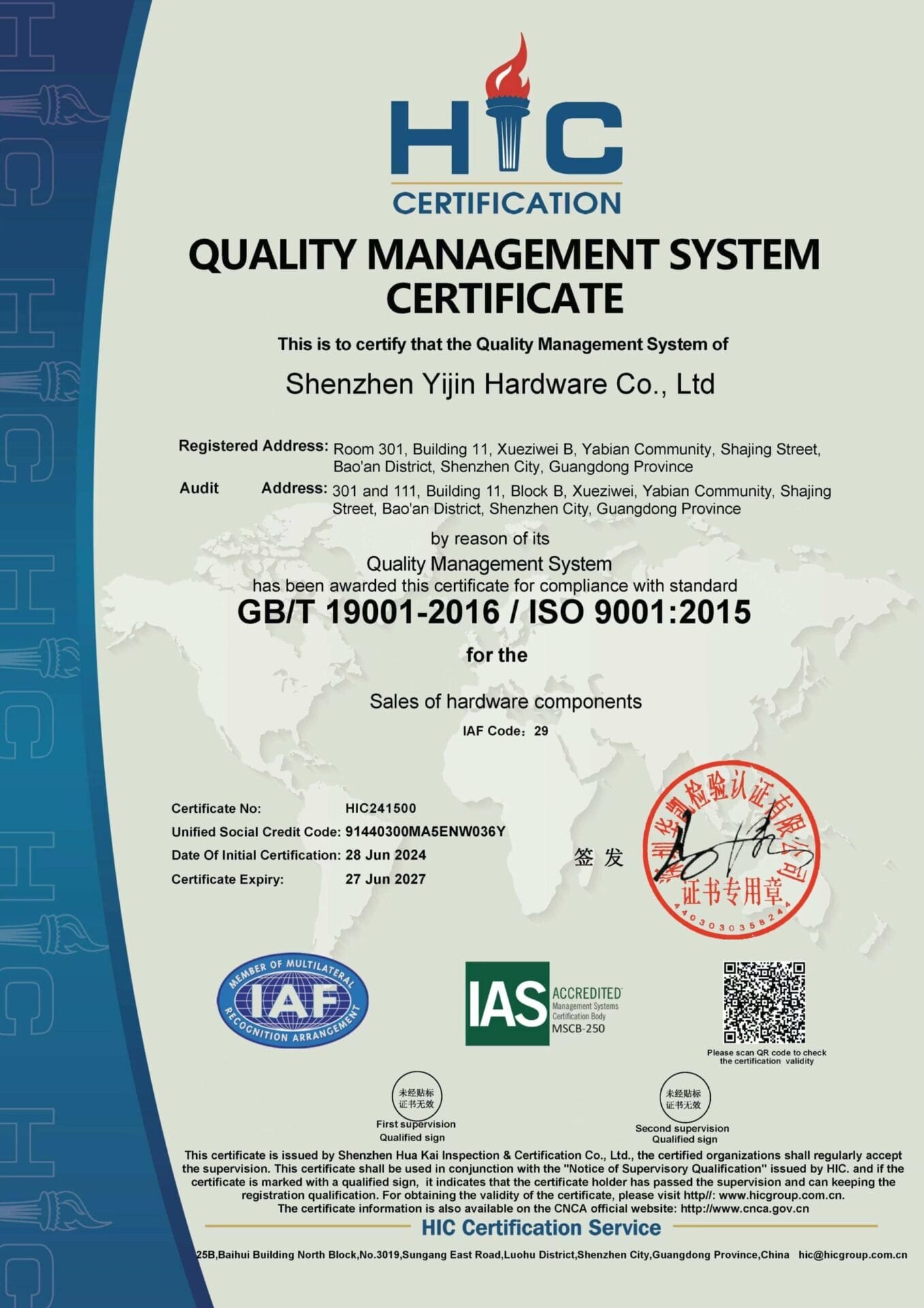
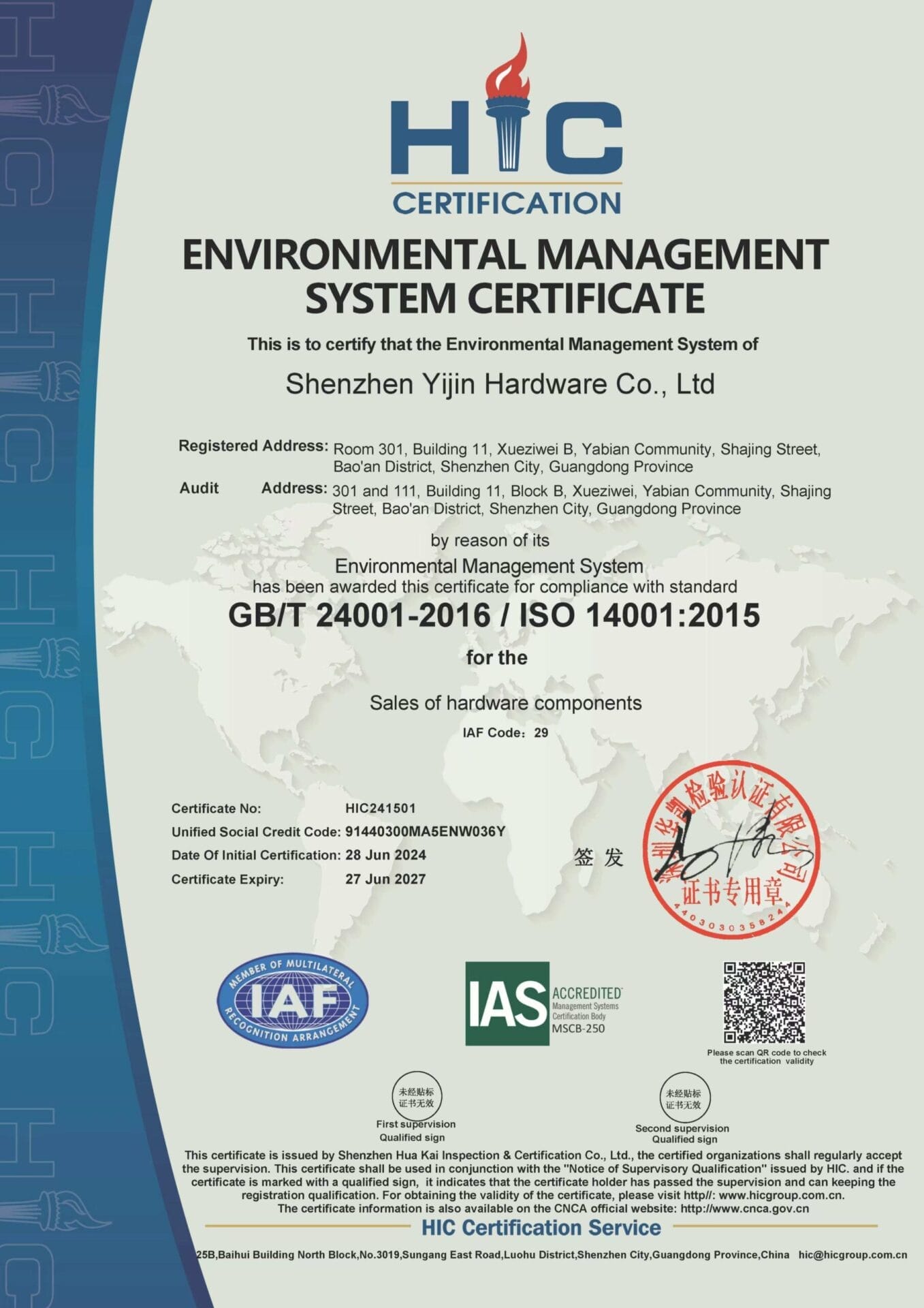
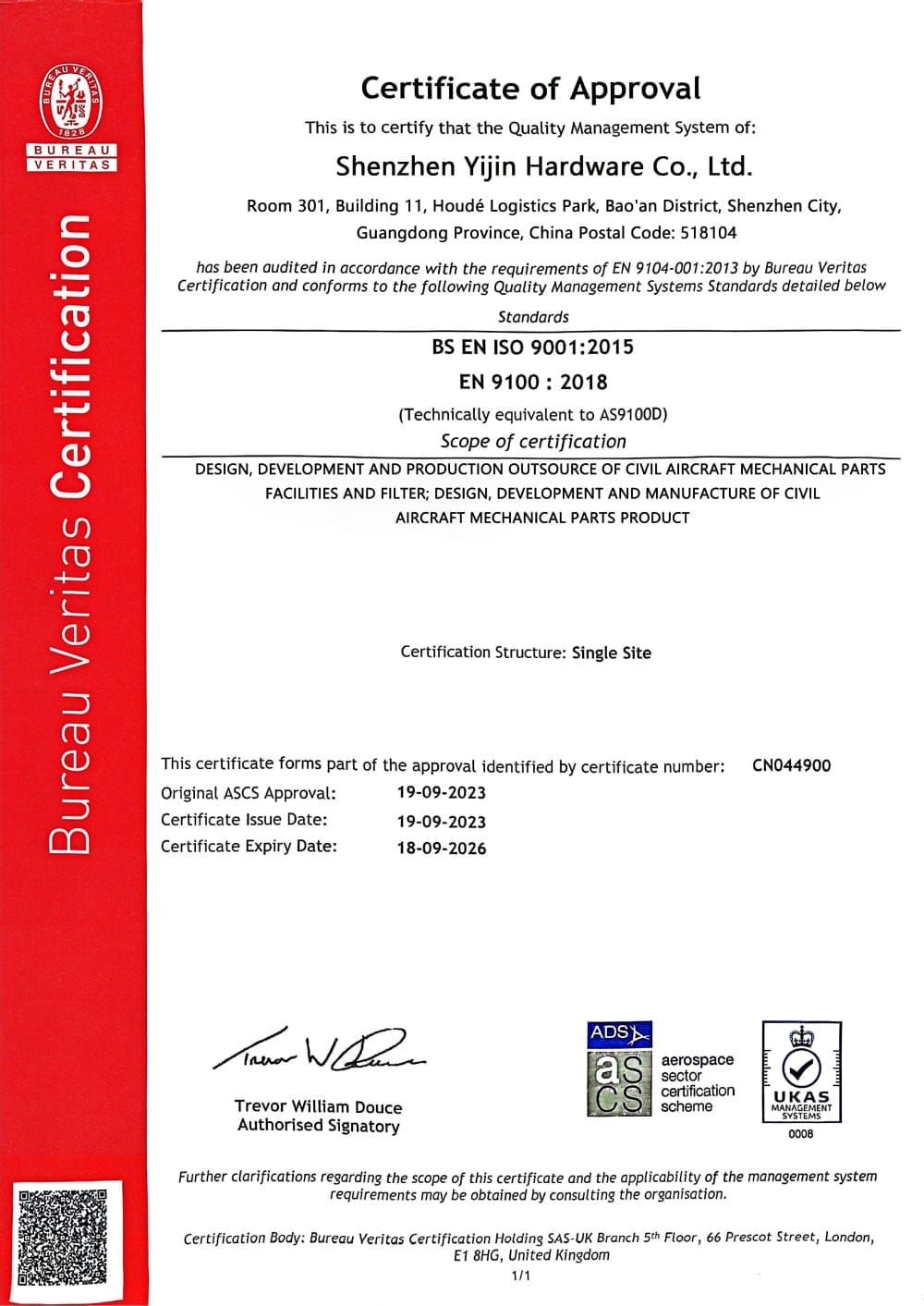
- Quality system: ISO 9001 certified.
Join 3000+ companies who work with Yijin Solution


PVD Coating with Yijin Solution
Yijin Solution provides PVD coating services in a range of coatings, colors, and finishes for machined, fabricated, and cast metal parts. You specify the coating and finish at the quote stage, and we coat the part to order.
Coatings such as TiN, ZrN, and DLC produce colors from gold to black on substrates including tool steel, stainless steel, and titanium alloys. These finishes add wear resistance, low friction, and surface hardness that improve part performance and appearance.
Coated parts serve automotive, aerospace, electronics, medical device, and industrial tooling applications.
PVD Coating Capabilities
The table below summarizes our standard PVD coating specifications.
| Parameter | Spezifikation |
|---|---|
| Coating types offered | TiN, TiCN, TiAlN, CrN, ZrN, DLC |
| Process methods | Sputtering, cathodic arc |
| Typical coating thickness | 0.5 to 5 microns, depending on coating type and application; confirmed at quote stage |
| Hardness range | HV 1,500 to 5,000+, depending on coating type |
| Substrate compatibility | Tool steel, stainless steel, titanium alloys, aluminium with pre-treatment, brass, copper, engineering plastics |
| Process temperature | 150 to 500 °C; does not distort heat-treated substrates |
| Dimensional impact | Negligible; film thickness measured in micrometres |
| Compliance | ISO 9001, ISO 14001 |
PVD Coating Types
Each coating delivers a different combination of hardness, friction coefficient, color, and thermal performance. Below covers the PVD coatings we apply most frequently.

TiN (Titannitrid)
Gold, HV 2,000 to 2,500, friction approximately 0.4. General wear resistance and decorative hardware. Most common PVD coating for tooling and consumer products.

TiCN (Titanium Carbonitride)
Grey-blue, HV 2,800 to 3,200, friction approximately 0.3. Higher hardness than TiN for interrupted cuts and forming dies.

TiAlN (Titan-Aluminium-Nitrid)
Dark grey, HV 3,000 to 3,500, friction approximately 0.35. High-temperature stability to 800 °C for dry machining tools and aerospace components.

CrN (Chromnitrid)
Silver, HV 1,800 to 2,200, friction approximately 0.5. Corrosion resistance for medical instruments and hydraulic components.

ZrN (Zirconium Nitride)
Gold-yellow, HV 2,600 to 3,000, friction approximately 0.4. Biocompatible for medical applications and a decorative alternative to gold plating.

DLC (Diamond-Like Carbon)
Black, HV 2,000 to 5,000+, friction approximately 0.1 to 0.15. Lowest friction coefficient. Automotive precision gears, medical devices, and optical components.

Nickel
Corrosion resistance and wear resistance. Versatile across most substrates and commonly used as an underlayer for chrome or gold.

Chrome
Hard chrome for wear surfaces such as hydraulic cylinders and valve bodies; decorative chrome for cosmetic applications including consumer hardware and automotive trim.

Zink
Cost-effective corrosion protection for steel parts, often paired with chromate or trivalent passivation.

Zinc-Nickel
High-performance corrosion protection for aerospace fasteners and structural fittings, and the modern replacement for cadmium plating.

Gold
Electrical conductivity and contact reliability for connectors, semiconductor components, and aerospace electronics.

Kupfer
Undercoat for adhesion and uniformity, or standalone for EMI shielding and electrical conductivity.

Tin
Solderability and corrosion resistance for electronic component leads and food-contact hardware.

Silver
High electrical and thermal conductivity for specialized electronic and aerospace applications.
Materials We PVD Coat
The substrate determines which coatings are compatible and what surface preparation is needed before the part enters the deposition chamber.
Werkzeugstahl
PVD extends tool life by reducing friction on cutting edges, forming dies, and injection mold cores. For thicker coatings or higher deposition temperatures, CVD coating may be more suitable.
Rostfreier Stahl
Excellent adhesion. PVD adds wear and scratch resistance to already corrosion-resistant parts. Common for medical and food-grade components.
Titan-Legierungen
PVD enhances biocompatibility and adds color for medical implant identification or decorative use.
Aluminium-Legierungen
Require a nickel or chrome underlayer for proper adhesion. Suitable for lightweight consumer product housings where scratch resistance matters.
Messing und Kupfer
Decorative PVD replaces lacquer finishes. Common in architectural hardware, plumbing trim, and luxury goods.
Engineering Plastics (ABS, polycarbonate)
PVD can coat pre-plated plastics at lower deposition temperatures. Consumer electronics trim and automotive interior accents.
Our PVD Coating Process
Every PVD coating order follows the same structured workflow from quote to shipment and runs alongside our broader CNC-Bearbeitung und Blechfertigung services.
- Quote and DFM review on uploaded CAD files. Coating type, thickness, color, and masking requirements are confirmed at this stage.
- Part manufacturing via CNC machining, sheet metal fabrication, or 3D printing if ordered as an integrated service.
- Substrate preparation, including ultrasonic cleaning or solvent degreasing, and a surface roughness check. Decorative coatings require Ra below 0.4 microns; functional coatings allow up to Ra 0.8 microns.
- Masking of threads, mating surfaces, bearing bores, and other features that must remain uncoated.
- Vacuum deposition in-house. Chamber evacuated, the target material vaporized, the reactive gas introduced, and the coating deposited at 150 to 500 °C.
- Post-coating inspection, including visual check, adhesion test, color verification, and dimensional spot-check where required.
- Packaging and shipment from our Shenzhen or Florida facility.
Industries and Applications
PVD-coated parts serve industries that specify wear resistance, low friction, hardness, or a durable metallic color at the part level.
Shift knobs, interior trim, gear components, and valve train parts. Durable decorative finishes resisting UV and abrasion; wear-resistant coatings extending drivetrain component life.
Turbine blade coatings, fastener wear surfaces, and actuator components. High-temperature PVD coatings extend part life in demanding thermal and load environments.
Watch cases, phone housings, laptop chassis accents, and connector pins. Fingerprint-resistant metallic colors in thin films that do not add bulk to tightly toleranced enclosures.
Surgical instruments, implant screws, and orthopedic guide pins. Biocompatible coatings reduce friction on reusable instruments and provide color coding for implant identification.
Cutting tools, forming dies, punches, and injection mold cores. PVD-coated tooling lasts longer between regrinds and produces better surface finishes on machined parts.
Why Yijin for PVD Coating
Yijin Solution runs PVD coating and part manufacturing in one facility. The points below cover lead time, design review, coating range, and quality control.

PrΓ€zision und QualitΓ€t
DFM review at the quotation stage flags PVD-related design issues early. Surface roughness targets for decorative versus functional coatings, masking complexity, and substrate compatibility are identified before production begins. ISO 9001 and ISO 14001 certified quality management systems, with Zeiss CMM inspection available for dimensional verification after coating.

Schneller Turnaround
In-house PVD coating runs alongside CNC machining, sheet metal fabrication, and other manufacturing processes in one facility. Parts move from manufacturing to coating without third-party handoffs, reducing lead time and the risk of handling damage between facilities.

Order Any Size
PVD coating is available across low-volume prototype runs and high-volume production batches. Minimum order quantities are flexible, allowing buyers to validate coating selection on a small batch before committing to full production volumes.

Prototyping to Production
Coating parameters established during prototype review carry directly into production. Thickness targets, masking specifications, and adhesion requirements confirmed at the sample stage are locked into the production process, removing the need to requalify at volume.

Material Breadth
Six PVD coating chemistries are supported alongside electroplating, anodizing, and powder coating. This gives buyers flexibility in surface treatment selection depending on performance, wear resistance, and aesthetic requirements across metals, carbides, and engineered substrates.

KostengΓΌnstig
Running PVD coating in the same facility as part manufacturing removes the cost and lead time associated with third-party finishing. Consolidated invoicing, single-point quality control, and reduced handling between processes keep per-part finishing costs competitive across both prototype and production volumes.
Gallery of PVD Coated Parts
The gallery shows PVD-coated parts produced across automotive, aerospace, electronics, medical, and industrial tooling applications.
PVD Coating FAQs
What coating thickness can you achieve with PVD?
Standard PVD coatings range from 0.5 to 5 micrometers. Thinner films under 1 micrometer preserve the tightest tolerances, and thicker films of 3 to 5 micrometers provide maximum wear life. The specific thickness depends on the coating material and application requirements.
Will PVD coating change my part dimensions?
Dimensional change is negligible for most engineering tolerances because the film is measured in micrometers. For parts with tolerances tighter than plus or minus 0.01 mm, masking and coating thickness targets should be discussed with our engineering team at the quote stage.
Which PVD coating color options do you offer?
Standard colors by coating type are gold from TiN, dark grey from TiAlN, silver from CrN, black from DLC, and gold-yellow from ZrN. Confirm available colors with our engineering team before committing to a specification.
Can you mask specific areas to keep them uncoated?
Yes. Threads, mating surfaces, bearing bores, and other critical features are masked before parts are loaded into the chamber. Masking requirements are confirmed during the DFM review.
How does PVD compare to anodizing for aluminum parts?
PVD produces a harder, thinner film and works across multiple substrates, while anodizing is limited to aluminum. For aluminum parts needing scratch resistance and tight tolerances, PVD is an option, but it typically requires a pre-treatment underlayer. Anodizing is simpler and lower cost for aluminum-only applications.
What is the typical lead time for PVD coating on machined parts?
Lead time depends on order volume, part complexity, and the finishing schedule. For most orders, PVD coating runs in parallel with the manufacturing schedule rather than adding a separate finishing queue. Our engineering team confirms the timeline at the quote stage.
Do you offer PVD coating as a standalone service or only with manufacturing orders?
PVD coating is an add-on finishing service on CNC machining, sheet metal fabrication, and die casting orders. You select PVD coating as part of the surface treatment specification based on your project requirements.

China vs US Manufacturing: CNC Costs, Reshoring, and How to Decide
A US shop and a China shop can quote the same CNC part two to three times apart. Buyers pause

IP Protection When Outsourcing CNC Machining to China
A buyer shares a full set of CAD drawings with a new supplier in China. Weeks later, a near-identical product

China CNC Machining Quality Control: AS9100 and ISO Realities
A certificate list on a supplier’s homepage does not prove much by itself. Anyone can post logos for ISO 9001,
Request a PVD Coating Quote
PVD coating adds wear resistance, low friction, and a range of metallic colors to machined and fabricated metal parts without altering part dimensions. Yijin Solution provides PVD coating services as part of in-house finishing, so the coating is specified and verified alongside the part it protects.