


Many sourcing decisions look straightforward on paper. Vietnam shows a 15% landed cost saving. Three months later, parts arrive out of tolerance.
That gap between projected and actual performance is what makes the China vs Vietnam decision a capability question, not just a cost question. Labor cost is one input. Machining capability, material supply, quality infrastructure, and lead time are the others, and they do not always point in the same direction.
China and Vietnam each hold real advantages depending on what the part demands. This comparison covers both countries on the factors that determine where a given part belongs, with a clear verdict for each one.
China vs. Vietnam for Manufacturing: The Quick Answer

China is the stronger option for tight-tolerance CNC parts, multi-axis machining, exotic alloys, and certified quality systems across the aerospace, medical, and automotive sectors. Vietnam has more competitive labor costs and tariff advantages for US-bound goods, especially for simpler turned or milled components and labor-intensive assembly.
For many precision-parts buyers, the practical answer is both. Complex, tolerance-critical work stays in China. Labor-intensive, lower-complexity parts move to Vietnam to reduce tariff exposure. The sections below explain why.
Manufacturing in China vs. Vietnam: at a Glance
The table below summarizes the key differences for buyers sourcing precision mechanical parts. Each factor is covered in detail in the sections that follow.
| Attribute | China | Vietnam |
|---|---|---|
| Manufacturing maturity | Decades-deep ecosystem, full vertical integration | Rapidly growing, strongest in assembly and light machining |
| CNC machining capability | 3, 4, and 5-axis widely available; Swiss turning mature | 3-axis common; 5-axis limited to larger foreign-invested shops |
| Typical CNC tolerances | Plus or minus 0.01 to 0.05 mm standard at scale | Plus or minus 0.05 to 0.1 mm typical; tighter possible but less consistent |
| Labor cost | 6 to 8 USD per hour in coastal hubs | 2 to 3 USD per hour, still 40 to 60% below China |
| US tariff exposure (June 2026) | About 35% effective on most goods (10% Section 122 plus 25% Section 301); steel and aluminum parts fall under separate Section 232 duties | 10% Section 122 baseline, down from 46% under the struck-down IEEPA tariffs; Section 301 investigations pending. Verify by HTS code. |
| Material supply chain | Deep domestic sourcing for metals, plastics, and alloys | Relies heavily on imported raw materials, often from China |
| Quality certifications | IATF 16949, ISO 13485, and ISO 9001 widely held at top-tier shops; aerospace certifications are available at certified facilities | ISO 9001 is common; automotive and medical certifications are rare outside foreign joint ventures |
| Lead time (CNC parts) | 7 to 15 days typical | 10 to 20 days; longer for complex or tight-tolerance work |
| IP protection | More developed legal framework; enforcement gaps for smaller buyers | Less mature framework; stronger NDA compliance in FDI zones |
| Best for | Complex, tight-tolerance CNC parts; high-volume production; deep material variety | Labor-intensive assembly; simpler turning and milling; tariff-sensitive US-bound goods |
Note: Tariff figures are current as of June 2026 and are subject to change. Verify HTS classification before making sourcing decisions.
Manufacturing in China: The Landscape
China’s manufacturing base built its scale through decades of industrial investment. A CNC machine shop, a heat treatment house, an anodizing line, and a fastener supplier can all sit within the same industrial park in Shenzhen or Dongguan. That clustering is what makes China fast. Secondary operations do not require cross-country shipping; they happen down the street.
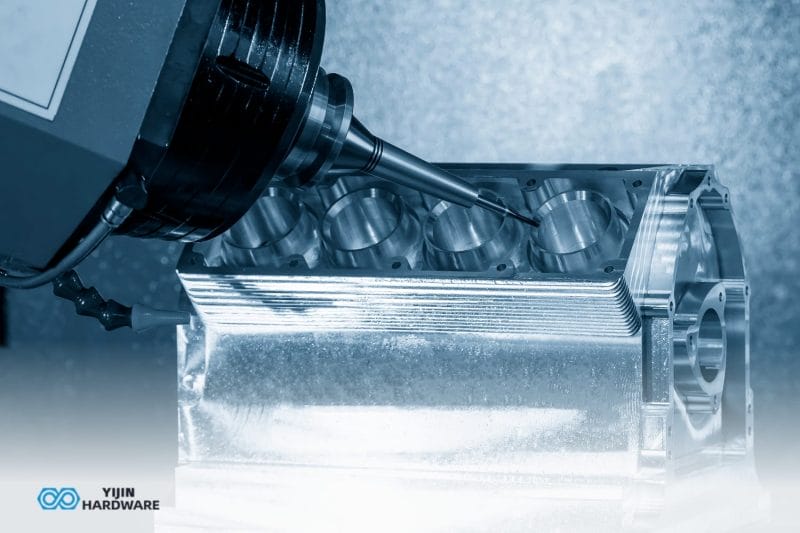
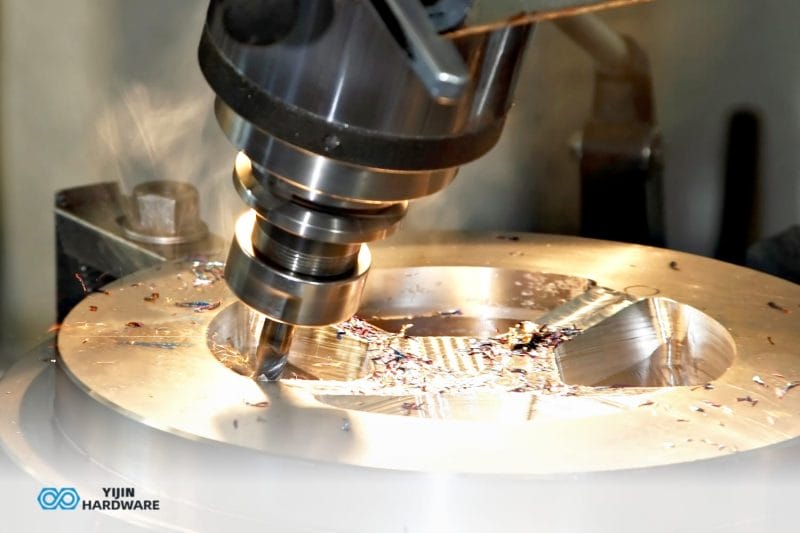
For precision parts buyers, this translates to access to 3-axis, 4-axis, and 5-axis CNC machining, Swiss-type turning, EDM, and grinding from a single region. Post-machining finishes are available through the same cluster.
Material availability is broad: aluminum alloys, stainless steels, titanium, Inconel, engineering plastics, and specialty copper alloys are stocked domestically. Top-tier Chinese shops hold IATF 16949, ISO 13485, and ISO 9001 certifications, and Zeiss CMM inspection is standard at that level.
The trade-off is cost pressure. Labor rates in coastal manufacturing hubs run 6 to 8 USD per hour, and for US-bound goods, the tariff stack pushes landed costs higher than it did two years ago.
For parts that require tight tolerances, multi-step processing, or certified quality documentation, China’s ecosystem depth is difficult to replicate elsewhere in Southeast Asia.
Manufacturing in Vietnam: The Landscape
Vietnam’s rise as a manufacturing destination has been fast and deliberate. Government incentives and foreign direct investment from Samsung, Foxconn, and Intel have pulled capital into industrial zones near Hanoi and Ho Chi Minh City. Trade agreements, including the CPTPP and EVFTA, have strengthened Vietnam’s position further. Labor costs run 2 to 3 USD per hour, roughly 40 to 60% below China’s coastal hubs.
The strength is assembly, labor-intensive fabrication, and simpler machining. Vietnamese shops handle 3-axis CNC milling and standard turning well. Some larger, foreign-invested facilities run 5-axis equipment. The installed base of advanced CNC machinery is smaller, and the finishing supply chain of plating, anodizing, and heat treatment is thinner than what China’s industrial clusters offer.
The material supply chain is the other constraint. Vietnam imports most of its industrial metals, often from China. That dependency adds lead time and creates a cost pass-through: when Chinese material prices shift, Vietnamese CNC shops feel it quickly.
For buyers with complex bills of material or exotic alloy requirements, sourcing in Vietnam requires more planning around material procurement.
Key Differences Between Manufacturing in China and Vietnam
Each subsection below covers one decision factor and ends with a clear verdict tied to real sourcing consequences.
Cost: labor, materials, and landed price
Labor is the figure most buyers look at first. Vietnam’s 2 to 3 USD per hour versus China’s 6 to 8 USD per hour looks like a clear win. For CNC-machined parts, labor is a smaller share of total cost than machine time and material. A complex 5-axis part might take 45 minutes of cycle time on a $300,000 machine. The operator’s hourly rate matters less than the shop’s machine rate and material markup.
Material cost tilts toward China. Domestic aluminum, steel, and alloy supply keeps procurement costs lower and lead times shorter. Vietnam imports most metals. On a material-heavy part, that import cost narrows the labor savings.
Landed cost for US-bound goods brings tariffs into the equation, and the gap there now favors Vietnam. The full tariff breakdown sits in its own section below. For material-heavy, precision-machined parts, the lower Vietnam tariff often does not offset China’s machine time and material-supply advantages.
Verdict: Vietnam wins on total landed cost for labor-intensive, low-complexity parts shipped to the US. China wins on material-heavy, precision-machined parts where machine time dominates cost, and the material supply chain needs to be local.
CNC machining and precision capability
China’s CNC ecosystem is deep. 5-axis simultaneous machining, Swiss-type turning for small-diameter work, wire EDM, and precision grinding are widely available across thousands of shops in the Pearl River Delta alone. Tolerances of 0.01 to 0.02 mm on production runs are routine at certified shops.
Vietnam’s CNC capability is growing, but the installed base is narrower. 3-axis milling and standard turning are well established. 5-axis machining exists at larger foreign-invested facilities, though it is not as widespread. Tolerances of plus or minus 0.05 to 0.1 mm are comfortable. Tighter work is possible, but consistency across production runs is harder to guarantee.
Surface finish and secondary operations widen the gap. China’s co-located ecosystem of plating, anodizing, heat treatment, and grinding vendors means a part can go from CNC to finished in the same industrial cluster. Vietnam’s finishing supply chain is thinner, and lead times for secondary operations tend to be longer.
Verdict: For parts needing plus or minus 0.02 mm or tighter, multi-axis machining, or exotic alloys, China remains the stronger option. For simpler turned or milled parts at moderate tolerances, Vietnam delivers comparable quality at lower cost.
Supply chain depth and material sourcing
China’s supply chain is vertically integrated. Metal mills, alloy distributors, fastener suppliers, and finishing houses sit within the same clusters. A shop in Shenzhen can source 7075-T6 aluminum, 17-4PH stainless steel, or Titanium Grade 5 from domestic suppliers without long procurement lead times.
Vietnam imports a large share of its industrial raw materials. Chinese suppliers are the primary source for steel, aluminum, and specialty alloys. This creates a direct dependency: disruptions in Chinese material supply hit Vietnamese shops with both delays and price increases.
For parts with complex bills of material or multi-material assemblies, this dependency matters. If a BOM calls for five different alloys and three surface finishes, a Chinese shop can often source everything locally. A Vietnamese shop may need to import most of it, adding procurement time to the project schedule.
Verdict: China has a clear advantage for material-intensive parts and multi-material assemblies. Vietnam’s reliance on imported material is a real constraint for complex BOMs.
Tariffs, trade agreements, and landed cost for US buyers
The tariff landscape shifted in 2026. In February 2026, the US Supreme Court struck down the IEEPA tariffs, which had pushed Vietnam’s reciprocal rate to 46% and created near-parity with China on some categories.
China: about 35% tariff effective on most manufactured goods, made up of the 10% Section 122 surcharge plus the 25% Section 301 duty. Steel and aluminum parts fall under separate Section 232 duties, raised to 50% in 2026, rather than the Section 122 surcharge. Product-specific rates run higher on targeted categories.
Vietnam: a 10% Section 122 baseline, down from 46% under the struck-down IEEPA tariffs. No Section 301 overlay is in force yet, though USTR opened new investigations in 2026, including one focused on Vietnam, that could raise rates after the Section 122 sunset.
Transshipment is the risk to watch. US Customs and Border Protection has increased enforcement on goods made in China but labeled as Vietnamese-origin. If a Vietnamese supplier mostly finishes Chinese-origin parts without substantial transformation, the higher rate can apply. Genuine manufacturing value-add in Vietnam is what earns the lower tariff.
Vietnam also benefits from trade agreements that China does not have. The CPTPP gives preferential access to Canadian, Japanese, Australian, and other markets. The EVFTA covers European trade. For buyers selling into those markets, Vietnam-origin parts carry a tariff advantage beyond US shipments.
Verdict: For US-bound goods, Vietnam’s tariff advantage is real but conditional. The Section 122 surcharge is temporary and expires on 24 July 2026 unless Congress extends it. An announced increase to 15% has not been formally implemented, and the rates face ongoing legal challenge.
Confirm genuine value-add in Vietnam, date every figure, and verify HTS classification before committing. For current rates, see the Tax Foundation tariff tracker and the USTR Section 301 schedules.
Quality systems, certifications, and inspection infrastructure

For buyers in aerospace, medical, or automotive, this factor can override everything else. China’s top-tier CNC shops hold industry-recognized quality certifications for aerospace, automotive, and medical devices. Zeiss CMM inspection, automated optical inspection, and full documentation packages such as first article inspection reports, PPAP Level 3, and material composition analysis are widely available.
Vietnam’s certification landscape is thinner. ISO 9001 is common, but aerospace and automotive sector certifications are rare outside foreign-invested joint ventures. For parts requiring certified quality systems and full traceability documentation, the pool of qualified Vietnamese suppliers is small.
This gap is narrowing as Vietnam attracts more foreign investment in precision manufacturing. For now, buyers sourcing for regulated industries should verify a Vietnamese supplier’s certifications independently rather than take the supplier’s word for it.
Verdict: China has a clear edge in certified quality infrastructure. For parts going into regulated end-use applications, China’s supplier base offers more options with verified credentials.
Intellectual property protection
Both countries present IP risk, and the mechanisms differ. China’s IP legal framework is more developed on paper. Courts handle patent and trade secret cases, and enforcement has improved at the national level. For smaller buyers without the resources to litigate in Chinese courts, enforcement remains inconsistent.
Vietnam’s IP framework is less mature. Foreign-invested industrial zones tend to have stronger NDA compliance and access controls, partly because the multinationals operating there enforce their own standards on co-located suppliers.
Practical guidance: require NDAs in both countries. In China, use a Chinese-language NDA enforceable under Chinese law. In Vietnam, NDA compliance tends to be more relationship-dependent. Dual sourcing can spread exposure, but only if both suppliers sign enforceable agreements.
Verdict: Neither country removes IP risk. China’s legal tools are stronger on paper. Vietnam’s foreign-invested zones offer practical containment. Require enforceable NDAs regardless of country.
Lead time: from order to delivered parts
China’s CNC lead times for custom parts run 7 to 15 days for standard orders. Prototype and sample work at capable shops can be faster. The co-located supply chain means secondary operations such as heat treatment, plating, and coating do not add the transit time they would in a less integrated ecosystem.
Vietnam’s CNC lead times run 10 to 20 days. Complex or tight-tolerance work extends further, especially when raw material needs to be imported. If the alloy is not stocked locally, procurement alone can add a week.
Shipping is roughly comparable. Both countries ship from major deepwater ports, and transit times to the US West Coast are similar. The difference is in production lead time, not ocean freight.
Verdict: China is faster for precision CNC parts, especially at prototype and low-volume stages. Vietnam’s lead-time gap narrows for higher-volume, simpler parts where material is pre-sourced.
How to Choose Between China and Vietnam for Parts
The verdicts above give the reasoning. This section turns them into decision triggers.
Source from China when:
- The parts require tolerances tighter than plus or minus 0.05 mm on critical features.
- The BOM includes exotic alloys, specialty plastics, or multiple materials from different suppliers.
- The industry requires AS9100D, IATF 16949, or ISO 13485 certifications with full FAIR or PPAP documentation.
- The application needs 5-axis machining, Swiss-type turning, or wire EDM capability.
- Prototype lead time is critical, and first articles are needed in days, not weeks.
- The part requires multiple secondary operations, such as plating, anodizing, or heat treatment, from a co-located supply chain.
Source from Vietnam when:
- The parts are labor-intensive assemblies or simpler turned and milled components at moderate tolerances.
- Tariff exposure on Chinese goods is eroding margins on US-bound shipments, and the part has genuine manufacturing value-add in Vietnam.
- Production volumes are high enough to absorb slightly longer lead times.
- The end market benefits from CPTPP or EVFTA preferential access, such as Canada, Japan, the EU, or Australia.
- The part design is stable, and material requirements are straightforward, such as standard aluminum or steel grades.
Decision framework at a glance
The matrix below maps common part scenarios to the source that usually fits best, with the reasoning behind each call.
| Part scenario | Recommended source | Reasoning |
|---|---|---|
| Tight-tolerance, multi-axis precision parts (plus or minus 0.02 mm or tighter) | China | Deeper 5-axis and Swiss-turning base, with such tolerances routine at certified shops |
| Regulated-industry parts (aerospace, medical, automotive) | China | Aerospace, automotive, and medical certifications widely held. with full inspection documentation available |
| Complex multi-material BOMs and exotic alloys | China | Vertically integrated material supply and co-located finishing |
| Prototype and low-volume runs needing fast first articles | China | 7 to 15 day lead times and co-located secondary operations |
| Labor-intensive assembly and simpler turned or milled parts | Vietnam | Lower labor cost with sufficient 3-axis capability |
| High-volume, stable-design parts in standard grades | Vietnam | Cost advantage holds, and longer lead times are absorbed at volume |
| Tariff-sensitive US-bound goods with genuine local value-add | Vietnam | 10% Section 122 baseline versus China’s heavier stack, subject to HTS and value-add checks |
| Parts sold into CPTPP or EVFTA markets (Canada, Japan, the EU, and Australia) | Vietnam | Preferential trade-agreement access that China does not hold |
| Mixed portfolios balancing complexity and tariff exposure | Both (dual sourcing) | Keep complex work in China; move simpler tariff-exposed parts to Vietnam |
Get the Right Sourcing Strategy with Yijin Solution
Sourcing between China and Vietnam comes down to part complexity, certification requirements, and tariff exposure, not labor costs alone. Yijin Solution operates in Shenzhen’s precision manufacturing cluster and focuses on the high-complexity, high-certification work where China’s ecosystem holds its advantage, covering CNC machining, sheet metal fabrication, and die casting with IATF 16949 and ISO 13485-certified quality systems.
Upload a design and target volume, and the engineering team will confirm the right process, flag DFM risks, and return a quote within 24 hours.
China vs Vietnam CNC Machining FAQs
Do I need to visit the factory before ordering from China or Vietnam?
Not always. For prototype or low-volume orders, a structured remote check works: Verify the business license, confirm certifications independently, request a sample with a first article inspection report, and review DFM feedback. A physical visit or third-party audit earns its cost for high-value, recurring, or safety-critical work. This matters more in Vietnam, where fewer shops hold the certifications that would otherwise vouch for their capability.
Are minimum order quantities different between China and Vietnam?
For CNC machining, both countries accept low volumes, including single prototypes, because the process does not require dedicated tooling. MOQs tend to rise for die casting or injection molding, where tooling investment needs to be amortized. Vietnamese shops sometimes set higher minimums on parts that depend on imported material to offset procurement overhead. Ask each supplier for both its prototype and production MOQ.
What is involved in moving a part from a China supplier to a Vietnam supplier?
Treat it as a requalification, not a transfer. The new supplier needs the full drawing package, material specifications, and a first article inspection against the required tolerances before production begins. Expect a sample cycle and possible DFM adjustments if the Vietnamese shop runs different machine platforms. Confirm material source as well, since imported stock can affect both lead time and the transshipment question.
Can the same part be made to identical specs in both countries?
Often, but verify rather than assume. Identical drawings do not guarantee identical results when machines, tooling, and inspection equipment differ. For dual-sourced parts, qualify each supplier separately with its own first article inspection. Watch tight-tolerance or surface-finish features most closely. That is where capability gaps show up first.
Back to Top: Manufacturing in China vs Vietnam: Cost, Quality, and Sourcing Compared






 English
  Spanish
  German
  French