


A buyer shares a full set of CAD drawings with a new supplier in China. Weeks later, a near-identical product surfaces on a marketplace it was never meant to reach. That scenario is the single biggest fear buyers have about China sourcing, and it is not an imaginary one.
The US Department of Commerce lists intellectual property infringement as a persistent, documented risk of manufacturing in China. How large the risk runs depends on the agreement a supplier signs, how a design is split across drawings, and how many vendors ever see the whole picture.
No contract or sourcing structure removes the exposure completely, and a supplier promising otherwise is overselling. It can be cut down sharply through three levers: the agreement, the drawing package, and the vendor structure. Each is a concrete decision made before a first order ships, covering which contract terms bind, which drawings travel, and which vendor sees what.
NNN Agreement vs. NDA: Which One Actually Holds Up in China?
Most buyers default to a non-disclosure agreement because it is what they already use at home. But in a Chinese court, that default rarely holds. A standard NDA drafted under US or EU law is built to stop disclosure and says nothing about use or circumvention.
A factory can keep a design confidential and still build it, sell it, or approach the buyer’s own customers directly, all without breaching the contract.
An NNN agreement closes that gap. The three Ns stand for non-disclosure, non-use, and non-circumvention, and each one blocks a specific behavior an NDA leaves untouched.
It holds in a Chinese court for a structural reason. An NNN written for Chinese jurisdiction draws its force from China’s Anti-Unfair Competition Law and Civil Code, the same statutes a Chinese judge already applies.
Three details decide whether that enforceability is real or theoretical: Chinese governing law, Chinese court jurisdiction rather than international arbitration, and a signature carrying the supplier’s official company chop. Skipping any of the three makes the agreement far harder to act on. The US Patent and Trademark Office’s China IPR Toolkit walks through the registration side in more depth.
The two agreements separate on five points, and every one of them shows up at enforcement time.
| Feature | Standard NDA | NNN Agreement |
|---|---|---|
| Governing law | US or EU | Chinese law |
| Jurisdiction | Home court or arbitration | Chinese court |
| Covers non-use | No | Yes |
| Covers non-circumvention | No | Yes |
| Enforceable against a Chinese supplier | Rarely in practice | Yes, when properly drafted and chopped |
Design-for-IP: Structuring Drawings So No Vendor Sees the Whole Product
A signed NNN protects the relationship but does not stop a supplier from learning more about a product than it needs to know. That is a separate problem with a separate fix: deciding, before any drawing goes out, exactly what each vendor is allowed to see.
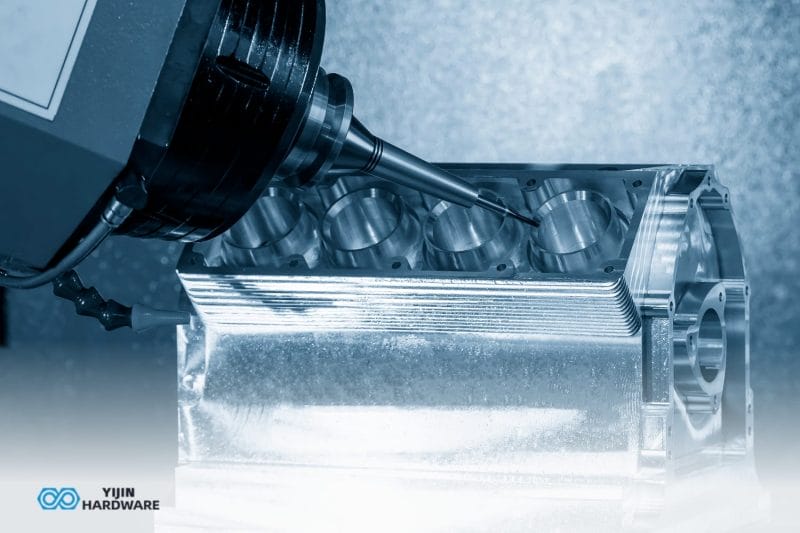
A machined housing makes the point concrete. The vendor cutting it needs the outer geometry, the mounting points, and the tolerances. It does not need the circuit board that sits inside, the firmware that runs on that board, or the assembly drawing showing how the two connect.
Sending the full package anyway is an unforced information leak, and an avoidable one. A drawing package redacted after the fact tends to miss what a specialist review would have caught from the start. A disciplined new product development process builds packages this way by default, splitting design intent from manufacturing detail before any vendor sees either one.
BOM Chunking: Splitting the Bill of Materials Across Vendors
Design-for-IP controls what a single drawing shows. Splitting the bill of materials controls what a single vendor ever handles. The idea, sometimes called BOM chunking, is simple. Instead of one vendor receiving the complete assembly, the parts list is divided so each vendor manufactures its own tier and never sees the rest.
No single supplier holds the complete assembly picture, so no single vendor is in a position to reproduce the finished product alone. A competitor would need to reconstruct the whole design from fragments held by factories that likely do not know each other exists.
The cost is coordination. Managing three or four vendors instead of one adds scheduling overhead and multiplies the quality checkpoints a buyer has to track. Shipping and assembly steps that used to happen inside one factory now happen across several.
Vendor Concentration: Weighing Fewer Suppliers Against Lower IP Exposure
Design-for-IP and BOM chunking both push toward more vendors, not fewer, but that push has a limit.
Consolidating with a single trusted vendor lowers management overhead. Fewer relationships usually means fewer handoffs, faster resolution when an issue surfaces, and often a better price once volume concentrates with one supplier. Distributing the work across several vendors moves in the opposite direction: more overhead, more moving parts, and less concentration risk on any single relationship.
Neither answer is correct in general. A buyer making a low-margin, easily copied commodity part has less to protect and more to gain from consolidation. A buyer whose design represents years of engineering investment usually faces the opposite math. The right balance is a judgment call based on what the design would be worth in a competitor’s hands, not a fixed rule applied the same way every time.
What does an IP-Protection Process Look Like Inside a Factory?
A contract and a drawing strategy only matter if a factory runs them day to day. Inside Yijin Solution’s production process, IP-protection comes down to four practices:
- An NNN is signed on every project as standard practice, not something a buyer has to request.
- Drawing access is restricted to the staff working on that specific order, not open to the wider shop floor.
- Tooling drawings are either destroyed or returned to the buyer once a project closes.
- Staff assigned to a project complete confidentiality training tied to that project.
None of these four habits is unusual on its own. Together they separate a policy that exists on paper from a process a buyer can verify up front.
Has China’s IP Enforcement Actually Improved Since 2019?
The honest answer is yes, and also not entirely. The court data and the trade data tell two different halves of the same story.
On the enforcement side, the numbers have moved. The Supreme People’s Court’s Intellectual Property Court marked its seventh anniversary on January 28, 2026, with the release of its 2025 Annual Report.
The Civil Code created a unified punitive damages system for IP cases when it took effect in 2021. The court has applied it in 58 cases since, worth RMB 2.05 billion combined. Of those, 30 came in 2025 alone, about RMB 1.13 billion, averaging close to RMB 38 million per case. That single year outweighed the punitive total from every prior year combined.
A broader count tells a similar story. Since the court’s founding, 73 cases have cleared RMB 10 million in damages, RMB 5.24 billion in total. Of those 73, the 32 decided in 2025 averaged roughly RMB 80 million each.
One case lands close to home for machining buyers. The Supreme People’s Court’s 2026 Work Report to the National People’s Congress singled out a CNC machine-tool trade-secret case as an example. The infringer and its affiliated companies were ordered to pay roughly RMB 380 million in triple punitive damages.
That is real money attached to real enforcement, but it is not the whole picture.
The Office of the United States Trade Representative released its 2026 Special 301 Report on April 30, 2026. It keeps China on the Priority Watch List, one of six countries named this year. The cited concerns include trade secret protection, technology transfer, and counterfeiting.
Both of these things are true at once. Enforcement has genuinely strengthened, and US trade officials have not called the matter resolved. A buyer plans around both.
What to Verify Before Sharing Drawings with a New Supplier

Everything above assumes a supplier that honors an NNN in practice. Four checks confirm that before the first drawing goes out.
- Request the supplier’s written IP-protection process before sending any files, not after.
- Confirm the NNN names Chinese court jurisdiction rather than international arbitration.
- Check for any public record of IP complaints against the supplier. No single registry exists for this in China, so USTR and US-China Business Council reporting are the most useful public sources.
- For high-value or safety-critical IP, involve an intellectual property attorney before anything is shared.
None of this is legal advice. It is the sourcing groundwork that makes an NNN worth signing in the first place.
IP protection in China comes down to structure, not luck: the right contract, controlled drawings, and a deliberate vendor split. Yijin Solution signs a China-enforceable NNN agreement as standard on every custom manufacturing project, before any drawings are exchanged. Buyers preparing to source a new part can send their drawings for a review of IP-handling terms before committing.
IP Protection FAQs
Does a home-country patent protect a design in China?
No, China follows a first-to-file system, so protection requires registering directly with the China National Intellectual Property Administration, not relying on a US or EU filing. A separate registration is needed for each right a buyer wants to protect.
Should an NNN agreement be written in Chinese?
A bilingual contract with a controlling Chinese-language version supports enforcement in a Chinese court and reduces the risk of translation disputes.
How much does putting an NNN agreement in place typically cost?
Costs vary by scope and by firm. A China-enforceable NNN drafted by a specialist is a modest expense set against the value of the IP it protects. Template agreements found online are rarely worth the risk.
How long does an NNN agreement stay in force after a project ends?
Terms vary, but two to three years past the end of the relationship is common. Longer or indefinite terms are negotiable if both sides agree.
What happens if a supplier breaches an NNN agreement?
The agreement typically sets liquidated damages, a fixed or formula-based amount agreed in advance, which is easier to enforce in a Chinese court than proving open-ended losses.
Back to Top : IP Protection When Outsourcing CNC Machining to China






 English
  Spanish
  German
  French