



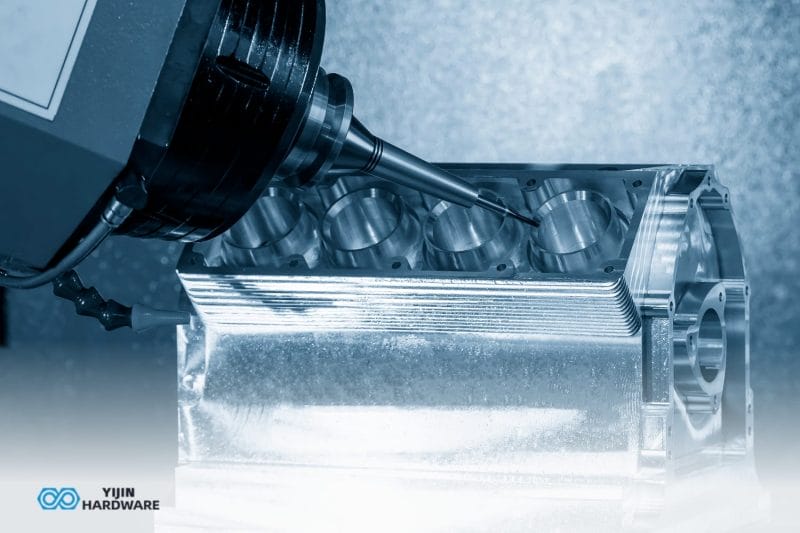
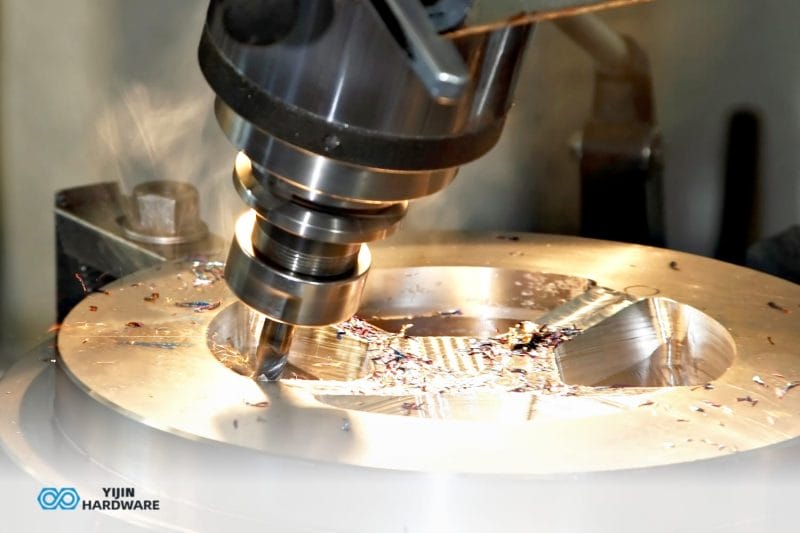

Acrylnitril-Butadien-Styrol, kurz ABS, ist ein thermoplastisches Polymer, das von Autoarmaturenbrettern und LEGO-Steinen bis hin zu Schutzhelmen und Elektronikgehäusen verwendet wird. Es ist einer der am häufigsten verarbeiteten technischen Kunststoffe im Spritzguss, in der CNC-Bearbeitung und im 3D-Druck und wird für seine Maßhaltigkeit, eine saubere Oberfläche und ein Kostenprofil geschätzt, das sowohl für Prototypen als auch für Serien.
Dieser Leitfaden erläutert, was ABS auf Polymer-Ebene tatsächlich ist, welche mechanischen und thermischen Eigenschaften die Bauteilkonstruktion bestimmen, wie es im Vergleich zu anderen gängigen Thermoplasten abschneidet und welche Fertigungsverfahren daraus fertige Teile machen
Was ist ABS-Material?
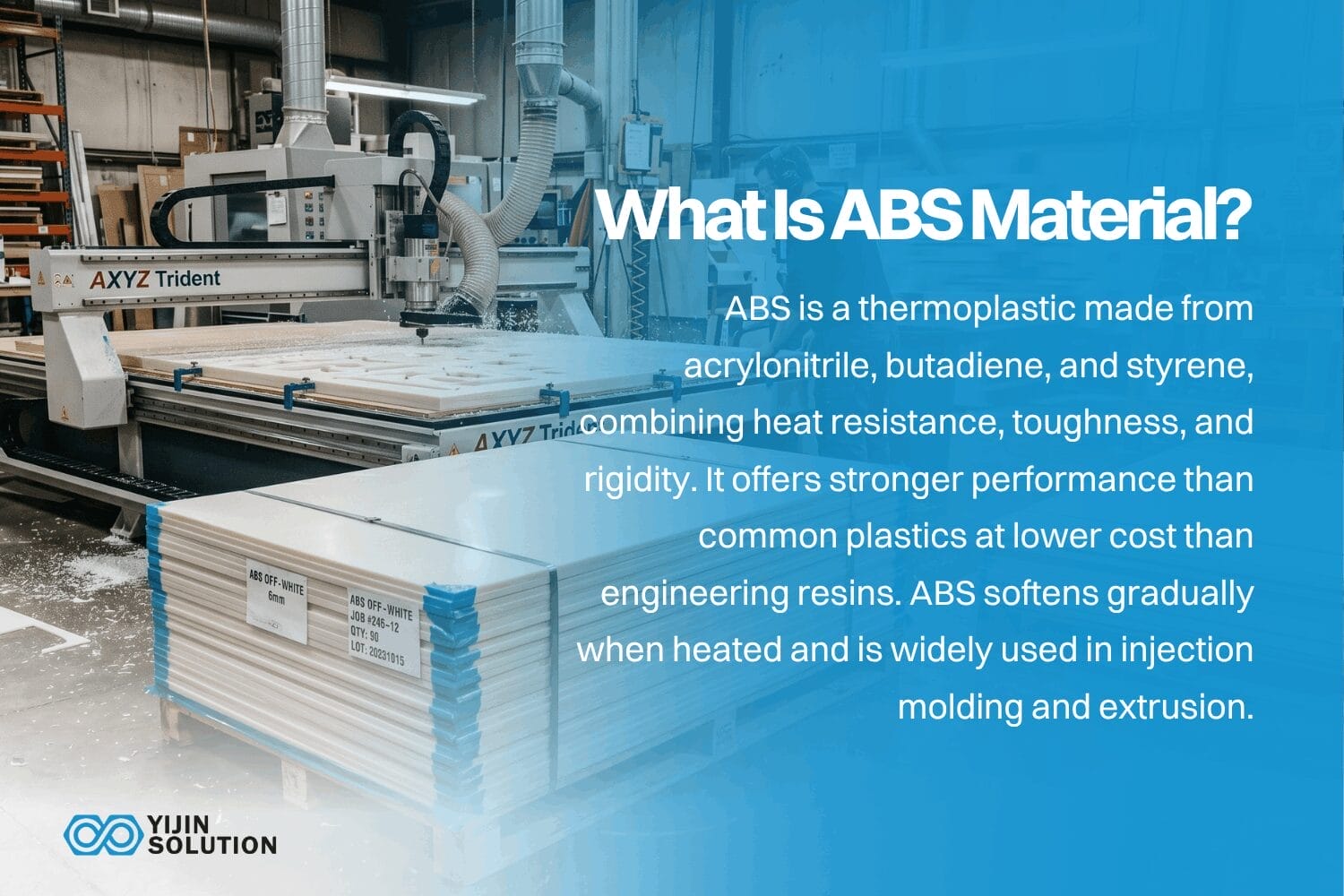
ABS ist ein thermoplastisches Polymer, das durch Polymerisation von drei Monomeren hergestellt wird: Acrylnitril, Butadien und Styrol. Jedes Monomer trägt eine bestimmte Eigenschaft zum fertigen Material bei. Acrylnitril sorgt für Chemikalienbeständigkeit und Wärmestabilität. Butadien erhöht die Zähigkeit und Schlagfestigkeit. Styrol liefert Steifigkeit, Glanz und gute Verarbeitbarkeit.
In der Hierarchie der technischen Kunststoffe liegt ABS zwischen Standardkunststoffen wie Polyethylen und Hochleistungsharzen wie PEEK. Es bietet eine stärkere mechanische Leistung als Polystyrol oder Polypropylen zu geringeren Kosten als Nylon oder Polycarbonat.
Diese Positionierung erklärt einen globalen ABS-Harzmarkt von rund 9,35 Millionen Tonnen im Jahr 2025.
ABS ist amorph, das heißt, es hat keine kristalline Struktur. Es erweicht allmählich beim Erhitzen, anstatt bei einer scharfen Temperatur zu schmelzen. Seine Glasübergangstemperatur liegt bei etwa 105 °C, und der typische Verarbeitungsbereich von 200 bis 240 °C eignet sich für Spritzgießen, Extrusion und die meisten anderen Schmelzformverfahren.
Wichtige Eigenschaften von ABS
Die Wahl von ABS für ein Projekt bedeutet zu verstehen, was das Material gut kann und wo seine Grenzen liegen. Die folgende Tabelle fasst die mechanischen, thermischen und physikalischen Eigenschaften zusammen, die die meisten Materialentscheidungen bestimmen.
| Eigentum | Typischer Wert | Prüfnorm |
|---|---|---|
| Dichte | 1,04 bis 1,06 g/cm³ | ISO 1183 |
| Zugfestigkeit | 41 bis 45 MPa | ISO 527 / ASTM D638 |
| Elastizitätsmodul | 2,0 bis 2,6 GPa | ISO 527 |
| Bruchdehnung | 22 bis 25 % | ISO 527 / ASTM D638 |
| Izod-Kerbschlagzähigkeit | 160 bis 200 J/m | ASTM D256 |
| Glasübergangstemperatur | 105 bis 95 °C | DSC |
| Vicat-Erweichungstemperatur | Ungefähr 100 °C | ISO 306 |
| Wärmeleitfähigkeit | 0,1 W/m·K | Allgemein |
| Elektrischer Widerstand | 10¹⁵ Ohm/cm | ASTM D257 |
| Wasseraufnahme | 0,2 bis 0,5 % | ASTM D570 |
| Entflammbarkeitsklasse | HB nach UL 94 | UL 94 |
Haftungsausschluss: Die Werte repräsentieren Allzweck-ABS-Sorten. Spezifische Formulierungen wie hochschlagfeste, flammhemmende oder glasfaserverstärkte Varianten weichen ab. Bestätigen Sie die Eigenschaften immer anhand des Datenblatts der spezifischen Sorte für Ihre Anwendung.
Mechanische Eigenschaften
ABS bietet eine sinnvolle Balance aus Steifigkeit und Zähigkeit. Die Zugfestigkeit von 41 bis 45 MPa und der E-Modul von 2,0 bis 2,6 GPa verleihen ihm genügend Steifigkeit für strukturelle Gehäuse und Umhausungen, während eine Kerbschlagzähigkeit nach Izod von 160 bis 200 J/m bedeutet, dass es bei plötzlichem Aufprall Energie gut absorbiert. Diese Zahlen spiegeln direkt wider, wo das Material eingesetzt wird: Innenverkleidungen im Automobilbau, Gehäuse für Elektrowerkzeuge und Schutzausrüstung.
Ein Großteil dieser Zähigkeit stammt aus der Butadien-Kautschukphase, die in der Styrol-Acrylnitril-Matrix dispergiert ist. Ein höherer Butadiengehalt erhöht die Schlagfestigkeit, verringert jedoch die Oberflächenhärte und die Wärmeformbeständigkeitstemperatur. Hersteller passen das Verhältnis an die Endanwendung an. Hochschlagfeste Typen tauschen etwas Steifigkeit gegen bessere Energieabsorption. Standardtypen bevorzugen Steifigkeit und Oberflächengüte.
Thermische Eigenschaften
ABS verhält sich zuverlässig bei Dauergebrauchstemperaturen bis etwa 70 bis 80 °C. Darüber beginnen die mechanischen Eigenschaften zu sinken. Die Glasübergangstemperatur von 105 bis 105 °C markiert den Punkt, an dem das Material von starrem zu gummielastischem Verhalten übergeht.
Für Anwendungen mit dauerhafter Wärmebelastung wie Automotive-Bauteile im Motorraum oder Leuchten sind hitzebeständige ABS-Typen oder alternative Materialien wie Polycarbonat oder Nylon oft besser geeignet.
Die geringe Wärmeleitfähigkeit von 0,1 W/m·K in Kombination mit einem spezifischen Volumenwiderstand von etwa 10¹⁵ Ohm/cm macht ABS zu einem starken elektrischen Isolator. Es wird häufig für Elektronikgehäuse, Schalterplatten und Kabelkanäle spezifiziert.
Chemische Beständigkeit
ABS widersteht wässrigen Säuren, Laugen, konzentrierter Salzsäure und Phosphorsäure. Es verträgt auch den Kontakt mit Alkohol, tierischen und pflanzlichen Ölen sowie den meisten Mineralölen ohne Beeinträchtigung. Diese Eigenschaften machen es geeignet für Sanitärarmaturen, Gehäuse für die Lebensmittelverarbeitung und Laborgehäuse.
Die Grenzen zeigen sich bei bestimmten Lösungsmitteln. Aceton, MEK und einige chlorierte Kohlenwasserstoffe lösen ABS an oder lassen es verspröden. Längere UV-Einstrahlung schädigt zudem die Oberfläche und führt zu Vergilbung und Versprödung. Für den Außeneinsatz sind in der Regel UV-stabilisierte Typen oder Schutzbeschichtungen erforderlich.
Wie ABS-Teile hergestellt werden
ABS kann mit den meisten gängigen Kunststoff-Fertigungsverfahren verarbeitet werden. Das richtige Verfahren hängt von der Stückzahl, der Bauteilgeometrie, den Toleranzanforderungen und dem Budget ab. Die vier unten beschriebenen Verfahren decken den Großteil der heute produzierten ABS-Teile ab.
Spritzgießen
Spritzgießen ist das dominierende Fertigungsverfahren für ABS-Teile bei Stückzahlen über einigen hundert Einheiten. ABS-Granulat wird erhitzt und unter Druck in eine Stahl- oder Aluminiumform gespritzt, anschließend gekühlt und ausgeworfen. Die niedrige Schmelzviskosität und die guten Fließeigenschaften lassen das Harz dünnwandige, geometrisch komplexe Kavitäten sauber ausfüllen.
Die typische Formschwindung liegt bei 0,4 bis 0,7 % und ist ausreichend vorhersehbar, um enge Maßtoleranzen zu halten.
Das Trocknen vor dem Spritzgießen ist wichtig: ABS nimmt Feuchtigkeit auf, und ungetrocknete Pellets verursachen Oberflächenverspritzungen, reduzierte Schlagfestigkeit und Maßabweichungen. Standardpraxis ist das Trocknen bei 80 bis 95 °C für drei bis vier Stunden in einem Trockenmittel-Trockner.
CNC-Bearbeitung
Für Prototypen, Kleinserien oder Teile, die engere Toleranzen erfordern, als der Spritzguss liefern kann, CNC-Bearbeitung von ABS ist der praktikable Weg. ABS lässt sich auf Standard-Fräs- und Drehmaschinen sauber bearbeiten. Es entsteht nur wenig Wärme beim Schneiden, Standard-Wendeschneidplatten aus Hartmetall sind geeignet, und die Oberfläche ist direkt ab Maschine gut.
Beim Gleichlauffräsen erzielt man auf ABS in der Regel eine bessere Oberfläche als beim Gegenlauffräsen.
Die Spankontrolle ist wichtig: ABS-Späne können schmelzen und sich wieder an der Bauteiloberfläche anhaften, wenn sich Wärme aufbaut. Scharfes Werkzeug und moderate Spindeldrehzahlen helfen dabei. Kühlmittel ist optional, aber für Arbeiten mit engen Toleranzen nützlich.
3D-Druck
ABS war eines der ersten Materialien für das Fused Deposition Modeling (FDM) und ist bis heute eines der am häufigsten gedruckten Thermoplaste. Im Vergleich zu PLA sind ABS-Drucke stärker, hitzebeständiger und lassen sich mit Aceton dampfglätten für eine nahezu spritzgussähnliche Oberfläche.
Gedruckte ABS-Teile eignen sich am besten für Funktionsprototypen, Passmodelle und Kleinserienvorrichtungen. Für Serienteile liefern Spritzguss oder CNC-Bearbeitung in der Regel bessere mechanische Eigenschaften und Maßhaltigkeit.
Extrusion
ABS-Platten, -Stäbe und -Rohre werden durch Extrusion hergestellt, bei der erhitztes ABS durch eine Düse gepresst wird, um durchgehende Profile zu erzeugen. Extrudierte ABS-Platten werden häufig beim Thermoformen für Kofferschalen, Geräteauskleidungen und Verkaufsdisplays eingesetzt. Das Material lässt sich dank seines breiten Erweichungsbereichs und seiner guten Schmelzfestigkeit gut thermoformen.
ABS im Vergleich zu anderen gängigen Thermoplasten
Die Materialauswahl erfolgt selten isoliert. Konstrukteure und Einkaufsteams vergleichen ABS je nach Anwendung in der Regel mit einer kurzen Liste von Alternativen. Die folgende Tabelle zeigt die häufigsten direkten Vergleiche.
| Eigentum | ABS | Polycarbonat | Polypropylen | Nylon 6/6 | PLA |
|---|---|---|---|---|---|
| Schlagzähigkeit | Hoch | Sehr hoch | Mäßig | Hoch | Niedrig |
| Hitzebeständigkeit | Bis ca. 80 °C | Bis ca. 130 °C | Bis ca. 100 °C | Bis ca. 180 °C | Bis ca. 55 °C |
| Chemische Beständigkeit | Beständig gegen Säuren, Laugen | Schlecht im Vergleich zu Lösungsmitteln | Ausgezeichnet | Gering beständig gegen Säuren | Begrenzt |
| UV-Beständigkeit | Schlecht | Mäßig | Schlecht | Schlecht | Schlecht |
| Oberflächengüte | Ausgezeichnet | Ausgezeichnet | Gut | Gut | Gut |
| Am besten für | Gehäuse, Umhausungen, Innenverkleidungen | Transparente Abdeckungen, hochschlagfeste Schutzhauben | Filmscharniere, Chemikalientanks | Zahnräder, Lager, Strukturteile | Prototypen, nicht funktionsfähige Modelle |
Haftungsausschluss: Die Angaben zur Hitzebeständigkeit beziehen sich auf die Dauereinsatztemperatur, nicht auf Spitzen- oder Kurzzeitbelastungsgrenzen. Die tatsächliche Leistung hängt von Belastung, Dauer und Umgebung ab.
Wann ABS Polycarbonat überlegen ist
Polycarbonat bietet höhere Schlagfestigkeit und eine höhere Einsatztemperatur, ist aber teurer und schwieriger zu verarbeiten. Für undurchsichtige Gehäuse, die Schlagfestigkeit ohne optische Klarheit benötigen, liefert ABS eine vergleichbare Haltbarkeit zu geringeren Kosten pro Teil. ABS lässt sich zudem berechenbarer bearbeiten; Polycarbonat kann reißen, wenn der Spann Druck zu hoch ist oder die Schneidwerkzeuge stumpf sind.
Wann ABS Polypropylen überlegen ist
Polypropylen führt zu Chemikalienbeständigkeit und Ermüdungsfestigkeit, was es zum stärkeren Kandidaten für Filmscharniere und Chemikalienbehälter macht. Es ist auch schwieriger zu lackieren, schwieriger mit Klebstoffen zu verbinden und erzeugt eine wachsartige Oberfläche. Wenn das Bauteil ein hochwertiges lackiertes oder plattiertes Aussehen benötigt, ist ABS der bessere Kandidat.
Wann Sie etwas anderes wählen sollten
ABS stößt an seine Grenzen in Umgebungen mit Dauerhitze über 80 °C, bei direkter Sonneneinstrahlung ohne UV-Schutz und bei Kontakt mit aggressiven Lösungsmitteln. Nylon oder glasfaserverstärktes Nylon ist unter diesen Bedingungen oft die bessere Wahl. Für transparente Gehäuse oder Abdeckungen sind Polycarbonat oder PMMA die Standardoptionen.
Typische Anwendungen von ABS-Material

ABS ist in Branchen vertreten, die eine Balance aus Zähigkeit, Aussehen und Erschwinglichkeit benötigen. Die folgenden Anwendungen zeigen, wo die Eigenschaftsmischung des Materials den größten Wert liefert.
Innenraumteile für die Automobilindustrie
Armaturenbretter, Türverkleidungen, Säulenverkleidungen, Handschuhkastengehäuse und Sicherheitsgurtkomponenten werden routinemäßig aus ABS gespritzt. Das Material hält dem Temperaturwechsel im Fahrzeuginnenraum stand, nimmt strukturierte Oberflächen und Lackierungen gut an und erfüllt in Standardtypen die Brandschutzanforderungen der Automobilindustrie. Der American Chemistry Council berichtet einen Durchschnitt von 25 Pfund ABS pro nordamerikanischem Leichtfahrzeug.
Gehäuse für Unterhaltungselektronik und Haushaltsgeräte
Laptop-Gehäuse, Monitorrahmen, Tastaturgehäuse, Druckergehäuse, Fernbedienungen, Staubsaugerkörper und Kühlschrankverkleidungen verwenden häufig ABS. Seine elektrischen Isoliereigenschaften, Formstabilität und hochglänzende Oberfläche eignen es für jedes Elektronikgehäuse, das gut aussehen und täglicher Beanspruchung standhalten muss.
Bauwesen und Sanitär
ABS-Rohre und -Fittings werden umfassend in Abwasser-, Entwässerungs- und Entlüftungssystemen eingesetzt. Das Material widersteht den in Abwasser enthaltenen Säuren und Laugen, verbindet sich sauber mit ABS-Lösemittelkleber und verkraftet Temperaturschwankungen in erdverlegten oder in Wänden verlaufenden Rohrleitungen. ABS-Rohre sind leichter als Gusseisen und schneller zu installieren, was die Arbeitskosten bei Wohn- und Gewerbeprojekten senkt.
Gehäuse für Medizintechnik
Nicht-implantierbare Medizinprodukte, Gehäuse für Diagnosegeräte, Trays und Gehäuse für Arzneimittelabgabegeräte verwenden ABS, wo Schlagfestigkeit, einfache Sterilisierbarkeit und gleichbleibende Oberflächenqualität zählen. ABS ist FDA-zugelassen für den Kontakt mit Lebensmitteln und medizinischen Geräten und hält den wiederholten Reinigungszyklen stand, die in Gesundheitseinrichtungen typisch sind.
Prototyping und Produktentwicklung
Da ABS schnell CNC-bearbeitet und auf Standard-FDM-Anlagen 3D-gedruckt werden kann, dient es als Brückenwerkstoff zwischen Konzeptmodellen und Produktionswerkzeugen. Konstrukteure können Passform, Form und Funktion mit ABS-Prototypen testen, die das mechanische Verhalten des späteren Serienteils annähern.
Gängige ABS-Typen und -Blends
Harzlieferanten formulieren verschiedene ABS-Typen, um bestimmte Eigenschaften für Zielanwendungen zu optimieren. Die am häufigsten spezifizierten Familien sind unten aufgeführt.
- Standard-ABS: Der Standard-Arbeitswerkstoff, ausgewogen bei Schlagzähigkeit, Steifigkeit und Verarbeitbarkeit. Geeignet für die meisten Gehäuse-, Behausungs- und Konsumgüteranwendungen.
- Hochschlagfestes ABS: Höherer Butadiengehalt für verbesserte Zähigkeit, auf Kosten eines Teils der Steifigkeit und Wärmebeständigkeit. Spezifiziert für Teile, die Stürzen, Stößen oder rauer Handhabung ausgesetzt sind.
- Hitzebeständiges ABS: Eine modifizierte Formulierung mit höherer Wärmeformbeständigkeitstemperatur, verwendet in Automobil-, Beleuchtungs- und Hausgeräteanwendungen mit dauerhaften Einsatztemperaturen über 80 °C.
- Schwer entflammbares ABS: Erfüllt die Brennbarkeitsanforderungen nach UL 94 V-0. Spezifiziert für elektrische und elektronische Anwendungen, in denen Brandschutzvorschriften gelten.
- ABS-/PC-Blend: Kombiniert die Verarbeitbarkeit von ABS mit der höheren Schlagfestigkeit und Hitzebeständigkeit von Polycarbonat. Häufig bei Automobil-Außenverkleidungen, Telekommunikationsgeräten und robusten Elektronikgehäusen.
- Glasfaserverstärktes ABS: Enthält 10 bis 20 % Glasfaser für höhere Steifigkeit und verbesserte Maßhaltigkeit bei erhöhten Temperaturen. Der Nachteil ist eine rauere Oberfläche und erhöhter Werkzeugverschleiß während der Bearbeitung.
Die Materialauswahl sollte sich an den tatsächlichen Einsatzbedingungen orientieren, nicht allein an den mechanischen Anforderungen. Zwei Teile mit identischen Festigkeitswerten können sehr unterschiedliche ABS-Formulierungen erfordern, sobald Wärmebelastung, Brandschutzklasse oder Schlagverhalten berücksichtigt werden.
Konstruktive Hinweise für ABS-Teile
Die Materialauswahl ist nur ein Teil der Designentscheidung. Auch die Bauteilgeometrie und die Merkmalsgestaltung müssen berücksichtigen, wie sich ABS während der Verarbeitung und im Einsatz verhält. Die folgenden Bereiche behandeln die Kompromisse, die am häufigsten auftreten.
Wandstärke
Bei spritzgegossenen ABS-Teilen ist eine gleichmäßige Wandstärke von 1,5 bis 3,5 mm typisch, wobei der richtige Wert von Bauteilgröße, Fließweg und Aspektverhältnis der Merkmale abhängt. Dicke Bereiche kühlen ungleichmäßig ab und erzeugen Einfallstellen auf sichtbaren Oberflächen sowie innere Lunker, die das Bauteil schwächen. Wenn ein Design einen dicken Ansatz oder eine Rippe benötigt, reduziert das Aushöhlen und eine Rippenstärke von 50 bis 60 % der angrenzenden Wand Einfallstellen bei gleichbleibender Strukturfestigkeit.
Entwurfswinkel
ABS hat eine moderate Formschwindung von 0,4 bis 0,7 %, was bedeutet, dass die Teile beim Abkühlen am Formkern haften. Ein Mindestentformungswinkel von 1 Grad an vertikalen Wänden ist ein üblicher Ausgangswert und hilft, Ausstoßmarken, Kratzer und festsitzende Teile zu vermeiden. Texturierte Oberflächen benötigen in der Regel zusätzlichen Entformungswinkel, oft etwa 1,5 Grad pro 0,025 mm Texturtiefe, wobei der genaue Wert vom Texturmuster und der Entformungsstrategie abhängt.
Toleranzen
Spritzgegossenes ABS hält allgemeine Toleranzen von 0,1 bis 0,2 mm bei den meisten Merkmalen. Engere Toleranzen sind erreichbar, erhöhen jedoch die Werkzeugkosten und die Zykluszeit. Für Teile, die engere Passungen benötigen, kann CNC-Bearbeitung von ABS aus extrudiertem Halbzeug 0,05 mm oder besser halten, wobei das erreichbare Band von Geometrie, Merkmalsgröße und Vorrichtung abhängt.
Oberflächenbeschaffenheit und Nachbearbeitung
ABS nimmt Lack, Galvanisierung und Heißprägen besser auf als die meisten Standardkunststoffe. Verchromtes ABS ist ein gängiger Ersatz für Druckguss-Zierteile in der Automobil- und Hausgeräteindustrie – bei ähnlichem Aussehen und geringerem Gewicht und Preis. Das Dampfglätten mit Aceton wird bei 3D-gedruckten ABS-Teilen eingesetzt, um Schichtlinien zu reduzieren und eine nahezu spritzgussähnliche Oberflächenqualität zu erreichen.
ABS-Fertigung bei Yijin Solution
ABS belohnt sorgfältige Vorarbeit: die richtige Sorte, eine auf den Prozess abgestimmte Bauteilgeometrie und einen Hersteller mit der Prüfkompetenz, das Ergebnis zu verifizieren. Yijin Solution fertigt kundenspezifische ABS-Teile sowohl durch CNC-Bearbeitung, Spritzguss, und 3D-Druck, mit vollständiger DFM-Unterstützung ab der ersten Konstruktionsprüfung bis zur Serienfertigung. Unser Engineering-Team hilft Ihnen, die passende ABS-Sorte für Ihre Anwendung auszuwählen und Ihre Bauteilgeometrie für das gewählte Fertigungsverfahren zu optimieren.
ABS-Material: FAQ
Ist ABS lebensmittelecht?
ABS ist in bestimmten Typen FDA-zugelassen für Lebensmittelkontakt, nicht als pauschale Materialkategorie. Wenn die Anwendung direkten Lebensmittelkontakt umfasst, bestätigen Sie die FDA-Konformität des spezifischen Typs beim Harzlieferanten und geben Sie lebensmittelechtes ABS in der Bauteilzeichnung an.
Was ist der Unterschied zwischen ABS und Polycarbonat?
ABS ist günstiger und lässt sich leichter verarbeiten, während Polycarbonat eine höhere Schlagfestigkeit, eine bessere Wärmebeständigkeit und optische Klarheit bietet. Für opake Gehäuse und Umhausungen, bei denen die Kosten entscheidend sind, ist ABS die bessere Wahl. Für transparente oder hochtemperaturbeständige Teile rechtfertigt Polycarbonat den Preisaufschlag.
Kann ABS im Außenbereich eingesetzt werden?
Standard-ABS wird bei längerer UV-Belastung spröde: Es vergilbt, die Oberfläche reißt und die Schlagfestigkeit nimmt ab. Für Außenanwendungen sind UV-stabilisierte ABS-Typen, UV-beständige Beschichtungen oder eine Alternative wie ASA die üblichen Lösungen. ASA bietet ein nahezu identisches Eigenschaftsprofil wie ABS bei deutlich besserer Witterungsbeständigkeit.
Ist ABS recycelbar?
ABS ist ein Thermoplast und kann geschmolzen und wiederverarbeitet werden. Mechanisches Recycling dominiert den Markt und macht 62,4 % des Gesamtumsatzes mit ABS-Recyclingverfahren im Jahr 2025. Recyceltes ABS behält die meisten seiner mechanischen Eigenschaften, allerdings treten mit jedem Recyclingzyklus Verluste bei Schlagfestigkeit und Oberflächenqualität auf. Wenn der Recyclinganteil eine Rolle spielt, lassen Sie sich das Recyclingverhältnis vom Lieferanten bestätigen.
Wie hoch ist der Schmelzpunkt von ABS?
ABS is amorphous and does not have a true melting point. It softens gradually above its glass transition temperature of around 220 °F and becomes processable between 392 and 464 °F. That gradual softening, rather than a sharp melt transition, is what makes ABS suit injection molding, extrusion, and thermoforming.
Zurück zum Anfang: Was ist ABS-Material? Eigenschaften, Anwendungen und Fertigungsleitfaden