
A semiconductor manufacturer is a company that makes chips used in electronics like your phone and computer. These tiny chips control how electronic devices work by managing electricity flow. The US has about 5-7 major semiconductor manufacturers, including Intel, Texas Instruments, Micron Technology, GlobalFoundries, and Analog Devices.
The number of semiconductor (and related device manufacturing establishments) increased from 1,876 in early 2020 to 2,545 by early 2024, according to the US Census Bureau. This shows an increased demand in semiconductors thanks to ever-increasing new technologies. Yijin Solution did some research to highlight some of the biggest semiconductor manufacturers, and here’s what we found.
Key Takeaways
- Semiconductor manufacturers create the tiny chips that power all your electronic devices through hundreds of precise steps in super clean factories.
- Different companies play different roles in the chip industry – some design chips, others manufacture them, and some make the special equipment needed to produce chips.
- TSMC is the biggest chip manufacturer in the world, making over half of all outsourced semiconductors from their factories in Taiwan.
- Yijin Solution creates precision metal parts using CNC machines that help build the equipment used in semiconductor manufacturing.
What Do Semiconductor Manufacturers Do?
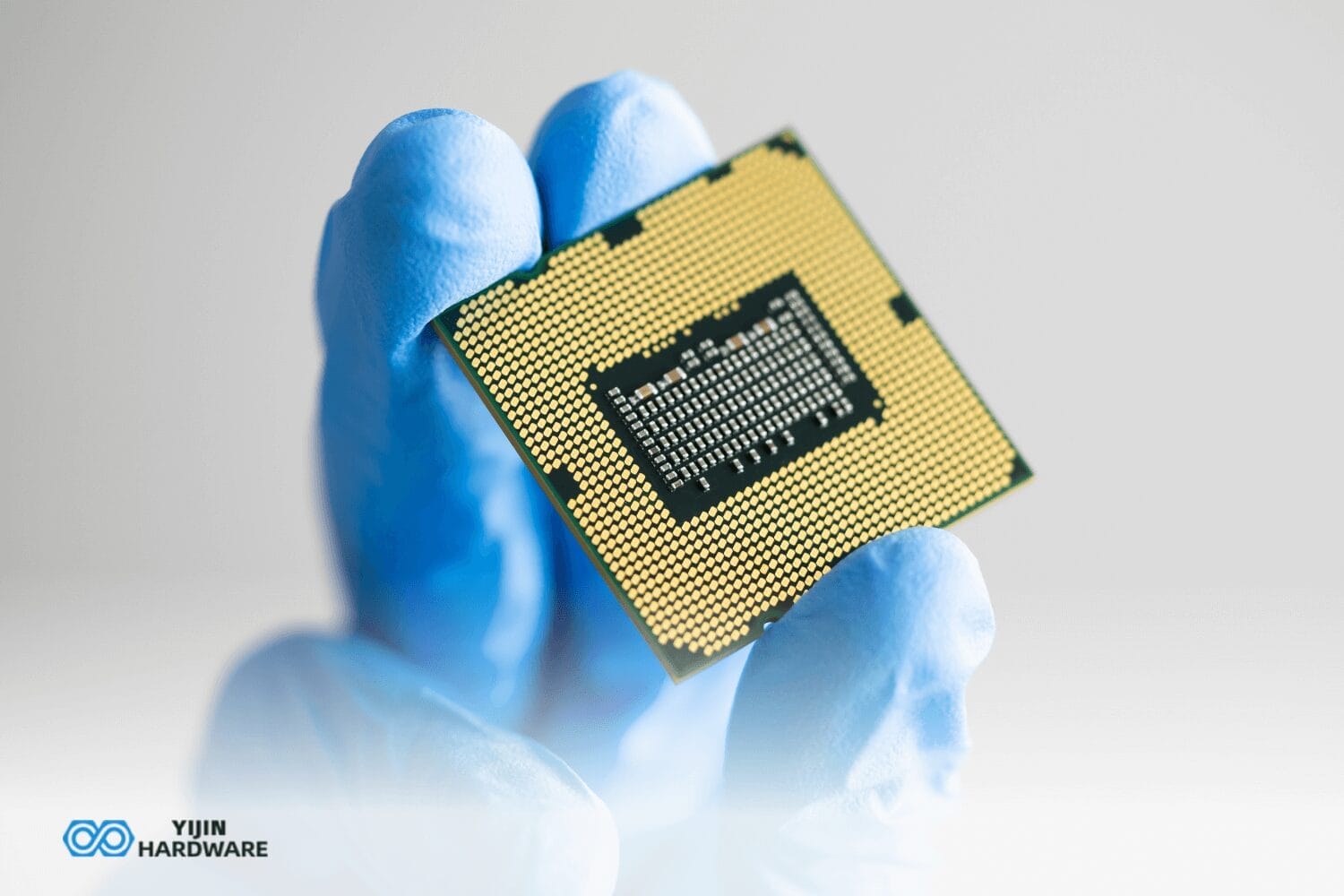
Semiconductor manufacturers create the tiny chips that power your electronic devices. They transform silicon wafers into complex circuits through hundreds of precise steps in super clean factories. These companies design, fabricate, test, and package chips that control everything from your smartphone to your car to medical devices and home appliances.
12 Manufacturers of Semiconductors
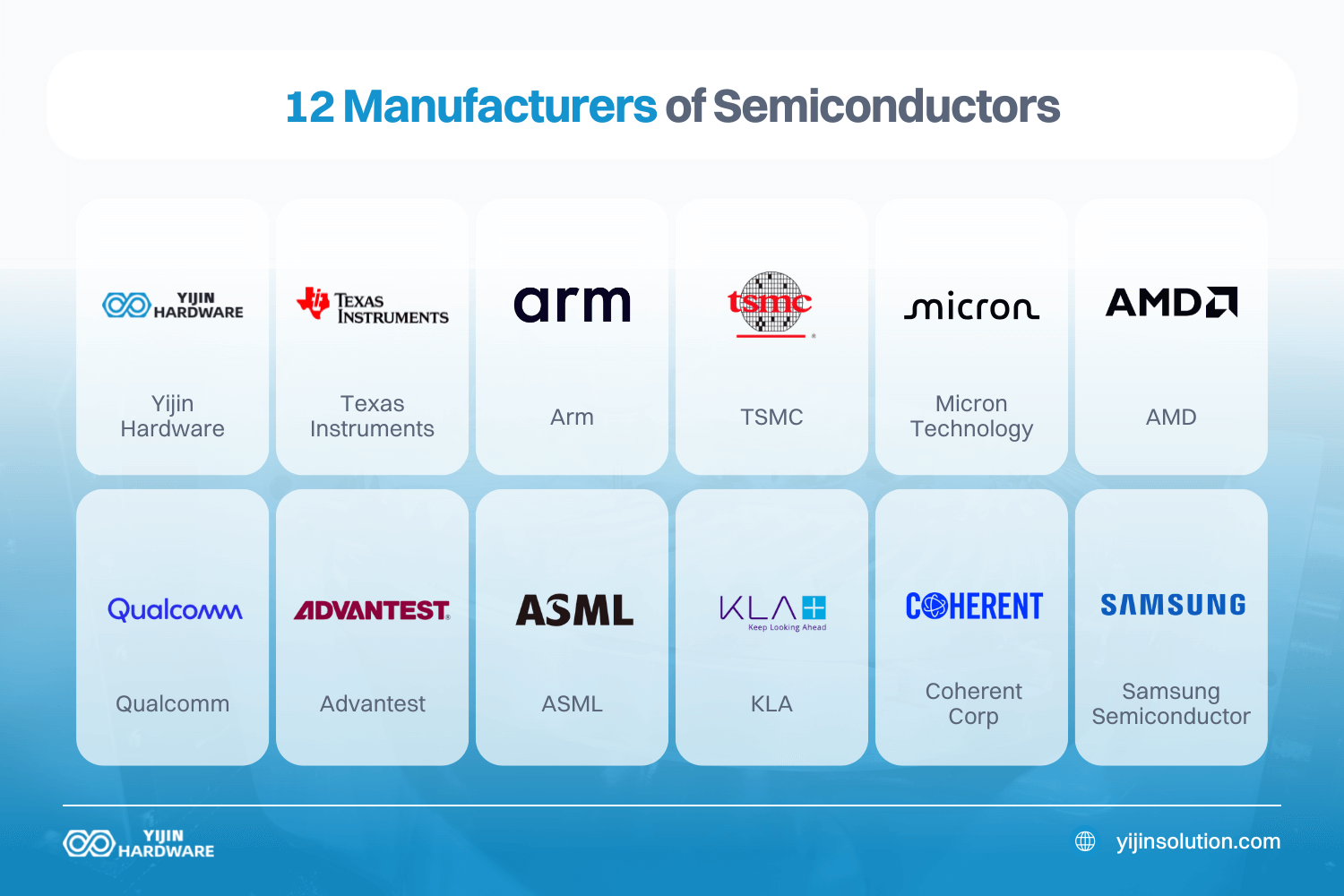
Here’s our list of the largest manufacturers of semiconductors together with their pros and cons. Then we’ll look at each one a little more in-depth.
| Company | Pros | Cons |
|---|---|---|
| Yijin Solution |
|
|
| Texas Instruments |
|
|
| Arm |
|
|
| TSMC |
|
|
| Micron Technology |
|
|
| AMD |
|
|
| Qualcomm |
|
|
| Advantest |
|
|
| ASML |
|
|
| KLA |
|
|
| Coherent Corp |
|
|
| Samsung Semiconductor |
|
|
Yijin Solution
Yijin Solution makes parts and tools that semiconductor companies need for chip production. You’ll find their products in many factories across Asia where they help build the machines that make your electronic devices work. Their specialty is creating metal components that can withstand the extreme conditions in chip factories.
Texas Instruments
Texas Instruments builds chips for calculators, cars, and industrial equipment, but they’re best known for the calculators you’ve probably used in school.
They focus on analog chips that connect the real world to digital devices and have factories in Texas, Maine, and Utah. TI has been making semiconductors since the 1950s and continues to be an important American chip maker.
Arm
Arm designs the blueprints for chips that power 99% of smartphones, yet they don’t actually make any chips themselves. Their energy-efficient designs are licensed to companies like Apple and Samsung who then build them into devices you use every day.
Arm’s technology is in billions of products worldwide and forms the backbone of the mobile computer.industry
TSMC
TSMC is the world’s largest dedicated chip manufacturer and makes chips for companies like Apple, AMD, and Nvidia that don’t have their own factories.
You’re probably using TSMC-made chips right now because they produce over half of all outsourced semiconductors in the world! Their advanced factories in Taiwan can make chips smaller than any other manufacturer, which is why tech companies depend on them.
Micron Technology
Micron Technology specializes in memory chips that store data in your phones, computers, and data centers. Your devices need these memory chips to save photos, run apps, and remember settings even when they’re off. Micron is one of the few American companies that both designs and manufactures their chips in the USA.
AMD
AMD designs powerful processors for computers and gaming consoles, but they partner with companies like TSMC to manufacture their chips.
Your gaming PC or PlayStation 5 probably contain AMD chips that handle complex graphics and calculations. They compete directly with Intel, but focus on performance and value rather than owning manufacturing plants.
Qualcomm
Qualcomm creates the chips that power your smartphone’s connection to cellular networks and the internet. Their Snapdragon processors run many Android phones and handle everything from calls to camera functions and gaming.
Qualcomm designs their semiconductors in California but relies on companies like TSMC and Samsung to manufacture them.
Advantest
Advantest makes the testing equipment that checks if chips work correctly before they go into your devices. Their machines can test thousands of chips per hour and find microscopic defects that would cause your electronics to fail. Without companies like Advantest, you’d have way more problems with your phones and computers.
ASML
ASML builds the advanced machines that print tiny circuit patterns onto silicon wafers, and these machines cost over $150 million each. Their equipment uses extreme ultraviolet light to create chips with features thousands of times smaller than a human hair.
ASML is the only company in the world that can make these cutting-edge machines, so every advanced chip in your devices depends on their technology.
KLA
KLA makes inspection systems that find defects in chips during manufacturing so they don’t end up in your devices. Their tools use lasers and AI to spot problems smaller than a virus on the surface of silicon wafers. KLA’s technology helps semiconductor factories improve their yield and make more working chips from each silicon wafer.
Coherent Corp.
Coherent Corp. produces specialty materials and lasers used in the chip-making process, and these components help create faster, more efficient semiconductors.
You benefit from their technology when using high-speed internet because their products enable fiber optic communications. Coherent also makes sensors and materials for autonomous vehicles and 5G networks that will power the next generation of devices.
Samsung Semiconductor, Inc.
Samsung Semiconductor makes memory chips, processors, and image sensors that you’ll find in smartphones, TVs, and computers across the world.
They’re one of the few companies that can both design and manufacture advanced chips, and they compete directly with TSMC for the most cutting-edge manufacturing technology.
Your Samsung phone probably contains chips they made themselves, but they also produce semiconductors for other companies like Apple and Google.
How is CNC Machining Involved in Semiconductor Manufacturing?
CNC (Computer Numerical Control) machining is involved in semiconductor manufacturing by using computer programs to control cutting tools that remove material from metal blocks. For semiconductor equipment, these parts must meet extremely tight requirements for cleanliness and precision.
Contact Yijin Solution if this is an industry you want to get more involved in. We specialize in creating these crucial components that semiconductor manufacturers need for their production lines. Without precision-machined parts from companies like Yijin, modern electronics couldn’t be made at today’s small sizes and large volumes.
Manufacturers of Semiconductors | FAQs
How are semiconductors made?
Semiconductors are made in factories called fabs through a process called photolithography. You start with a silicon wafer and add layers of patterns using light, chemicals, and metals. This creates tiny electronic circuits smaller than a human hair. The process takes hundreds of steps over several weeks.
What is wafer fabrication?
Wafer fabrication is the main step in making computer chips where you build electronic circuits on thin silicon discs. You start with a blank wafer and add patterns using light, chemicals, and metals in hundreds of precise steps. This process creates the tiny transistors and connections that make your electronic devices work.
Why is Taiwan important in chip manufacturing?
Taiwan is crucial in chip manufacturing because it’s home to TSMC, which makes over 90% of the most advanced chips used in your phone and computer. You rely on Taiwan’s chips for almost all modern electronics. This concentration creates supply risks when tensions rise with China, which claims Taiwan as its territory.
What caused the global chip shortage?
The global chip shortage happened when COVID-19 shut down factories while making you buy more electronics for remote work and entertainment. Car companies canceled chip orders early in the pandemic, then couldn’t get them back when demand returned. Supply chain problems, trade tensions, and limited manufacturing capacity made the situation worse.
Back to Top: Top Semiconductor Manufacturers in 2025 | Global Leaders