

Die Auswahl eines Herstellers von Stanzwerkzeugen in China und eines Partners für die Metallumformung in China sollte kein Glücksspiel sein, aber genau so fühlt es sich an, wenn man sich online durch Hunderte von Anbietern wühlt. Diese Unternehmen verarbeiten flache Bleche zu Komponenten, indem sie spezielle Technologien und Hochdruckumformung einsetzen. Für Hersteller, die nach Lösungen für Precision Metal Stamping China suchen, ist die Realität weitaus komplexer, als es den Anschein hat. Wir sprechen hier von Herstellern, die die Automobil-, Luft- und Raumfahrt-, Elektronik- und Medizintechnikindustrie beliefern, wo ein Millimeter Abweichung von der Spezifikation Tausende von Teilen kosten kann, die zurückgewiesen werden.
Hier steht ziemlich viel auf dem Spiel. Wenn Sie sich für den falschen Lieferanten entscheiden, müssen Sie mit Qualitätsproblemen, verpassten Lieferterminen, Problemen bei der Einhaltung von Vorschriften und Kosten rechnen, die schnell außer Kontrolle geraten können. Mit dem Markt für Metallstempelungen Mit einem Umsatz von $220,2 Mrd. im Jahr 2024 und einem prognostizierten Anstieg auf $281,5 Mrd. im Jahr 2033 gibt es keinen Mangel an Unternehmen, die behaupten, sie könnten Ihr Projekt durchführen. Die Schwierigkeit besteht darin, herauszufinden, welche Unternehmen tatsächlich über die technischen Fähigkeiten, Zertifizierungen und Branchenkenntnisse verfügen, um das zu liefern, was sie versprechen.
Wichtigste Erkenntnisse
- Der Weltmarkt erreichte in diesem Jahr ein Volumen von $231,27 Mrd. und wächst jährlich um 4,1% - es ist also eine große Sache
- Gute Folgeverbundwerkzeuge können 50.000 Teile pro Stunde herstellen und dabei Toleranzen von bis zu ±0,0010 Zoll einhalten.
- Die Hersteller, mit denen es sich lohnt, zusammenzuarbeiten, haben ihre Zertifizierungen im Griff - ISO 9001:2015, IATF 16949:2016 und AS9100D:2016
- Etwa 80% der Stanzteile werden in der Automobilindustrie eingesetzt, was zeigt, wo das Volumen liegt.
- Die Materialstärke reicht in der Regel von 0,002 Zoll bis zu 0,500 Zoll und umfasst Stahl, Aluminium und Speziallegierungen.
- Führende Hersteller bieten Hochpräzisions-Metallstempelungen in China an, einschließlich Edelstahlstempelungen in China und Metallstempelungen in China aus Edelstahl.
Was sind gestanzte Metallteile und warum sind die Hersteller wichtig?
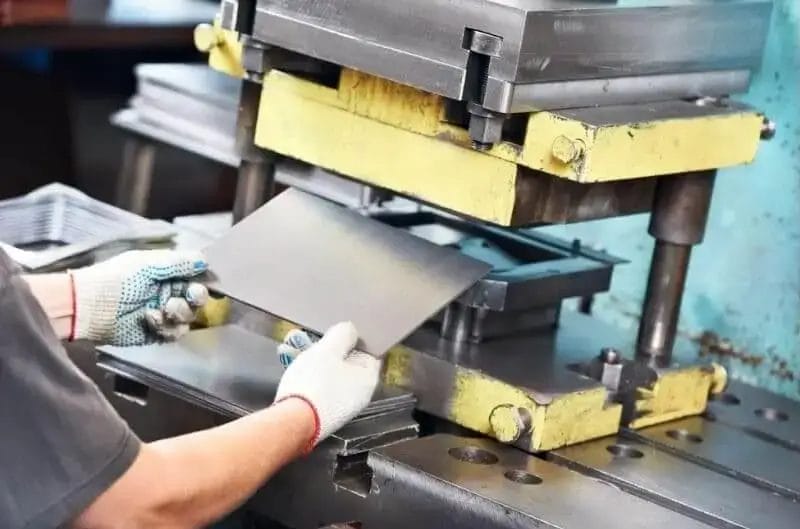
Stanzteile aus Metall sind präzisionsgeformte Komponenten, die durch das Einlegen flacher Metallbleche zwischen spezielle Werkzeuge unter hohem Druck hergestellt werden, um bestimmte Formen und Abmessungen zu erzielen. Die Hersteller nutzen fortschrittliche Technologien für eine hochwertige Produktion und bieten umfassende Möglichkeiten für verschiedene Materialien und Anwendungen. Der Stanzprozess umfasst Stanz-, Biege-, Präge-, Stanz- und Bördelvorgänge, die Rohmaterialien in fertige Teile verwandeln. Diese Fertigungsmethode bietet außergewöhnliche Maßgenauigkeit, Materialvielfalt und kostengünstige Lösungen für die Anforderungen der Großserienfertigung.
Kernprozesse der Metallumformung
| Prozess-Typ | Operation | Anwendungen | Präzisionsnivellier |
|---|---|---|---|
| Ausblendung | Schneiden von Außenprofilen | Grundlegende Teileformen | ±0,005 Zoll |
| Piercing | Erzeugt Löcher/Schlitze | Interne Merkmale | ±0,002 Zoll |
| Biegen | Formen von Winkeln | Halterungen, Gehäuse | ±1 Grad |
| Zeichnung | Erzeugt hohle Formen | Becher, Gehäuse | ±0,003 Zoll |
Die Industrie verlässt sich auf Präzisionsstanzteile für kritische Anwendungen, die Festigkeit, Präzision und Zuverlässigkeit in einer Vielzahl von Branchen erfordern. Hersteller von Automobilteilen verwenden gestanzte Komponenten für Karosserieteile, Halterungen und Getriebesysteme, bei denen Gewichtsreduzierung und strukturelle Integrität von größter Bedeutung sind.
Welche Branchen treiben die Nachfrage nach Stanzteilen an?
Die Automobilindustrie dominiert den Verbrauch von Stanzteilen. Laut der Branchenanalyse von Metoree entfallen etwa 80% der weltweiten Marktnachfrage auf Karosserieteile, Motorkomponenten, Getriebesysteme und Batteriegehäuse für Elektrofahrzeuge. Fahrzeughersteller benötigen Automobilstanzteile, die den Qualitätsstandards der IATF 16949:2016 entsprechen und gleichzeitig die Ziele der Gewichtsreduzierung und die Anforderungen an die Crashsicherheit erfüllen. Die Produktion von Elektrofahrzeugen führt zu einer steigenden Nachfrage nach leichten Aluminium-Stanzteilen, Batteriegehäusen und Stromschienenkomponenten, die die Energieeffizienz und Reichweite verbessern.
Wichtige Industrieanwendungen

- Automobilindustrie: Karosseriebleche, Halterungen, Getriebekomponenten, EV-Batterie-Gehäuse
- Luft- und Raumfahrt: Strukturelle Halterungen, Verbindungselemente, Gehäuseteile, die eine AS9100D-Zertifizierung erfordern
- Elektronik: Steckergehäuse, Kühlkörper, Geräterahmen, EMI-Abschirmkomponenten
- Medizinische: Chirurgische Instrumente, Implantatgehäuse, die der ISO 13485:2016 entsprechen müssen
Welche technischen Fähigkeiten sollten Sie evaluieren?
Die Bewertung der technischen Möglichkeiten umfasst die Tonnagebereiche von Stanzpressen, die Bettgrößen, die Handhabung der Materialstärke und die sekundären Betriebsleistungen, die die Machbarkeit der Herstellung für Ihre Anwendungen bestimmen. Laut Branchendaten von ATACO Steel Products betreiben führende Hersteller Pressen mit einer Kapazität von 30 bis 1.700 Tonnen, mit Bettlängen von bis zu 168 Zoll und Breiten von bis zu 54 Zoll für die Produktion großer Teile. Die Materialstärken reichen in der Regel von 0,002 Zoll für die Präzisionselektronik bis zu 0,500 Zoll für die Schwerindustrie, wobei spezielle Stanzanlagen für exotische Legierungen und hochfeste Materialien eingesetzt werden.
Wesentliche technische Spezifikationen
| Fähigkeit Typ | Bereich | Anwendungen |
|---|---|---|
| Tonnage der Presse | 30-1.700 Tonnen | Leichte Halterungen für schwere Platten |
| Material Dicke | 0.002″-0.500″ | Elektronik bis Industrie |
| Produktionsrate | 150-50.000 Teile/Stunde | Mittleres bis hohes Volumen |
Top 10 Stamped Metal Parts Manufacturers in China 2026
China has many outstanding metal stamping companies, including Yijin Solution, KDM Steel, and MicPro. Let’s dissect the top 10 companies offering metal stamping services, the services they offer, and industries they specialize in.
1. KDM Steel — China Metal Stamping Die Manufacturer
KDM Steel wurde 2010 in Jiangsu gegründet und hat sich auf das Transfer-, Folgeverbund- und Tiefziehen von Metall spezialisiert und verfügt über umfassende interne Werkzeugkapazitäten. Die hochmodernen Einrichtungen für den Werkzeugbau gewährleisten eine hervorragende Qualitätskontrolle, kürzere Lieferzeiten und verbesserte Stanzfähigkeiten für anspruchsvolle Anwendungen. Das Unternehmen ist nach ISO 9001 zertifiziert und optimiert kontinuierlich seine Prozesse, um zuverlässige Ergebnisse für die Stanzoperationen in China und die Anforderungen der Automobilindustrie zu liefern.
Fertigungsspezialisierungen:
- Folgeverbundstanzung mit fortschrittlichen Transfersystemen
- Eigener Werkzeug- und Formenbau für kundenspezifische Anwendungen
- Tiefziehfunktionen für komplexe dreidimensionale Teile
- Qualitätsoptimierung durch kontinuierliche Prozessverbesserung
2. Yijin Solution (Unser Unternehmen)
Yijin Solution leads China Metal Stamping with advanced manufacturing and Precision Metal Stamping China capabilities through our integrated approach, combining advanced CNC machining with comprehensive custom solutions in our 25,000 square meter facility in Shenzhen. Our 278 CNC lathes and 136 high-precision CNC machines enable complete secondary operations including precision boring, threading, and complex geometry machining on stamped components. This eliminates multiple suppliers while ensuring dimensional accuracy and finish quality that exceeds industry standards for custom metal stamping services.
Fortgeschrittene Fertigungskapazitäten
- Monatliche Produktionskapazität für Stanzteile: 8+ Millionen Teile
- ISO 9001:2015 und IATF 16949:2016 zertifizierte Qualitätssysteme
- Eigener Werkzeug- und Formenbau für schneller Prototypenbau
- Fehlerquoten unter 50 PPM bei pünktlicher Lieferung von 99%+
- Vollständige Dokumentation der Materialrückverfolgbarkeit und Maßkontrolle
- Vollständige Integration der Blechfertigung mit CNC-Bearbeitung
3. MicPro - Spezialist für schnelle Entwicklung
MicPro wurde 1999 in Dongguan gegründet und ist spezialisiert auf Stanzlösungen für die Bereiche Unterhaltungselektronik, New Energy Vehicles (NEV) und Industrieautomation über ein Netzwerk von Stanzteilzulieferern. Das erfahrene Ingenieurteam konzentriert sich auf die Materialauswahl und Problemlösungsmethoden, um die Spitzenleistung von Stanzteilen zu gewährleisten. MicPro bietet Rapid-Prototyping- und Massenproduktionskapazitäten, die Konzepte in weniger als vier Wochen in fertige Produkte für Metallverarbeitungs- und Stanzunternehmen verwandeln.
Hervorragende Leistungen beim Rapid Prototyping:
- Spezialisierung auf Unterhaltungselektronik mit 4-wöchiger Bearbeitungszeit
- Entwicklung von Komponenten für Fahrzeuge mit neuer Energie
- Herstellung von Teilen für die industrielle Automatisierung
- Erweiterte Materialauswahl und technische Unterstützung
4. Dongguan Xinhongyuan Metal Products Limited - Anbieter kundenspezifischer Lösungen
Xinhongyuan wurde 2003 in Dongguan gegründet und konzentriert sich auf kundenspezifische Stanzprojekte und Blechbearbeitung für die Automobil-, Medizin- und Elektronikindustrie. In der 1.650 Quadratmeter großen Anlage werden verschiedenste Anwendungen durch ISO 9001:2015-zertifizierte Prozesse bedient. Die firmeneigene Werkzeugabteilung und das umfangreiche Serviceangebot, einschließlich Beschichtungs-, Schweiß- und Montagearbeiten, machen das Unternehmen zu einem äußerst vielseitigen Anbieter von Stanz- und Metallteilen.
| Servicebereich | Fähigkeit | Bediente Branchen | Zertifizierungen |
|---|---|---|---|
| Individuelle Prägung | Komplexe Geometrien | Automobilindustrie, Medizintechnik | ISO 9001:2015 |
| Blechverarbeitung | Präzisionsumformung | Elektronik | Zertifizierte Qualität |
| Sekundäre Ops | Beschichtung, Montage | Mehrere Branchen | Prozess validiert |
5. JINGXIN® Precision Machinery Co., LTD - Integrierte Fertigung
Das 2003 in Dongguan gegründete Unternehmen JINGXIN® hat sich auf hochpräzises Metallstanzen, CNC-Bearbeitung und Kunststoffspritzguss für die Automobil- und Elektronikindustrie spezialisiert. Ihr umfassender Ansatz kombiniert Präzisionsstanzen mit sekundären Operationen wie CNC-Biegen und Metalldrücken. Die Zertifizierung nach ISO 9001:2015 spiegelt das Engagement des Unternehmens für hohe Standards in den Bereichen Stanzpressen und Präzisionsmetallfertigung wider.
Zentrale Dienstleistungsbereiche:
- Hochpräzises Stanzen mit CNC-Integration
- Kunststoff-Spritzgießen für Multimaterial-Baugruppen
- Metalldrücken und Umformen
- Kundenspezifische Fertigungslösungen aus einer Hand
6. Dongguan Heju Precision Electronic Technology Co, LTD - Kompetenz in progressiven Werkzeugen
Heju Precision wurde 2008 in Dongguan gegründet und hat sich auf das Stanzen von Folgeverbundwerkzeugen aus Metall für Materialien mit einer Dicke von 0,04 mm bis 4 mm spezialisiert. Der Schwerpunkt auf Forschung und Entwicklung bietet umfassende Dienstleistungen für Steckverbinder und Gehäuse, die sich gut für medizinische und mobile Anwendungen eignen. Das Fachwissen des Unternehmens im Bereich des Metallstanzens gewährleistet Qualität und Genauigkeit in der Luft- und Raumfahrt sowie bei Stanzanwendungen.
Progressive Werkzeugspezialisierung
- Bereich der Materialstärke: 0,04 mm bis 4 mm Fähigkeit
- Anschlussklemmen und Gehäuse für die Elektronik
- Anwendungen für medizinische und mobile Geräte
- F&E-Schwerpunkt für kontinuierliche Innovation
7. TenRal - führend in der nachhaltigen Produktion
TenRal ist seit dem Jahr 2000 in Foshan tätig und zeichnet sich durch seine Stanzkapazitäten aus, die auf Nachhaltigkeitsinitiativen und Umweltverantwortung ausgerichtet sind. Das Unternehmen setzt Hochgeschwindigkeitspressen und fortschrittliche Folgeverbundwerkzeuge ein, um Präzisionsstanzteile für die Luft- und Raumfahrt, die Automobilindustrie und den Elektroniksektor herzustellen. Ihr Engagement für umweltfreundliche Praktiken und kontinuierliche Qualitätsverbesserung zeichnet sie im Bereich Präzisionsstanzteile und komplexe Metallfertigung aus.
Nachhaltige Produktion im Fokus:
- Umweltbewusste Herstellungsprozesse
- Hochgeschwindigkeits-Pressvorgänge für Effizienz
- Fortschrittliche Folgeverbundwerkzeug-Technologie
- Spezialisierung auf Luft- und Raumfahrt, Automobil und Elektronik
8. Jiantong Hardware - Umfassende Fertigungslösungen
Das 2008 in Dongguan gegründete Unternehmen Jiantong Hardware bietet umfassende Dienstleistungen im Bereich der Metallumformung an - vom Präzisionsstanzen über das Tiefziehen bis hin zu Metallumformungsprozessen. Das Unternehmen verfügt über umfassende interne Kapazitäten für die Entwicklung von Werkzeugen und Formen sowie für die Oberflächenbearbeitung. Das macht sie zu einer ausgezeichneten Wahl für kundenspezifische Stanzlösungen in der Elektronik- und Automobilbranche, die komplexe Teile und Stanzteile benötigen.
| Bereich Fähigkeit | Dienstleistungen | Ausrüstung | Anwendungen |
|---|---|---|---|
| Präzisionsstempeln | Komplexe Geometrien | Moderne Pressen | Elektronik, Automobilindustrie |
| Tiefziehen | Hohle Komponenten | Spezialisierte Werkzeuge | Industrielle Anwendungen |
| Entwicklung von Tools | Kundenspezifische Lösungen | Interne Bearbeitung | Vielfalt der Branchen |
9. Shinning Metals Co, Ltd - Spezialist für Materialvielfalt
Shinning Metals wurde 2005 in Shenzhen gegründet und hat sich auf das Stanzen von Metall spezialisiert, einschließlich Tiefzieh- und Folgeverbundwerkzeugen für verschiedene Materialien wie Messing, Edelstahl und Kupfer. Ihr Engagement für die Qualität der Metallstanzarbeiten wird durch strenge Prüfverfahren und eine pünktliche Lieferleistung unterstützt. Das Unternehmen verarbeitet eine breite Palette von Metallwerkstoffen und bietet sowohl unbearbeitete als auch fertige Produkte für die Stanzproduktion an.
Exzellente Materialverarbeitung
- Tiefzieh- und Folgeverbundwerkzeuge
- Verarbeitung von Messing, rostfreiem Stahl und Kupfer
- Strenge Qualitätsprüfung und Validierung
- Sowohl einfache als auch fertige Produktoptionen
10. Worthy Hardware - Schwerpunkt Militär und Luft- und Raumfahrt
Worthy Hardware ist seit 1998 in Dongguan tätig und bietet Metallstanzarbeiten für die Militär-, Luft- und Raumfahrt- sowie die medizinische Industrie mit integrierter CNC-Bearbeitung und Blechfertigung an. Das Unternehmen verarbeitet verschiedene Metallwerkstoffe in ISO 9001-zertifizierten Prozessen. Mit Stanzwerkzeugen mit einer Kapazität von 16 bis 250 Tonnen gewährleistet Worthy Hardware Flexibilität, Präzision und hochwertige Stanzdienstleistungen für die Verarbeitung von Legierungen und Großserienanwendungen.
Spezialisierter Branchenfokus:
- Militär und Herstellung von Luft- und Raumfahrtkomponenten
- Teile für medizinische Geräte mit strengen Qualitätsanforderungen
- Integrierte CNC-Bearbeitung und -Fertigungsdienstleistungen
- Bereich der Pressenkapazität: 16-250 Tonnen für verschiedene Anwendungen
Welche Materialien und Verfahren sind die Grundlage für eine exzellente Fertigung?
Führende Hersteller verarbeiten Stahllegierungen wie kaltgewalzten Stahl, verzinkten Stahl, hochfesten Stahl (HSS) und Advanced High-Strength Steel (AHSS) für Automobil- und Industrieanwendungen. Stahl dominiert den Markt aufgrund des außergewöhnlichen Verhältnisses von Festigkeit zu Gewicht, der Umformbarkeit und der Kosteneffizienz für die Großserienproduktion, so eine Marktanalyse von Grand View Research. Die Materialstärke kann je nach Legierungszusammensetzung zwischen 0,010 Zoll und 0,500 Zoll betragen.
Erweiterte Materialspezifikationen
| Material Typ | Gemeinsame Noten | Dickenbereich | Wichtige Eigenschaften |
|---|---|---|---|
| Stahl | Kaltgewalzt, AHSS, HSS | 0.010″-0.500″ | Hohe Festigkeit, Umformbarkeit |
| Aluminium | Serien 1000, 3000, 5000, 6000 | 0.020″-0.375″ | Leichtes Gewicht, korrosionsbeständig |
| Rostfreier Stahl | Serien 304, 316, 430 | 0.015″-0.250″ | Korrosionsbeständig, biokompatibel |
Die Stanzindustrie verwendet Aluminiumlegierungen wie die Serien 1000, 3000, 5000 und 6000, die leichte Lösungen für Karosserieteile, Strukturen in der Luft- und Raumfahrt und Unterhaltungselektronik bieten, die Korrosionsbeständigkeit und Wärmeleitfähigkeit erfordern. Spezialisierte Kupferlegierungen wie Berylliumkupfer und Phosphorbronze bieten Federeigenschaften und Verschleißfestigkeit für elektrische Präzisionskontakte und mechanische Komponenten in einem breiten Spektrum von Stanzanwendungen.
Wie wirken sich die Qualitätsstandards auf die Auswahl der Produktion aus?
Führende Hersteller unterhalten ein Qualitätsmanagementsystem nach ISO 9001:2015, das Kundenorientierung, Engagement der Führungskräfte, einen Prozessansatz und Methoden zur kontinuierlichen Verbesserung vorsieht. Diese grundlegende Zertifizierung erfordert dokumentierte Qualitätsrichtlinien, risikobasiertes Denken und eine systematische Leistungsüberwachung durch interne Audits und Managementprüfungen. Die Einhaltung der ISO 9001:2015 gewährleistet eine gleichbleibende Qualität und die Messung der Kundenzufriedenheit für die Stempelanforderungen.
Kritische Qualitätszertifizierungen

- ISO 9001:2015: Grundlagen des Qualitätsmanagements für alle Branchen
- IATF 16949:2016: Automobilspezifische Qualitätsanforderungen einschließlich PPAP und SPC
- AS9100D:2016: Luft- und Raumfahrtstandard mit Konfigurationsmanagement und Risikokontrolle
- ISO 13485:2016: Qualität von Medizinprodukten mit Designkontrollen und Rückverfolgbarkeit
Bei der Überwachung der statistischen Prozesskontrolle (SPC) werden Regelkarten, Prozessfähigkeitsstudien und Datenerfassung in Echtzeit eingesetzt, um die Maßgenauigkeit aufrechtzuerhalten und Fehler zu vermeiden, bevor sie auftreten. Führende Hersteller erreichen Prozessfähigkeitsindizes (Cpk) von mehr als 1,33 für kritische Abmessungen, während sie die Stabilität der Regelkarten während der gesamten Produktion aufrechterhalten.
Wie verbessern fortschrittliche Metallstanztechniken die Produktion?
Bei der Metallumformung werden servogesteuerte Pressen eingesetzt, die eine präzise Bewegungssteuerung, Energieeffizienz und programmierbare Hubprofile für optimierte Umformvorgänge bieten. Servopressen machen mechanische Verbindungen überflüssig, reduzieren den Geräuschpegel und ermöglichen eine variable Geschwindigkeitssteuerung während des gesamten Hubzyklus, um den Materialfluss und die Maßgenauigkeit zu verbessern. Diese Systeme erzielen Energieeinsparungen von 20-50% im Vergleich zu herkömmlichen mechanischen Pressen und bieten gleichzeitig hervorragende Prozesssteuerungsmöglichkeiten.
Moderne Stanztechnologien
Die Folgeverbundtechnik umfasst mehrere Arbeitsstationen, an denen gleichzeitig Arbeitsgänge wie Stanzen, Lochen, Biegen und Umformen mit einem einzigen Werkzeug ausgeführt werden. Diese Stanztechnik reduziert die Handhabung, verbessert die Konsistenz und erhöht die Produktionsraten bei gleichzeitiger Einhaltung enger Toleranzen. Das Transferstanzen ermöglicht tiefere Ziehungen und komplexere Geometrien, indem Teile zwischen speziellen Umformstationen bewegt werden.
Moderne Hersteller integrieren Roboterautomatisierung, Industrie 4.0-Sensoren und prädiktive Analysen zur Überwachung der Pressenleistung und Optimierung der Produktionsparameter. Diese Stanzwerkzeuge sammeln Echtzeitdaten zu Tonnage, Hubposition und Temperatur, um Prozessschwankungen zu erkennen, bevor Qualitätsprobleme auftreten.
Sind Sie bereit für eine Partnerschaft mit führenden chinesischen Stanzmaschinenherstellern?
Die Auswahl des richtigen Herstellers von Metallstanzteilen erfordert eine sorgfältige Bewertung der technischen Fähigkeiten, Qualitätszertifizierungen und Branchenkenntnisse, die Ihren spezifischen Anforderungen entsprechen. Der Stanzsektor entwickelt sich durch fortschrittliche Technologien, Automatisierung und Nachhaltigkeitsinitiativen, die die Produktionseffizienz verbessern und gleichzeitig die Qualitätsstandards aufrechterhalten, ständig weiter. Führende Hersteller bieten umfassende Lösungen von der Designberatung bis zur Auslieferung der fertigen Teile für Anwendungen in der Automobilindustrie, Luft- und Raumfahrt, Elektronik und Industrie.
Yijin Solution stands ready to support your stamping needs through our integrated manufacturing approach, combining precision stamping with advanced CNC machining capabilities. Our ISO-certified quality systems, extensive equipment range, and technical expertise ensure optimal solutions for your most demanding applications. Kontaktieren Sie uns heute um Ihre Anforderungen an das kundenspezifische Stanzen von Metall zu besprechen und zu erfahren, wie unsere umfassenden Fähigkeiten Ihre Produktentwicklung und Produktionsziele verbessern können.
FAQs zu Herstellern von gestanzten Metallteilen
Welche vier Arten des Metallstanzens gibt es?
Die vier Hauptarten des Metallstanzens sind Stanzen, Lochen, Biegen und Ziehen, die unterschiedlichen Fertigungszwecken dienen. Beim Stanzen werden äußere Teileprofile aus dem Blechmaterial geschnitten, wobei die Grundform durch Scherwirkung entsteht, während beim Lochen Löcher und innere Merkmale durch Abtragen von Material mit Hilfe von Formstempeln erzeugt werden. Beim Biegen werden Winkel ohne Materialabtrag durch kontrollierte Verformung geformt, und beim Ziehen werden flache Zuschnitte durch Materialfluss über Formflächen in dreidimensionale Hohlformen gezogen.
Ist das Stanzen von Metall teuer?
Das Stanzen von Metall wird ab einem Produktionsvolumen von mehr als 10.000 Stück pro Jahr aufgrund der Amortisation der Werkzeuge und der Effizienz der automatisierten Verarbeitung kosteneffizient, wobei die anfänglichen Werkzeugkosten zwischen $10.000 und $100.000 die Hauptkosten darstellen. Bei hohen Stückzahlen von mehr als 100.000 Stück werden durch optimierte Materialausnutzung und reduzierte Rüstkosten Teilekosten von unter $1,00 erreicht, während bei niedrigen Stückzahlen von unter 1.000 Stück aufgrund der erforderlichen Werkzeugamortisation höhere Stückkosten von $5,00 bis $20,00 entstehen.
Wie lauten die 7 Schritte der Prägemethode?
Die sieben grundlegenden Schritte des Stanzverfahrens beginnen mit der Materialvorbereitung durch Richten und Zuführen, gefolgt von der Werkzeugeinrichtung mit Bauteilausrichtung und Parametereinstellung sowie der Materialpositionierung mithilfe von Führungen und Anschlägen. Die Aktivierung des Pressenhubs übt eine kontrollierte Kraft zur Materialverformung aus, der Materialvorschub bewegt die Teile zu den nachfolgenden Stationen, der Teileauswurf entfernt die fertigen Komponenten mithilfe mechanischer Systeme, und die Qualitätskontrolle überprüft die Maßhaltigkeit durch Messungen und statistische Stichprobenverfahren.
Zurück zum Anfang: Top 10 Hersteller von gestanzten Metallteilen
Wie wir diese Hersteller ausgewählt haben
Um sicherzustellen, dass diese Liste den Käufern einen echten Mehrwert bietet, haben wir die Unternehmen anhand der folgenden Kriterien bewertet:
- Produktionskapazitäten: Wir haben Fabriken mit bewährten Produktionskapazitäten und modernen Maschinen den Vorzug gegeben.
- Zertifizierungen: Bevorzugt wurden ISO-zertifizierte Hersteller, die eine Qualitätskontrolle gewährleisten.
- Ruf der Industrie: Wir suchten nach etablierten Unternehmen mit langjähriger Erfahrung auf dem Weltmarkt.
- Globale Reichweite: Lieferanten, die in der Lage sind, zu exportieren und internationale Standards zu erfüllen.
Hinweis: Abgesehen von unserem eigenen Unternehmen sind die oben aufgeführten Hersteller nicht in einer bestimmten Reihenfolge nach Qualität geordnet.
Hinweis zur Transparenz: Dieser Artikel wird veröffentlicht von Yijin-Lösung, einem führenden Hersteller in dieser Branche. Auch wenn wir unsere eigenen Fertigungskapazitäten vorstellen, soll diese Liste einen objektiven Überblick über die führenden Anbieter auf der Grundlage von Marktreputation, Zertifizierungen und Fertigungskapazitäten bieten.






 English
  Spanish
  German
  French