


Ceramic CNC machining uses controlled milling, drilling, grinding, and finishing processes to produce custom ceramic components from technical ceramics such as alumina, zirconia, Macor, silicon nitride, and aluminum nitride. Ceramic parts are valued for hardness, wear resistance, electrical insulation, heat resistance, and chemical stability.
The machining strategy depends on whether the ceramic is in a green, partially sintered, or fully sintered state. Green machining is easier but must account for shrinkage during firing. Sintered ceramic machining produces final hard parts but requires diamond tooling, conservative parameters, and careful DFM to reduce chipping.
| Workflow | Best for | Main advantage | Planning concern |
|---|---|---|---|
| Green machining | Complex geometry before final hardness | Lower cutting force and less tool wear | Sintering shrinkage must be built into the design and process plan. |
| Partially sintered machining | Balanced process control for features needing more stability | More stable than green blanks, easier than fully sintered material | Material state and supplier data must be confirmed. |
| Sintered machining | Final tolerance, hard ceramic surfaces, critical features | Final geometry is machined after firing | Requires diamond tools, light cuts, and strict control of chipping. |

Ceramic Machining Parameter Ranges
The ranges below are planning references, not universal cutting data. Ceramic grade, sintering state, tool type, coolant, machine rigidity, feature size, and edge quality requirements all change the final process window.
| Operation | Tooling | Typical approach | Process caution |
|---|---|---|---|
| Milling green ceramic | Carbide or diamond-coated tooling | Moderate spindle speed, light radial engagement, stable support | Allow for shrinkage and distortion during sintering. |
| Grinding sintered ceramic | Diamond grinding wheels | High wheel speed, low depth of cut, controlled coolant | Heat and microcracking must be controlled. |
| Drilling ceramic | Diamond core drill or specialized abrasive tooling | Pecking, coolant, low force, backed exit surface | Breakout and edge chipping are common design concerns. |
| Finishing critical surfaces | Lapping, polishing, fine grinding | Low material removal and controlled inspection | Only critical surfaces should receive expensive finishing. |
Common CNC Machined Ceramic Materials
- Alumina: wear resistant, electrically insulating, chemically stable, and widely used for industrial components.
- Zirconia: tougher than many ceramics, useful where impact resistance and wear resistance are both important.
- Macor: machinable glass ceramic suitable for prototypes, insulators, and precision components without firing after machining.
- Silicon nitride: strong thermal and wear performance for demanding mechanical applications.
- Aluminum nitride: useful where thermal conductivity and electrical insulation are important.
DFM Guidelines for Brittle Ceramic Parts
- Use generous internal radii instead of sharp internal corners.
- Avoid thin unsupported walls, knife edges, and deep narrow slots.
- Keep holes away from edges where possible to reduce breakout risk.
- Specify tight tolerances only on functional surfaces.
- Separate cosmetic surfaces from sealing, bearing, or alignment surfaces.
- Confirm whether shrinkage compensation is needed before machining green ceramic.
- Use chamfers or small edge breaks on exposed edges that may chip during handling.
When Ceramic Is the Wrong Choice
Ceramic is not the right material for every precision part. If the part needs ductility, high impact resistance, thread flexibility, or low-cost iteration, stainless steel, aluminum, titanium, PEEK, or another engineering plastic may be more practical. The decision should start with load, temperature, chemical exposure, electrical behavior, wear, and inspection requirements.
Preserved Technical Body From the Live Page
The sections below preserve the deeper technical material from the audited live page, while the new top section adds faster decision support, clearer buyer guidance, and Yijin-safe conversion language.
What is Ceramic CNC Machining?
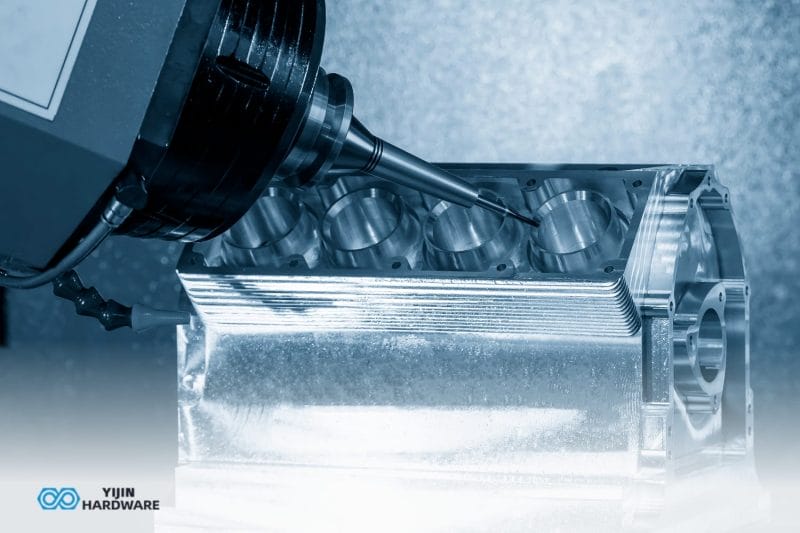
Ceramic CNC machining is a precise cutting method using computer-controlled machines. The CNC process cuts ceramic material into intricate shapes. CNC machining ceramics is ideal for more nuanced and specific shapes; it is a specialized manufacturing process that creates durable parts.
Ceramics make durable parts with complex geometries and fine details. In this process, a CNC machine utilizes various cutting tools. However, the quality of ceramic relies on precise machining operations.
How does Ceramic CNC Machining Work?
Ceramic CNC machining works by creating a detailed 3D model using Computer-Aided Design (CAD) software, which is then converted to a machine-readable format through Computer-Aided Manufacturing (CAM) software. This process generates G-code instructions that precisely control the CNC machine’s toolpaths, cutting parameters, and movement sequences. The ceramics also allow for parts with complicated designs.
What are the Stages in Ceramic CNC Machining?
The CNC machining process contains several crucial stages, from material selection to finishing and polishing. Each stage contributes to the final quality of ceramic parts.
Successful ceramic machining requires careful attention to each process stage. The unique properties of ceramic materials demand specialized approaches throughout the manufacturing workflow. The table below outlines the critical stages in order:
| Stage | Process Step | Key Requirements and Considerations |
|---|---|---|
| 1 | Material Selection and Evaluation | Evaluate material properties including hardness, thermal characteristics, electrical insulation, and mechanical strength requirements. Consider how material purity and grain size affect machinability and performance in the intended application. |
| 2 | Design Optimization | Create designs that avoid stress concentrations through appropriate wall thicknesses, support structures, and gradual transitions between features. Account for ceramics’ susceptibility to cracking under mechanical or thermal stress throughout the design process. |
| 3 | Tool Selection and Preparation | Select diamond-coated or solid diamond tooling with geometries optimized to reduce fracture risk, while preparing for accelerated tool wear. Install specialized coolant delivery systems to manage the unique thermal challenges of ceramic machining. |
| 4 | Rough Machining | Remove material using conservative cutting depths, controlled feed rates, and continuous coolant application to prevent thermal and mechanical stress. Implement careful step-down approaches for deep features to maintain workpiece integrity throughout machining. |
| 5 | Precision Finishing | Apply specialized grinding and polishing techniques using ultra-precise tool control while carefully managing thermal conditions. Minimize vibration to prevent microcracking during final dimensional and surface quality refinement. |
| 6 | Quality Verification | Conduct comprehensive inspection using coordinate measuring machines for dimensional accuracy and non-destructive testing for internal integrity. Verify surface quality and material properties to ensure the component will perform as intended in its application environment. |
Each stage builds upon the previous one, creating a comprehensive process that addresses the unique challenges of ceramic machining.
What are the Key Techniques in Ceramic CNC Machining?
Different CNC machining techniques are essential for machining ceramics, such as milling and grinding. These techniques produce high-quality ceramic parts. The best choice is a ceramic material that fits project parameters.
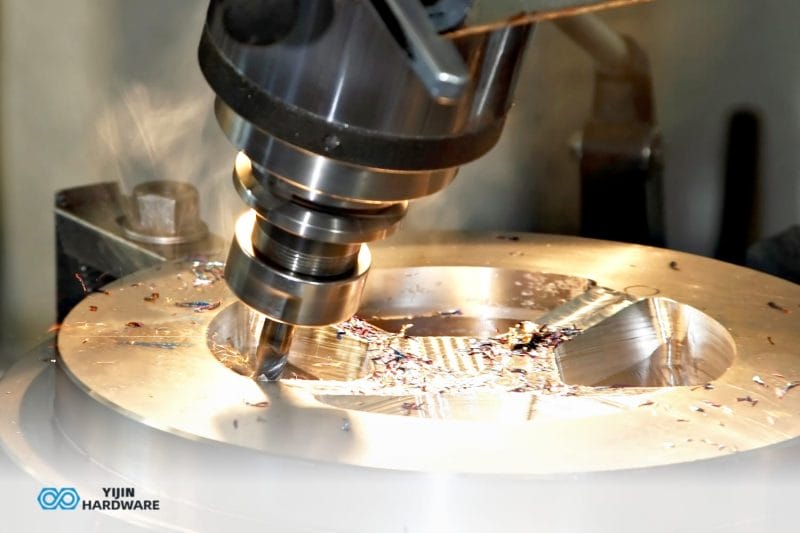
CNC Milling:CNC milling uses rotary cutters to remove material.- It is ideal for complex geometries. – CNC milling machines can perform various tasks. – Used in CNC machining to remove material.
Grinding:Grinding provides a smooth surface finish on the ceramic.- It is vital for precise applications. – Abrasive wheels refine dimensions to reduce errors. – Grinding is used for machining to make quality parts.
Laser Cutting:A laser beam cuts the ceramic workpiece.- It is suitable for intricate designs and thin sections. – This ensures clean, precise edges without material stress. – Laser cutting to cut ceramic improves exactness.
Choosing the Right Ceramic for CNC Machining
The type of ceramic influences the machining and performance. Different ceramics used exhibit distinct properties, such as zirconia and silicon carbide ceramics. Ceramics are ideal materials when performance matters, but precision machining of ceramics requires the right ceramic.
| Ceramic Type | Properties | Common Applications |
|---|---|---|
| Alumina Ceramics | High hardness, wear resistance | Electrical insulators, wear parts |
| Zirconia | High strength, fracture toughness | Medical implants, high-stress components |
| Silicon Carbide | Extreme hardness, high-temperature strength | Abrasives, semiconductor components |
| Aluminum Nitride | High thermal conductivity | Heat sinks, electronic substrates |
| Machinable Ceramic | Ease of machining | Prototypes, small-scale production |
Advantages of Ceramic CNC Machining
The advantages of ceramic machining, such as high precision and material versatility, are significant for various industries. Ceramic CNC machining offers many benefits over traditional machining methods.
High Precision:Achieves tight tolerances for critical applicationsComplex Geometries:Creates intricate shapes otherwise impossibleMaterial Versatility:Machines with a range of different types of ceramicsScalability:Adapts to varying production volumes efficientlyCost-Effective:Reduces material waste and improves production ratesRepeatability:Ceramic parts are made consistentlyLess Waste:The process reduces waste.
Applications of Ceramic CNC Machining
Applications of ceramic machining span numerous industries, such as aerospace and medical devices. Ceramic CNC machining due to its unique qualities is versatile. According to the Journal of Materials Processing Technology, ceramic matrix composites are enabling materials, unlocking new thermo-mechanical properties for engineers.
Aerospace:Heat shields, engine componentsMedical:Implants, dental prostheticsElectronics:Substrates, insulatorsDefense:Armor, high-performance partsAutomotive:Sensors, wear partsChemical:Chemical-resistant parts
Yijin Solution delivers top-quality CNC ceramic services. We combine CNC machining with advanced techniques, and our expertise ensures precision ceramic components. Contact us today for reliable machining services and exceptional results.
Custom Ceramic CNC Machining Support From Yijin
Yijin Solution helps customers evaluate custom ceramic and ceramic-adjacent precision components for manufacturability. We can review drawings, tolerance needs, material state, surface finish, inspection requirements, and production quantity before quoting.
Upload your ceramic part drawing and tell us the ceramic grade, sintering state if known, tolerance, quantity, and end-use environment for a DFM review.
FAQs
Can ceramic be CNC machined?
Yes. Ceramic can be CNC machined, but the process depends on material type and whether the blank is green, partially sintered, or fully sintered.
Why is ceramic machining difficult?
Ceramic machining is difficult because technical ceramics are hard and brittle. Tooling, coolant, support, and cutting force must be controlled to limit chipping and microcracking.
What is green ceramic machining?
Green ceramic machining shapes the part before full sintering. It is easier to cut, but the process must account for shrinkage and final dimensional control after firing.
What information does Yijin need to quote a ceramic part?
Yijin needs the drawing or CAD file, ceramic grade, sintering state if known, tolerance, surface finish, quantity, inspection needs, and end-use environment.






 English
  Spanish
  German
  French