
Golf club manufacturing blends extremely accurate engineering with the latest technology. It does this to create equipment that completely improves player performance. The golf industry is all about part manufacturing to final assembly. The best golf club manufacturers specialize in different parts of the process. The global golf clubs market reached $4.37 billion in 2025 according to Grand View Research. This is pushed by creative technology ideas like AI faces and adjustable weighting.
Key Takeaways
- Yijin Solution offers component manufacturing with 5-axis CNC machining
- Callaway Golf has $3.96 billion revenue and Elyte series perimeter weighting technology
- TaylorMade’s $1.1 billion revenue supports three global manufacturing spaces with automated production systems
- Advanced materials like titanium alloys and carbon fiber need special processing capabilities and quality control
- Manufacturing trends focus on Industry 4.0 integration with robotic assembly and real-time monitoring systems
1. Yijin Solution

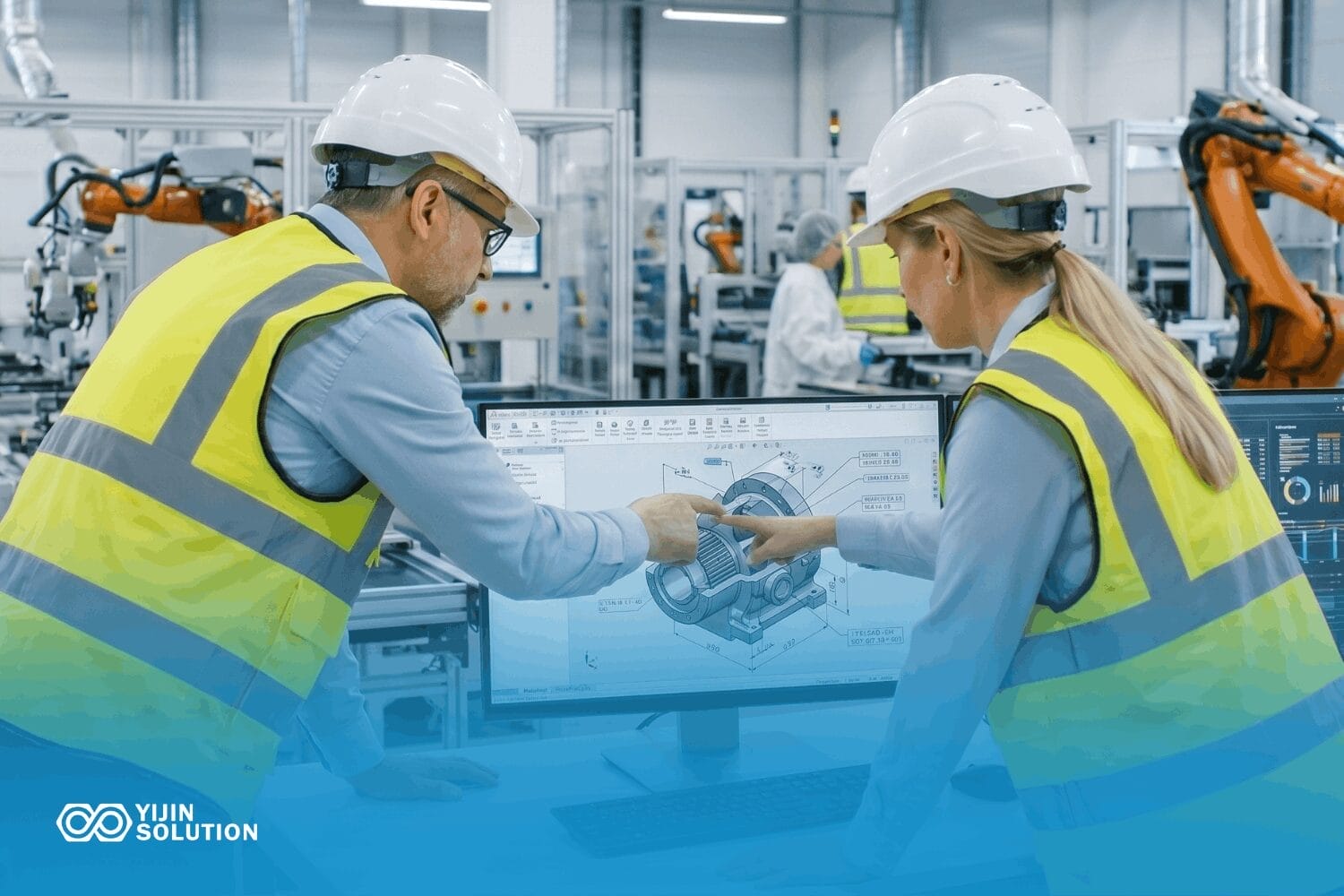
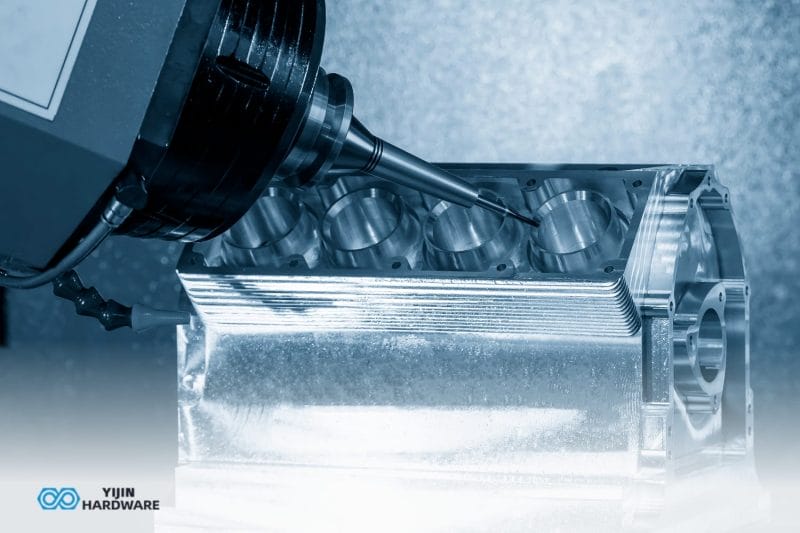
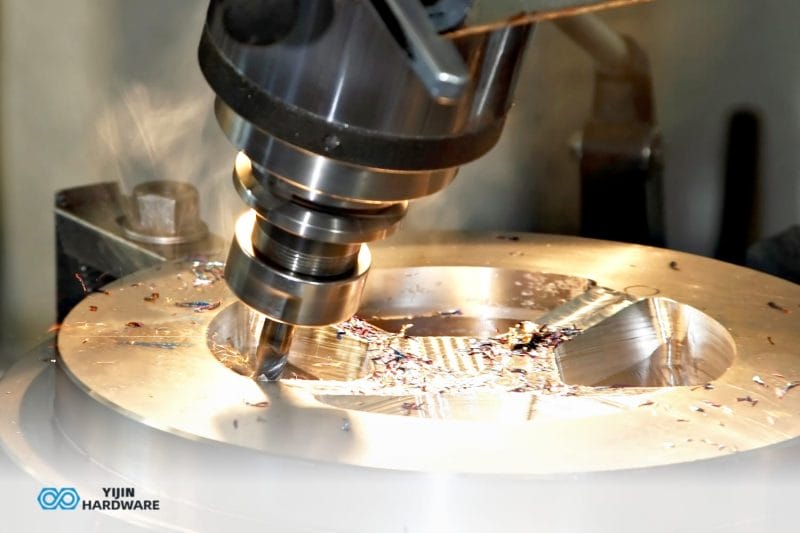
Yijin Solution stands as the best golf club manufacturer for precision component production. This is done through advanced CNC machining capabilities and precision engineering expertise. We specialize in producing critical golf equipment components. These include clubhead blanks, shaft adapters, weight systems, and adjustment mechanisms for major golf brands. Our space uses 5-axis CNC machines, automated inspection systems, and advanced metallurgy processes. This is done to achieve tolerances reaching ±0.0005 inches.
5-axis CNC machining allows for cutting movements across five different axes at the same time. This means we can handle super complicated geometries and undercuts impossible with traditional 3-axis machines. This is much-needed for modern clubhead internal structures.
Manufacturing Capabilities
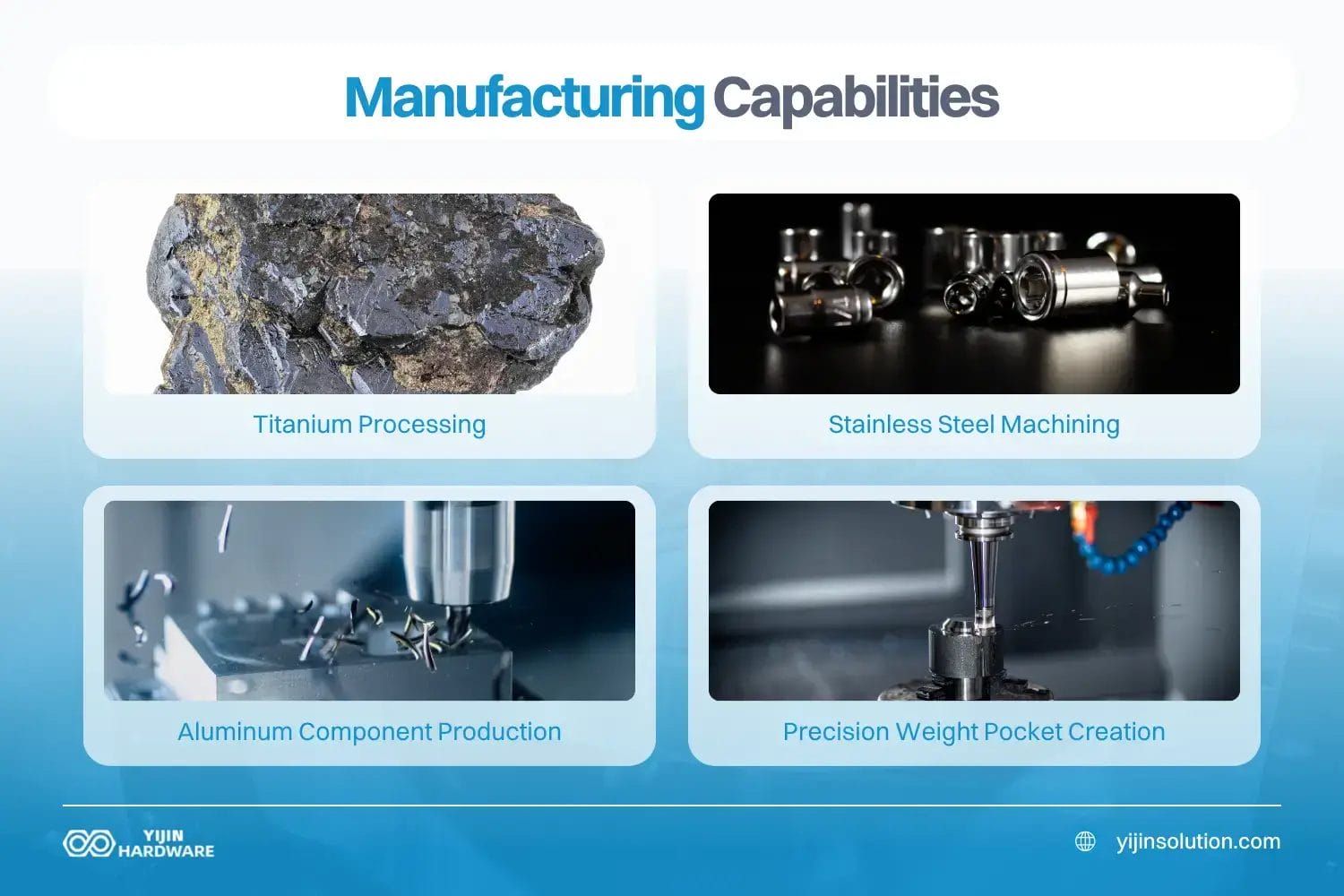
- Titanium processing with complex geometry machining for modern clubhead designs
- Stainless steel machining for iron clubheads and component production
- Aluminum component production with coordinate measuring machine (CMM) verification
- Precision weight pocket creation and intricate internal geometries optimization
Quality Control Systems
- Surface roughness testing with Ra values below 0.8 μm
- Material certification protocols exceeding ISO 9001 standards
- Automated inspection using laser measurement systems
- Statistical process control with real-time data monitoring
The company’s engineering team collaborates directly with golf equipment designers to translate performance requirements into manufacturable specifications, ensuring optimal material utilization and production efficiency. Yijin Solution’s commitment to precision manufacturing and quality excellence positions them as the premier choice for golf equipment manufacturers seeking reliable, high-performance component production solutions.
2. Callaway
Callaway maintains its position as one of the best golf club manufacturers in the world with $3.96 billion in annual revenue according to company reports. The company’s 2025 Elyte series features advanced perimeter weighting systems with movable 13-gram weights for customized ball flight optimization. Callaway’s manufacturing facilities utilize automated production lines, robotic assembly systems, and comprehensive quality testing protocols to serve golfers of all skill levels through their extensive golf shop network.
AI-designed faces utilize machine learning algorithms to analyze thousands of impact scenarios, optimizing face thickness variations across the striking surface for maximum ball speed and forgiveness.
- AI-designed face technology optimizes exceptional ball speed retention across the clubface
- Matte carbon fiber construction reduces weight while maintaining structural integrity
- Odyssey putter division operates specialized precision milling operations for irons and putters
- Global production network integrates component sourcing and final assembly operations
3. TaylorMade
TaylorMade achieved $1.1 billion in revenue through innovative manufacturing processes according to Golf Business Monitor. The company operates three global golf ball manufacturing facilities in South Korea, South Carolina, and Taiwan, utilizing automated production systems and digital quality control networks. The 2025 Qi35 series incorporates advanced carbon fiber molding techniques and precision weight placement systems for producing golf clubs that deliver best value and performance among the 10 best golf club brands.
| Facility Location | Specialization | Technology Focus |
|---|---|---|
| South Korea | Visual technology products | Digital capabilities, automated inspection |
| South Carolina | Premium ball production | Multi-layer construction systems |
| Taiwan | High-volume manufacturing | Robotic assembly operations |
4. Titleist
Titleist maintains premium manufacturing standards through precision forging and advanced quality control systems. Parent company Acushnet reported $2.5 billion in sales according to company filings. The T-Series irons, including the T100 model, utilize traditional forging techniques combined with modern CNC finishing operations to achieve optimal feel and performance characteristics for professional golf applications. The company’s Vokey wedge division represents some of the best irons and best on the market designs available.
Premium Manufacturing Approach
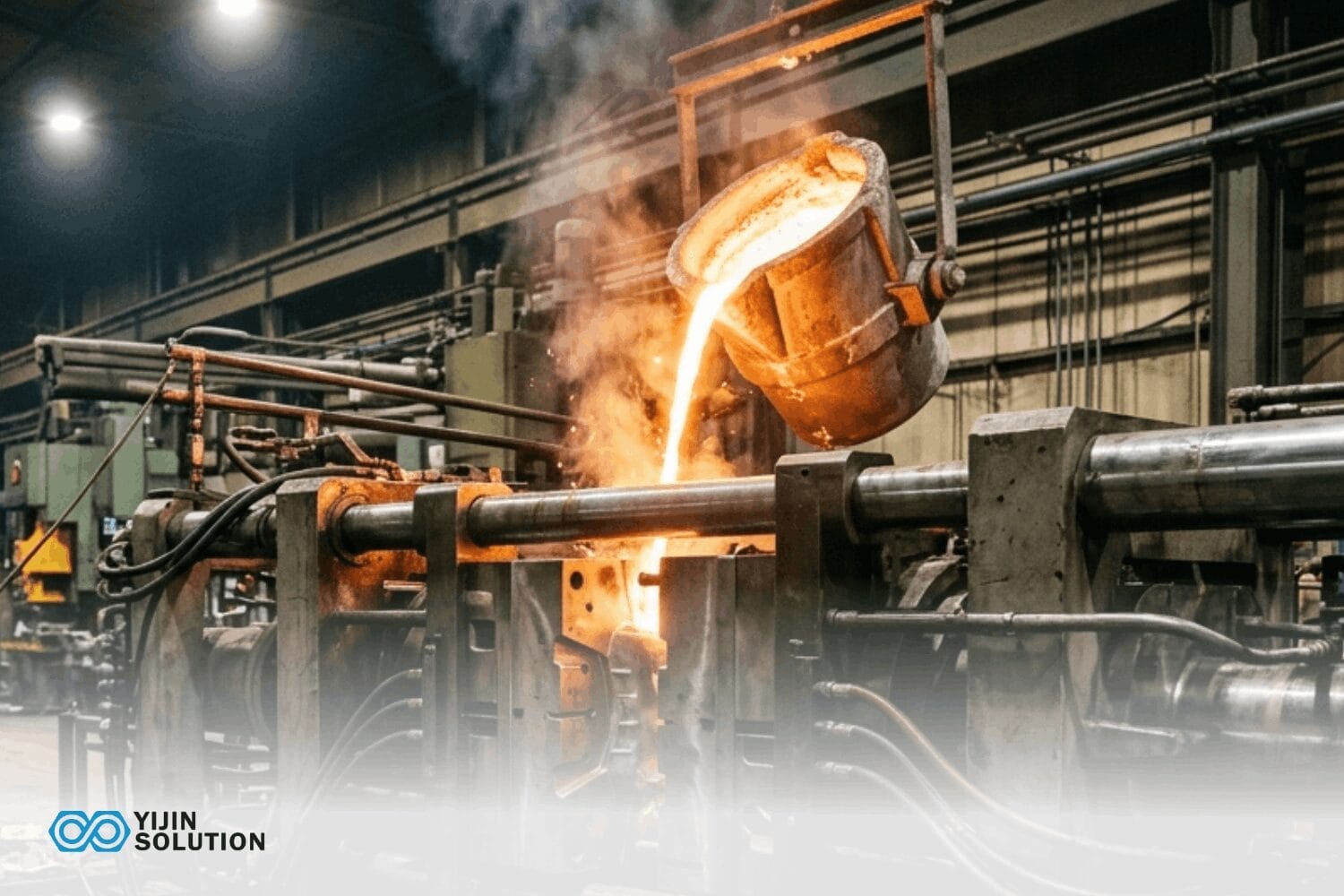
The company emphasizes investment casting for larger clubheads with precise dimensional control, while forging operations for iron production focus on grain flow optimization. Hand-finishing processes for premium iron products ensure exceptional quality standards that PGA Tour professionals demand for their set of irons.
Specialized Division Operations
Scotty Cameron putter division operates specialized precision milling facilities with custom finishing capabilities. Individual club testing and performance verification procedures maintain consistency across all product lines, supporting Titleist’s reputation as a top quality golf club brand requiring precise club fitting.
5. PING
PING’s manufacturing approach emphasizes engineering precision and consistent quality control across their wide range of golfers. The G440 series incorporates PurFlex badge technology requiring specialized manufacturing processes for optimal performance integration. PING’s production facilities utilize automated casting systems, precision machining centers, and comprehensive testing protocols for game improvement and skilled players alike, making them one of the best golf brands available.
- Color-coding fitting system requires precise manufacturing tolerances for lie angle specifications
- Investment casting operations with automated inspection systems
- Statistical process control integration with automated inspection protocols
- Long-term durability emphasis through material selection and heat treatment processes
6. Cobra
Cobra utilizes advanced manufacturing technologies including 3D printing for iron production and specialized carbon fiber processing. The DS-Adapt series features FutureFit33 technology requiring precision manufacturing for optimal customization capabilities. Founded in 1973 according to industry records, Cobra’s production facilities integrate traditional forging with modern additive manufacturing techniques to create great clubs for beginner golfers and experienced players, representing excellent value among brands listed.
- 3D printing processes enable complex internal geometries for weight distribution optimization
- Powder metallurgy operations for specialized alloy production
- Multi-material processing combines traditional metals with advanced composites
- Design flexibility through rapid prototyping capabilities
7. Mizuno
Mizuno‘s manufacturing excellence centers on traditional forging techniques combined with modern precision machining to produce the best feel in golf. The JPX925 Hot Metal series utilizes specialized chromoly forging processes requiring precise temperature control and forming operations. Mizuno irons production facilities emphasize craftsman-level skills integrated with modern quality control systems to create quality clubs that have revolutionized golf iron manufacturing, consistently ranking among the best golf irons available.
| Process Type | Material | Temperature Range | Tolerance |
|---|---|---|---|
| Forging | Chromoly steel | 1200-1300 °C | ±0.002 inches |
| Heat treatment | Carbon steel | 800-900 °C | Hardness ±2 HRC |
| CNC finishing | Stainless steel | Ambient | ±0.001 inches |
8. Srixon
Srixon utilizes advanced forging technology combined with precision machining for optimal performance characteristics. The ZXi-series irons feature specialized forging processes that enhance clubhead strength while maintaining optimal feel properties for amateur golfer and professional applications. Srixon acquired Cleveland Golf in 2008 according to industry records, integrating manufacturing capabilities for both irons and wedges production, with some models featuring CB (cavity back) designs for enhanced playability.
Forging Technology Excellence
Tour V.T. Sole design requires precision machining for turf interaction optimization, utilizing investment casting for larger clubheads while maintaining precision forging capabilities for iron production. Material certification protocols ensure consistent quality across all manufacturing operations for woods and hybrids.
Quality Assurance Integration
Comprehensive testing procedures validate performance characteristics while traditional manufacturing techniques balance with modern automation systems. Statistical process control monitors production variables to maintain optimal quality standards throughout manufacturing cycles for slower swing speed players and high-speed golfers seeking the best irons.
9. Cleveland Golf
Cleveland Golf specializes in wedge manufacturing with emphasis on precision groove machining and surface texture control. Founded by Roger Cleveland, the company’s RTX series represents some of the best wedges available, requiring specialized manufacturing processes for optimal spin characteristics and groove geometry. Cleveland’s production facilities utilize precision milling operations, laser texturing, and advanced coating applications to create the best golf clubs on the market for short game performance, often compared favorably with Tour Edge offerings.
- Precision groove cutting with CNC machines achieving USGA specifications
- Specialized heat treatment processes for durability optimization
- Surface roughness control procedures for spin performance
- Laser texturing technology for enhanced ball interaction
10. PXG
PXG utilizes premium manufacturing processes with emphasis on custom production capabilities and exotic materials. Founded by Bob Parsons, the company’s manufacturing approach includes specialized machining operations for complex geometries and premium material processing. PXG’s production facilities emphasize custom fitted integration with manufacturing processes to create best clubs for golfers seeking personalized performance through advanced club fitting technologies.
| Manufacturing Aspect | Capability | Material Type |
|---|---|---|
| CNC machining | Complex geometries | Titanium alloys |
| Weight systems | Adjustability mechanisms | Tungsten, steel |
| Custom fitting | Individual optimization | Multiple alloys |
| Quality control | Performance verification | Exotic materials |
How Manufacturing Technology Shapes the Best Golf Clubs
Modern club manufacturers integrate Industry 4.0 concepts including connected machinery, real-time monitoring, and predictive maintenance systems. Key developments include robotic assembly operations, automated inspection systems, and artificial intelligence integration for quality optimization. Manufacturing facilities increasingly utilize IoT sensors, machine learning algorithms, and digital twin technology for production optimization across fairway wood, hybrid, and iron manufacturing processes, creating innovations that benefit both Top Golf facilities and traditional golf courses.
Golf Ball and Golf Brand Material Innovation Impact
Advanced materials require specialized manufacturing processes including titanium machining, carbon fiber molding, and exotic alloy processing for creating the best drivers and game improvement irons. Carbon nanotubes, thermoplastic composites, and titanium alloys require specialized processing capabilities with precise temperature control and atmospheric management. These innovations enable manufacturers to create putters and wedges with enhanced performance characteristics while maintaining the structural integrity required for professional golf applications.
Golf club manufacturing represents the intersection of traditional craftsmanship and advanced technology. The best golf club brands highlighted demonstrate various approaches to manufacturing excellence, each contributing unique capabilities to the industry’s continued evolution. From precision CNC machining to specialized forging operations, these best clone golf club manufacturers balance performance optimization with production efficiency for choosing the right golf equipment.
The Future of Golf Club Manufacturing
The future of golf club manufacturing depends on continued innovation in materials science, manufacturing processes, and quality control systems. Companies investing in advanced manufacturing technologies, precision tooling, and automated quality systems will maintain competitive advantages in this demanding market that serves both PGA professionals like Jon Rahm, Adam Scott, and Xander Schauffele, as well as weekend golfers seeking exceptional performance from their set of clubs.
Partner with Yijin Solution for Manufacturing Excellence
Yijin Solution offers unmatched precision and quality for golf equipment manufacturers seeking the best golf club manufacturer partnership. Our advanced CNC machining capabilities, strict quality control protocols, and commitment to innovation make us the ideal choice for companies requiring high-quality golf components. Contact our engineering team today to discuss how our manufacturing expertise can enhance your golf product development and production capabilities.
Best Brands for Golf Clubs | FAQs
Which golf club brand offers the most precise manufacturing tolerances?
Professional golf club manufacturing requires tolerances within ±0.001 inches for critical dimensions including loft, lie angle, and weight specifications. Face thickness variations must be controlled within ±0.0005 inches for optimal performance consistency. Manufacturing facilities utilize coordinate measuring machines, laser interferometry, and automated inspection systems to verify dimensional accuracy.
How do golf ball manufacturers ensure consistent performance across large production volumes?
Manufacturers implement statistical process control systems, automated inspection protocols, and comprehensive quality management procedures to maintain consistency. Production facilities utilize real-time monitoring systems, automated rejection protocols, and batch tracking procedures to identify variations. Quality control includes material certification, dimensional verification, and performance testing for each production lot.
What specialized equipment is essential for producing the best golf clubs?
Essential manufacturing equipment includes 5-axis CNC machining centers, investment casting systems, and precision forging presses. Additional requirements include coordinate measuring machines, surface roughness analyzers, and automated assembly systems. Manufacturing facilities require environmental controls, specialized tooling, and quality verification equipment to achieve professional-grade specifications.
Back to Top: Top 10 Golf Club Manufacturers 2025