Metal Brushing Services
Clean satin and matte finishes for custom metal parts. Our metal brushing services help hide machining marks, reduce glare, and get parts ready for coating or final use.
- Methods and grit: belt, wheel, and hand brushing in grit ranges from #120 to #400.
- In-house finishing: applied as a finishing step on the parts we manufacture, with no third-party handoffs.
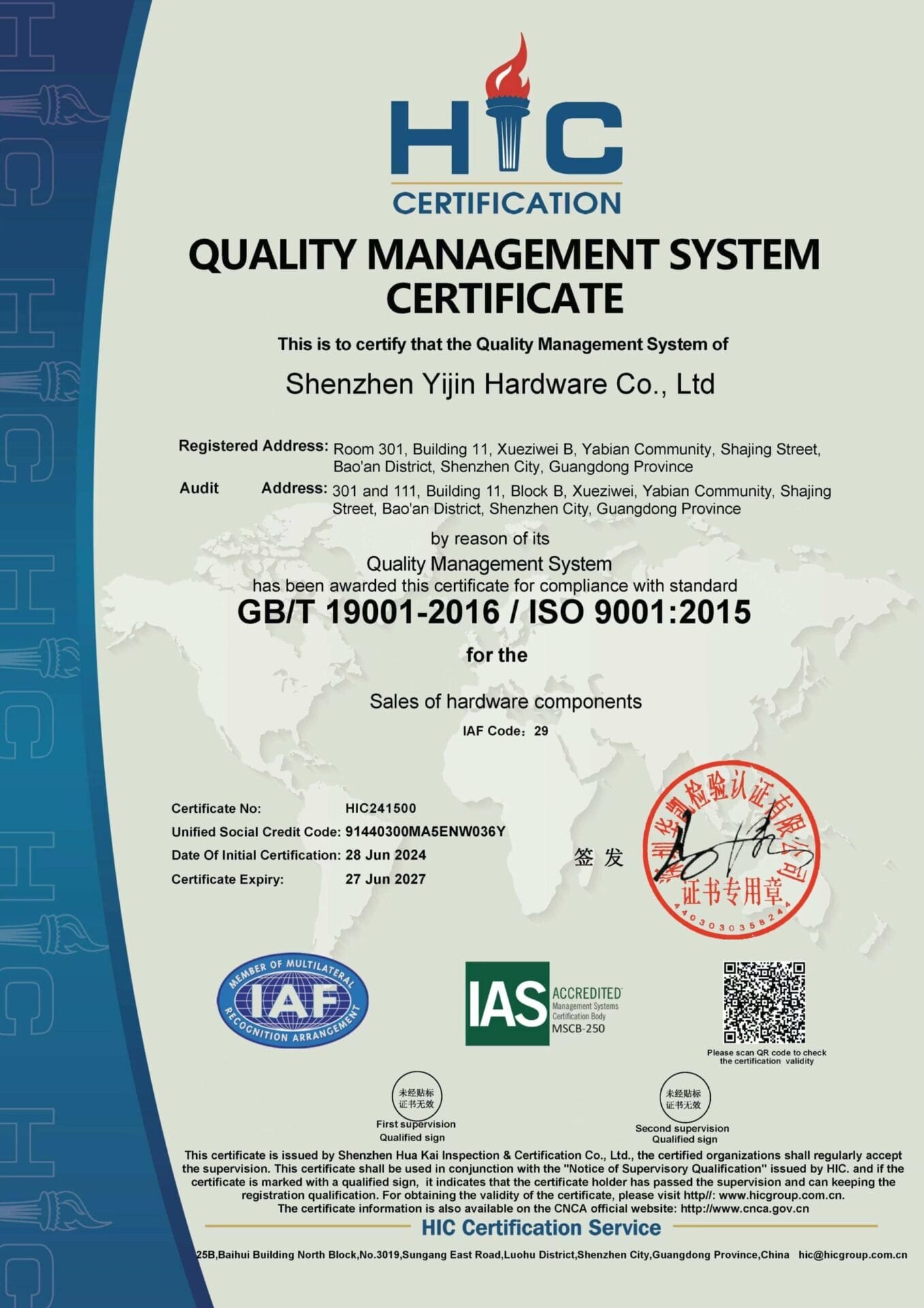
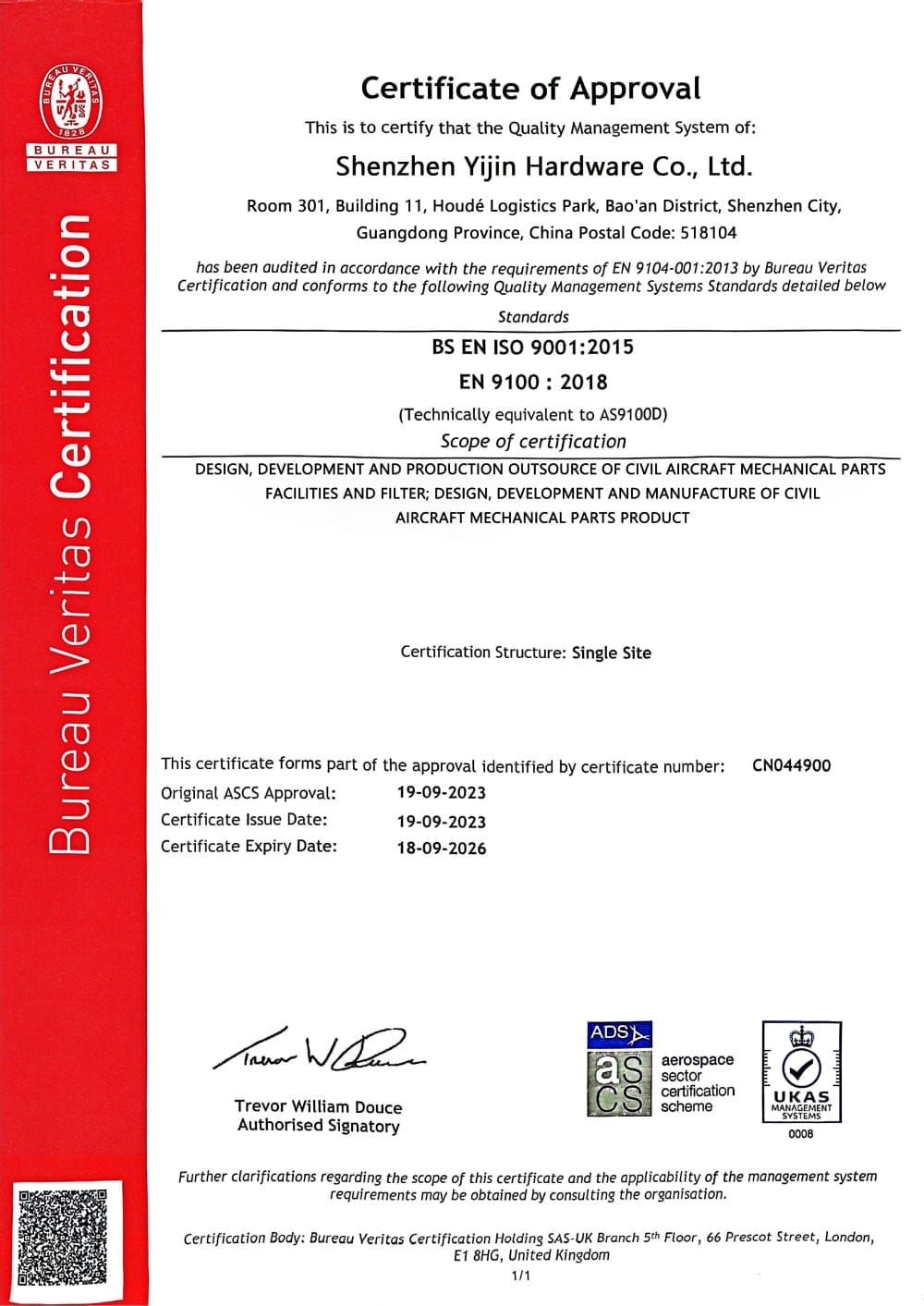
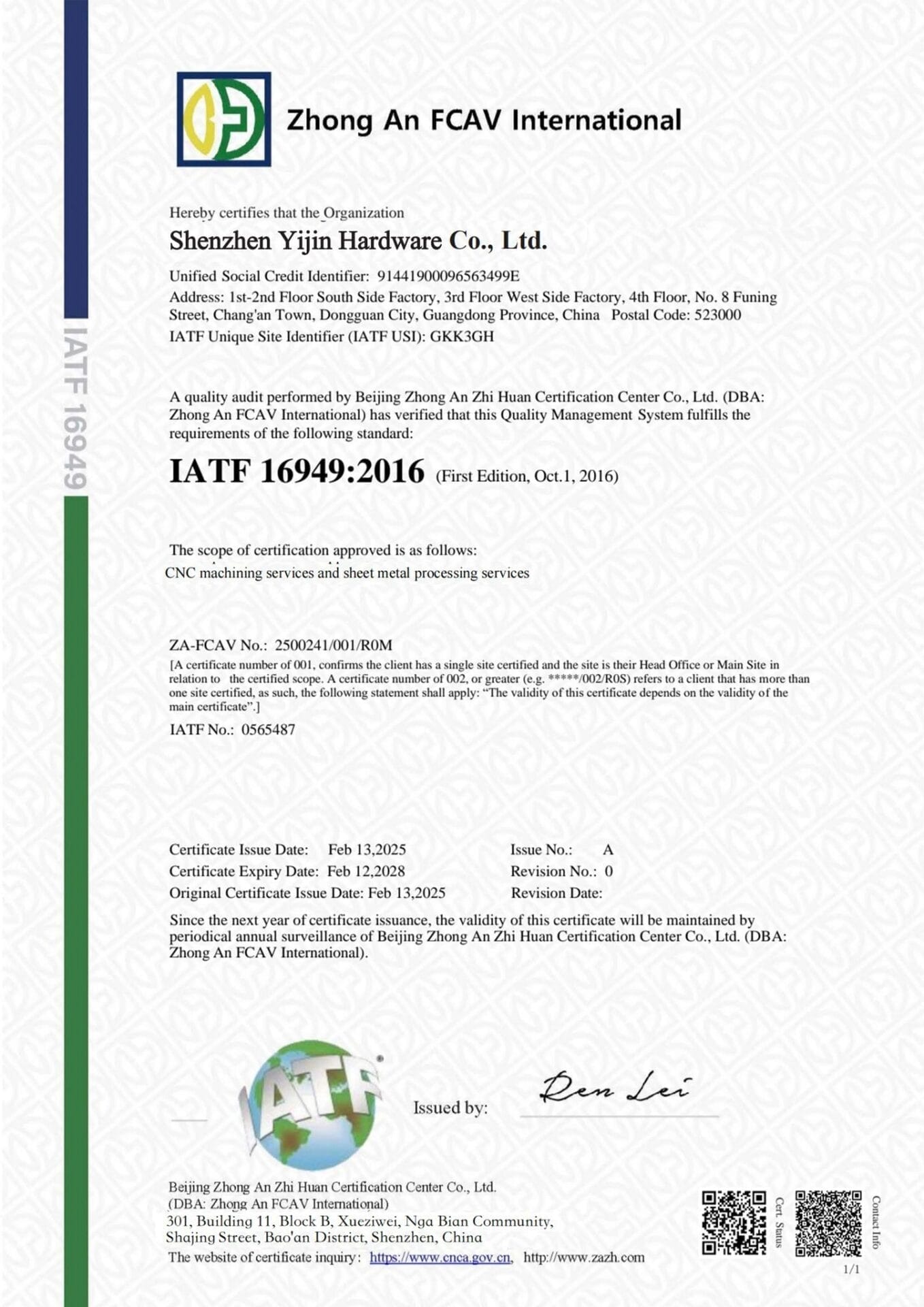
- Quality system: ISO 9001 certified, with Zeiss CMM inspection available on finished parts.
Join 3000+ companies who work with Yijin Solution


Metal Brushing with Yijin Solution
Yijin Solution applies metal brushing in-house on the parts we manufacture, so finish quality is controlled at every step from raw material to shipment. The target grit, grain direction, and Ra range are confirmed at the DFM review stage, which means brushing is planned into the part rather than added after the fact.
We offer linear and circular grain patterns across grit ranges from #120 to #400, applied to aluminum, stainless steel, carbon steel, brass, copper, and titanium. Brushing can be used as a final cosmetic finish or as a preparation step before anodizing, powder coating, or painting. An ISO 9001 quality system governs the work, with Zeiss CMM inspection available for dimensional verification after finishing.
Metal Brushing Capabilities
The table below summarizes our standard metal brushing parameters, confirmed on your part at the quote stage.
| Parameter | Specification |
|---|---|
| Brushing methods | Belt brushing, wheel brushing, hand brushing |
| Finish types | Linear (unidirectional) and circular (swirl) |
| Common grit range | #120, #150, #180, #220, #320, #400 |
| Typical surface roughness | Ra 0.2 to 1.6 microns; varies by grit and material, confirmed at quote stage |
| Tolerance impact | Minimal material removal, 5 to 30 microns. Not a dimensional process. |
Types of Brushed Finishes
We offer two grain patterns. The right one depends on part geometry and the look the part needs.

Linear brushing
Straight, parallel grain lines in one direction. This is the standard finish for enclosures, panels, and consumer electronics housings. Brushing direction should be noted on the drawing so the grain stays consistent across a production batch.

Circular Brushing
An arc or swirl pattern from a rotating abrasive. It suits round parts, dial faces, and decorative hardware on which a straight grain would look interrupted.
How Grit Affects Brushed Finish Appearance
Grit selection sets the depth and visibility of the grain. The table below maps common grit ranges to finish character, typical use, and approximate surface roughness (Ra).
| Grit | Finish character | Typical use case | Approx. Ra (microns) |
|---|---|---|---|
| #120 | Coarse, visible grain lines | Industrial panels, heavy deburring, surface prep before coating | 1.2 to 1.6 |
| #180 | Medium, balanced texture | Appliance panels, enclosures, general-purpose cosmetic finish | 0.8 to 1.2 |
| #220 to #320 | Fine, subtle grain | Consumer electronics housings, medical device enclosures | 0.4 to 0.8 |
| #400 | Very fine, near-satin | Premium cosmetic parts, watch cases, decorative trim | 0.2 to 0.4 |

Nickel
Corrosion resistance and wear resistance. Versatile across most substrates and commonly used as an underlayer for chrome or gold.

Chrome
Hard chrome for wear surfaces such as hydraulic cylinders and valve bodies; decorative chrome for cosmetic applications including consumer hardware and automotive trim.

Zinc
Cost-effective corrosion protection for steel parts, often paired with chromate or trivalent passivation.

Zinc-Nickel
High-performance corrosion protection for aerospace fasteners and structural fittings, and the modern replacement for cadmium plating.

Gold
Electrical conductivity and contact reliability for connectors, semiconductor components, and aerospace electronics.

Copper
Undercoat for adhesion and uniformity, or standalone for EMI shielding and electrical conductivity.

Tin
Solderability and corrosion resistance for electronic component leads and food-contact hardware.

Silver
High electrical and thermal conductivity for specialized electronic and aerospace applications.
Materials We Brush
We brush a range of metals we machine and finish. Grit and media are matched to each one to get a consistent grain without removing more material than the part allows.
Aluminum Alloys
Uniform satin finish and an ideal pre-anodizing surface. Hides machining marks on enclosures and heat sinks.
Stainless Steel
Consistent directional grain that reduces fingerprint visibility on panels and housings. Common on 304 and 316 grades.
Carbon Steel
Directional grain on industrial panels and enclosures, often as a surface prep step before painting or powder coating.
Brass
Decorative matte finish without aggressive material removal. Common on hardware and fixtures.
Copper
Soft directional texture that highlights the natural color of decorative and electrical components.
Titanium
Uniform matte grain that removes machining marks and prepares the surface for anodizing or PVD coating.
Our Electroplating Process
Brushing runs as part of the production flow rather than a separate stage. The steps below show how a part moves from quote to shipment.
- Quote and DFM review on uploaded CAD files. Finish requirements, brushing direction, and target grit are confirmed at this stage.
- Manufacturing of the part on our production lines, since we apply brushing to parts we make.
- Surface preparation and masking of critical features, threaded holes, and mating surfaces.
- Grit and media selection based on material type and target finish specification.
- Brushing to the target Ra range and visual standard, with grain direction per drawing.
- Post-brushing cleaning, inspection, and protective packaging.
- Shipment from our Shenzhen or Florida facility.
Applications and Industries
Brushed finishes are used across industries that want a low-glare, fingerprint-resistant, or coating-ready surface. The examples below show typical parts and why the finish fits each one.
Laptop housings, phone frames, speaker grilles. Brushed aluminum gives a premium look and resists visible fingerprints in daily handling.
Enclosures, instrument housings, panel faces. Brushed stainless steel reduces glare under surgical lighting and cleans easily.
Interior trim, dashboard accents, door handle covers. The finish gives a tactile, low-glare surface that holds up to repeated contact.
Control panels, enclosures, operator interface bezels. The grain hides scratches from everyday use in factory environments.
Control panel covers, end-effector housings, and structural frames. A brushed finish keeps a clean look and resists handling marks across assembly and operation.
Refrigerator panels, oven fronts, range hoods. Brushed stainless steel is the standard commercial finish for kitchen products.
Why Choose Yijin Solution for Metal Brushing
Brushing quality depends on the steps that come before the finishing line. The points below cover how we control them, from manufacturing through inspection.

Finishing happens on the same site as production, so brushing fits into the schedule instead of adding a separate queue, and surface quality is controlled from raw material to finished part.

Our engineering team reviews finish-related design risks at the quotation stage. Sharp internal corners that are difficult to brush evenly, and thin walls that may distort under belt pressure, are flagged before production begins.

Linear and circular patterns from #120 through #400, matched to the target Ra and end use, plus brushing as a prep step ahead of anodizing, powder coat, or paint.

An ISO 9001 quality system governs the work, and Zeiss CMM inspection is available for dimensional verification after finishing. Shenzhen production is backed by Florida-based support for North American customers.
Gallery of Brushed Parts
Brushed parts produced across consumer electronics, medical, automotive, industrial, robotics, and household appliance applications.
FAQs on Metal Brushing Services
Do you brush parts you did not manufacture?
Metal brushing is an add-on finishing step applied to parts we manufacture. Choosing it at the time of order means the production quality and dimensional control carry through to the finished surface.
Is there a minimum order quantity for brushed parts?
Brushing follows your manufacturing order, so there is no separate finishing minimum. We confirm quantities and pricing with the production quote at the DFM review stage.
What drives the cost of a brushed finish?
Cost depends on part size, the surface area to be brushed, the target grit, and how much masking the part needs. Finer finishes and complex masking add labor. We price brushing as part of the production quote rather than a flat per-part rate.
What is the typical lead time for brushed parts?
Lead time depends on order volume, part complexity, and the finishing schedule. For most orders, brushing runs alongside production rather than adding a separate finishing queue. We confirm the timeline with the production quote.
Can you protect threads and mating surfaces during brushing?
Yes. We mask threads, press-fit areas, and critical mating surfaces before brushing so dimensional accuracy and function are preserved. Masking requirements are confirmed during the DFM review.

China vs US Manufacturing: CNC Costs, Reshoring, and How to Decide
A US shop and a China shop can quote the same CNC part two to three times apart. Buyers pause

IP Protection When Outsourcing CNC Machining to China
A buyer shares a full set of CAD drawings with a new supplier in China. Weeks later, a near-identical product

China CNC Machining Quality Control: AS9100 and ISO Realities
A certificate list on a supplier’s homepage does not prove much by itself. Anyone can post logos for ISO 9001,
Request a Metal Brushing Quote
Metal brushing produces a consistent directional grain that masks machining marks, reduces glare, and prepares surfaces for coating across aluminum, stainless steel, brass, and titanium. Yijin Solution applies metal brushing in-house on the parts we manufacture, matched to your target finish at the DFM stage.