Phosphate Coating Services
Our offerings include zinc, manganese, and iron phosphate coating for machined and fabricated steel parts. These processes add corrosion resistance, oil retention, and paint adhesion without significant dimensional change.
- Substrates: carbon steel, alloy steel, tool steel, cast iron, powdered metal, and aluminum alloys with iron phosphate pre-treatment.
- Coating types: zinc phosphate, manganese phosphate, and iron phosphate.
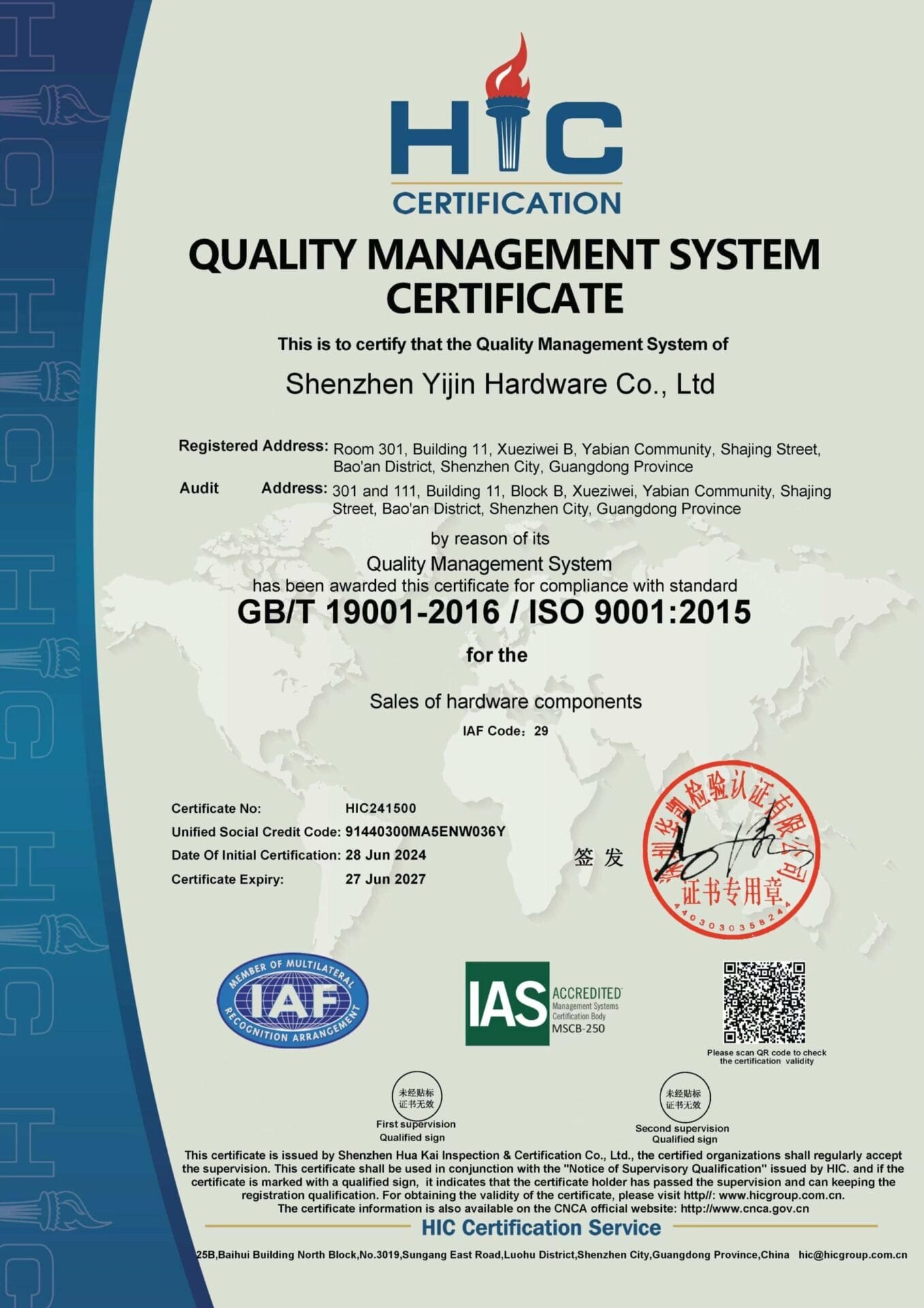
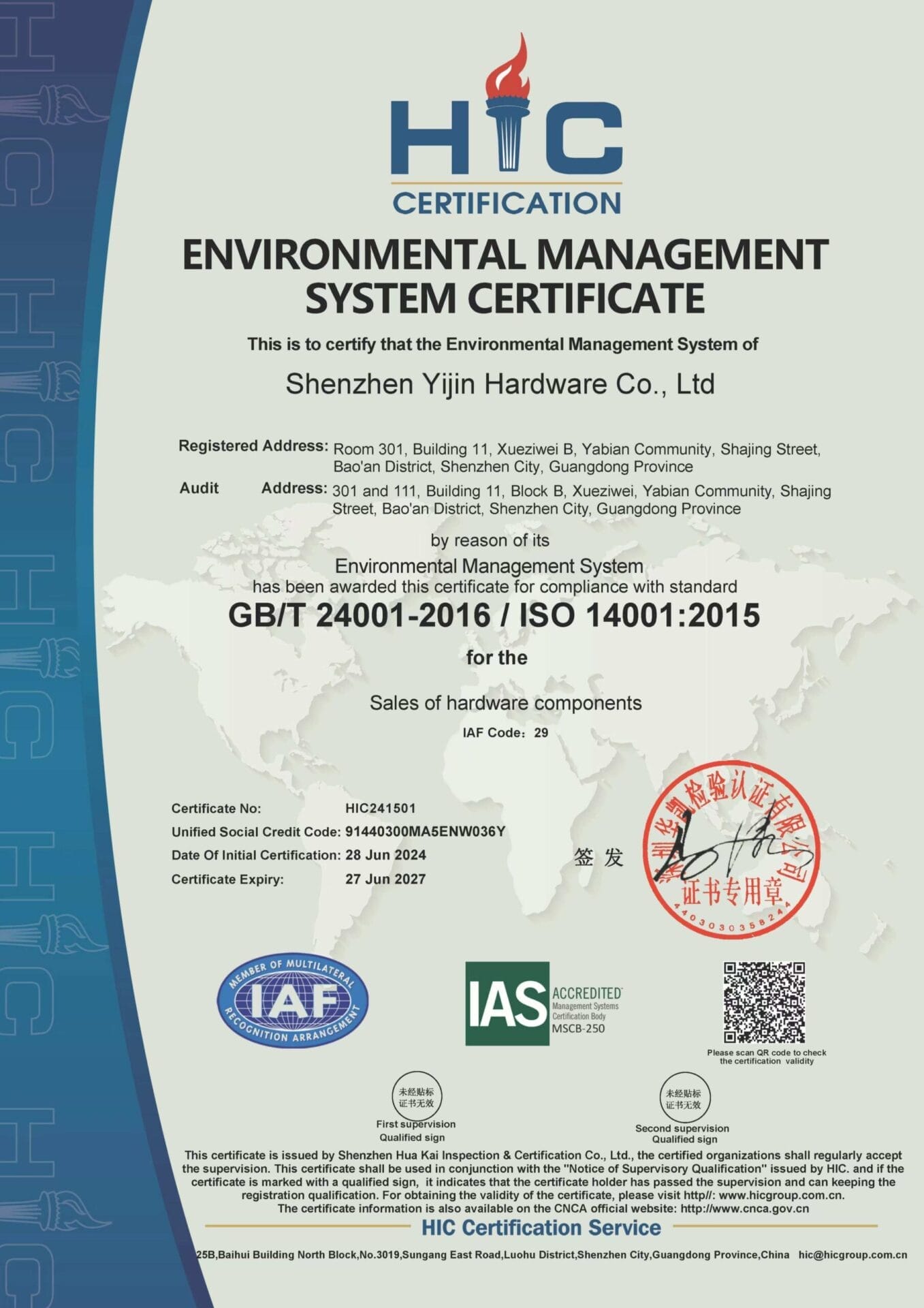
- Quality system: ISO 9001 and ISO 14001 certified.
Join 3000+ companies who work with Yijin Solution


Phosphate Coating with Yijin Solution
Yijin Solution provides in-house phosphate coating in zinc, manganese, and iron phosphate, applied alongside our CNC-Bearbeitung and other manufacturing processes.
We coat carbon steel, alloy steel, tool steel, and cast iron, giving you corrosion resistance for storage and shipping, oil retention for wear protection, and a reliable paint or powder coat base.
Our phosphate coating service is planned for the part at the DFM review, with process control from substrate preparation through to post-coating inspection.
Phosphate Coating Capabilities
The table below summarizes our standard phosphate coating specifications.
| Parameter | Spezifikation |
|---|---|
| Coating types offered | Zinc phosphate, manganese phosphate, iron phosphate |
| Process method | Immersion (dip) phosphating |
| Typical coating thickness | Iron phosphate: 1 to 4 microns. Zinc phosphate: 5 to 20 microns. Manganese phosphate: 8 to 25 microns. |
| Coating weight | Iron phosphate: 40 to 100 mg/ft². Zinc phosphate: 100 to 1,000 mg/ft². Manganese phosphate: 1,000 to 4,000 mg/ft². |
| Substrate compatibility | Carbon steel, alloy steel, cast iron, and powdered metal. Iron phosphate pre-treatment is available for aluminum alloys. |
| Process temperature | 70 to 9 °C, depending on phosphate type |
| Dimensional impact | Minimal. Coating thickness measured in microns. |
| Post-treatment options | Oil seal, chromic acid seal, non-chrome seal, wax seal, paint or powder coating |
| Compliance | ISO 9001, ISO 14001 |
Phosphate Coating Types
Each phosphate type delivers a different combination of thickness, oil retention, and surface function. Selection depends on the end-use environment and whether the part will be painted, lubricated, or sealed against rust.

Zinc Phosphate
Gray crystalline finish, 5 to 20 microns. Strong corrosion resistance and a paint adhesion base. Common on automotive body panels, brackets, and structural parts that are later painted or powder coated.

Manganese Phosphate
Dark gray to black crystalline finish, 8 to 25 microns. High oil retention and wear resistance. Suited for gears, bearings, pistons, and fasteners that need anti-galling and break-in lubrication.

Iron Phosphate
Blue to iridescent amorphous finish, 1 to 4 microns. Lowest cost and simplest to control. Used as a paint pre-treatment for sheet metal enclosures, appliance housings, and steel parts in mild environments.

Nickel
Corrosion resistance and wear resistance. Versatile across most substrates and commonly used as an underlayer for chrome or gold.

Chrome
Hard chrome for wear surfaces such as hydraulic cylinders and valve bodies; decorative chrome for cosmetic applications including consumer hardware and automotive trim.

Zink
Cost-effective corrosion protection for steel parts, often paired with chromate or trivalent passivation.

Zinc-Nickel
High-performance corrosion protection for aerospace fasteners and structural fittings, and the modern replacement for cadmium plating.

Gold
Electrical conductivity and contact reliability for connectors, semiconductor components, and aerospace electronics.

Kupfer
Undercoat for adhesion and uniformity, or standalone for EMI shielding and electrical conductivity.

Tin
Solderability and corrosion resistance for electronic component leads and food-contact hardware.

Silver
High electrical and thermal conductivity for specialized electronic and aerospace applications.
Materials We Phosphate Coat
The substrate determines which phosphate types suit the part and what surface preparation is needed before phosphating.
Carbon Steel (1018, 1045, A36)
The primary substrate for all three phosphate types, with no special preparation beyond standard cleaning and pickling.
Alloy Steel (4140, 4340)
Takes phosphate readily and holds a fine, even crystal structure on loaded parts such as gears and shafts.
Tool Steel (D2, H13, A2)
Accepts manganese phosphate well on dies, punches, and mold components that run under sliding contact.
Gusseisen
Gray and ductile cast iron both phosphate well, and the porous surface holds sealant effectively.
Powdered Metal (Sintered Iron)
The porous structure absorbs the phosphating solution readily, which is common on automotive transmission components.
Aluminium-Legierungen
Suit iron phosphate as a paint pre-treatment only. Zinc and manganese phosphate do not apply to aluminum, and anodizing is the usual route for corrosion protection.
Our Phosphate Coating Process
Every phosphate coating order follows the same workflow from quote to shipment.
- Quote and DFM review on uploaded CAD files. Phosphate type, sealer, and masking are confirmed here, with tolerances framed to ISO 2768.
- Part manufacturing via CNC machining, Blechfertigung, die casting, or 3D printing when ordered as an integrated service.
- Substrate preparation. Alkaline cleaning removes machining oils and coolant, and acid pickling removes scale and oxides, followed by a water rinse.
- Surface activation through a titanium salt or oxalic acid rinse to create even nucleation sites for fine crystal growth.
- Phosphatieren in-house. Parts are immersed in a heated bath with zinc, manganese, or iron salts, controlled for temperature, time, and concentration.
- Post-treatment sealing. Oil dip, chromic seal, non-chrome seal, or a dry-to-touch rust preventive, chosen by end use.
- Post-coating inspection. Visual check, coating weight verification, adhesion test, and a dimensional spot-check where needed.
- Packaging and shipment from our Shenzhen or Florida facility.
Industries and Applications
Phosphate-coated parts serve industries that need corrosion resistance, oil retention, or a paint adhesion base on steel and iron components.
Brake parts, transmission gears, leaf and coil springs, engine fasteners, and body-in-white brackets. Zinc phosphate gives a pre-paint barrier on structural parts; manganese phosphate adds oil retention on drivetrain components.
Firearm components, munitions casings, and vehicle chassis parts. Manganese phosphate prevents galling on bolt carriers and slides.
Hydraulic cylinder bores, pump housings, gear reducers, and bearing races. Manganese phosphate holds break-in lubrication on sliding surfaces.
Downhole tool components, valve bodies, and threaded couplings. Phosphate adds corrosion protection and thread lubrication in harsh service.
Bolts, studs, nuts, washers, and threaded rod. Zinc phosphate acts as a paint base; manganese phosphate prevents thread galling during assembly.
Why Yijin for Phosphate Coating
Yijin Solution runs phosphate coating and part manufacturing under one roof. The points below cover quality, turnaround, order size, production scale, material range, and cost.

Präzision und Qualität
ISO 9001 and ISO 14001 certified systems apply to every order. Coating weight checks and Zeiss CMM inspection confirm that parts meet specifications before shipment.

Schneller Turnaround
Phosphate coating runs alongside CNC machining, die casting, and other in-house processes. Parts move from manufacturing to coating without third-party handoffs, which cuts lead time and handling risk.

Order Any Size
Phosphate coating orders are accepted from single prototypes through to high-volume production runs. Coating type, thickness, and masking requirements are confirmed at the quote stage, regardless of order volume.

Prototyping to Production
DFM review at the quotation stage flags phosphate-related design points early. Cleanliness targets, masking complexity, and coating type selection are resolved before production starts, supporting a smooth transition from prototype approval to volume output.

Material Breadth
Zinc, manganese, and iron phosphate are available across carbon steel, alloy steel, cast iron, and stainless steel substrates. Each type is matched to the corrosion environment, lubrication requirement, or paint adhesion specification of the application.

Kostengünstig
Combining part manufacturing and phosphate coating under one roof removes third-party finishing costs and eliminates the freight and handling charges that arise when coating is sourced separately. The coating is specified and priced at the quote stage, so there are no surprises at the finishing step.
Gallery of Phosphate Coated Parts
The gallery shows phosphate-coated parts produced across automotive, military and defense, industrial machinery, oil and gas, and fastener applications.
Phosphate Coating FAQs
What phosphate coating thickness can you achieve?
Iron phosphate runs 1 to 4 microns, zinc phosphate 5 to 20 microns, and manganese phosphate 8 to 25 microns. The exact figure depends on bath concentration, immersion time, and the application.
Will phosphate coating change my part dimensions?
The added layer is measured in microns, so the change is minimal for most tolerances. For parts held tighter than plus or minus 0.02 mm, discuss coating type and thickness with our team at the quote stage.
Which phosphate coating type should I choose?
Choose zinc phosphate for corrosion resistance and paint adhesion, manganese phosphate for wear resistance and oil retention, and iron phosphate for low-cost paint pre-treatment in mild environments. Our team confirms the right type during the DFM review.
How does phosphate coating compare to black oxide?
Phosphate gives a thicker, more porous layer that holds oil and supports paint. Black oxide is thinner, adds almost no dimension, and suits tight-tolerance or decorative parts that do not need paint adhesion.
Can phosphate-coated parts be painted or powder coated afterwards?
Yes. Phosphate coating is a common pre-treatment for both. Zinc and iron phosphate are designed to improve paint adhesion and coating life.
What is the typical lead time for phosphate coating on machined parts?
Lead time depends on volume, part complexity, and the finishing schedule. For most orders, the coating runs in parallel with manufacturing rather than as a separate queue, and our team confirms timing at the quote stage.
Do you offer phosphate coating as a standalone service or only with manufacturing orders?
Phosphate coating is an add-on finishing service on CNC machining, sheet metal fabrication, and die casting orders, selected as part of the surface treatment specification.

China vs US Manufacturing: CNC Costs, Reshoring, and How to Decide
A US shop and a China shop can quote the same CNC part two to three times apart. Buyers pause

IP Protection When Outsourcing CNC Machining to China
A buyer shares a full set of CAD drawings with a new supplier in China. Weeks later, a near-identical product

China CNC Machining Quality Control: AS9100 and ISO Realities
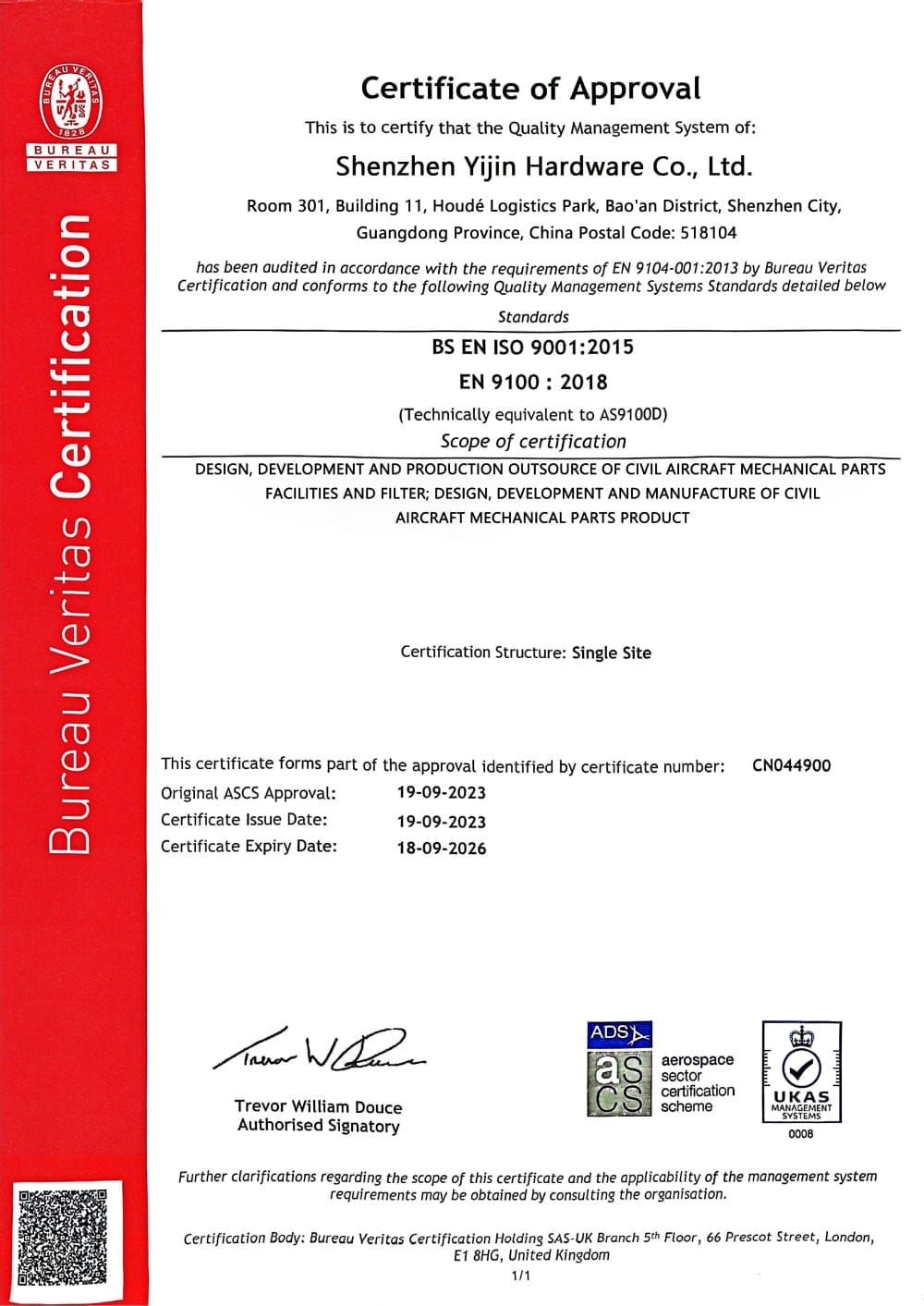
A certificate list on a supplier’s homepage does not prove much by itself. Anyone can post logos for ISO 9001,
Request a Phosphate Coating Quote
Phosphate coating adds corrosion resistance, oil retention, and a paint adhesion base to machined and fabricated steel parts without significantly changing their dimensions. Yijin Solution applies phosphate coating as part of its in-house finishing, so the coating is specified, applied, and verified alongside the part it protects.