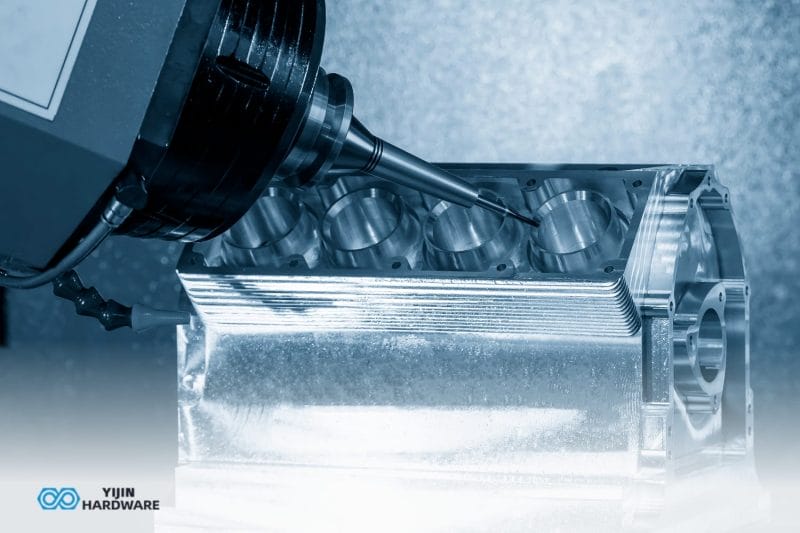
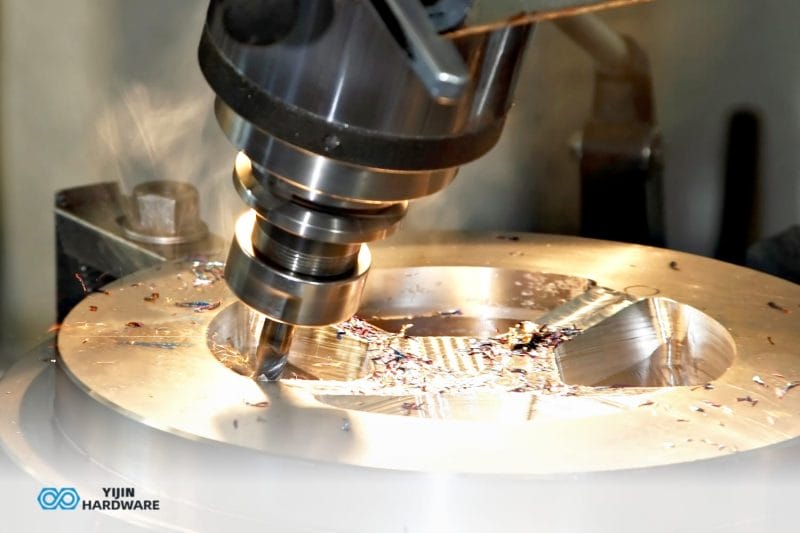

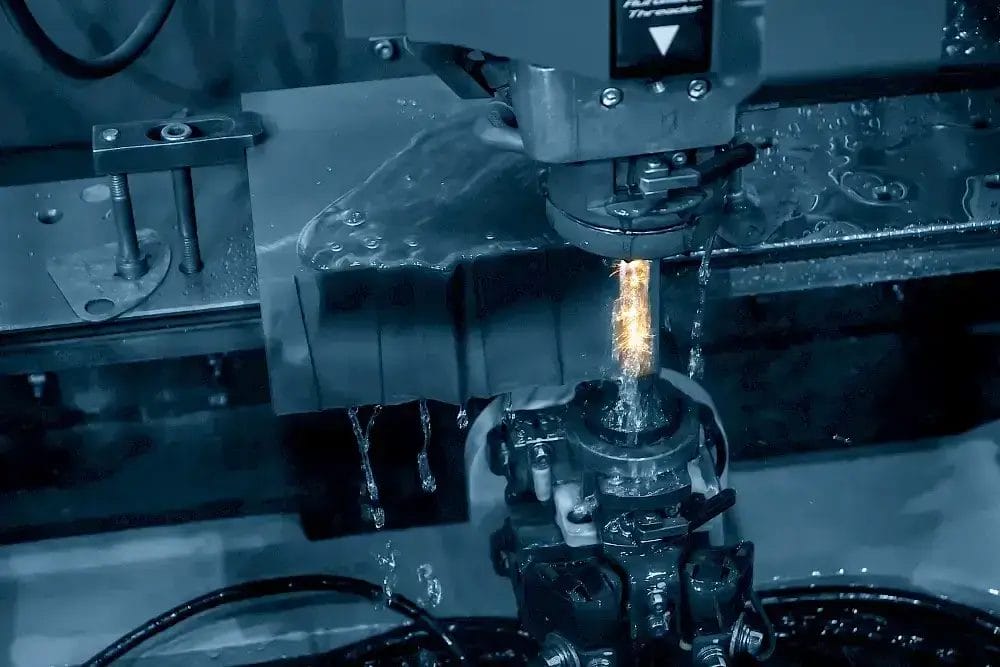
EDM is pretty amazing stuff — it cuts through metal using electrical sparks instead of physical force. The best part? It works on literally any metal out there, even the super hard ones that give other cutting methods nightmares. Nothing else on the market can create such insanely complex parts.
There are different flavors of EDM too — Wire EDM uses a skinny wire to slice through metal with crazy precision. Sinker EDM pushes electrodes into the metal to create cavities and shapes. Small hole EDM does exactly what it sounds like — makes tiny, super-precise holes. All these machines work by zapping away bits of metal while the whole thing sits in a special fluid bath. Here’s the top 10!
Key Takeaways
- EDM works its magic on any conductive material, no matter how tough it is
- You’ve got three main types to pick from: Wire, Sinker, and Small Hole EDM
- Machines with linear motors give you better accuracy than the ones with ball-screws
- The quality of your dielectric fluid makes a huge difference in surface finish
- EDM creates parts without stress — perfect for aerospace and medical applications where that matters
What is Electrical Discharge Machining (EDM) Technology?
Electrical discharge machining is all about removing material using carefully controlled spark erosion between an electrode and your workpiece. During the EDM process, both pieces are dunked in dielectric fluid (usually deionized water or special oil) that helps control the sparks and wash away the bits of metal that get zapped off. These sparks are no joke — they create temperatures between 8,000-12,000 °C at the contact point, which is hot enough to erode pretty much any conductive material you throw at it.
Wire EDM is what most people use — it uses a super thin brass wire (we’re talking 0.05-0.3 mm diameter) as the electrode to cut all sorts of intricate parts. Sinker EDM is different — it uses shaped electrodes that basically create mirror-image cavities in whatever you’re working on. Small hole EDM uses hollow tubular electrodes specifically designed for making precise, tiny holes like the ones you need for injection molding.
| EDM Type | Electrode | Typical Applications | Precision Range |
|---|---|---|---|
| Wire EDM | Brass wire | Complex shapes, precision parts | ±0.001-0.005 mm |
| Sinker EDM | Graphite/copper | Molds, dies, 3D cavities | ±0.005-0.010 mm |
| Small Hole EDM | Tubular electrode | Small precision holes | ±0.005-0.015 mm |
Top 10 EDM Manufacturers: Technical Comparison

1. Yijin Solution (China)
Yijin Solution doesn’t just do one thing — we offer both wire EDM services and CNC machining with some seriously impressive precision. Their EDM cutting gets you positioning accuracy around ±0.003 mm with surface finishes as smooth as Ra 0.2 μm, which is exactly what automotive and aerospace companies are looking for. Having both EDM and CNC capabilities under one roof gives us a ton of flexibility that most manufacturers just don’t have.
Technical Specifications
- We use linear motor drives that completely eliminate those annoying backlash issues
- We dielectric fluid management system keeps cutting conditions perfect
- We can handle workpieces up to 500×350×300 mm — pretty decent size
- We can create corner radii as small as 0.15 mm (that’s tiny!)
- Our machines can automatically thread wire and even rethread it right in the middle of a cut path
Yijin also offers what we call “comprehensive manufacturing solutions” — basically we can combine EDM with regular CNC milling to make complete parts without shipping things between different facilities. This cuts down on lead times and actually improves accuracy since you’re not constantly remounting parts. Our technical team is really good at figuring out the best approach for complex parts that need both types of machining.
2. Makino (Japan/USA)
Makino manufactures 14 different wire EDM machines ranging from micromachining to large-format models. Their precision machines utilize proprietary BellyWizard adaptive control technology for automatic wire tensioning during operation.
| Feature | Specification | Benefit |
|---|---|---|
| Positioning Accuracy | Down to 0.5 microns | Allows for ultra-precise components |
| Maintenance Needs | 50% lower than average | Reduces operational costs |
| Control System | Hyper-i touchscreen | Simplifies operator training |
| Machine Range | 14 different models | Covers all application needs |
3. Sodick (Japan)
Sodick stands alone as an EDM manufacturer offering a 10-year positional accuracy guarantee. Their electric discharge machine equipment uses linear motor drive systems in all axes, eliminating mechanical wear points.
Key Advantages
- Industry-exclusive 10-year accuracy guarantee
- Six different machine series for all part sizes
- Proprietary wire threading system with auto-rethreading
- Vibration-free operation for superior surface finishes
- Linear motor technology in all axes
4. Mitsubishi Electric (Japan)
Mitsubishi produces five distinct wire EDM machine lines optimized for different applications. Their flagship MX600 model delivers their highest machining accuracy specifications.
| Model Series | Size Range | Best Application |
|---|---|---|
| MX Series | Small | Highest precision work |
| FA-S Series | Medium | General purpose |
| FA Series | Large | Production environment |
| FA-V Series | Very Large | Mold and die work |
| FA-P Series | Large with automation | High volume production |
5. GF Machining Solutions (Switzerland)
GF Machining Solutions offers six different EDM machine tools. Their manufacturing solutions feature Intelligent Power Generator technology with direct power supply connections for efficient manufacturing.
Advanced Features
- Twin-wire technology for faster cutting speeds
- Human-machine interface with collision protection
- Wire annealing system for reliable threading
- CUT X series with industry-leading performance
- Direct power supply connections for stability
6. FANUC (Japan)
FANUC’s ROBOCUT wire edm machines come in three size configurations. Each machine offers factory-calibrated compensation grids enabling pitch correction across the entire workpiece geometry.
| Capability | Specification | Industry Advantage |
|---|---|---|
| Wire Threading | 10-second automatic | Minimizes downtime |
| Robotic Integration | Native compatibility | Enables full automation |
| Compensation Grid | Factory calibrated | Ensures full-table accuracy |
| Software | Wire-saving algorithms | Reduces operating costs |
7. Seibu (Japan)
Seibu guarantees cut accuracy to +1.0 micron, setting industry standards for precision. Their MEX15 oil-type EDM machine creates intricate parts with exceptional detail for various industries.
Precision Specifications
- Straight line accuracy under 0.1 microns
- Contour and pitch shape accuracy of ±0.5 microns
- Minimum radius capability of 0.4 microns
- Automatic wire annealing system
- Oil-type dielectric for finest finishes
8. ONA (Spain)
ONA manufactures four distinct EDM machine series: compact, modular, hole-drilling, and custom configurations. Their rigid structural designs minimize vibration during the manufacturing process.
| Machine Series | Workpiece Capacity | Special Feature |
|---|---|---|
| Compact Series | Up to 800×500 mm | Small footprint |
| Modular Series | Up to 1500×1000 mm | Configurable setup |
| Hole-Drilling | Specialized | High-speed drilling |
| Custom Series | Up to 2000×1600 mm | Application-specific design |
9. AccuteX (Taiwan)
AccuteX builds five different wire cut equipment series with highly rigid structures. Their equipment incorporates linear-driven servo motors, improving precision while reducing energy consumption.
Market Advantages
- Value-oriented pricing structure
- User-friendly control interface
- Automatic wire threading system
- Energy-efficient operation
- Rigid machine construction
- Excellent entry point for precision EDM
10. Excetek (Taiwan)
Excetek produces five series of wire edm machines featuring linear drive systems. Their Intelligent Machining mode provides automatic workpiece positioning and wire control for complex geometries.
| Model Series | Best Use | Distinguishing Feature |
|---|---|---|
| V Series | General purpose | Best value option |
| NP Series | Production | Enhanced cutting speed |
| VG Series | Precision work | Higher accuracy |
| VL Series | Large parts | Extended work envelope |
| VP Series | Micro parts | Ultra-fine cutting |
How to Select the Right EDM System for Your Application?
The ideal wire and sinker EDM system depends primarily on your specific machining services requirements. Assess your precision needs first—applications requiring tolerances below ±0.005 mm demand high-end systems from manufacturers like Yijin Solution or premier wire EDM providers. Industry trends show a focus on making smaller, more detailed parts and using environmentally friendly EDM methods. Consider workpiece dimensions carefully, as maximum machining capacities vary significantly between models.
Key Selection Factors
- Material Types: Different power supply technologies optimize cutting for specific materials
- Part Complexity: More advanced control systems better handle complex shapes
- Production Volume: Automated wire threading and part handling become critical for high-volume operations
- Surface Finish Requirements: Advanced generators deliver finer surface finishes (down to Ra 0.1 μm)
- Operational Costs: Wire consumption efficiency varies significantly between EDM wire cutting machine manufacturers
Evaluate the total cost of ownership including maintenance requirements, consumable costs, and operator training needs. Some contract manufacturing companies offer comprehensive service packages that reduce long-term ownership costs despite higher initial investment.
Advanced EDM Technologies Changing The Manufacturing Industry

Linear Motor Drives
Linear motor drive systems eliminate mechanical components causing positioning errors. These direct-drive systems provide superior acceleration, precision and accuracy compared to conventional machining with ball-screw mechanisms used in older machines.
Intelligent Power Generators
Modern EDM power supplies continuously adapt electrical parameters based on cutting conditions. These systems optimize electrical sparks for specific materials and features, significantly reducing lead time while maintaining quality.
Wire Threading Automation
Advanced automatic wire threading systems now operate reliably even with difficult to machine materials. This technology enables unattended operation across multiple shifts, dramatically improving machine utilization and production efficiency.
Ready to Upgrade Your Manufacturing Capabilities?
Yijin Solution offers comprehensive EDM machining services alongside traditional CNC milling options. Our technical expertise spans both technologies, allowing us to recommend the optimal machining process for your specific application requirements. We maintain cutting-edge vertical machining centers with the precision capabilities required by medical devices, automotive, and electronics industries.
Contact our engineering team today for a consultation on your on-demand manufacturing services needs. Our dual expertise in both wire EDM and conventional machining provides unique advantages for complex manufacturing projects requiring multiple processes.
EDM Manufacturing FAQs
How does EDM compare to traditional machining methods?
EDM excels with materials above 50 HRC, where cutting tools experience excessive wear in conventional machining. The EDM and wire EDM process creates sharp internal corners and complex shapes impossible with rotating tools. CNC machines offer faster material removal for most applications, but cannot match electrical discharge machining when working with hardened materials.
What materials can be processed using EDM technology?
EDM processes any electrically conductive material regardless of hardness, including tool steels, stainless steel, aluminum, copper, carbide, and titanium. Wire Pro EDM services work exceptionally well with materials above 50 HRC that challenge traditional methods. Material conductivity directly impacts machining speed—higher conductivity materials like copper process faster than tungsten carbide.
What maintenance requirements do EDM machines have?
Electric discharge machines require regular dielectric fluid maintenance, including filter replacement and contamination monitoring for optimal performance. XACT Wire EDM and other shops need periodic inspection of wire guides, power contacts, and flushing nozzles that experience wear during operation. Modern EDM drilling systems include self-diagnostic capabilities, identifying potential issues before they impact part manufacturing quality.
Back to Top: Top 10 EDM Manufacturers