



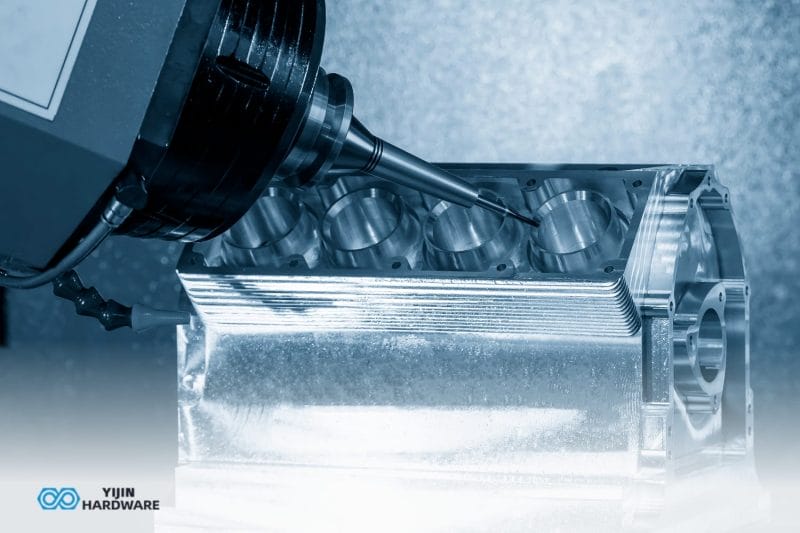
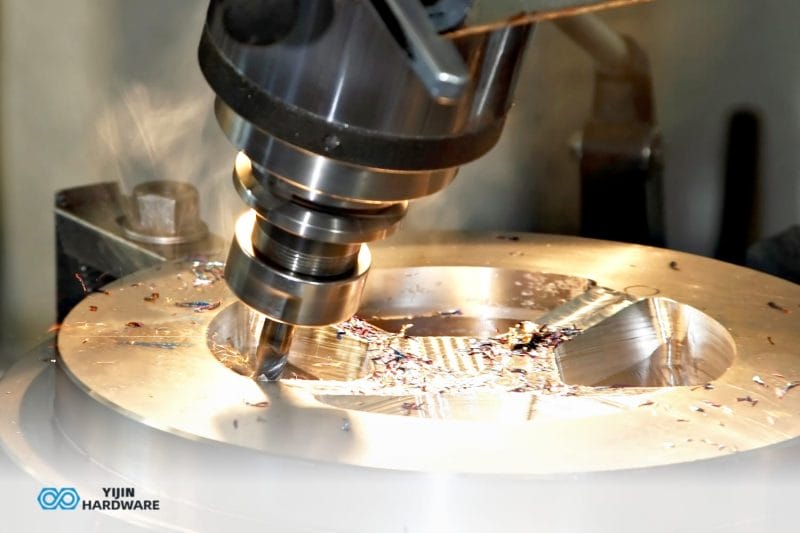


Metal surface finishing changes the outer layer of a metal part. The goal is to improve corrosion resistance, wear performance, dimensional fit, or appearance. It is a functional specification, not a cosmetic afterthought. The wrong finish shows up later as a failed salt spray test, a part that will not assemble, or a coating that delaminates in service.
This guide covers the major metal finishing techniques. It explains how surface roughness is measured and specified, then walks through the criteria that drive most selection decisions. It also flags the dimensional and material compatibility issues that catch buyers out at incoming inspection.
What is Metal Surface Finishing?

Metal surface finishing covers a group of processes that alter the outer layer of a metal part, changing its texture, chemistry, or coating to improve corrosion resistance, wear performance, appearance, or some combination of these.
The category spans three families. Mechanical treatments include grinding, polishing, brushing, and abrasive blasting. Chemical treatments include passivation and conversion coatings. Electrochemical treatments include anodizing, electroplating, and electropolishing.
None of these processes are interchangeable. Each addresses a different surface requirement and carries its own dimensional impact, material compatibility, and lead time.
Why Metal Surface Finishing Matters
Corrosion resistance is the primary reason engineers specify a finish. The surface, not the bulk metal, is what the operating environment attacks first. A zinc-electroplated mild steel bracket performs adequately inside a dry indoor enclosure but corrodes within months in a marine environment. The specification typically shifts to hot-dip galvanizing or powder coat over zinc phosphate pretreatment for outdoor and coastal use.
Dimensional impact is the second factor most buyers underestimate. Most finishing processes add or remove material in non-trivial amounts on precision features. Type III hard anodize adds 25 to 37 micrometers per side. Powder coat adds 60 to 120 micrometers. On a close-fit bore, a threaded hole, or a press-fit seat, that added thickness causes interference, assembly failure, or a rejected lot. Engineers who do not account for finishing stock in their machined dimensions discover this at incoming inspection, when correction is far more expensive.
How Metal Surface Finish is Measured
Surface roughness is specified on engineering drawings using a small set of standard parameters. The four below cover most production work.
- Ra, or arithmetic mean roughness, is the arithmetic average deviation of the machined surface profile from its mean line. It is expressed in micrometers or microinches and is the most commonly specified parameter on engineering drawings worldwide. A lower Ra means a smoother surface.
- Rz, or mean roughness depth, measures the average height between the five highest peaks and five lowest valleys across the measurement length. It is preferred for sealing surfaces and electroplated features when peak-to-valley height controls coating thickness or seal performance.
- Rq, also called RMS roughness, is the root-mean-square average of the profile deviations. It is used in optical and semiconductor applications.
- Rt, or maximum roughness depth, captures the single largest peak-to-valley distance across the measurement length. It is specified on parts where a single surface defect could cause functional failure, such as fatigue-critical fasteners or sealing rings.
The table below shows what common Ra values mean in practice. These are reference ranges. Achievable surface roughness depends on material, part geometry, tooling condition, and machining strategy, not just process selection. Per ISO 4287, now ISO 21920, these values provide a shared language for specifying and accepting parts.
| Ra range | Surface description | Typical process | Common application |
|---|---|---|---|
| 0.1 to 0.4 µm | Mirror or super-finish | Lapping, grinding, electropolishing | Optical components, bearing races, sealing surfaces, medical implants |
| 0.4 to 0.8 µm | Fine machined | Fine CNC turning, cylindrical grinding | Hydraulic pistons, precision shafts, mating faces |
| 0.8 to 1.6 µm | Standard machined | Standard CNC turning or milling | General mechanical parts, housing bores, flanges |
| 1.6 to 3.2 µm | Medium machined | CNC milling at standard feeds | Non-critical surfaces, structural brackets |
| 3.2 to 6.3 µm | Rough machined or as-cast | Rough turning, die casting, investment casting | Non-functional surfaces, pre-coat substrates |
| 6.3+ µm | Rough or as-formed | Hot rolling, sandblasting, forging | Hidden structural surfaces, pre-weld preparation |
What are the Main Types of Metal Surface Finishing?

Each technique below follows the same structure: what it is, what it delivers, which materials it suits, and what buyers should watch for. The goal is to help you match the right process to the part.
Electroplating
Electroplating deposits a thin metallic layer onto a base metal by passing a direct current through a solution containing dissolved metal ions. The part acts as the cathode, attracting ions from the bath to its surface.
The most common plating metals each serve a different function. Zinc provides corrosion protection on steel. Nickel adds hardness and wear resistance. Chrome delivers surface hardness and a bright aesthetic. Gold supports electrical conductivity and oxidation resistance in connectors. Copper serves as an adhesion undercoat for subsequent plating layers.
Plating adds dimensional thickness. On tight-tolerance features such as bores, threads, and press-fit seats, the plating stock should be subtracted from the machined dimension before plating.
One critical watch-out applies to high-strength steel fasteners at hardness of 39 HRC or above. Parts plated with zinc or cadmium require a baking relief cycle within four hours of plating. This prevents hydrogen-induced cracking, a failure mode governed by ASTM F1941. Uncontrolled supply chains frequently miss this step.
Electroless plating
Electroless plating deposits a metal coating, most commonly nickel, using an autocatalytic chemical reaction rather than an electric current. No external power source is needed. A reducing agent in the plating bath drives the reaction.
The key advantage over electrolytic plating is uniformity. The deposit is essentially even across complex geometries, including internal bores, blind holes, undercuts, and threaded features. Electroless nickel is commonly specified for hydraulic manifolds, complex machined components, and parts with internal passages that conventional electroplating cannot reach uniformly.
Medium-phosphorus electroless nickel, at 6 to 9 percent phosphorus content, is the most common industrial grade. It offers a balance of corrosion resistance, hardness up to approximately 70 HRC after heat treatment, and solderability. High-phosphorus grades offer better corrosion resistance but lower as-deposited hardness. The process is compatible with aluminum, steel, copper, and most engineering alloys.
Anodizing
Anodizing is an electrochemical process that converts the aluminum surface into a durable, integral aluminum oxide layer. The part is immersed in an acid electrolyte bath and a controlled current is passed through it. Unlike a coating applied on top of the surface, the anodic layer grows into and out of the base metal.
Type II, or standard anodize at 5 to 25 micrometers, is specified for corrosion resistance and dyeing. Type III, or hard anodize at 25 to 75 micrometers, provides significantly higher surface hardness, up to approximately 400 HV, and is specified for wear-critical surfaces such as pistons, slides, and tooling components.
Anodizing is nearly exclusive to aluminum alloys, with some titanium applications. It does not work on steel, stainless steel, or most other metals.
Dimensional impact matters here. Anodize adds roughly 50 percent of its thickness above the original surface and grows 50 percent into the surface. For Type III at 50 micrometers total, the outer dimension increases by approximately 25 micrometers per side. Threads are often masked or re-tapped post-anodize to maintain fit.
Chemical treatment: passivation and conversion coatings
This category covers two distinct sub-types that competitors often blur together.
- Passivation applies to stainless steel. A nitric or citric acid treatment removes free iron contamination from the machined surface and restores the natural chromium oxide passive layer. It is required for stainless parts in medical, food, and marine applications. The governing standard is ASTM A967. There is no dimensional change.
- Chemical conversion coatings apply to aluminum and steel. Chromate conversion coating, also called Alodine or Iridite, deposits a thin chromate film on aluminum surfaces. It provides corrosion resistance, improves paint adhesion, and maintains electrical conductivity. The governing specification is MIL-DTL-5541. Black oxide is the steel equivalent, providing mild corrosion resistance and a non-reflective matte finish.
A common misconception is that passivation is a protective coating. It is not. The treatment restores the stainless steel’s native corrosion resistance, which machining had compromised by smearing free iron across the surface.
Powder coating
Powder coating applies a dry polymer powder to the metal surface using an electrostatic charge, then cures it in an oven at 180 to 200 degrees Celsius to form a continuous, uniform polymer film. No solvents are used.
It delivers strong corrosion resistance, especially over a zinc phosphate pretreatment, along with impact resistance, a wide color range, UV stability, and a durable finish for structural and enclosure parts. Typical film thickness runs 60 to 120 micrometers.
On threaded features and tight-tolerance holes, masking before coating or post-coat tapping is standard practice. Drawing callouts should name the specific features to mask, such as M6 threads or alignment dowel holes; coaters do not infer masking requirements from geometry.
Powder coating is the dominant finish for sheet metal enclosures and fabricated steel assemblies. It is cost-effective at volume, highly automated, and produces a more durable finish than wet paint.
Painting and wet coating
Painting is the broad category that includes spray painting, dip painting, and electrostatic spray using HVLP systems. Wet paints are liquid-based, applied at room temperature, and produce thinner films than powder coat, at 25 to 75 micrometers.
Two systems cover most buyer needs. Primer plus topcoat is specified for structural parts that need corrosion protection in outdoor or harsh environments. Single-coat decorative paint is used on consumer product parts when cost and appearance matter more than extreme durability.
Paint adhesion depends entirely on surface preparation. Bare, unprimed, or contaminated steel will delaminate within months of service. Zinc phosphate conversion or sandblast pretreatment is standard under any industrial paint system.
Standard epoxy paints fail above approximately 150 degrees Celsius. High-temperature coatings, ceramic-based or silicone-based, are available for exhaust systems and engine components, but they carry a cost premium.
Polishing and electropolishing
These are different processes that serve different purposes, though they are often grouped together.
- Mechanical polishing uses progressively finer abrasives such as belts, wheels, or compounds to reduce surface roughness. Achievable Ra: 0.1 to 0.8 micrometers depending on final grit and technique. It is used for aesthetics, sealing surfaces, and pre-electropolish preparation.
- Electropolishing is an electrochemical process that removes metal ions from the surface by reversing the electroplating current. It removes the microscopic peaks in the surface profile, achieving Ra values of 0.1 to 0.4 micrometers. The process also removes embedded iron particles and improves corrosion resistance beyond passivation alone. Per ISO 15730, it is preferred for medical implants, food-contact surfaces, and pharmaceutical equipment.
Electropolishing removes 10 to 30 micrometers per side. Parts intended for electropolishing should be machined with this stock removal factored in to achieve the target final dimensions.
Abrasive blasting
Abrasive blasting propels a stream of media, sand, steel shot, glass beads, or aluminum oxide, at high velocity against the metal surface. It removes scale, rust, mill marks, and surface contamination, and it creates a consistent surface profile for coating adhesion.
Blasting serves two distinct functions. The first is surface preparation before painting or powder coating; the resulting blast profile per ISO 8501 controls how well the subsequent coating bonds. The second is aesthetic finishing, with glass bead blasting producing a uniform matte or satin texture seen on consumer electronics enclosures and aerospace components.
Shot peening is a separate, related process. It uses metal shot to induce compressive residual stress in the surface, improving fatigue life. It is common on landing gear, connecting rods, and turbine blades. It is not the same as blasting for cleaning, and the drawing should specify which is required.
Blasting alone is not a protective finish. A blasted part that is not coated within a short window will begin to oxidize, especially in humid environments.
Hot-dip galvanizing
Hot-dip galvanizing immerses steel parts in a bath of molten zinc at approximately 450 degrees Celsius, forming a metallurgically bonded zinc-iron alloy coating. This produces a far more durable layer than electroplated zinc because the coating bonds into the steel, not just onto it.
The primary use is long-term outdoor corrosion protection for steel that does not require ongoing maintenance. Common applications include custom industrial hardware, outdoor fasteners, and structural components for industrial machinery.
Typical coating thickness runs 45 to 85 micrometers depending on steel grade and immersion time. The coating adds dimensional bulk. For threaded fasteners, oversized threads before galvanizing are standard to accommodate the zinc build-up.
Galvanizing is not suitable for precision parts or tight-tolerance components. The high immersion temperature can distort thin-section parts. It is also not appropriate for stainless steel, aluminum, or non-ferrous metals.
PVD and vacuum coatings
Physical Vapor Deposition, or PVD, deposits thin, hard coatings onto the part surface in a vacuum chamber. Common coatings include titanium nitride, known as TiN, titanium carbonitride or TiCN, titanium aluminum nitride or TiAlN, and diamond-like carbon or DLC. Typical coating thickness is 1 to 5 micrometers.
Two application areas dominate. On cutting tools and mold inserts, PVD coatings extend tool life by 3 to 10 times by increasing surface hardness and reducing friction. On precision mechanical components such as shafts, gears, and medical implants, PVD provides wear resistance and low friction without adding significant dimensional thickness.
PVD is applied at relatively low temperatures, 150 to 500 degrees Celsius, which preserves the heat treatment of the base metal. This makes it suitable for hardened steel tools and precision components that need dimensional stability after coating.
Thermal spraying, which includes HVOF, arc spray, and flame spray, is a related process that deposits metallic or ceramic coatings for high-temperature and wear-resistance applications. It is common on gas turbine components and pump housings when other processes are impractical.
Brushing
Mechanical brushing applies abrasive belts or brushes to the metal surface in a single direction, creating a consistent linear grain texture. It is primarily an aesthetic surface treatment.
The most common application is brushed stainless steel and brushed aluminum for consumer electronics enclosures, architectural hardware, and appliance panels. The directional grain gives a premium, refined appearance.
Brushing is applied to corrosion-resistant base materials such as stainless steel, aluminum, and brass. On mild steel, the exposed grain oxidizes unless a protective coating is applied afterward. Brushing does not provide corrosion resistance or mechanical improvement. It is a cosmetic finish.
How do the Main Metal Surface Finishes Compare?
The table below compares every major technique covered in this guide across the attributes that drive most finish selection decisions: process type, compatible metals, dimensional impact, corrosion protection, and best-fit applications. Use it as a general reference. Dimensional impact, cost, and corrosion performance depend on part geometry, material grade, surface preparation, and supplier process control.
| Technique | Process type | Compatible metals | Dimensional impact | Corrosion protection | Best for |
|---|---|---|---|---|---|
| Electroplating | Electrochemical, deposits metal ions | Steel, copper, most conductors | Adds 5 to 25 µm per side | Medium to high | Fasteners, structural steel, electrical contacts |
| Electroless nickel | Autocatalytic, no external current | Steel, aluminum, copper alloys | Adds 10 to 50 µm uniformly | High | Internal bores, complex geometry, hydraulic parts |
| Anodizing Type II | Electrochemical, grows oxide layer | Aluminum alloys only | Adds 5 to 12 µm per side net | High | Aerospace housings, consumer electronics, medical enclosures |
| Hard anodize, Type III | Electrochemical, thick oxide | Aluminum alloys only | Adds 12 to 37 µm per side net | Very high | Wear-critical aluminum: pistons, slides, tooling |
| Passivation | Chemical acid treatment | Stainless steel only | No dimensional change | High, restores native oxide | Medical, food, marine stainless parts |
| Chemical conversion | Chemical film deposition | Aluminum, steel | Negligible, under 1 µm | Medium, primer base | Aerospace aluminum, EMI shielding, pre-paint prep |
| Powder coating | Electrostatic plus thermal cure | Steel, aluminum, most metals | Adds 60 to 120 µm | Very high | Sheet metal enclosures, structural assemblies |
| Wet paint | Spray or dip liquid coating | Most metals with prep | Adds 25 to 75 µm | Medium to high | Consumer products, outdoor structural parts |
| Electropolishing | Electrochemical, removes metal | Stainless steel, aluminum | Removes 10 to 30 µm per side | Very high | Medical implants, food-contact surfaces, pharma |
| Mechanical polishing | Abrasive belt or compound | Most metals | Removes surface peaks, minimal | Low, cosmetic only | Aesthetic surfaces, pre-electropolish prep |
| Abrasive blasting | High-velocity abrasive media | Most metals | Negligible | Low, prep step only | Pre-coat surface preparation, matte texture finish |
| Hot-dip galvanizing | Zinc immersion, metallurgical bond | Steel and iron only | Adds 45 to 85 µm | Very high, sacrificial zinc | Outdoor structural steel, fasteners |
| PVD / vacuum coating | Physical vapor deposition | Tool steel, carbide, titanium, SS | Adds 1 to 5 µm | Medium to high | Cutting tools, wear surfaces, medical implants |
| Brushing | Directional mechanical abrasion | SS, aluminum, brass | Negligible | Low, cosmetic only | Consumer enclosures, architectural panels |
How to Choose the Right Metal Surface Finish
Most finish selection decisions filter through four checks in this order: operating environment, base material compatibility, dimensional impact, and lead time and volume. Working through them in sequence catches most conflicts before they reach the production floor.
Start with the operating environment
The operating environment is the first filter in finish selection. A finish that performs in a dry indoor environment may fail in a salt-spray marine application.
For indoor and dry environments, most finishes work, with cost and appearance driving the choice. For outdoor and UV-exposed applications, the standard specifications are powder coat over zinc phosphate primer, hot-dip galvanizing, or hard anodize for aluminum.
For chemical exposure, electroless nickel, PVDF coatings, or PVD are specified depending on the chemical involved. For immersion and wet environments, hot-dip galvanizing handles structural steel, while Type III anodize or electroless nickel covers aluminum and machined parts.
When comparing corrosion claims between finishes, hours of salt spray protection per ASTM B117 is the relevant metric. Vague terms like “good corrosion resistance” are not specifications. They are marketing.
Match the finish to the base material
Not every finish is compatible with every metal. Copying a finish spec from a steel part to an aluminum equivalent without checking compatibility is a common specification mistake.
- Aluminum is compatible with anodize in Type II and III, chromate conversion, powder coat, and electroless nickel. It is not compatible with passivation, which only works on stainless steel, or hot-dip galvanizing, because the zinc immersion temperature would melt most aluminum alloys.
- Steel and cast iron accept zinc electroplating, electroless nickel, hot-dip galvanizing, powder coat, black oxide, and painting. They are not compatible with anodizing.
- Stainless steel takes passivation as a baseline, plus electropolishing, electroless nickel, and PVD. Anodizing is not standard for stainless steel.
- Copper and brass accept nickel plating, tin plating, silver plating, and gold plating. These base metals are not suitable for anodizing or galvanizing.
Account for dimensional impact on tolerances
Most finishing processes that add a coating change the part’s final dimensions. On precision features such as mating bores, threaded holes, press-fit seats, and close-clearance faces, the finishing stock should be factored into the machined dimension.
Type III hard anodize adds approximately 25 to 37 micrometers per side depending on total layer thickness. Electroless nickel adds 10 to 50 micrometers uniformly, including inside bores and on threaded features. Powder coat adds 60 to 120 micrometers. A 60-micrometer powder coat on both mating faces of a close-fit assembly adds 120 micrometers total to the gap, which can cause interference or prevent assembly entirely.
Electropolishing and mechanical polishing work in the opposite direction. Electropolishing removes 10 to 30 micrometers per side. Parts intended for electropolishing should be machined with this removal factored in.
Finish stock allowances should be confirmed during a DFM review before design lock. Adjusting a machined dimension at the design stage is faster and less expensive than re-tapping, re-masking, or re-machining after first article inspection.
Consider lead time and volume
Approximate lead time additions by process type: passivation and black oxide add 1 to 2 working days at minimal cost. Anodizing and electroplating add 2 to 5 working days. Powder coating adds 2 to 4 working days. Electropolishing adds 2 to 4 working days. PVD coatings add 5 to 10 working days, since they are typically outsourced to specialist facilities.
At higher volumes, batch-based processes such as powder coating, electroplating, and anodizing become more cost-effective per part because setup cost is amortized across larger quantities. For low-volume prototype runs of 1 to 20 parts, processes with lower setup overhead, including passivation, black oxide, and sandblasting, are more economical.
Get the Right Finish for Your Parts with Yijin Solution
The right metal finish for any part is the one that matches its operating environment, base material, and dimensional tolerances. Yijin Solution’s engineers validate those factors during a free DFM review and align finishing documentation with the certification standard your sector requires.
To start, upload your CAD file along with your finish specifications and our team will return a tolerance-aware finishing plan and quote.
Metal Surface Finishing FAQs
The questions below cover the finishing-related details that most often slow down quote review or assembly.
How do I specify a surface finish on an engineering drawing?
Call out the finish by standard designation, not trade name. For example, specify “anodize per MIL-A-8625 Type III, Class 1, 50 µm” rather than “hard anodize, black.” Include the applicable standard, the finish type and class, the required thickness or Ra value, and any masking requirements for features that must remain uncoated. Ambiguous callouts like “finish to customer approval” create disputes at inspection.
What happens if I change the base material but keep the same finish spec?
The finish may no longer be compatible. Switching from Aluminum 6061 to Aluminum 7075, for example, changes how the alloy responds to anodizing, both in color consistency and oxide layer hardness. Switching from stainless steel to mild steel while keeping a passivation callout would be invalid entirely, since passivation only works on stainless steel. Any material change should trigger a finish compatibility review.
How should I handle finishing on parts that will be welded or assembled after coating?
Weld zones and assembly interfaces generally need to remain uncoated or be masked before finishing. Powder coat and anodize in weld zones will burn off or crack during welding, contaminating the joint. For bolted assemblies, coating on mating faces can compress unevenly and reduce clamp load. Define weld prep areas and bare contact zones on the drawing with clear masking callouts before sending to the finisher.
Can surface finishing affect the mechanical properties of my part?
Some processes can. Hydrogen embrittlement from electroplating is the most common risk, particularly on high-strength steels above 39 HRC, and is mitigated by a post-plating bake per ASTM F1941. Hard anodizing reduces fatigue strength in aluminum by introducing a brittle oxide layer at the surface, which matters for cyclic-load components such as aircraft fittings.
What information should I provide when requesting a finishing quote?
At minimum: the base material and alloy grade, the finish specification with applicable standard, the required thickness or Ra value, masking requirements, batch quantity, and whether the parts are machined or fabricated. Including a dimensioned drawing with GD&T callouts and finish notes eliminates most back-and-forth. Missing any of these details typically delays quoting by several days.
Back to Top: Metal Surface Finishing: Types, Techniques, and How to Choose