

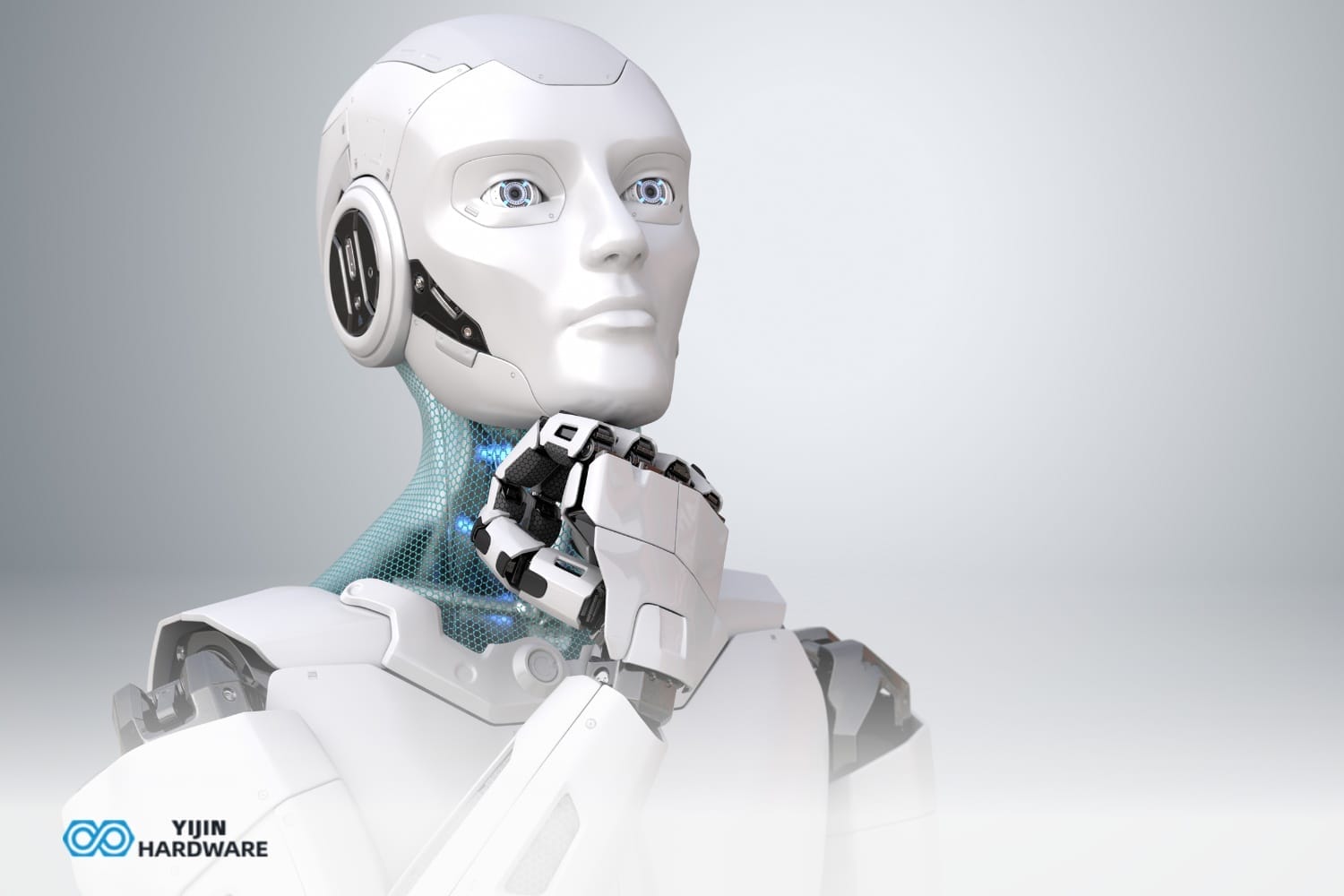
Chinese factories currently use thousands of AI-powered humanoid robots for assembly and logistics work, a number that will only grow as these robots become more sophisticated. To make these humanoid robots, China humanoid robot factories need CNC machined parts. This is especially true for servo joints, which require tight tolerances of ±0.01 mm.
Only six humanoid robot makers plan to make more than 1,000 units in 2025 to supplement this growing demand. While this will drive domestic output to US$ 616 million this year, the sector will probably pass 20 billion yuan by 2026 according to People’s Daily Online. We’ve outlined the top 10 Chinese factories that will be at the forefront of humanoid robotics and their manufacturing.
Key Takeaways
- AgiBot has made over 962 humanoids and targets 5,000 units by year-end
- China controls 90% of humanoid component manufacturing
- Government investment passes $20 billion for robotics development
- Force-compliant drive joints need precision machining to ±0.01 mm tolerances
- China targets 500 robots per 10,000 workers by 2025
How do Humanoid Robots Transform Modern Factory Operations?
Humanoid robots do complex jobs with artificial intelligence using smart movements, just like people. For example, the Walker S robots have 41 moving joints and many sensors that help them see, hear, and measure distance. These robots connect directly to factory computer systems to share data in real time, keeping your staff up-to-date with their progress.
Technical Capabilities and Requirements
The robots use special cameras to see their surroundings in 3D. This helps them make maps and find safe paths while avoiding things in their way. They can work safely next to people because they understand their environment and learn from it. They rely on several precision components to move from one task to another, including servo joints, actuators, and bearings.
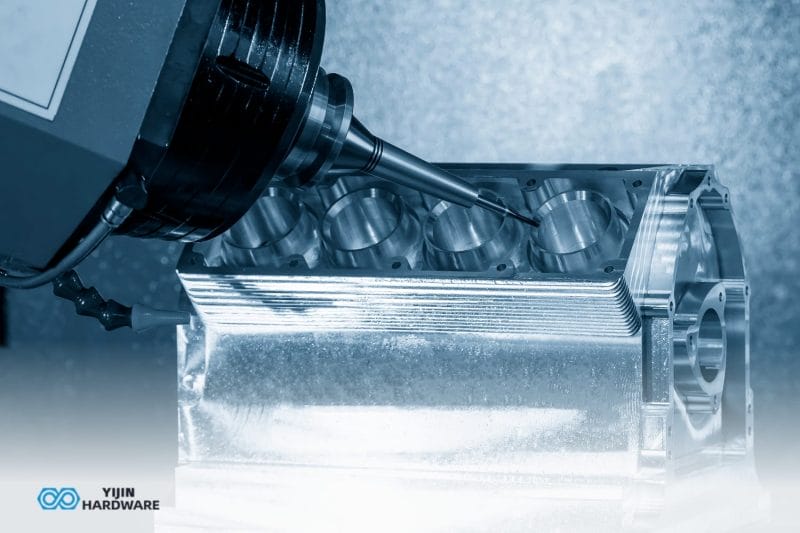
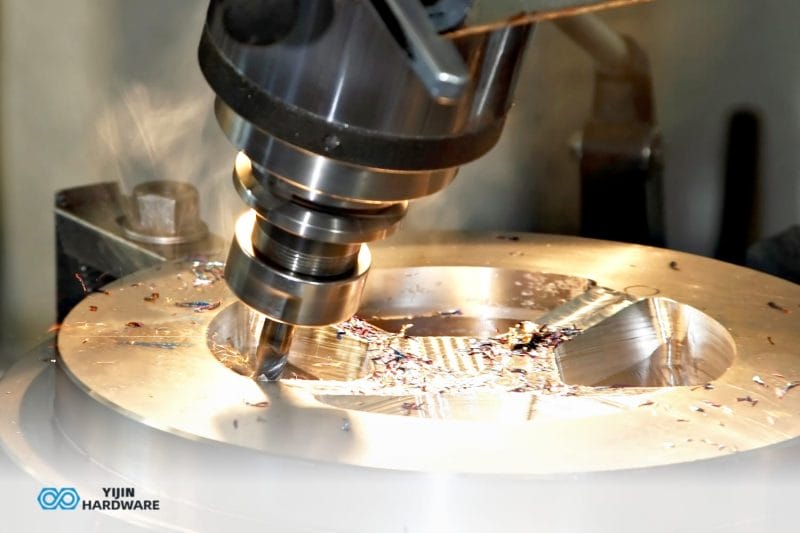
Manufacturing these components requires an experienced CNC factory to get right.
| Component Type | Tolerance Requirement | Material Standard | Critical Application |
|---|---|---|---|
| Servo Joint Housing | ±0.005 mm | Aluminum 6061-T6 | Force feedback systems |
| Actuator Frames | ±0.01 mm | Carbon steel A36 | Motion control assemblies |
| Sensor Mounts | ±0.02 mm | 316 Stainless steel | Vision system integration |
| Bearing Races | ±0.002 mm | Tool steel M2 | Joint rotation mechanisms |
Top 10 Chinese Factories Successfully Using Humanoid Robots

The top factories that currently use humanoid robots are Zeekr, Agibot, and BYD. They rely on precision CNC manufacturing to aid in manufacturing their robots, such as Yijin Solution. These factories lead China’s humanoid robot adoption across automotive, logistics, and manufacturing sectors. Each facility demonstrates unique applications and technical requirements for precision-manufactured robot components.
1. Zeekr 5G Smart Factory (Geely, Ningbo)
Zeekr’s factory represents the first humanoid robot deployed in an automotive factory for full-process handling tasks. UBTech Walker S1 robots perform material sorting, box transport, and delicate car part assembly with 15 kg lifting capacity. Multi-robot coordination utilizes integrated “super brain” AI management systems.
Collaborative AI Integration
The facility demonstrates first multi-robot coordination through integrated AI management systems. Robots continuously feed real industrial data back to central systems, improving operational skills and efficiency. This data-driven approach enables predictive maintenance and process optimization across automotive manufacturing lines.
2. Yijin Solution (Our Company)

Yijin Solution leads Chinese precision manufacturing for humanoid robot components through advanced CNC machining capabilities and automotive-grade quality systems. The facility specializes in servo joint housings, actuator frames, and sensor mounting systems for major robotics industry clients. Five-axis CNC centers achieve ±0.005 mm tolerances essential for force-feedback joint mechanisms in intelligent manufacturing applications.
Advanced Manufacturing Capabilities
- Precision Assembly: Five-axis CNC centers with sub-micron accuracy
- Material Expertise: Processing over 50 different alloys including titanium and Inconel
- Quality Systems: ISO 9001 certified with automotive TS 16949 compliance
- Rapid Prototyping: 24-hour turnaround for critical robot components
Technical Specifications and Services
| Service Category | Capability Range | Typical Applications | Quality Standard |
|---|---|---|---|
| Precision Milling | ±0.002 mm tolerance | Servo housings, frames | Automotive grade |
| Turning Operations | ±0.005 mm roundness | Shafts, bearing races | Aerospace standard |
| Surface Grinding | 4-8 μin Ra finish | Mating surfaces | Medical device grade |
| Wire EDM | ±0.001 mm accuracy | Complex geometries | Defense specification |
3. AgiBot Humanoid Manufacturing Plant (Shanghai)
AgiBot operates 17 hours daily with 100 robots operated by 200 humans for continuous data collection and training. The company launched in February 2023 and has begun mass production of general-purpose humanoid robots, reportedly producing at least 962 humanoids. Shanghai authorities provided rent-free premises for this robot factory data collection operations.
| Production Metric | Current Capability | 2025 Target | Infrastructure |
|---|---|---|---|
| Daily Operation | 17 hours continuous | 24 hours planned | 100 robots active |
| Annual Production | 962 units completed | 5,000 units target | 200 human operators |
| Component Sourcing | 90% local supply | 95% local target | Rent-free facility |
4. Foxconn Smart Manufacturing Facilities (Shenzhen)
UBTech Walker S1 humanoid robots completed logistics training at Foxconn’s Shenzhen facilities for 3C sector applications. The partnership focuses on electronics automation for computers, communications, and consumer electronics. This strategic cooperation agreement aims to make humanoid robots more affordable and accessible through mass production.
| Application Area | Robot Function | Precision Requirement |
|---|---|---|
| Component Placement | Pick and place operations | ±0.1 mm positioning |
| Quality Inspection | Visual defect detection | 0.05 mm resolution |
| Material Transport | Cleanroom logistics | Anti-static protocols |
5. BYD Automotive Manufacturing Centers
BYD, the world’s largest electric vehicles manufacturer, employs Walker S1 robots working with unmanned logistic vehicles and intelligent manufacturing systems. UBTech received over 500 orders for its industrial humanoid robot from major Chinese automaker clients. These applications require precision-machined components for high-voltage battery systems in automotive manufacturing.
EV Battery Assembly Integration
The collaboration focuses on developing automotive-grade force-control robots specifically for electric vehicle battery assembly operations. These specialized applications demand explosion-proof housings and precision grounding systems for safe high-voltage battery manufacturing environments with automation protocols.
6. MagicLab Production Facilities
MagicBots perform logistics, assembly, barcode scanning, and heavy lifting up to 40 kg. Robots feature 42 degrees of freedom and can mimic 70% of human hand movements. Systems operate autonomously for up to 5 hours per charge.
- Degrees of Freedom: 42 articulated joints for diverse tasks
- Hand Dexterity: 70% human movement replication accuracy
- Autonomous Operation: 5-hour continuous work cycles
- Heavy Lifting: 40 kg payload capacity with precision control
7. SF Express Logistics Centers
SF Express employs humanoid robots for sorting, transporting, and managing packages through collaboration with UBTech for workflow optimization. Logistics applications require robust mechanical systems for continuous operation and varying load conditions. Robot deployment reduces manual handling while improving package processing speed across a range of tasks.
Logistics Automation Systems
The implementation emphasizes reliability and maintenance accessibility for 24/7 logistics operations. Robots operate in dusty warehouse environments requiring sealed bearing systems and protective coatings. Advanced workflow optimization enables continuous learning and adaptation to changing supply chain demands.
8. Dongfeng Liuzhou Motor Facilities
Dongfeng Liuzhou Motor Co signed agreements for UBTech Walker S humanoid robots performing various automotive manufacturing tasks. Applications include quality inspection tasks like safety belt testing, door lock examination, headlight inspection, and assembly operations. Robots work alongside traditional automation equipment for complex unmanned production scenarios.
| Inspection Task | Precision Level | Quality Standard | Integration Method |
|---|---|---|---|
| Safety Belt Testing | ±0.5 mm tolerance | Automotive FMEA | Collaborative automation |
| Door Lock Inspection | ±0.2 mm accuracy | ISO/TS 16949 | Traditional equipment |
| Headlight Examination | 0.1 mm resolution | SAE standards | Unmanned production |
9. Ex Robots Manufacturing Centers (Shanghai/Liaoning)
Ex Robots develops hyper-realistic androids used in manufacturing and service roles. Robots help build factory infrastructure and participate in collaborative assembly lines. Advanced sensory systems enable real-time adaptation and communication for complex manufacturing environments including quality inspection operations.
Advanced Sensory Integration
The facility specializes in ultra-realistic android development with sophisticated sensory capabilities for human-robot interaction. Manufacturing processes require ultra-precise surface finishes and complex geometric features for optimal sensory performance and human acceptance in real-world applications.
10. BAIC Motor Factories
BAIC Motor serves as an early adopter of UBTech’s Walker S robots for logistics and assembly line support. Robots work alongside human teams, enhancing efficiency and safety. Implementation focuses on material handling and collaborative manufacturing processes for factory tasks.
- Human-Robot Collaboration: Enhanced workplace safety protocols
- Material Handling: Automated logistics and supply management
- Assembly Support: Production line assistance and quality improvement
- Early Adoption: Pioneer status in automotive humanoid integration
What Precision CNC Machining Do Humanoid Robot Factories Need?
China’s humanoid robot market demands CNC machining capabilities achieving ±0.01 mm tolerances for servo joint housings and force-feedback mechanisms. Critical components that need these CNC machining capabilities include aluminum alloy frames, stainless steel sensor mounts, and tool steel bearing races for robotics applications.
Manufacturing Process Requirements
| Process Type | Tolerance Capability | Surface Finish | Typical Components |
|---|---|---|---|
| 5-Axis Milling | ±0.002 mm | 8-16 μin Ra | Servo housings, actuator frames |
| Precision Turning | ±0.005 mm | 16-32 μin Ra | Shaft components, bearing races |
| Wire EDM | ±0.001 mm | 32-63 μin Ra | Complex geometries, sensor mounts |
| Surface Grinding | ±0.001 mm | 4-8 μin Ra | Mating surfaces, precision fits |
Quality control systems must verify dimensional accuracy, surface texture, and material properties through coordinate measuring machines, surface profilometers, and material testing systems for industrial manufacturing standards.
How Should Factories Choose Manufacturing Partners for Humanoid Robot Components?
Factories should prioritize CNC machining partners with demonstrated experience in precision robotics components and automotive-grade quality systems. Essential capabilities include five-axis machining centers, coordinate measuring machines, and ISO 9001 certified quality management. Partners must demonstrate ±0.01 mm tolerance capabilities and specialized surface treatments for robotic applications.
Local Chinese suppliers provide same-day delivery and immediate technical consultation advantages. Effective partnerships include collaborative training, design support, cost optimization, and rapid prototyping capabilities for new robot development projects in the global market.
Yijin Solution | Top Humanoid Robot Part Manufacturer
China aims to lead the humanoid robotics revolution, creating unprecedented opportunities for precision component suppliers. With over $20 billion government investment and production targets reaching thousands of units annually, the industry demands specialized CNC machining capabilities and automotive-grade quality systems for Chinese robotics manufacturers.
Strategic partnerships with established manufacturers like Yijin Solution provide competitive advantages through proven expertise, advanced equipment, and local supply chain benefits. Contact Yijin Solution today to discuss your humanoid robot component requirements and secure your position in this rapidly expanding market.
China Humanoid Robot Factory FAQs
What specific materials work best for humanoid robot joint mechanisms?
Aluminum 6061-T6 provides optimal strength-to-weight ratios for robot frame structures, while 17-4 PH stainless steel offers corrosion resistance for sensor housings. Tool steel grades like M2 and D2 deliver necessary hardness for bearing races and high-wear components.
How do force-feedback systems affect CNC machining requirements?
Force-feedback systems require extremely tight tolerances (±0.005 mm) for proper sensor integration and mechanical coupling. Machining processes must eliminate vibration marks and tool chatter that could interfere with force measurement accuracy. Surface finishes typically require 8-16 micro-inch Ra for optimal sensor performance.
What quality certifications are essential for humanoid robot component suppliers?
ISO 9001 quality management certification provides fundamental requirements for consistent manufacturing processes. Automotive industry standards like TS 16949 demonstrate capability for statistical process control and traceability. Additional certifications may include AS9100 for aerospace-grade requirements depending on robot applications.
Back to Top: Top 10 Chinese Factories Using Humanoid Robots Today
How We Selected These Manufacturers
To ensure this list provides real value to buyers, we evaluated companies based on the following criteria:
- Manufacturing Capabilities: We prioritized factories with proven production capacity and advanced machinery.
- Certifications: Preference was given to ISO-certified manufacturers ensuring quality control.
- Industry Reputation: We looked for established companies with years of experience in the global market.
- Global Reach: Suppliers capable of exporting and meeting international standards.
Note: Aside from our own company, the manufacturers listed above are not ranked in any specific order of quality.
Transparency Note: This article is published by Yijin Solution, a leading manufacturer in this industry. While we feature our own manufacturing capabilities, this list aims to provide an objective overview of top-tier suppliers based on market reputation, certifications, and manufacturing capabilities.






 English
  Spanish
  German
  French