




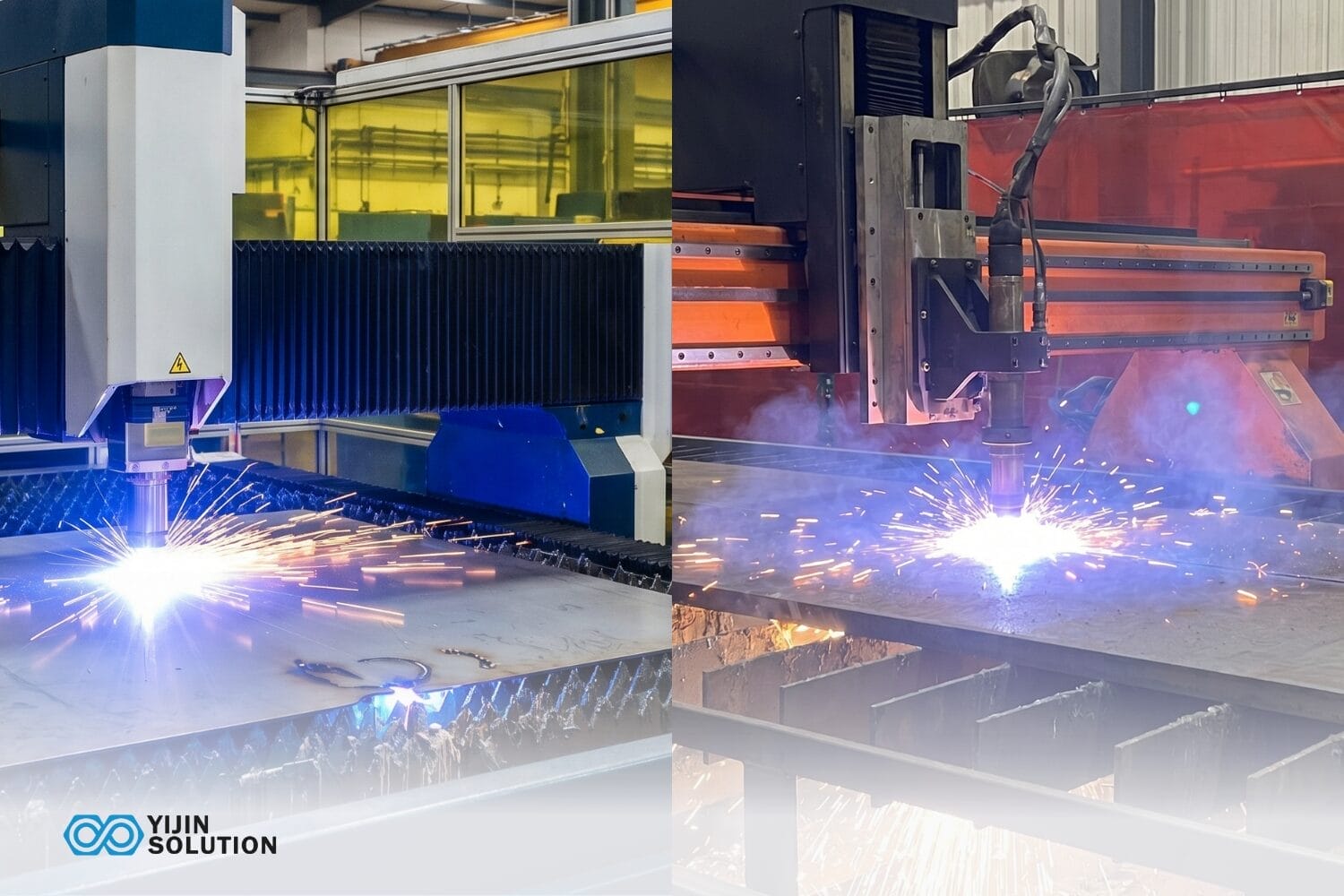
El corte por láser y el corte por plasma son los dos procesos CNC más comunes para cortar chapa metálica. Parecen similares en una hoja de capacidades: ambos funcionan con CNC, ambos cortan acero y ambos manejan lotes de producción. En la práctica, sin embargo, operan en un territorio diferente, con diferentes bandas de tolerancia, límites de espesor y perfiles de costes.
La elección de uno u otro afecta a algo más que al propio corte. La selección del proceso determina la calidad del canto, el trabajo posterior de plegado y acabado, las tasas de desecho y el coste total por pieza. Hacerlo bien en la fase de aprovisionamiento es más barato que corregirlo más adelante.
Esta guía explica cómo funciona cada proceso, en qué se diferencian y cómo elegir uno u otro para un trabajo de chapa metálica.
Corte por láser vs. Corte por plasma: Comparación rápida
La imagen completa de un vistazo. Cada línea se explica en las secciones siguientes.
| Atributo | Corte por láser | Corte por plasma |
|---|---|---|
| Tipo de proceso | El haz focalizado funde y vaporiza el material. Térmico, sin contacto. | Los arcos de gas ionizado funden metales conductores. Térmico y eléctrico. |
| Rango de tolerancia típico* | ±0,05 a 0,2 mm, varía según el material y el grosor. | ±0,25 a 1,0 mm. Plasma HD en el extremo más estrecho. |
| Espesor máximo, acero | ~25 mm láser de fibra; ~20 mm CO2 | 50 a 150+ mm, dependiendo del amperaje del sistema. |
| Calidad de corte | Limpio, cuadrado, mínima escoria. A menudo sin acabado secundario. | Bisel de 1 a 3°, algo de escoria. Puede necesitar rectificado o limpieza. |
| Velocidad en chapa fina, inferior a 6 mm | De 2 a 5 veces más rápido que el plasma en calibre fino. | Más lento que el láser en chapas finas. |
| Velocidad en chapa gruesa, más de 20 mm | Más lento; el tiempo de perforación aumenta por encima de ~20 mm. | Más rápido; ventaja de rendimiento significativa por encima de 12 a 20 mm. |
| Coste del equipo | Los sistemas láser de fibra suelen costar entre 2 y 5 veces más que los de plasma. | Más bajo; el plasma HD tiene un coste de entrada accesible. |
| Costes de explotación | Más caro por hora: gas, energía, óptica. | Más bajo por hora en chapa gruesa. |
| Materiales | Metales y no metales. Necesita una superficie limpia y plana. | Sólo metales conductores. Tolera el óxido, las incrustaciones y los revestimientos. |
| Lo mejor para | Chapa de precisión fina a media, perfiles complejos, ensamblajes con tolerancias estrictas. | Chapa estructural gruesa, corte ajustado al presupuesto donde la tolerancia lo permita. |
* Las tolerancias alcanzables dependen del material, el espesor de la chapa, la configuración de la máquina y la geometría de la pieza. Las cifras mostradas son rangos indicativos para sistemas comerciales.
¿Cómo funciona el corte por láser?
El corte por láser es un proceso térmico que utiliza un haz concentrado de alta energía para fundir, quemar o vaporizar material a lo largo de una trayectoria programada. La precisión que consigue es consecuencia de la geometría, no de un ajuste de la máquina.
Un rayo láser enfocado suele medir entre 0,1 y 0,3 mm de diámetro en el punto focal. Este diámetro de enfoque determina directamente la anchura de la sangría. Un corte más estrecho significa que el corte sigue más de cerca la trayectoria programada, con menos espacio para la desviación del material a lo largo del borde. El láser mantiene tolerancias más estrictas que el plasma porque la fuente de calor es más pequeña, geométricamente más estable y más controlable.
El gas de asistencia es el que decide la calidad de los cantos. El nitrógeno produce cantos limpios y sin óxido en acero inoxidable. Es la elección correcta para piezas médicas, cosméticas y de precisión que se saltan por completo la limpieza secundaria. El oxígeno acelera la velocidad de corte en acero dulce, pero deja un borde ligeramente oxidado. El aire comprimido funciona para aplicaciones sensibles a los costes, aunque a expensas de la calidad del filo. La elección incorrecta de gas añade un paso de acabado que de otro modo no existiría.
En la producción de chapa metálica importan tres tipos de láser. El láser de fibra es la plataforma dominante, Los láseres de CO2 son más rápidos en metales finos, más fiables en aleaciones reflectantes como el aluminio y el cobre, y su coste de funcionamiento es inferior al del CO2. Los láseres de CO2 siguen siendo versátiles para metales y no metales; son adecuados para acero dulce de 0,5 a 20 mm. Existen sistemas Nd:YAG, pero la fibra los ha desplazado en gran medida en el corte comercial de chapas.
Los láseres de fibra óptica cortan acero dulce hasta aproximadamente 25 mm en entornos comerciales, y la tolerancia alcanzable se reduce en materiales más finos porque la entrada térmica es más fácil de controlar. La repetibilidad de los lotes en una tirada de producción depende de la calibración de la máquina, la consistencia del material y la configuración. Las especificaciones del láser por sí solas no la garantizan.
El estrecho corte del láser, que suele citarse como una ventaja pura, crea un problema de producción en las chapas gruesas. Por encima de unos 16 mm, las piezas se atascan en el esqueleto de la chapa. El corte es demasiado estrecho para que caigan limpiamente, por lo que deben eliminarse manualmente, lo que ralentiza el rendimiento y requiere la atención del operario.
¿Cómo funciona el corte por plasma?
Corte por plasma fuerza gas a presión a través de una boquilla constreñida, creando un arco eléctrico que ioniza el gas en un chorro de plasma lo suficientemente caliente como para fundir metales conductores de la electricidad. Ese calificativo, conductor de la electricidad, define todo el límite del proceso. El plasma no puede cortar materiales no conductores.
Las características de precisión responden a la misma física. Un arco de plasma es más ancho y menos controlado geométricamente que un rayo láser enfocado. El diámetro del arco y la variabilidad en el comportamiento del borde del chorro de plasma determinan la anchura de la sangría y la rectitud del borde. La banda de tolerancia más amplia es una consecuencia física de no poder enfocar un arco con la misma estabilidad geométrica que un rayo.
Dos tipos de sistemas definen el panorama. El plasma convencional utiliza equipos de menor coste y produce un corte más ancho y un borde más rugoso, adecuado para chapas estructurales en las que los requisitos de tolerancia son poco estrictos. Plasma de alta definición (HD) utiliza una boquilla más ajustada geometría para producir un kerf más estrecho y una mejor calidad de borde, cerrando el hueco con láser en chapa hasta aproximadamente 20 mm. El plasma HD con tecnología True Hole puede producir orificios listos para atornillar en acero dulce, con un diámetro de orificio mínimo igual al espesor del material, con una relación mínima de 1:1.
El plasma convencional trabaja con material de 1 mm a 50 mm o más. El plasma HD es más eficaz entre 6 y 38 mm en acero, y por encima de 25 mm, el plasma se convierte en la principal opción económica para el corte de acero estructural. La zona afectada por el calor, o ZAC, es más amplia que la del láser porque se deposita más energía térmica alrededor del corte. En una chapa fina, esto puede significar una pequeña distorsión en el borde. En chapas estructurales gruesas, es aceptable porque las tolerancias son menores y el acabado secundario ya está previsto.
El plasma también corta el óxido, la cascarilla de laminación, las superficies pintadas y el material almacenado a la intemperie. Se trata de una ventaja operativa diaria que la conversación sobre la tolerancia tiende a eclipsar. El láser requiere una chapa limpia, plana y bien almacenada. La cascarilla, los revestimientos y la contaminación de la superficie pueden provocar fallos de corte o exigir una pasada de limpieza previa al corte. Los talleres de fabricación de estructuras que reciben material con cascarilla de laminación o que sacan material de estanterías exteriores notan esta diferencia en cada turno.
Corte por láser vs. Corte por plasma: Explicación de las principales diferencias

Cada una de las dimensiones siguientes es una decisión del comprador, no sólo una observación técnica.
Precisión y tolerancia
La brecha de tolerancia se debe directamente a la física del proceso. Un rayo láser enfocado produce una sangría de 0,1 a 0,3 mm de ancho. Un arco de plasma, incluso uno HD, produce una sangría de 1 a 3 mm de ancho en sistemas convencionales, que se reduce a aproximadamente 0,5 a 1 mm con plasma HD. Una sangría más ancha significa más variación geométrica a lo largo de la trayectoria de corte. Es física, no un juicio de calidad.
En cifras prácticas: el corte por láser alcanza tolerancias en el rango de ±0,05 a 0,2 mm en chapa metálica, dependiendo del material y el grosor. El plasma HD se reduce a ±0,25 a 0,5 mm en chapas más gruesas, y el plasma convencional es más amplio, de ±0,5 a 1,0 mm, según el sistema y las condiciones. Todos los márgenes son aproximados. La tolerancia real alcanzable depende de la geometría, el espesor y la configuración de la máquina.
Las piezas que requieren ensamblajes ajustados, insertos roscados o características de ajuste a presión obtienen resultados más consistentes con el láser. Las piezas estructurales con tolerancias dimensionales menos estrictas y mayores exigencias de rendimiento son territorio del plasma.
Espesor y tipo de material
El corte por láser es más rentable en chapas de acero de hasta 25 mm, con mejores resultados por debajo de 12 mm. Por encima de 12 a 20 mm, el plasma es cada vez más competitivo en coste por corte.
El láser corta metales y no metales: acrílico, madera, caucho, cerámica. El plasma requiere conductividad eléctrica y no puede procesar materiales no metálicos. Un soplete de plasma sobre una lámina acrílica no produce nada útil.
El plasma también tiene una restricción en cuanto al diámetro mínimo de los orificios que merece la pena conocer: no puede cortar con precisión orificios inferiores a aproximadamente 2× el grosor del material sin la tecnología True Hole. Incluso con True Hole, el mínimo es 1:1, es decir, el diámetro del orificio debe ser igual al grosor del material.
Un orificio de 5 mm en una chapa de 10 mm no se puede conseguir con precisión con el plasma convencional, que obliga a un taladrado secundario que añade costes y tiempo. El láser puede cortar limpiamente orificios de 2 mm en una chapa de 10 mm. Para diseños con patrones de orificios densos, orificios de fijación pequeños o ranuras de precisión, esta limitación puede determinar la elección del proceso antes incluso de que la tolerancia o el coste entren en la conversación.
Calidad del corte y zona afectada por el calor
El láser produce un corte estrecho de aproximadamente 0,1 a 0,3 mm en chapas finas, una zona mínima afectada por el calor y una calidad de borde que normalmente elimina el desbarbado secundario en cortes limpios. Las piezas salen de la mesa listas para la siguiente operación.
El plasma produce un corte más ancho, de aproximadamente 1 a 3 mm en los sistemas convencionales, más estrecho con el plasma HD, y una ZAT más amplia. En una chapa fina, la ZAT más amplia puede causar oxidación superficial y pequeñas distorsiones. Los bordes cortados con plasma tienen un ángulo de bisel de aproximadamente 1 a 3 grados, más amplio en chapas más gruesas. Las piezas que se introducen directamente en una fijación de soldadura o en un conjunto de pernos pueden necesitar que se rebaje o compense esa conicidad en el diseño.
Piezas cosméticas, superficies chapadas, cualquier cosa que vaya directamente a una prensa plegadora: el láser reduce los costes de reprocesado. Las piezas estructurales sin especificación de acabado de bordes absorben las características del plasma sin problemas.
Velocidad
Los láseres de fibra modernos cortan entre 2 y 5 veces más rápido que el plasma en chapas de menos de 6 mm. Por encima de 6 mm, la velocidad del plasma pasa a ser competitiva y, por encima de 20 mm, el plasma suele ser más rápido a niveles de potencia equivalentes.
Sin embargo, la velocidad de corte y el tiempo de ciclo son cosas diferentes. El borde más limpio del láser a menudo elimina un paso de acabado, lo que cambia significativamente la comparación del tiempo total en piezas de precisión que, de otro modo, necesitarían desbarbado después del plasma.
El tiempo de perforación también es importante en planchas gruesas: por encima de unos 20 mm, el plasma perfora más rápido, y en trabajos de nesting de gran tamaño la ventaja de rendimiento agregado se acumula rápidamente. Merece la pena evaluar el ciclo completo, no solo los minutos que la máquina está funcionando.
Coste
Los sistemas láser de fibra suelen ser entre 2 y 5 veces más caros que los sistemas de plasma de alta definición comparables. Un láser de fibra de 6 kW con un cambiador de palés básico cuesta entre $600.000 y $800.000. Un sistema de plasma de alta definición ronda los $250.000. Un sistema de plasma de alta definición ronda los $250.000. Los consumibles de plasma, como electrodos y boquillas, también cuestan menos por hora que la óptica láser y el gas.
El láser justifica su mayor coste por hora gracias a la tolerancia, la calidad de los bordes y la versatilidad del material. En piezas de precisión que acumulan repasos y acabados tras el corte por plasma, el coste total del láser por pieza conforme suele ser inferior.
La mayoría de las comparaciones omiten el trabajo de rectificado. La escoria del plasma significa que siempre hay alguien rectificando piezas. Un trabajador que dedica cuatro horas diarias a eliminar la escoria a $25/hora suma aproximadamente $25.000 por año en costo de mano de obra. Los sistemas de plasma de alta definición como la serie Hypertherm XPR pueden reducir drásticamente ese tiempo de rectificado en materiales apropiados, pero el costo sigue apareciendo en alguna parte. Las piezas cortadas por láser en espesores adecuados pasan directamente a la siguiente operación.
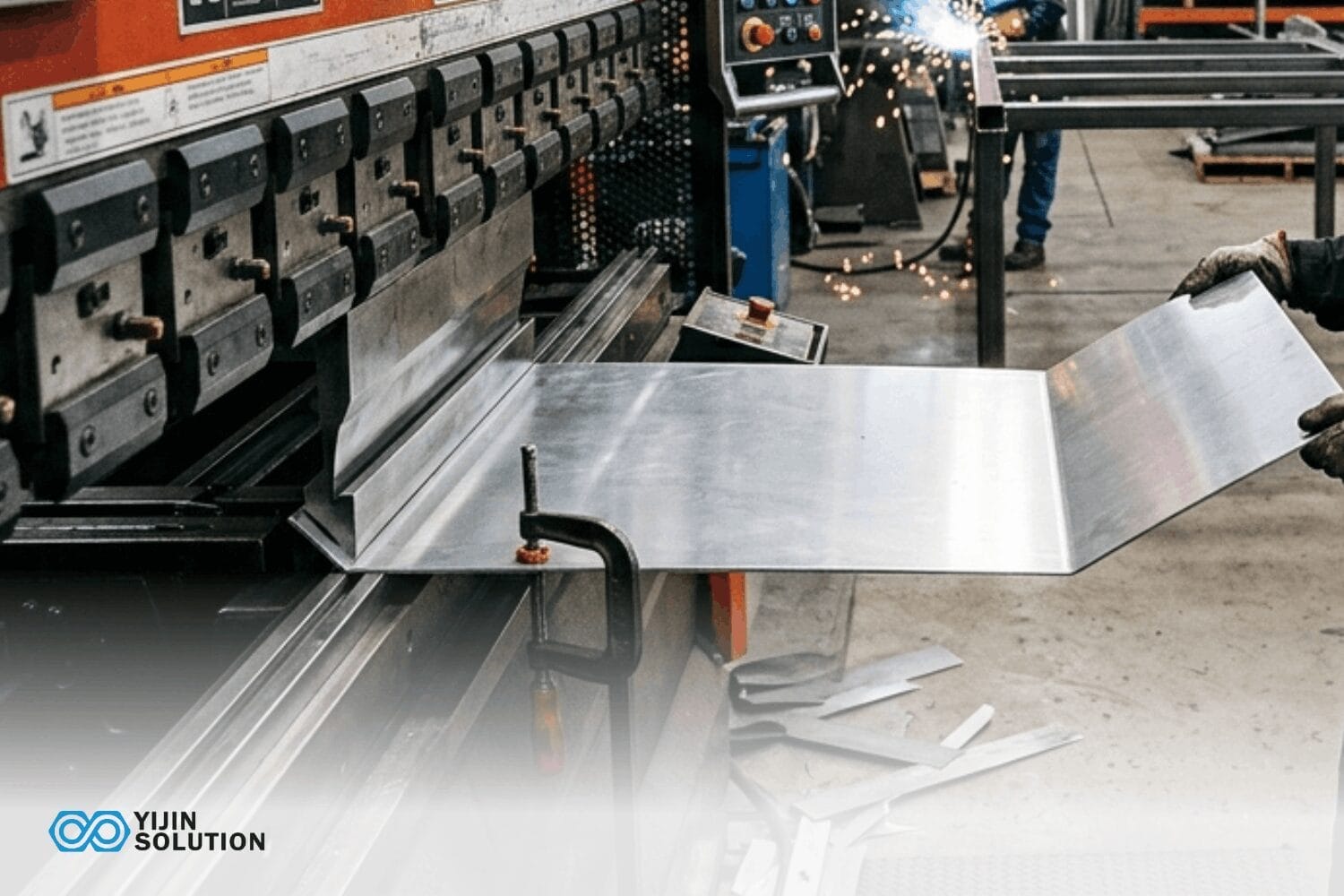
El flujo de trabajo de la plegadora también importa. Los cantos cortados con láser están listos para la prensa plegadora: directamente al plegado sin preparación del canto. Los cantos cortados con plasma en chapas más finas a menudo necesitan un rectificado antes del plegado para evitar grietas en el radio de plegado y garantizar un desarrollo uniforme del plegado. Los talleres que utilizan ambos tipos de proceso en la misma prensa plegadora tienen la sensación de que el tiempo de preparación del canto se acumula a lo largo del turno. La decisión de corte afecta a todo el flujo de fabricación.
Compatibilidad de materiales: ¿Qué puede cortar cada proceso?
El tipo de material suele resolver la cuestión del proceso antes incluso de que entren en juego el coste o la tolerancia. El requisito de conductividad del plasma es un límite duro, y un equipo mejor no lo cambia.
| Material | Corte por láser | Corte por plasma | Notas |
|---|---|---|---|
| Acero dulce | Sí, CO2 y fibra | Sí, todos los tipos de sistema | Gas auxiliar de oxígeno para láser; plasma dominante en placa de más de 20 mm |
| Acero inoxidable | Sí, se prefiere la asistencia de nitrógeno | Sí. Plasma HD para la calidad; convencional para la estructura. | El láser asistido por nitrógeno proporciona cantos sin óxido; el plasma deja bisel y HAZ |
| Aluminio | Sí, se prefiere el láser de fibra | Sí, con gas y parámetros adecuados | El láser de fibra maneja bien la reflectividad; el plasma tolera la cascarilla de laminación |
| Cobre y latón | Sí, láser de fibra | Sí, metal conductor | El láser de fibra maneja metales reflectantes con fiabilidad; el de CO2 requiere una configuración especializada |
| Titanio | Sí | Sí | Ambos funcionan; el láser es preferible para aplicaciones aeroespaciales de precisión |
| Acrílico y plásticos | Sí, versátil | No. No conductor. | Límite físico del proceso. El plasma no puede cortar no metales. |
| Madera y caucho | Sí, CO2 y fibra | No. No conductor. | Sólo láser. |
Los sistemas láser de fibra modernos trabajan con cobre y latón de forma fiable. Esta era una limitación de los antiguos sistemas de CO2 que ya no afecta a un taller de láser de fibra bien equipado. El plasma sigue limitado a los metales conductores, independientemente de la actualización del sistema. ¿Material que llega oxidado, descascarillado o recubierto? El plasma lo maneja sin limpieza previa. El láser no.
Cuándo elegir el corte por láser frente al corte por plasma
La selección del proceso se basa en tres variables: espesor del material, tolerancia requerida y presupuesto del proyecto.
| Escenario | Proceso recomendado | Razón |
|---|---|---|
| Acero inoxidable o aluminio de calibre fino, 6 mm o menos | Láser | Corte estrecho, borde limpio, tiempo de ciclo rápido |
| Chapa de acero estructural de más de 12 a 20 mm | Plasma | El coste por corte y el rendimiento favorecen al plasma; los requisitos de tolerancia suelen permitirlo |
| Geometría 2D compleja o perfiles intrincados | Láser | Los detalles finos, los radios estrechos de las esquinas y la precisión de los orificios pequeños requieren una anchura de corte láser |
| Recortes estructurales no críticos y sensibles al presupuesto | Plasma | Menor coste de equipamiento y funcionamiento cuando la tolerancia no es la prioridad |
| Ensamblajes médicos, aeroespaciales o de tolerancias estrictas | Láser | Los requisitos de tolerancia, calidad de los bordes y trazabilidad favorecen el láser |
| Chapa no metálica: acrílico, madera, compuestos | Láser | El plasma no puede procesar materiales no conductores |
| Soportes y marcos estructurales de gran volumen | Plasma para espesores gruesos, láser para espesores finos | Elija por grosor: láser para galga fina, plasma para chapa estructural |
| Diseños con agujeros pequeños, de menos de 2× de grosor de material | Láser | La restricción del diámetro mínimo del orificio de plasma hace que el láser sea la única opción viable |
Elija el corte por láser cuando...
- Su material es de calibre fino a medio, inferior a 12 mm. Especialmente acero inoxidable, aluminio o chapas revestidas.
- Los requisitos de tolerancia son estrictos. Ensamblajes que requieren ajustes a presión, insertos roscados o características de acoplamiento inferiores a ±0,2 mm.
- Su pieza tiene orificios pequeños, perfiles intrincados o geometría 2D detallada en la que la anchura de corte del plasma provocaría un error dimensional.
- La calidad de los cantos es importante en la fase posterior. Piezas cosméticas, superficies chapadas o piezas que van directamente a una fijación de soldadura sin preparación de bordes.
- Su material incluye no metales como acrílico, compuestos, caucho o madera junto a componentes metálicos.
Elija el corte por plasma cuando...
- Su material es una chapa estructural gruesa, por encima de 12 a 20 mm en acero, donde la ventaja de rendimiento y coste del plasma es real.
- Los requisitos de tolerancia lo permiten. Piezas estructurales en las que se acepta ±0,5 mm o menos.
- Todo su material es metal conductor y no necesita corte no metálico.
- El presupuesto es limitado. El menor coste de equipamiento y funcionamiento hace que el plasma sea la opción más accesible.
- Su material llega imperfecto. El material oxidado, descascarillado o recubierto procedente del almacenamiento en exteriores es compatible con el plasma sin limpieza previa.
Cuándo utilizar ambos: el flujo de trabajo híbrido
Algunos proyectos utilizan el plasma y el láser en secuencia. El plasma corta grandes planchas en bruto de forma rápida y económica. A continuación, el láser corta elementos de precisión, como orificios para pernos, ranuras complejas y perfiles con tolerancias estrechas, en las chapas precortadas como operaciones secundarias. Este flujo de trabajo es habitual en equipos agrícolas, acero estructural y fabricación industrial pesada, donde la mayor parte de la pieza es chapa estructural, pero hay características específicas que requieren precisión láser.
Existen máquinas de corte combinado que integran ambos procesos en una mesa. Las máquinas dedicadas que hacen bien un trabajo tienden a superarlas en rendimiento. Una empresa de fabricación que gestiona internamente los procesos de plasma y láser suele considerar más rentable utilizar primero el plasma y luego el láser, en lugar de utilizar cada proceso de forma aislada.
Aplicaciones industriales del corte por láser y plasma en la fabricación de chapas metálicas
Lo que haces importa tanto como el grosor del material.
La producción de automóviles utiliza el corte por láser para paneles de carrocería, soportes y componentes de cajas de baterías de vehículos eléctricos en los que las tolerancias son estrictas y los estándares estéticos son elevados. Plasma se encarga de subchasis estructurales y placas de chasis en los que la velocidad importa más que el acabado de los bordes.
Los sectores aeroespacial y de defensa confían en el láser para la fabricación de soportes, carcasas y revestimientos estructurales de precisión en aluminio 6061, acero inoxidable 316L y titanio de grado 5. El plasma rara vez se especifica para chapas aeroespaciales de tolerancias estrechas.
La fabricación de dispositivos médicos funciona casi exclusivamente con láser. Los componentes de instrumentos quirúrgicos, las carcasas médicas y las piezas de acero inoxidable de calibre fino necesitan tolerancias estrechas y bordes sin rebabas.
Los equipos industriales son la categoría que utiliza ambos procesos codo con codo. Láser para paneles de control de precisión y placas de montaje, y plasma para soldaduras estructurales gruesas, bastidores y estructuras de soporte.
La electrónica de consumo y la robótica utilizan el corte por láser para chasis de aluminio, disipadores de calor y bastidores de chapa de precisión en los que los estándares estéticos y dimensionales son elevados.
Hable con Yijin sobre su proyecto de chapa metálica
La elección entre láser y plasma rara vez es obvia a partir de un archivo CAD únicamente; depende de la tolerancia, el grosor, el volumen y lo que suceda a continuación.
Solución Yijin ejecuta ambos procesos internamente y recomienda el adecuado en la fase de revisión de ingeniería, antes de que comience el corte. Nuestro equipo de chapistas trabaja en aplicaciones de automoción, aeroespaciales, médicas e industriales, con el respaldo de las certificaciones ISO 9001, IATF 16949, AS9100D e ISO 13485 que cubren cada uno de esos sectores.
Cargue sus archivos CAD para obtener una revisión y un presupuesto gratuitos de DFM en 24 horas.
Preguntas frecuentes sobre el corte por láser y el corte por plasma de chapas metálicas
¿Puedo cambiar de plasma a láser a mitad de proyecto si las tolerancias resultan más ajustadas de lo esperado?
Depende de lo avanzado que esté el proyecto. Si el corte no ha comenzado, el cambio suele ser sencillo, ya que el fabricante reubica las piezas en la mesa del láser y las vuelve a cotizar.
Una vez que el corte por plasma está en marcha, las piezas ya cortadas según las tolerancias del plasma no pueden apretarse retroactivamente. Tendría que volver a cortar esas piezas con láser, lo que significa pagar dos veces por esa parte de la tirada.
¿Cómo especifico el corte por láser frente al corte por plasma en un dibujo?
La mayoría de los fabricantes no esperan que se indique el proceso de corte en el propio plano. Lo que necesitan son los valores de tolerancia, los requisitos de acabado de los bordes y cualquier nota sobre operaciones posteriores como la soldadura o el plegado. Si un elemento requiere ±0,1 mm, el fabricante sabe que es territorio láser. Si un soporte estructural requiere ±1,0 mm, el plasma está sobre la mesa.
¿Funciona el corte por láser para prototipos únicos o sólo es rentable en grandes cantidades?
El corte por láser es uno de los procesos de fabricación de chapas metálicas que mejor se adapta a los prototipos. No hay costes de utillaje, el tiempo de preparación es mínimo y las piezas se cortan directamente a partir de un archivo CAD. Un solo prototipo cuesta más por pieza que una tirada de producción porque el tiempo de preparación y programación lo absorbe una unidad en lugar de cientos, pero esto se aplica igualmente al plasma.
¿Qué formatos de archivo y prácticas de diseño agilizan las citas?
Los archivos STEP son el estándar para presupuestar piezas de chapa metálica. Conservan la geometría 3D, la información de plegado y los detalles de las características que el software de anidado del fabricante puede leer directamente.
Los archivos DXF y DWG sirven para piezas planas, pero pierden los datos de grosor y curvatura, lo que obliga al fabricante a hacer preguntas o suposiciones. Los PDF de planos son útiles como referencia junto con el archivo 3D, no para sustituirlo.
Volver arriba: Corte por láser vs. Corte por plasma para chapa metálica: ¿Cuál necesita su proyecto?