¡Noticias emocionantes! Yijin Hardware cambia de marca a Yijin Solution. Read more →

No Drawings? No Problem. From concept to production, our designers and engineers handle everything in between. Explore Our New Services

Swiss Screw Machining Capabilities

These specifications apply across our Swiss lathes. Specific tolerances and part geometry depend on material, diameter, and feature complexity. Engineering review is available on request.

Característica Descripción
General Tolerance ±0.0005 in (±0.013 mm) on features up to 32 mm diameter
Tolerancia estricta ±0.0001 in (±0.0025 mm) typical; secondary grinding for sub-micron finishes
Diameter Range and L:D Ratio 0.5 to 32 mm bar diameter; length-to-diameter ratios beyond 3:1 with full guide-bushing support
Machine Configuration and Lead Time 7 to 9-axis CNC Swiss lathes with sub-spindle and live tooling; prototypes 1–2 weeks, production 3–4 weeks

Swiss Screw Machining Materials

We machine 40+ material grades across stainless steel, brass, aluminum, and specialty alloys for Swiss-turned parts. Every bar ships with mill certification and lot-level traceability. Material selection follows the part’s mechanical load, operating environment, and cost target.

Acero inoxidable

Tipo Common Grados
Austenítico 303, 304, 316
Precipitation-Hardening 17-4 PH
Free-Machining 416
TipoCommon Grados
Free-Cutting BrassC360 (UNS C36000)
CobreC110, C122
BronceC932, phosphor bronze

TipoCommon Grados
General-Purpose6061-T6, 2011-T3
High-Strength7075-T6
Cast and SpecialtyCast Al 356

TipoCommon Grados
TitanioGrade 2 (CP), Grade 5 (Ti-6Al-4V)
Plásticos técnicosPEEK, POM (Delrin), PTFE
Aleaciones exóticasInconel 718, Hastelloy C276

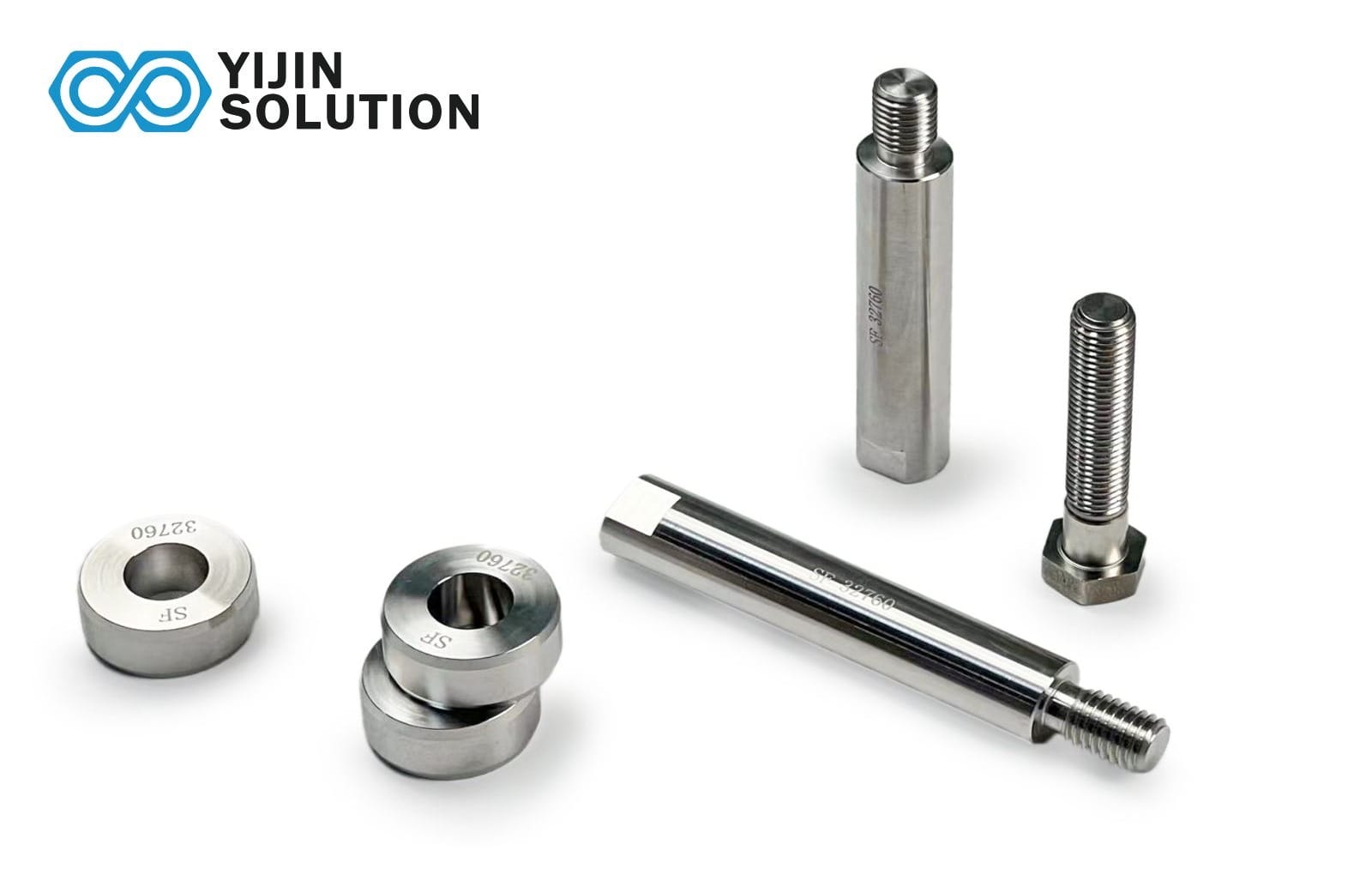
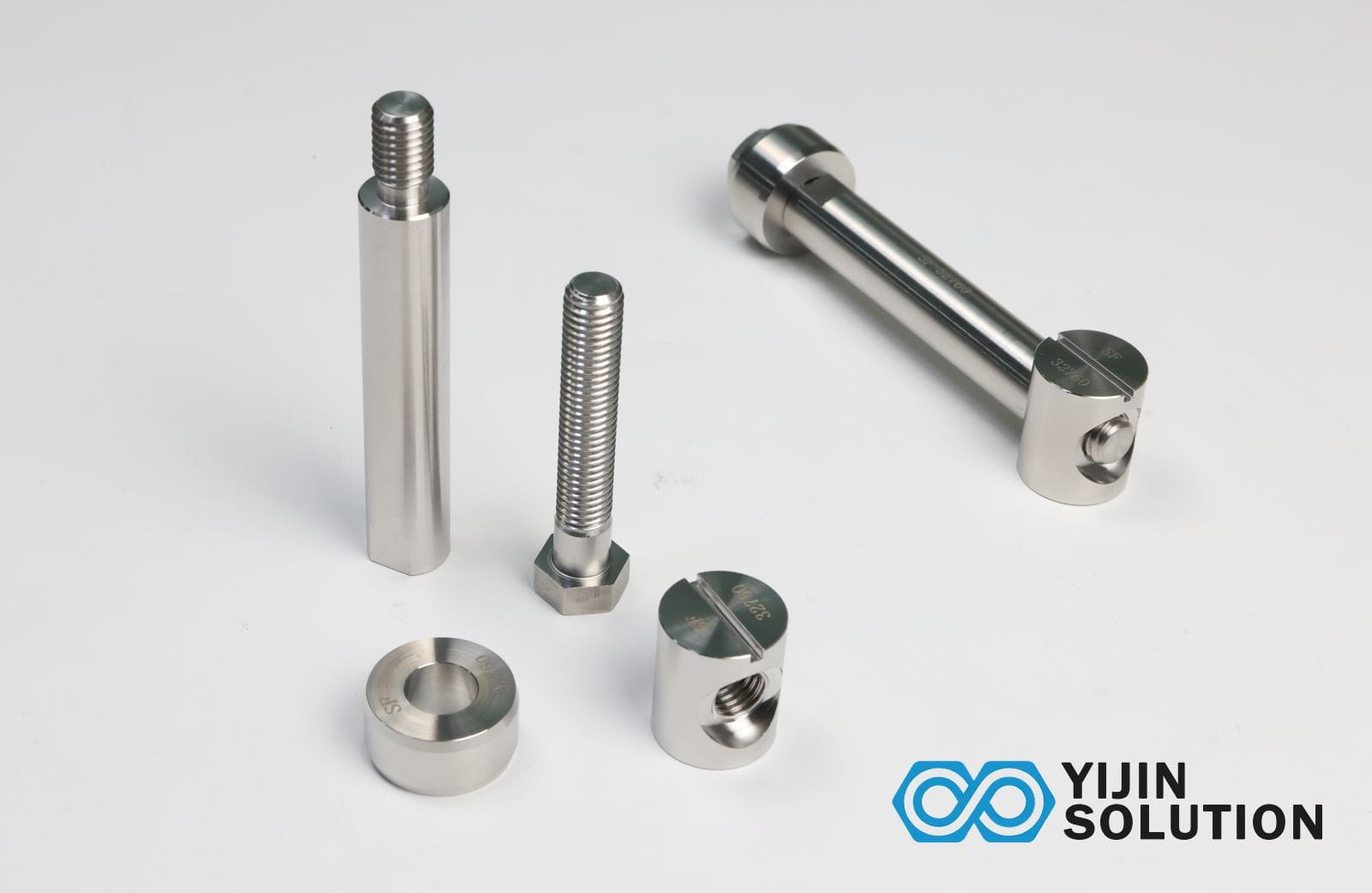
custom cnc turned bolts spacers

Swiss Screw Machining Surface Finishes

We apply surface finishes in-house to control quality and lead time on small, precision-turned parts.

Acabado superficial

ESPECIFICACIÓN

Stainless steel Swiss-turned part with an as-machined finish

As-Machined

Parts ship directly off the Swiss lathe with a clean turned finish and deburred edges. Standard for internal components and parts that will be plated or coated downstream. Surface finish 0.4 to 1.6 μm Ra.

Stainless steel Swiss-turned parts being passivated

Passivation (Stainless)

Citric or nitric acid treatment per ASTM A967 removes free iron from turned stainless steel surfaces and restores the chromium oxide layer. Standard on medical and food-contact parts.

Electropolished stainless steel Swiss-turned part with mirror finish

Electropulido

Electrochemical polishing removes a thin surface layer to produce a bright, ultra-smooth finish down to 0.1 μm Ra. Common on medical implants and components requiring low bacterial adhesion.

Black oxide coated steel turned pins and fasteners

Black Oxide

Alkaline oxide conversion coating for mild corrosion resistance and reduced glare on steel fasteners and small precision components. Adds negligible dimensional change.

Gold and nickel plated brass connector pins

Plating (Nickel, Gold)

Electroless nickel, gold, and silver plating for electrical conductivity, solderability, and corrosion resistance on connector pins and electronic contacts. Plating thickness 2 to 10 μm.

Laser marking a Swiss-turned stainless steel part

Laser Marking

Permanent part numbers, lot codes, and UDI markings for medical and traceability requirements, applied without contact or coating removal.

Types of Swiss Machining We Offer

We run Swiss-type turning under one roof with single-spindle, live-tooling, and sub-spindle machines. Below are the main configurations and where each is suited.

Single-spindle Swiss CNC lathe feeding bar stock through a guide bushing

Single-Spindle Swiss

A sliding headstock feeds bar stock through a guide bushing to a single turret. Handles most small-diameter turned parts with excellent tolerance control. Diameter range 0.5 to 20 mm; spindle speeds to 10,000 RPM.

Live-tooling driven tool cross-drilling a part on a Swiss lathe

Live-Tooling Swiss

Adds driven tools on the main turret for off-axis milling, cross-drilling, and threading without removing the part from the guide bushing. Standard for parts needing flats, holes, or slots off the turned axis.

Sub-spindle picking off a turned part for back-side machining on a Swiss lathe

Sub-Spindle Swiss

A second spindle picks off the part after the main operation to complete back-side machining and part-off in the same cycle, holding concentricity between front and back features to within microns.

Applications of Swiss Screw Machining

Productos sanitarios

Surgical instrument components, bone screws, dental implant parts, and diagnostic equipment pins in 316L stainless, titanium, and PEEK. Passivated and traceable to lot level.

Electrónica

Connector pins, contact terminals, and micro-fasteners in brass and beryllium copper with nickel or gold plating for conductivity and solderability.

Aeroespacial

Small structural fasteners, hydraulic fittings, and sensor housings in titanium and stainless steel machined to aerospace tolerance and traceability standards.

Automoción

Fuel injector components, sensor housings, valve pins, and transmission parts in steel and brass held to tight roundness and concentricity.

Electrodomésticos

Small precision shafts, valve stems, and fasteners for coffee makers, blenders, and kitchen appliances in brass and stainless steel.

Luxury and Watches

Watch stems, crowns, and case components in stainless steel and brass, machined to the tight cosmetic and dimensional tolerances luxury goods require.

Fluid Power

Valve bodies, fitting nipples, and hydraulic components in brass and stainless steel requiring precise threads and sealing surfaces.

Defensa

Small precision pins, bushings, and mechanism components in steel and stainless steel with tight tolerance and repeatability requirements.

Robótica

Miniature shafts, bushings, and linkage pins for actuators and end-effectors in stainless steel, brass, and engineering plastics.

Yijin Solution Swiss Machining Factory

Yijin Solution operates a 25,000+ m² manufacturing facility in Shenzhen, China. Our Swiss machining cell runs CNC sliding-headstock lathes with sub-spindle and live-tooling configurations, backed by 281 inspection instruments including precision calipers, optical comparators, and CMMs for verifying small-diameter, tight-tolerance parts. Bar stock moves from raw material through turning, finishing, and inspection without leaving the facility.

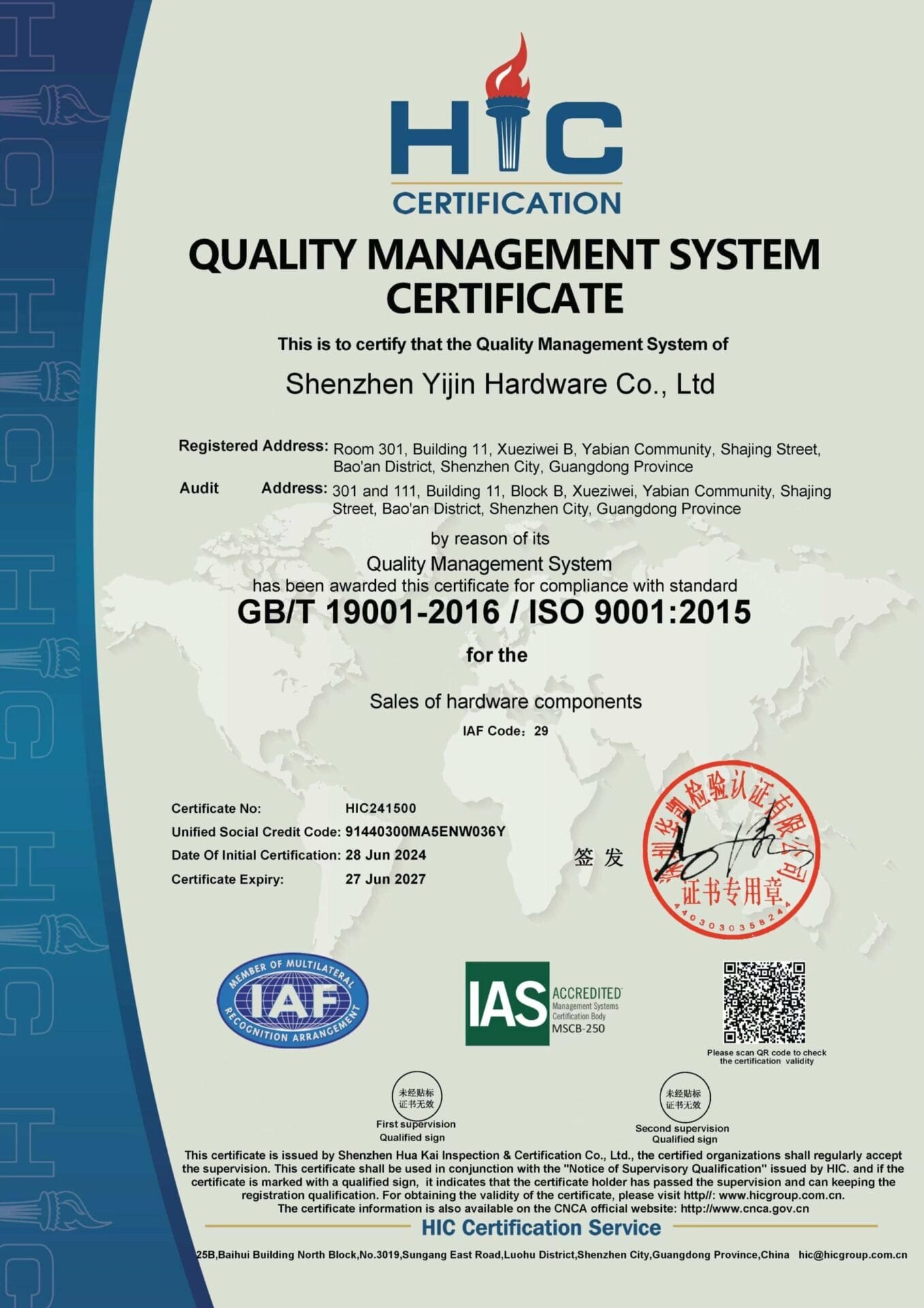
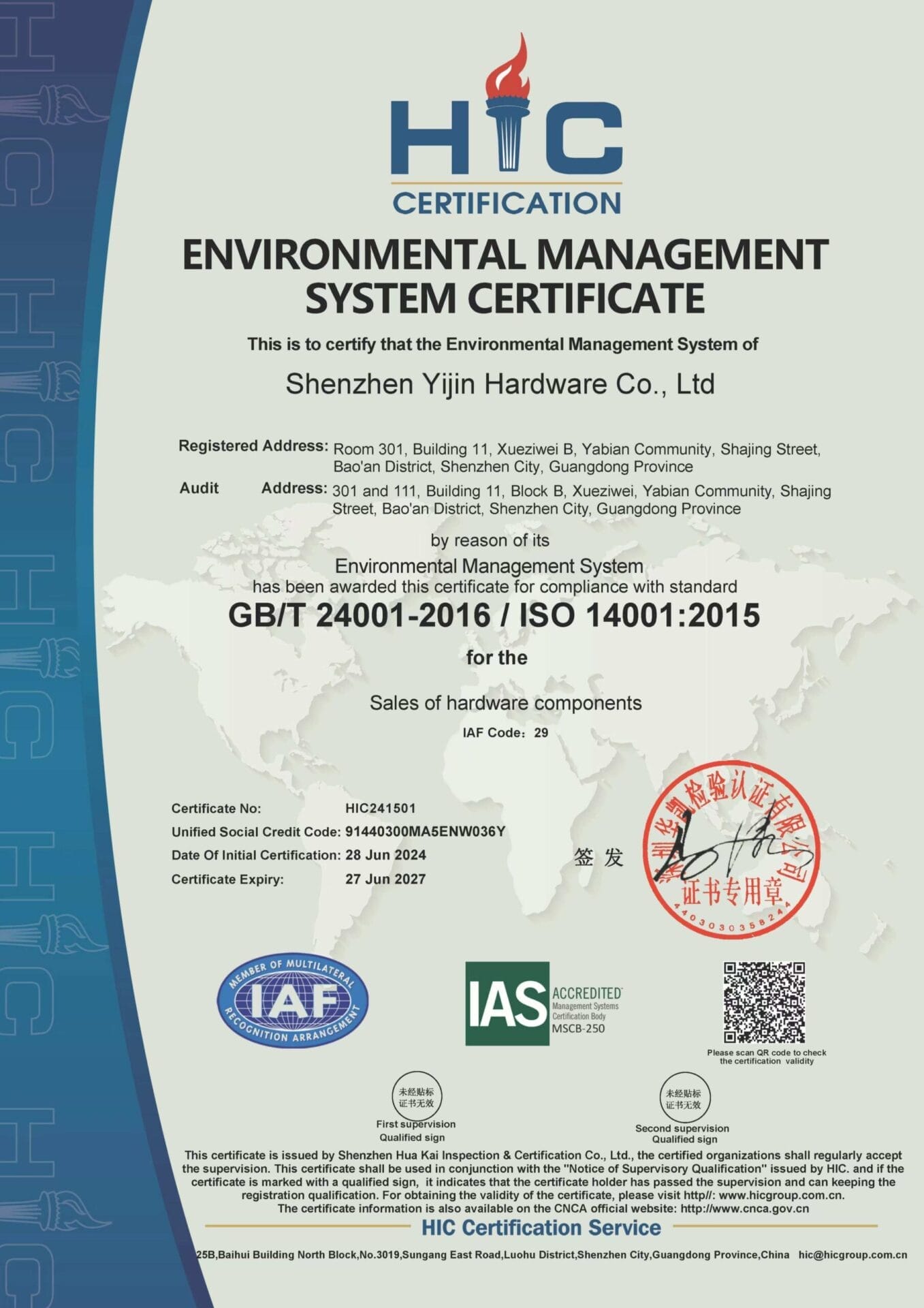
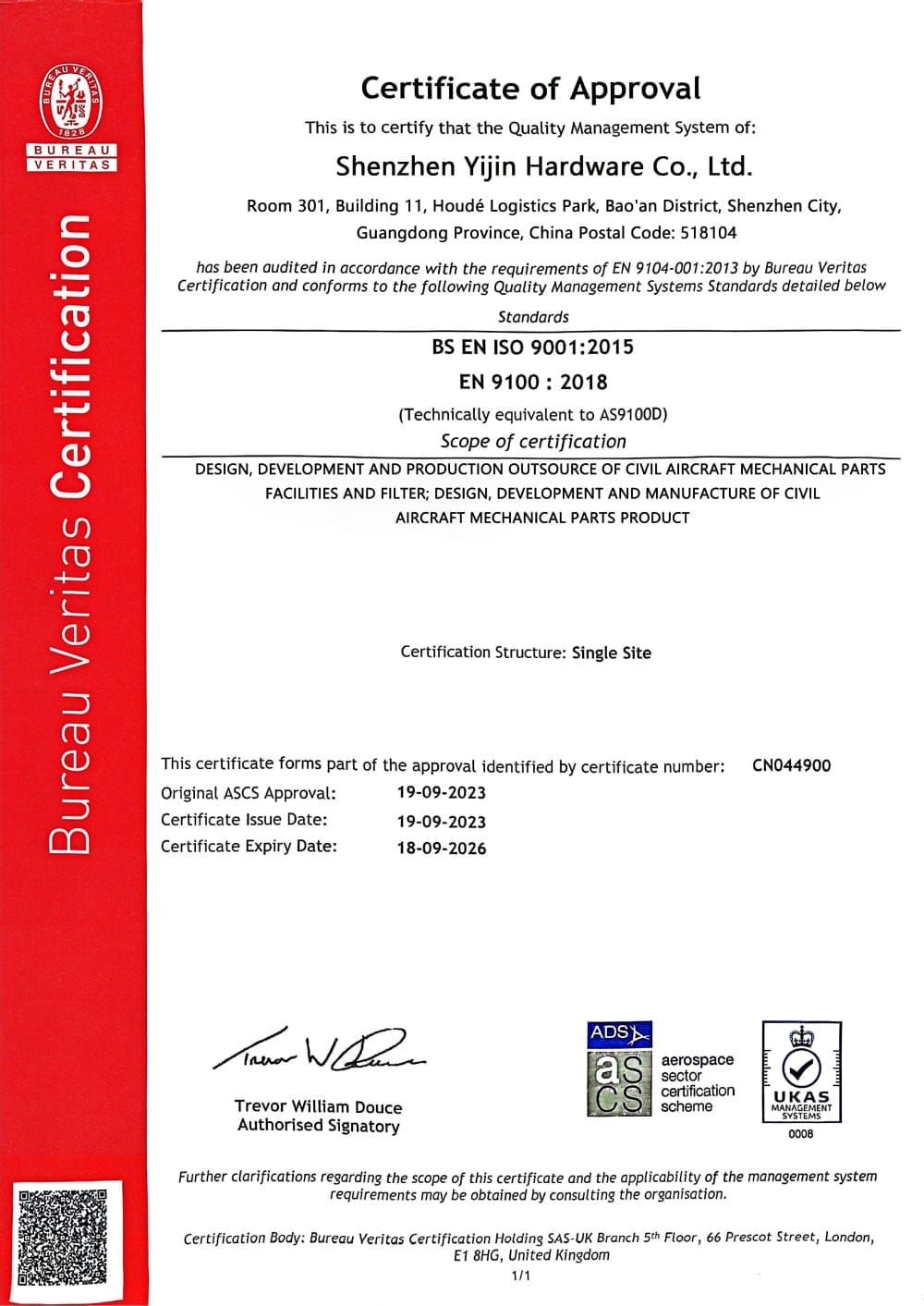
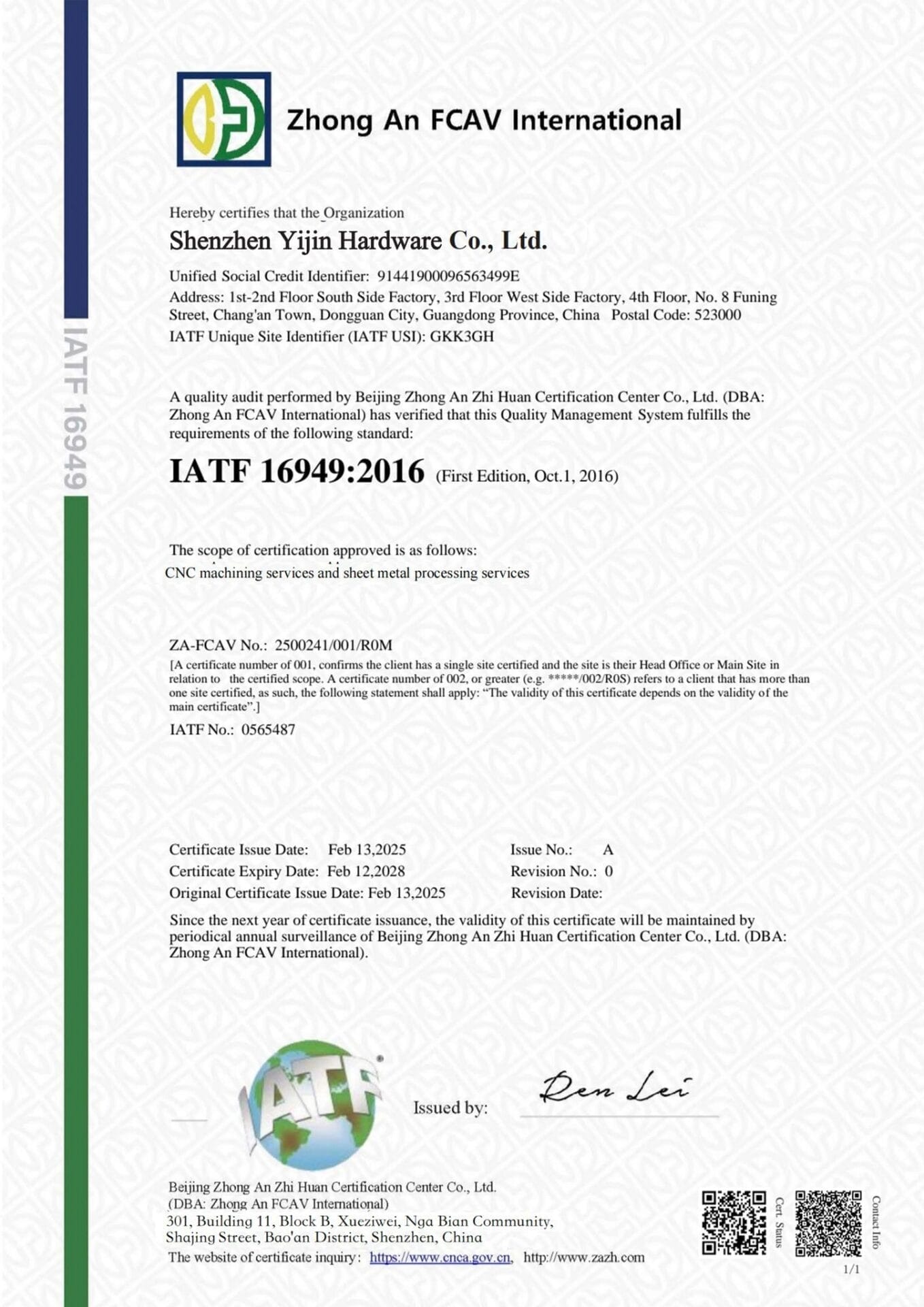
We serve clients across North America, Europe, and Asia-Pacific. Every order ships with full dimensional inspection reports and material certifications, and production runs under our ISO 9001 quality management system.

Nuestras certificaciones

What's Swiss Screw Machining

Swiss screw machining shapes small cylindrical metal and plastic parts by feeding bar stock through a guide bushing positioned right next to the cutting tool. The bushing supports the material at the point of cut, so thin, long parts do not bend or vibrate away from the tool the way they can on a lathe that only holds the bar at one end.

The name comes from the Swiss watchmaking industry, where the process was developed to turn the tiny, precise pins and stems watches require. The same sliding-headstock design now produces small parts across medical, electronics, and automotive manufacturing at tolerances tighter than most other CNC processes reach.

Swiss-type CNC lathe cycle showing bar feeder and sub-spindle part transfer

How Swiss Screw Machining Works

Swiss screw machining follows a repeatable cycle for every bar-fed part.

  1. Bar loading. A bar feeder loads raw stock through the machine’s spindle and guide bushing, positioning the material for the first cut.
  2. Guide bushing support. The bushing clamps around the bar directly next to the cutting tool, holding the material steady as it slides forward for each operation.
  3. Turning and live tooling. The main turret turns the outer profile while driven live tools mill flats, cross-drill holes, or cut threads without removing the part from the bushing.
  4. Sub-spindle transfer. A second spindle picks off the part to machine the back side and part it off, completing the part in one continuous cycle.
  5. Coolant and inspection. High-pressure, through-tool coolant clears chips from deep, narrow features and controls heat during continuous small-diameter cutting; the operator then verifies critical dimensions before the next bar advances.

A typical simple part ships in 1 to 2 weeks. More complex, multi-operation parts take 3 to 4 weeks.

Why Choose Yijin Solution for Swiss Machining

We control every step of Swiss screw machining from bar stock through turning, finishing, and inspection. That vertical integration means shorter lead times, consistent part quality, and direct factory pricing without broker margins.

precision and quality
Precisión y calidad

Precision calipers, optical comparators, and CMMs verify every critical batch. Parts hold tolerances to ±0.0001 in (±0.0025 mm) on diameters from 0.5 to 32 mm.

fast turnaround
Entrega rápida

Simple parts ship in 1 to 2 weeks and complex multi-operation parts in 3 to 4 weeks. Bar feeders keep spindles running for unattended, lights-out production.

order any size
Order any Size

Single-piece prototypes and production runs into the hundreds of thousands go through the same Swiss lathes and inspection standards. No minimum order quantity.

prototyping to production
One-Setup Completion

Turning, milling, drilling, and threading complete in a single setup on the guide bushing, holding concentricity and eliminating handling error between operations.

wide range materials
Material Breadth

Stainless steel, brass, aluminum, titanium, copper alloys, and engineering plastics in 40+ grades, all with mill certificates and lot traceability.

cost effective
Rentable

Direct factory pricing without broker margins. Our engineering team reviews your drawing before programming to confirm the part suits Swiss machining economics.

FAQs About Swiss Screw Machining

Common questions about Swiss screw machining processes, materials, and our production system.

CNC Swiss screw machining is a precision turning process that feeds bar stock through a guide bushing to produce small, complex cylindrical parts in high volumes.

A sliding headstock advances the bar through the bushing, which sits directly beside the cutting tool and supports the material at the point of cut. This eliminates the deflection that limits conventional lathes on long, thin parts.

Live tooling and a sub-spindle let the machine turn, mill, drill, and thread a part complete in one setup, holding tolerances to ±0.0001 in (±0.0025 mm) on diameters from 0.5 to 32 mm.

The guide bushing is the difference. Swiss machining supports the bar right next to the cutting tool, while conventional turning holds the workpiece only in a chuck or collet at one end.

That support lets Swiss lathes machine long, thin parts, length-to-diameter ratios beyond 3:1, without the chatter or taper that unsupported turning produces on the same geometry. Conventional turning stays more economical on larger-diameter or shorter parts where deflection is not a factor.

Swiss machines also carry live tooling and a sub-spindle as standard, so milling, cross-drilling, and threading happen in the same cycle instead of a second operation.

Swiss screw machining works with ferrous and non-ferrous metals and plastics to produce custom parts in a wide range of sizes and shapes.

Stainless steel (303, 304, 316, 17-4 PH) is the default for medical and food-contact parts. Free-cutting brass (C360) machines fast and holds a clean finish for connectors and fittings. Aluminum (6061, 7075) and titanium (Grade 2, Grade 5) cover lightweight and high-strength applications.

Engineering plastics such as PEEK and POM, and exotic alloys such as Inconel and Hastelloy, are available for specialized performance requirements. Material selection should match the part’s load, environment, and cost target.

Standard Swiss lathes hold general tolerances to ±0.0005 in (±0.013 mm) and tight tolerances to ±0.0001 in (±0.0025 mm), with secondary grinding available for sub-micron requirements.

Bar diameter typically ranges from 0.5 to 32 mm, and the guide bushing supports length-to-diameter ratios beyond 3:1, well past what a fixed-headstock lathe can hold without a steady rest.

Our Swiss lathes run 7 to 9 axes: X and Z on the main turret, a live-tool C-axis, and a sub-spindle with its own axes for back-working, at spindle speeds up to 10,000 RPM depending on diameter and material.

Swiss screw machining is used across multiple industries that require small, high-precision components.

Medical device makers use it for implant components, surgical instrument parts, and diagnostic equipment pins. Electronics manufacturers use it for connector pins and contact terminals. Aerospace and automotive programs use it for small fasteners, sensor housings, and fuel system components, and luxury goods makers use it for watch stems and case parts.

Yes. Swiss screw machining is cost-effective for medium to high-volume runs because parts complete in one setup without moving between machines, and bar feeders keep spindles running unattended.

Setup and programming cost more upfront than a simple manual lathe job, but that cost spreads across the run. Faster cycle times and fewer secondary operations bring the per-part cost down as volume increases, which is why Swiss machining often provides the best value on complex parts produced in quantity.

Swiss screw machining is not the right process for every part. Diameter is the main constraint: our machines top out around 32 mm, so larger-diameter or bulky parts need conventional CNC turning or milling instead.

Low-volume orders may not justify Swiss machining’s setup and programming cost; a handful of simple parts is often cheaper on a manual or conventional CNC lathe. Parts that do not need tight tolerance or a small diameter also gain little from the guide-bushing setup, since standard turning holds a wider tolerance at lower cost.

Guide-bushing machining also requires bar stock, so one-off parts from large blanks or castings fall outside its scope. Our engineering team flags these cases during DFM review and recommends the better-suited process.

We accept STEP, IGES, and SLDPRT files, with STEP preferred for turned parts. Upload your CAD file for an instant quote based on material, diameter, and feature complexity.

For complex parts, an engineer reviews the file within 24 hours with DFM notes on guide-bushing feasibility and a refined quote. Accept the quote online and production enters the schedule immediately, with typical first-article parts shipping within 1 to 2 weeks.

Swiss Machining and CNC Turning Guides

Empiece hoy mismo. Consiga piezas rápidamente.

Free Machined Parts Design to Your Projects with Reduced Lead Times Times.

Cargue sus dibujos 2D y al menos un archivo CAD 3D para obtener un presupuesto más rápido y preciso. Si tiene varios archivos, comprímalos en .zip o .rar. ¿Prefiere el correo electrónico? Envíe su solicitud de presupuesto a info@yijinsolution.com.

Arrastrar y soltar archivos,, Seleccione los archivos que desea cargar Puedes subir hasta 15 archivos.
Casillas de verificación
Arrastrar y soltar archivos,, Seleccione los archivos que desea cargar Puedes subir hasta 15 archivos.
1 / 2 SERVICIO

Solicitar presupuesto

Cargue sus archivos de diseño para obtener un presupuesto rápido, plazos de entrega precisos y un análisis DFM gratuito.

Casillas de verificación
Arrastrar y soltar archivos,, Seleccione los archivos que desea cargar Puedes subir hasta 15 archivos.

Adjunte sus dibujos CAD 2D y modelos CAD 3D en cualquier formato, incluidos STEP, IGES, DWG, PDF, STL, etc. Si tiene varios archivos, comprímalos en un archivo ZIP o RAR. También puede enviar su solicitud de oferta por correo electrónico a info@yijinsolution.com.