


18/8 stainless steel and 18/10 stainless steel are closely related austenitic stainless steels. The first number refers to chromium content and the second number refers to nickel content. In practical terms, 18/8 is commonly associated with about 18% chromium and 8% nickel, while 18/10 uses about 18% chromium and 10% nickel.
For custom CNC machined parts, the difference is usually not dramatic, but it can affect corrosion resistance, polish, cost, and machining behavior. Use 18/8 when you need reliable general-purpose corrosion resistance and better cost control. Use 18/10 when a higher nickel level, smoother finish, or food-contact appearance matters more.
| Grade family | Typical chromium/nickel meaning | Best fit | CNC buyer note |
|---|---|---|---|
| 18/8 stainless steel | About 18% chromium and 8% nickel | General corrosion resistance, functional parts, cost-sensitive components | Often the practical choice when the drawing does not require a higher nickel grade. |
| 18/10 stainless steel | About 18% chromium and 10% nickel | Food-contact, polished parts, better luster, slightly improved corrosion behavior | Worth specifying when appearance, hygiene, or the purchasing spec requires it. |
| 18/0 stainless steel | About 18% chromium and little to no nickel | Lower-cost stainless parts, magnetic applications, nickel-sensitive requirements | Lower nickel changes corrosion behavior; confirm the service environment before choosing it. |

What Does 18/8 Stainless Steel Mean?
18/8 stainless steel means the alloy contains roughly 18% chromium and 8% nickel. Chromium forms the passive oxide layer that gives stainless steel its corrosion resistance. Nickel improves ductility, toughness, formability, and the stable austenitic structure that makes this family useful for many precision parts.
In CNC machining, 18/8 stainless steel is usually selected for parts that need corrosion resistance without the added cost of more specialized stainless grades. It is common in brackets, housings, shafts, fittings, food equipment components, and industrial hardware where the part is custom-made to a drawing.
What Does 18/10 Stainless Steel Mean?
18/10 stainless steel contains roughly 18% chromium and 10% nickel. The higher nickel content can improve polish, toughness, and corrosion performance in some environments. This is why 18/10 is often discussed in cookware, food-contact components, and visible stainless parts where appearance matters.
For machined components, 18/10 is not automatically better. It is better when the part specification, end-use environment, hygiene requirement, or finish requirement justifies the extra nickel content. If the part only needs general corrosion resistance, 18/8 may deliver the required performance at a better cost.
18/8 vs 18/10 Stainless Steel: Key Differences
| Factor | 18/8 stainless steel | 18/10 stainless steel |
|---|---|---|
| Nickel content | Lower | Higher |
| Corrosion resistance | Good for many general environments | Slightly stronger in some service conditions |
| Appearance | Clean stainless finish | Better polish and luster potential |
| Cost | Usually lower | Usually higher due to nickel content |
| Machining impact | Good with controlled speeds, sharp tooling, and coolant | Similar, but nickel content can influence work hardening and tool wear |
How Stainless Composition Affects CNC Machining
Both 18/8 and 18/10 stainless steels can work harden during machining. That means the cutting process can make the surface harder if feeds, speeds, tooling, or coolant are not controlled well. Sharp carbide tools, steady feed rates, effective chip evacuation, and appropriate coolant help maintain part quality.
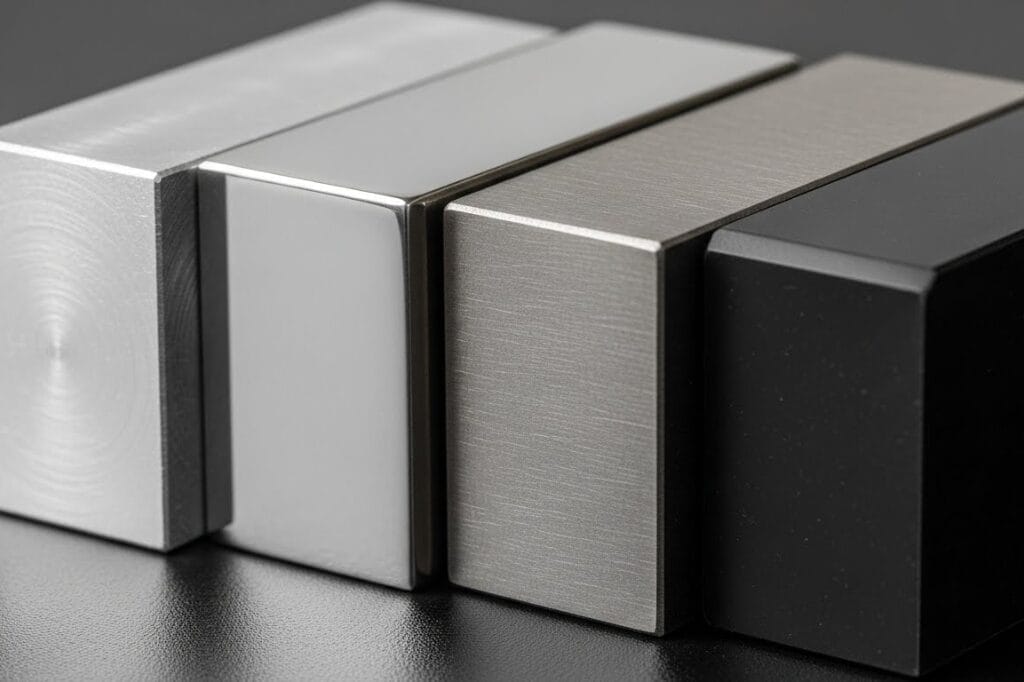
Material choice should also account for the required finish. A visible stainless part may need brushing, polishing, electropolishing, or passivation after machining. For functional components, the finish requirement should be tied to corrosion performance, cleanliness, mating surfaces, and inspection needs.
Manufacturing Process Context
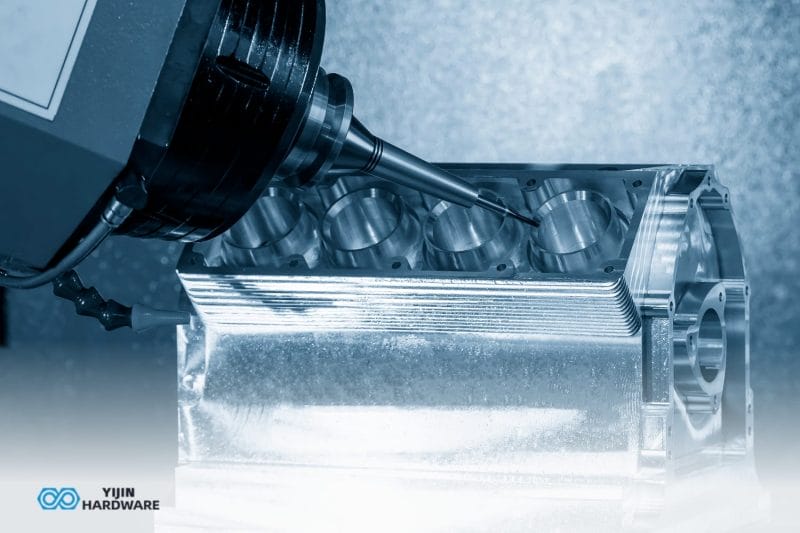
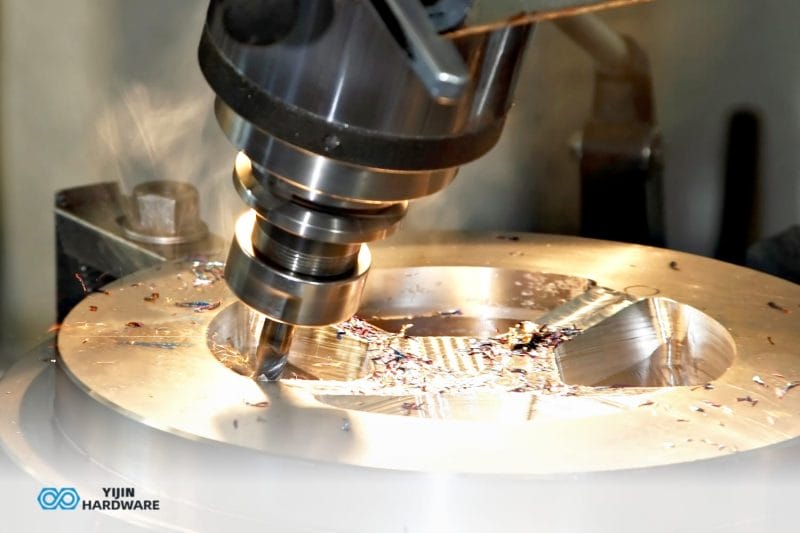
Stainless steel parts can be CNC milled, turned, drilled, tapped, ground, and finished after machining. The best process depends on geometry, tolerance, volume, and surface finish. A simple bushing may be efficient on a CNC lathe, while a housing with pockets, bosses, and side features may need 3-axis, 3+2, or 5-axis machining.
Passivation is often used after machining to improve the stainless surface by removing free iron contamination. For food-contact or medical-adjacent components, cleaning, deburring, inspection, and documentation should be specified before production begins.
Which Grade Should You Choose?
- Choose 18/8 when the part needs dependable corrosion resistance, good machinability, and controlled cost.
- Choose 18/10 when the part needs stronger polish, food-contact appearance, or a purchasing specification that calls for higher nickel content.
- Review 18/0 carefully when cost or nickel sensitivity matters, because corrosion performance is different from nickel-bearing stainless steel.
- Use 316 or another grade when chloride exposure, marine service, or stronger corrosion resistance is part of the requirement.
Preserved Technical Body From the Live Page
The sections below preserve the deeper technical material from the audited live page, while the new top section adds faster decision support, clearer buyer guidance, and Yijin-safe conversion language.
What are the Key Differences Between 18/8 and 18/10 Stainless Steel?
The key differences between 18/8 and 18/10 stainless steel include their corrosion resistance, strength, aesthetic qualities, temperature resistance, and magnetic properties, with 18/10 generally providing superior performance due to its higher nickel content.
| Property | 18/8 Stainless Steel | 18/10 Stainless Steel | Key Difference |
|---|---|---|---|
| Composition | 18% Chromium, 8% Nickel | 18% Chromium, 10% Nickel | 2% higher nickel content in 18/10 |
| Corrosion Resistance | Excellent for standard environments | Superior, especially in harsh conditions | 18/10 performs better in acidic, saline environments |
| Strength & Durability | Good fatigue and impact resistance | Better fatigue resistance and impact toughness | 18/10 maintains properties better under stress |
| Aesthetic Qualities | Good shine and finish | Higher luster and better finish retention | 18/10 provides superior appearance longevity |
| Temperature Resistance | Good up to 870 °C (1600 °F) | Better dimensional stability during thermal cycling | 18/10 performs better in applications with temperature fluctuations |
| Magnetic Properties | Slightly magnetic after cold working | Lower magnetic permeability even after processing | 18/10 maintains better non-magnetic properties |
Is 18/10 Stainless Steel More Corrosion (Rust) Resistant Than 18/8 Steel?
Yes, 18/10 Stainless Steel exhibits superior corrosion resistance due to higher nickel content, most apparent in acidic environments, saline conditions (coastal or marine applications), and chemical processing environments.
18/8 stainless steel is still resistant to corrosion for standard applications. While the Pitting Resistance Equivalent Number (PREN = %Cr + 3.3 [%Mo] + 16 [%N]) is similar for both grades due to identical chromium content, the additional nickel in 18/10 enhances overall corrosion behavior beyond what this formula captures.
Is 18/10 Stainless Steel More Durable Than 18/8 Stainless Steel?
Yes, 18/10 stainless steel tends to have better fatigue resistance, impact resistance, and has superior performance in extreme conditions. These differences are extremely modest in most cases, and other factors of durability, like strength, hardness, and elongation are basically equal between the two types.
| Property | 18/8 Stainless Steel | 18/10 Stainless Steel |
|---|---|---|
| Tensile Strength | 520-720 MPa | 520-720 MPa |
| Yield Strength | 210-230 MPa | 210-230 MPa |
| Elongation | 45-55% | 45-55% |
| Hardness | 80-85 HRB | 80-85 HRB |
Is 18/10 Stainless Steel More Aesthetic Than 18/8?
Yes, 18/10 stainless steel typically offers superior aesthetic qualities because it shines brighter due to the increased nickel content, has a higher finish retention, and is less susceptible to discoloration. These advantages make 18/10 preferred for high-end consumer products and applications where appearance matters.
Can 18/8 Resist Temperatures Better Than 18/10 Stainless Steel?
No, 18/10 stainless steel tends to resist temperatures better than 18/8. It shows better ductility at cryogenic temperatures and provides better dimensional stability during thermal cycling. Other than this, however, both resist scaling up to around 870 °C (1600 °F).
These characteristics are important in heat exchangers, exhaust systems, and components subjected to temperature fluctuations.
Is 18/8 Stainless Steel More Magnetic Than 18/10?
Yes, 18/8 is slightly more magnetic than 18/10 stainless steel. While both grades are austenitic and generally non-magnetic in their annealed state, 18/8 may exhibit slight magnetic properties after cold working due to austenite-to-martensite transformation. 18/10’s higher nickel content provides greater austenitic stability, resulting in lower magnetic permeability even after processing,
The magnetic permeability of annealed 18/8 typically ranges from 1.008 to 1.012, while 18/10 shows lower values around 1.004 to 1.008 – crucial for applications where magnetic properties must be minimized.
What are 18/8 and 18/10 Stainless Steel?
18/8 and 18/10 stainless steel are variants of Type 304 austenitic stainless steel containing 18% chromium with 8% and 10% nickel respectively, resulting in important variations in corrosion resistance, durability, appearance, and machining characteristics.
The number system represents practical shorthand for material composition – the first number indicating chromium percentage and the second indicating nickel content. This helps engineers quickly identify appropriate materials without consulting detailed specification sheets.
Both grades belong to the 300-series austenitic stainless steel family, characterized by non-magnetic properties and excellent formability. Type 304 stainless steel accounts for approximately 60% of global stainless steel production due to its versatility and balanced properties.
| Component | 18/8 Stainless Steel | 18/10 Stainless Steel |
|---|---|---|
| Chromium | 17.5-19.5% | 18.0-20.0% |
| Nickel | 8.0-10.5% | 8.0-10.5% (typically closer to 10%) |
| Iron | ~72% | ~70% |
| Other | <1% | <1% |
While official specifications allow for compositional ranges, manufacturers aim for consistency in production. The nickel content remains the primary differentiating factor, with 18/10 stainless steel containing approximately 2% more nickel than 18/8 stainless steel.
How do 18/8 and 18/10 Stainless Steel Perform in CNC Machining?
18/8 and 18/10 stainless steel perform similarly in CNC machining, with 18/10 requiring slightly modified cutting parameters due to its higher nickel content while achieving superior surface finishes, and 18/8 offering more cost-effective machining for non-critical applications.
Machinability Comparison
Both grades present similar challenges due to their austenitic structure, including work hardening tendencies and heat concentration at cutting edges. Key differences include:
- 18/8 Stainless Steel: Slightly easier initial machining (machinability index: 45-50%). – 18/10 Stainless Steel: More consistent cutting properties (machinability index: 42-48%).
Yijin Solution finds 18/8 offers efficiency advantages in roughing operations, while 18/10 performs better in precision finishing.
Tool Selection & Wear
For 18/8 stainless steel, HSS tools are suitable for simple operations, while carbide tools with TiN/AlTiN coatings are recommended for production. In contrast, 18/10 stainless steel requires carbide tools for all operations along with premium coatings that provide substantial benefits. Additionally, 18/10 typically produces more uniform wear patterns, although it may accelerate flank wear rates by 5–10% compared to 18/8.
Recommended Cutting Parameters
| Operation | 18/8 Stainless Steel | 18/10 Stainless Steel |
|---|---|---|
| Roughing | 80-100 m/min, 0.2-0.4 mm/rev | 75-95 m/min, 0.15-0.35 mm/rev |
| Finishing | 100-130 m/min, 0.05-0.15 mm/rev | 90-120 m/min, 0.05-0.15 mm/rev |
| Drilling | 15-20 m/min, 0.05-0.15 mm/rev | 12-18 m/min, 0.05-0.12 mm/rev |
18/10 generally requires slightly lower speeds and feeds, with increased attention to cooling.
Finishing & Tolerance Considerations
Regarding surface finish, 18/10 stainless steel achieves a higher luster with less aggressive polishing and responds better to electropolishing. Both grades can reach tolerances of ±0.05mm, but 18/10 requires fewer adjustments during production and maintains superior stability in complex, multi-axis operations.
In post-processing, 18/8 demands more aggressive passivation with 20–30% nitric acid for 30–60 minutes, whereas 18/10 forms smaller, more consistent burrs that need less aggressive removal. These manufacturing differences significantly enhance production efficiency, particularly for complex components that require tight tolerances and superior surface finishes.
What are the Cost Considerations When Choosing Between 18/8 and 18/10 Stainless Steel?
The cost considerations when choosing between 18/8 and 18/10 stainless steel include raw material price differentials (5-15%), processing variations, long-term value calculations, and application-specific ROI time frames ranging from immediate to 4 years.
| Cost Factor | 18/8 Stainless Steel | 18/10 Stainless Steel | Price Differential |
|---|---|---|---|
| Raw Material Cost | Standard grade | Premium grade | 5-15% higher for 18/10 |
| Service Life | Good durability | Enhanced durability | 15-30% longer life in corrosive environments |
| Processing Costs | Standard machining | Potentially lower post-processing | Varies by application |
| Replacement Frequency | Standard intervals | Extended intervals | Lower long-term total cost |
| Typical ROI Breakeven | 1-3 years | Immediate to 2 years | Depends on application |
| Availability | Broad supplier base | More limited availability | Potential longer lead times |
Understanding the nuanced differences between 18/8 and 18/10 stainless steel is just the beginning. At Yijin Solution, we don’t just provide materials—we engineer solutions that transform your most demanding manufacturing challenges. Get a free quote today.
Custom Stainless Steel Parts From Yijin Solution
Yijin Solution manufactures custom stainless steel components from customer drawings, CAD files, and functional requirements. We support prototype through production quantities, with DFM review, CNC machining, finishing, and inspection under one manufacturing workflow.
Need a stainless steel custom part? Upload your drawing and tell us the grade, quantity, tolerance, finish, and service environment for a free DFM review and quote.
FAQs
Is 18/10 stainless steel better than 18/8?
18/10 stainless steel is better when the application benefits from higher nickel content, improved polish, or a specific food-contact or appearance requirement. 18/8 is often more cost-effective for general custom machined parts.
Is 18/8 stainless steel the same as 304 stainless steel?
18/8 is commonly used to describe 304-family stainless steel composition, but engineering drawings should still specify the exact grade or standard required for the part.
Can 18/8 and 18/10 stainless steel be CNC machined?
Yes. Both can be CNC machined with the right tooling, coolant, feeds, and speeds. Work hardening and tool wear should be managed during process planning.
Does Yijin sell 18/8 or 18/10 stainless steel stock?
No. Yijin Solution provides custom manufacturing services for parts. We can help source suitable stainless material for your custom component, but we do not sell raw material stock as a distributor.




 English
  Spanish
  German
  French