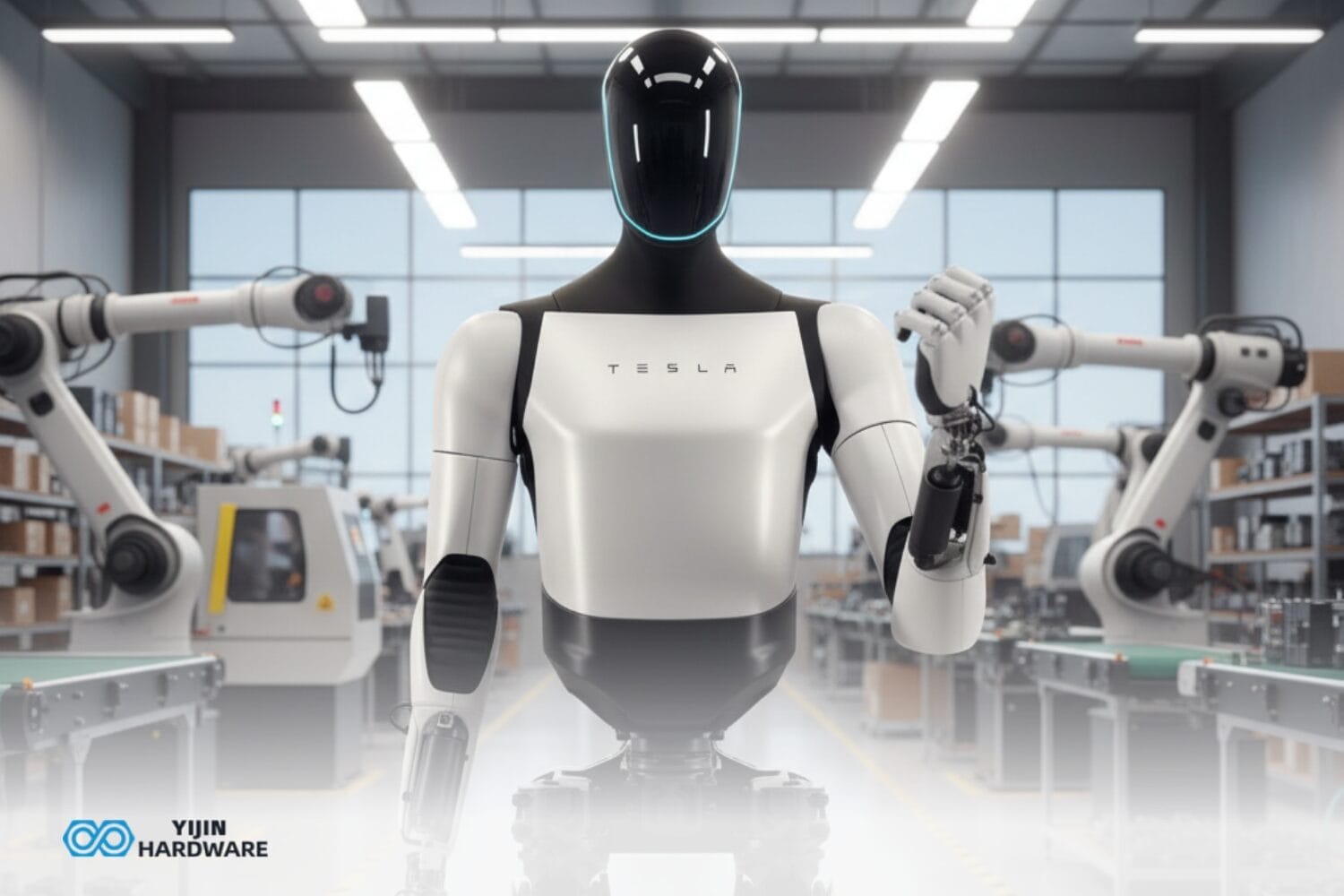


Building a humanoid robot means choosing materials that balance competing demands—strength without excessive weight, flexibility where needed, and durability to withstand constant use. The materials matter enormously.
This guide explores the key materials used in humanoid robots today, explaining why each one matters and how they contribute to creating robots that look, move, and interact in genuinely human-like ways. The right material choices separate clunky, limited robots from sophisticated machines that can navigate real-world environments effectively.
Key Takeaways
- Humanoid robots rely on advanced materials like carbon fiber, silicone, and PEEK that deliver lightweight strength and durability impossible with traditional materials
- PEEK (polyetheretherketone) handles high temperatures and mechanical stress, making it perfect for structural components and joints enduring constant movement
- Carbon fiber composites cut weight dramatically compared to metals whilst maintaining the strength and rigidity robotic frameworks require
- Silicone brings biocompatibility and flexibility to contact surfaces, making human-robot interaction safer and more natural
- The humanoid robot market is expanding rapidly, creating increasing demand for specialized materials that enable better performance in the robotics industry
What are the Key Materials Used in Humanoid Robots?
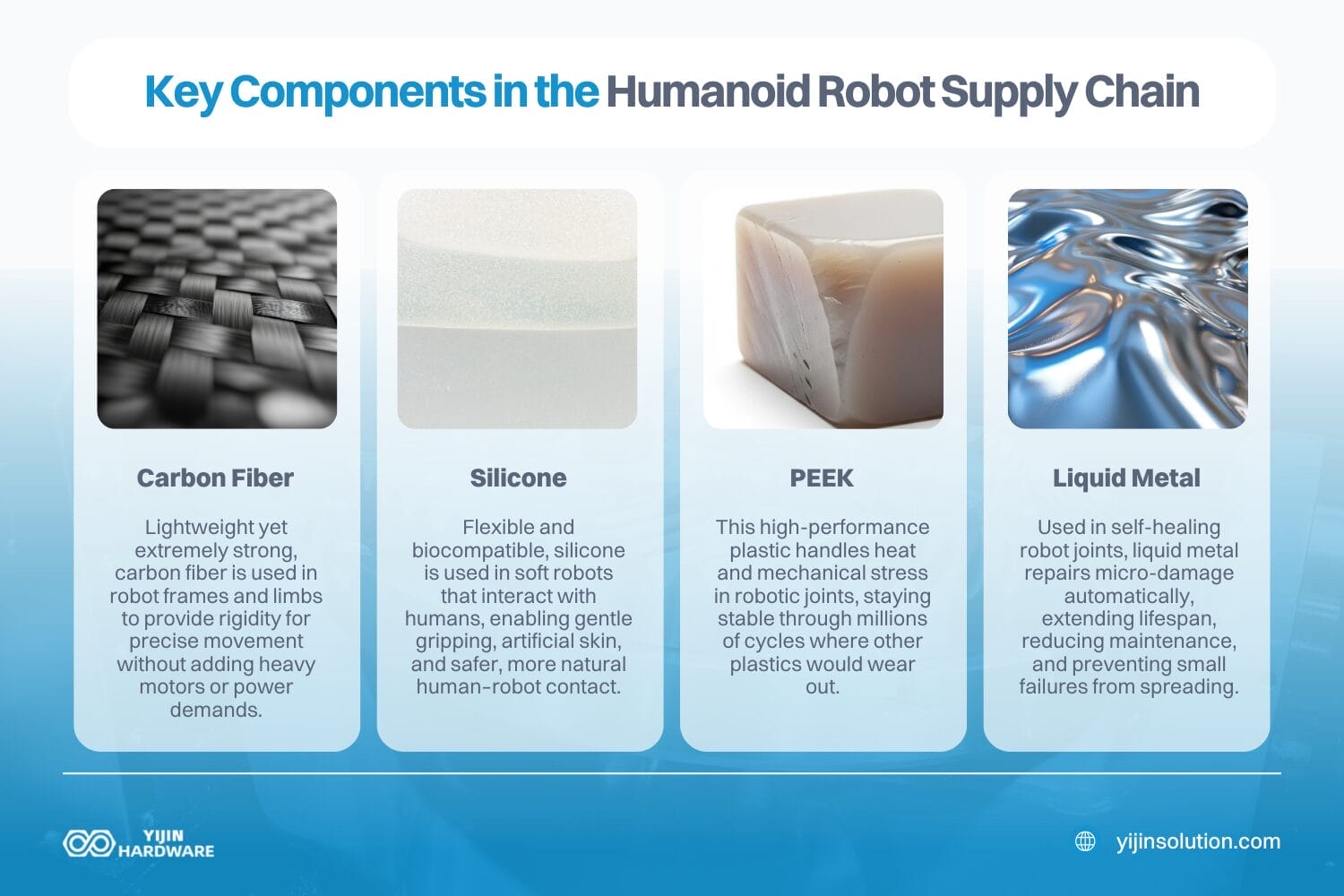
Materials for humanoid robots get selected based on specific mechanical properties and what the robot needs to accomplish. Here’s what actually goes into building humanoid robots that can move, interact, and function reliably:
- Carbon Fiber – This composite material delivers exceptional strength-to-weight ratio, which is why it shows up in robotic frames, limbs, and structural components. Carbon fiber provides the rigidity needed for precise movement whilst keeping overall weight down.
- Silicone – Valued for biocompatibility and flexibility, silicone gets used in soft robotics applications where the robot interacts with humans. Think hands that can grasp objects without damaging them, or artificial skin that feels less mechanical and threatening during human contact. Silicone allows robots to handle delicate tasks and interact more naturally with people.
- PEEK (Polyether Ether Ketone) – This high-performance plastic works in demanding applications like robotic joints and spine structures where components face high temperatures from friction and need exceptional durability. PEEK withstands mechanical stress that would degrade other plastics whilst maintaining dimensional stability.
- Liquid Metal – A breakthrough material enabling self-healing joints that extend robot longevity. When micro-damage occurs, liquid metal components can repair themselves, reducing maintenance needs and preventing catastrophic failures from propagating.
The combination of these materials lets humanoid robots mimic human movement patterns whilst maintaining durability and energy efficiency that wouldn’t be possible with traditional materials like steel and aluminum alone.
How does Carbon Fiber Improve Robot Performance Anyway?
Carbon fiber composite materials (CFRP) are among the best materials for humanoid robots due to their lightweight and high strength properties.
- Strength-to-weight ratio: CFRP is 79 times stronger than steel, making it perfect for robotic arms and other high-stress components. It helps reduce weight while ensuring strength, which is crucial for robot performance.
- Energy efficiency: The lightweight nature of carbon fiber results in reduced energy consumption, improving the robot’s overall efficiency.
- Durability: Carbon fiber is fatigue-resistant, meaning it can withstand repetitive movements, a key requirement for humanoid robots.
Thanks to its rigidity, carbon fiber helps robots move more agile while maintaining structural integrity.
What Role does Silicone Play in Humanoid Robot Design?
Silicone is a material that plays a crucial role in making robots human-like and safe for interaction with humans.
- Soft and flexible: Silicone provides a skin-like texture, which is essential for safe human-robot interaction. It’s often used for robot skins and hands, ensuring robots can interact safely with humans.
- Biocompatibility: Silicone is non-toxic, making it an ideal material for humanoid robots that need to mimic human touch without causing harm.
- Temperature resistance: It can withstand extreme temperatures, ensuring it holds up in different operational environments.
Silicone is often used in soft robotics where flexibility is key, enabling robots to interact naturally with their environment.
How does PEEK Improve the Functionality of Humanoid Robots?
Polyether Ether Ketone (PEEK) is a high-performance polymer that provides mechanical properties ideal for robotic joints and other high-stress components.
- Heat resistance: PEEK can withstand operation at temperatures up to 250°C in the short term, making it perfect for robotics where components face heat stress.
- Durability and fatigue resistance: PEEK is highly resistant to wear and tear, which makes it suitable for parts that undergo constant motion.
- Chemical resistance: It resists degradation from chemicals and environmental exposure, ensuring long-lasting performance.
PEEK’s dimensional stability and strength-to-weight properties make it an ideal choice for robot servo motor connectors and structural components.
How does Liquid Metal Improve Robot Performance?
Liquid metal is a cutting-edge material that offers self-healing properties, which is crucial for improving the longevity and functionality of humanoid robots.
- Self-healing: Liquid metal alloys, like GaInSnZn, can repair themselves when cracks form, increasing robot lifespan and reducing maintenance needs.
- Flexibility: It is ideal for joints and other areas where flexibility and strength are needed.
- Durability: Liquid metal provides increased ductility, making it resistant to wear and fatigue over time.
Incorporating liquid metal allows humanoid robots to be more agile while also increasing their durability in high-stress environments.
How is Titanium Used in Humanoid Robots?
Titanium is a critical material used in humanoid robots due to its high strength and low weight.
- Strength-to-weight: Titanium Ti-6Al-4V is used for high-stress joints, such as hip blocks and knee pivots, providing excellent strength while keeping weight to a minimum.
- Corrosion resistance: Titanium is resistant to corrosion, making it suitable for robots that operate in various environments.
- Fatigue resistance: Titanium ensures that the robot can undergo repeated movements without structural failure.
Thanks to titanium, humanoid robots can perform tasks that require both high strength and light weight, such as robotic arms and legs.
What is the Future of Materials in Humanoid Robots?
The future of materials used in humanoid robots lies in self-healing, AI-driven design, and bionic materials.
- Self-healing materials like liquid metal are becoming increasingly important as they reduce maintenance costs and improve robot durability.
- AI-driven material design will allow for more advanced polymers that adapt in real time, optimizing performance and energy efficiency.
- Bionic materials, such as materials that mimic human skin and muscle-like properties, will allow robots to become even more human-like in their appearance and functionality.
As the robotics industry progresses, the right materials will play a pivotal role in making humanoid robots more adaptive, resilient, and efficient. Barclays Research says the humanoid robot market, now $2-3 billion, could reach $200 billion by 2035 in best-case scenarios. Actuators make up about 50% of production costs.
How are Materials Selected for Humanoid Robots?
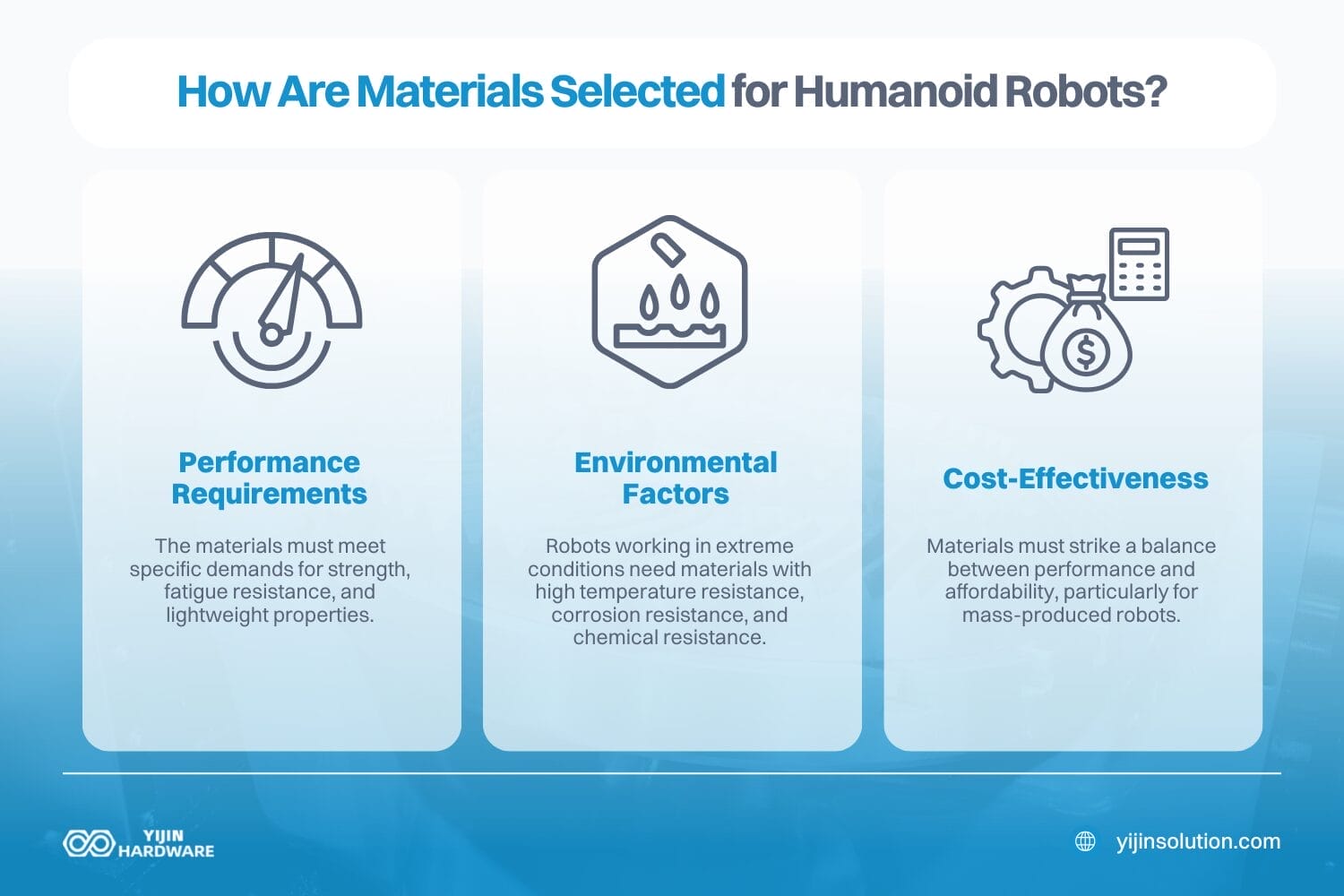
Selecting materials for humanoid robots involves considering factors such as performance, durability, and cost-effectiveness.
- Performance requirements: The materials must meet specific demands for strength, fatigue resistance, and lightweight properties.
- Environmental factors: Robots working in extreme conditions need materials with high temperature resistance, corrosion resistance, and chemical resistance.
- Cost-effectiveness: Materials must strike a balance between performance and affordability, particularly for mass-produced robots.
The right materials are selected to ensure that humanoid robots can function efficiently and cost-effectively while withstanding environmental stresses.
Building the Future of Humanoid Robots
Humanoid robot building materials are advancing rapidly, enabling robots to perform complex tasks with greater durability, flexibility, and human-like interaction. Materials like carbon fiber, silicone, and PEEK provide robots with the performance required for various tasks, while breakthroughs in liquid metal and self-healing materials promise to make them even more resilient.
As we continue to innovate and improve humanoid robot materials, the future holds exciting possibilities. With cutting-edge materials and the right engineering plastics, robots will continue to evolve into more agile, human-like machines, capable of operating in a variety of environments.
Ready to build the future? Contact us today to learn more about how our CNC machining services can help you develop humanoid robots with advanced materials.
Advanced Materials for Humanoid Robots FAQs
What are the 7 components of a robot?
The seven core components of a robot are the power supply, actuators, sensors, controllers, end effectors, structure, and software. These elements work together to enable the robot to perform tasks and interact with its environment.
How much silver is in a robot?
Silver is used mainly in electronic components like motors, connectors, and circuit boards. The amount is small, typically just a few grams per robot, chosen for its electrical conductivity in the robot’s wiring and circuits.
Why does AI need silver?
AI systems depend on silver for its excellent electrical conductivity, which allows for fast and efficient data transmission in microelectronics and processors. It plays a crucial role in AI components, enabling quicker decision-making and processing speeds in robots.
Back to Top: Advanced Materials for Humanoid Robots | Your Full Guide to the Latest Technology