
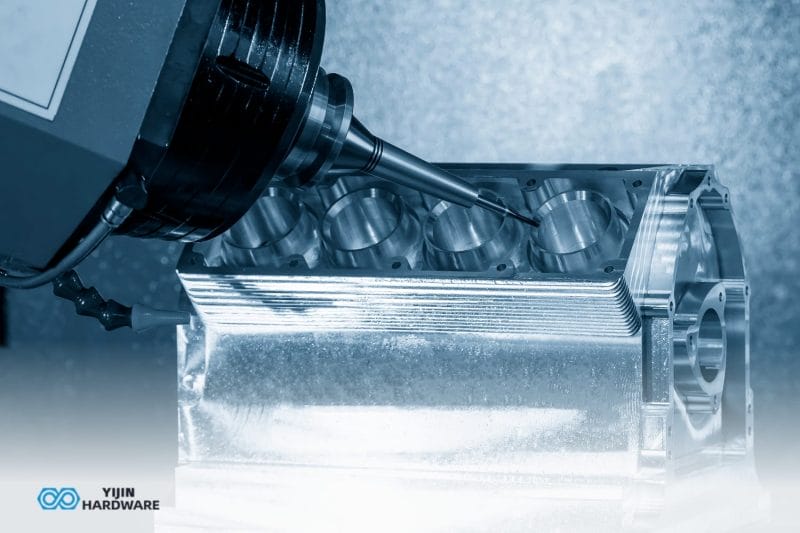
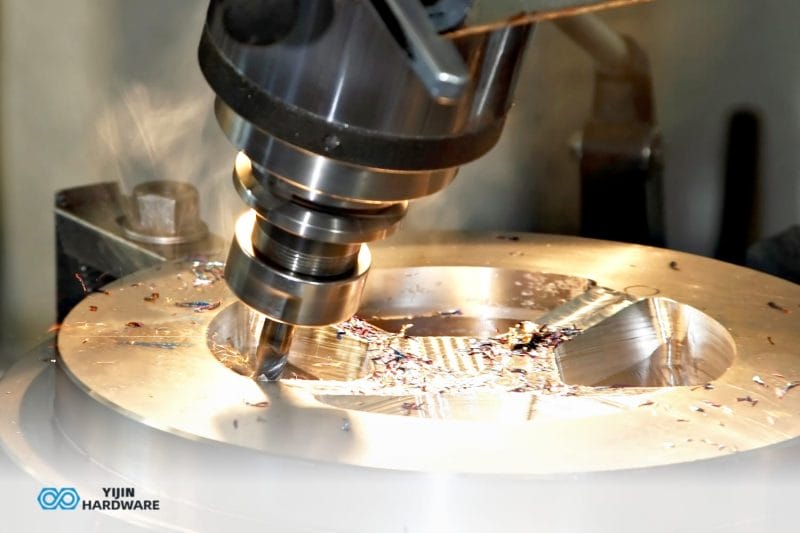


Precision metal cutting is a core manufacturing process across automoción, aeroespacial, construction, and electronics — any industry where custom metal components drive product performance. The process removes material from flat metal sheets using a range of techniques, each suited to specific materials, thicknesses, and tolerance requirements.
Selecting the right cutting method directly affects your part cost, cycle time, and edge quality. This guide covers every major precision metal cutting process — how it works, where it performs best, and the trade-offs that matter for your project.
Principales conclusiones
- Precision metal cutting converts flat stock into finished components for aerospace, automotive, medical, and construction applications
- Common methods include laser cutting, plasma cutting, waterjet cutting, and shearing
- Method selection determines your tolerance ceiling — laser holds ±0.1 mm, plasma holds ±0.5–1.5 mm, waterjet holds ±0.1–0.25 mm
- CNC technology has transformed sheet metal fabrication by dramatically improving both cutting speed and accuracy
- Understanding the different types of sheet metal cutting helps you select the right approach for your specific project requirements
What is Sheet Metal Cutting?

Sheet metal cutting is a metal cutting operation that creates parts and components by removing material from flat metal sheets. It’s a fundamental sheet metal working process for producing items used across countless industries, from electronics enclosures to automotive panels to HVAC ductwork.
The cutting process itself can be performed using various tools like shears, lasers, or plasma torches, depending on what you’re working with. The material type, sheet thickness, and required cutting technique all influence which method works best for your specific application.
What are the Different Types of Sheet Metal Cutting?
The types of sheet metal cutting methods depend on the application, material type, and desired outcome. Here’s an overview of the most commonly used cutting techniques:
| Método de corte | Ideal For | Gama de espesores | Tolerance (±) | Principales ventajas | Limitations |
|---|---|---|---|---|---|
| Cizalla | High-volume, straight cuts | 0.4–6 mm | 0.2–0.5 mm | Fast, cost-effective, minimal setup | Straight cuts only; higher edge distortion on thick sheet |
| Corte por láser | Intricate profiles in thin to medium metals | 0.5–25 mm | 0.1–0.3 mm | High precision, clean edges, minimal heat-affected zone | Higher equipment cost; slower above 20 mm |
| Corte por plasma | Thick structural and heavy-gauge metals | 1–80 mm | 0.5–1.5 mm | High cutting speed, handles heavy plate | Rougher edges; secondary finishing required for tight fits |
| Corte por chorro de agua | Heat-sensitive or multi-material applications | Up to 150 mm | 0.1–0.25 mm | No heat-affected zone, cuts composites | Slower than laser on thin sheet; higher operating cost |
| Doblado de metales | Forming angles and shapes post-cut | 0.5–12 mm | ±0.5° angle | Creates structural components without material removal | Forming only — not a material-removal cutting process |
Each sheet metal cutting method has specific advantages based on your project’s requirements. For example, laser cutting provides precise, clean edges for intricate designs, while plasma cutting is more suited for faster cuts in thicker materials.
Laser cutting handles mild steel, stainless steel, and aluminum up to 25 mm. Plasma cutting suits carbon steel, stainless steel, and aluminum up to 80 mm — non-conductive materials require waterjet. Waterjet is the correct specification for titanium, composites, and glass, where heat distortion is unacceptable. Shearing is limited to ductile metals — mild steel, aluminum, and copper — under 6 mm.
How does CNC Enhance Sheet Metal Cutting?
CNC (Computer Numerical Control) machines automate the sheet metal cutting process, enabling highly accurate and repeatable cuts. With CNC systems, the cutting tools are controlled by CAD (Computer-Aided Design) software, ensuring the highest level of precision. This technology reduces human error, minimizes waste, and improves cutting speed by optimizing tool paths and machine settings for each specific cut sheet metal project.
The CNC cutting machine uses cutting tools that can perform various operations such as laser cutting, plasma cutting, and punching operations, improving both the speed and precision of the cutting operation. CNC also helps in minimizing material wastage by optimizing the layout and cutting techniques.
At Yijin Solution, our 30 laser cutting machines deliver CNC-controlled cuts to ±0.1 mm with minimal heat-affected zones across steel, aluminum, and stainless.
How does the Shearing Process Work?
Shearing is one of the oldest and simplest sheet metal cutting methods used to cut sheets of metal into smaller, straight sections. The process involves the application of a shear force between two blades, which shears off the excess material, leaving behind the desired shape. While the shearing process is highly efficient and cost-effective, it’s best suited for large volumes and simple, straight-line cuts.
What is the Difference Between Laser and Plasma Cutting?
Both laser cutting and plasma cutting are popular methods for cutting sheet metal, but they differ in several key ways.
- Corte por láser uses a focused beam of light to melt or vaporize the material, offering precision sheet metal cuts with fine tolerances, making it ideal for intricate designs. Laser cutting is best for thinner materials and provides clean edges.
- Corte por plasma uses a high-speed jet of ionized gas to melt and blow away metal. It’s faster than laser cutting and works better on thicker materials, though the edges may need further processing. Plasma cutting is commonly used for cutting large metal sheets in construction or automotive manufacturing.
The choice between these two methods depends on the material, thickness, and precision required for your project.
What are the Main Sheet Metal Operations?

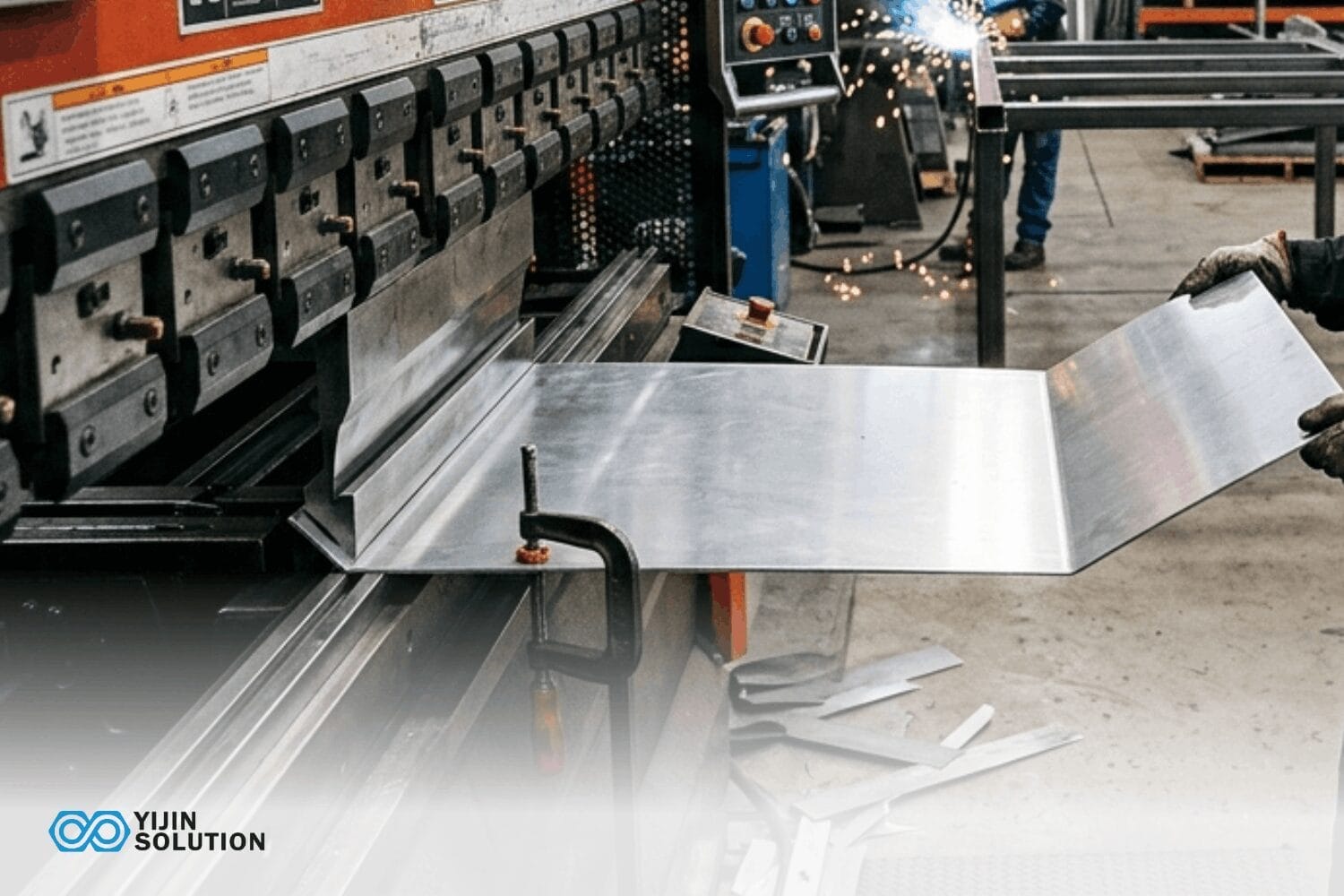
The sheet metal operations involved in metal sheet cutting include shearing, punching, laser cutting, and bending. These processes play a crucial role in transforming sheet metal stock into the desired shapes and sizes:
- Cizalla – Cuts sheets of metal into straight lines or simple shapes.
- Perforación – Creates holes or patterns in the metal part using a punch and die.
- Corte por láser – Ideal for high-precision cuts on thin to medium-thickness metals.
- Corte por plasma – Suitable for cutting thicker materials at faster speeds.
- Doblado de metales – Forms metal into specific shapes and angles.
Each operation contributes to sheet metal fabrication by shaping the material to fit into larger assemblies.
The latest Estadísticas show that the sheet metal cutting and fabrication business was worth about 21 billion dollars in 2024. It is expected to grow steadily and reach around 33 billion dollars by 2034.
How do CNC Machines Impact Sheet Metal Cutting?
CNC machines play a critical role in improving sheet metal processing efficiency and accuracy. With CNC laser cutting and plasma cutting systems, metal can be cut with high precision, which is especially important for industries like aerospace or automotive manufacturing. CNC machines are equipped to handle complex designs and shapes, offering repeatable, high-quality cuts without the need for manual intervention.
The automation and programming capabilities of CNC machines ensure that cut sheet metal parts are produced to the exact specifications, reducing errors and increasing production speed.
How Can You Minimize Waste During Sheet Metal Cutting?
Minimizing material waste in sheet metal cutting is crucial to reducing costs and increasing efficiency. Some methods, like laser cutting and waterjet cutting, produce minimal waste due to their high precision. By using nesting software to optimize the placement of parts on the metal sheet, manufacturers can reduce unused space and maximize material usage.
Moreover, using the right cutting tool and maintaining consistent cutting parameters ensures that the cutting process is as efficient as possible, further reducing waste.
What is the Role of Punching in Sheet Metal Fabrication?
Punching is used to create holes or specific shapes in sheet metal using a punch and die mechanism. This process is commonly employed in high-volume production, especially when making repeated patterns like ventilation holes or mounting brackets. Punching operations are ideal for mass production and can handle a variety of metal thicknesses, depending on the cutting tool used.
How do Cutting Methods Impact Material Waste?
The method you choose for cutting metal sheets plays a significant role in the amount of waste generated. Laser cutting offers superior precision, resulting in minimal scrap material, especially when cutting intricate parts. Conversely, shearing operations can generate more scrap, especially when cutting large pieces of metal into smaller ones.
Using metal cutting operations that maximize material usage, like waterjet cutting and laser cutting, helps ensure minimal waste and cost-effective production.
Yijin Solution: Top Sheet Metal Cutting Services
The sheet metal cutting process is a highly technical and specialized operation that is critical to manufacturing in various industries. Choosing the right cutting method, whether it’s laser cutting, plasma cutting, or shearing, directly affects your project’s cost, speed, and precision. By understanding the different types of sheet metal cutting and how each method works, you can optimize your production and achieve high-quality results.
At Yijin Solution, we specialize in laser cutting, plasma cutting, and sheet metal bending, ensuring precision and efficiency for all your sheet metal needs. Get a free DFM review and quote for your sheet metal project.
Sheet Metal Cutting FAQs
How to properly cut sheet metal?
To properly cut sheet metal, choose the right cutting tool based on the material and thickness. Secure the sheet metal, set the appropriate cutting speed, and ensure the machine is calibrated correctly to achieve clean, precise cuts.
Can you use WD-40 to cut metal?
WD-40 is not typically used as a cutting fluid for metal cutting operations. It may provide some lubrication, but for better results, use specialized cutting oils or fluids designed for the shearing process or laser cutting.
What is the process of trimming sheet metal?
Trimming involves cutting off excess material from the edges of sheet metal parts after the main cutting operation. This can be done with CNC press brakes or manual tools to achieve smooth, finished edges.
Volver arriba: Sheet Metal Cutting | Your Full Guide to Precision & Efficiency






 English
  Spanish
  German
  French