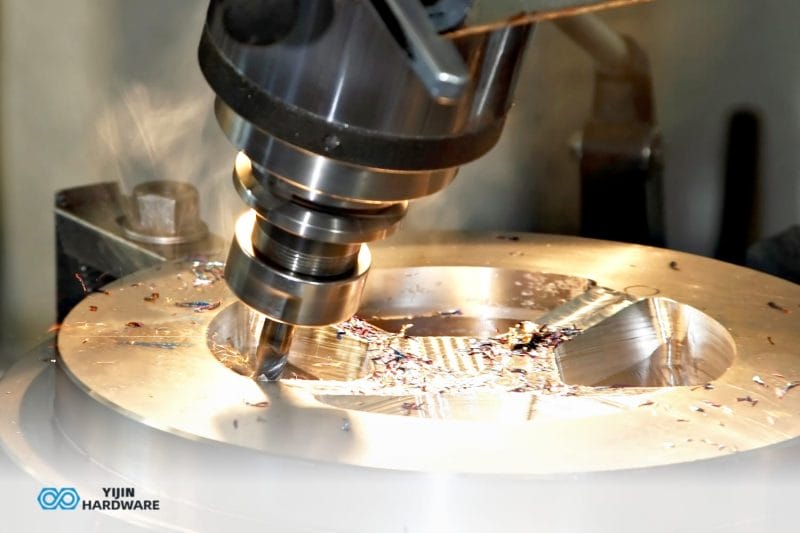
Passivation Services
Corrosion-resistant finishing for stainless steel and alloys. Our passivation service removes free iron and surface contaminants left after machining or fabrication, restoring the chromium oxide layer that protects parts in service.
- Citric acid and nitric acid passivation methods available
- In-house finishing planned into the part from the quote stage forward
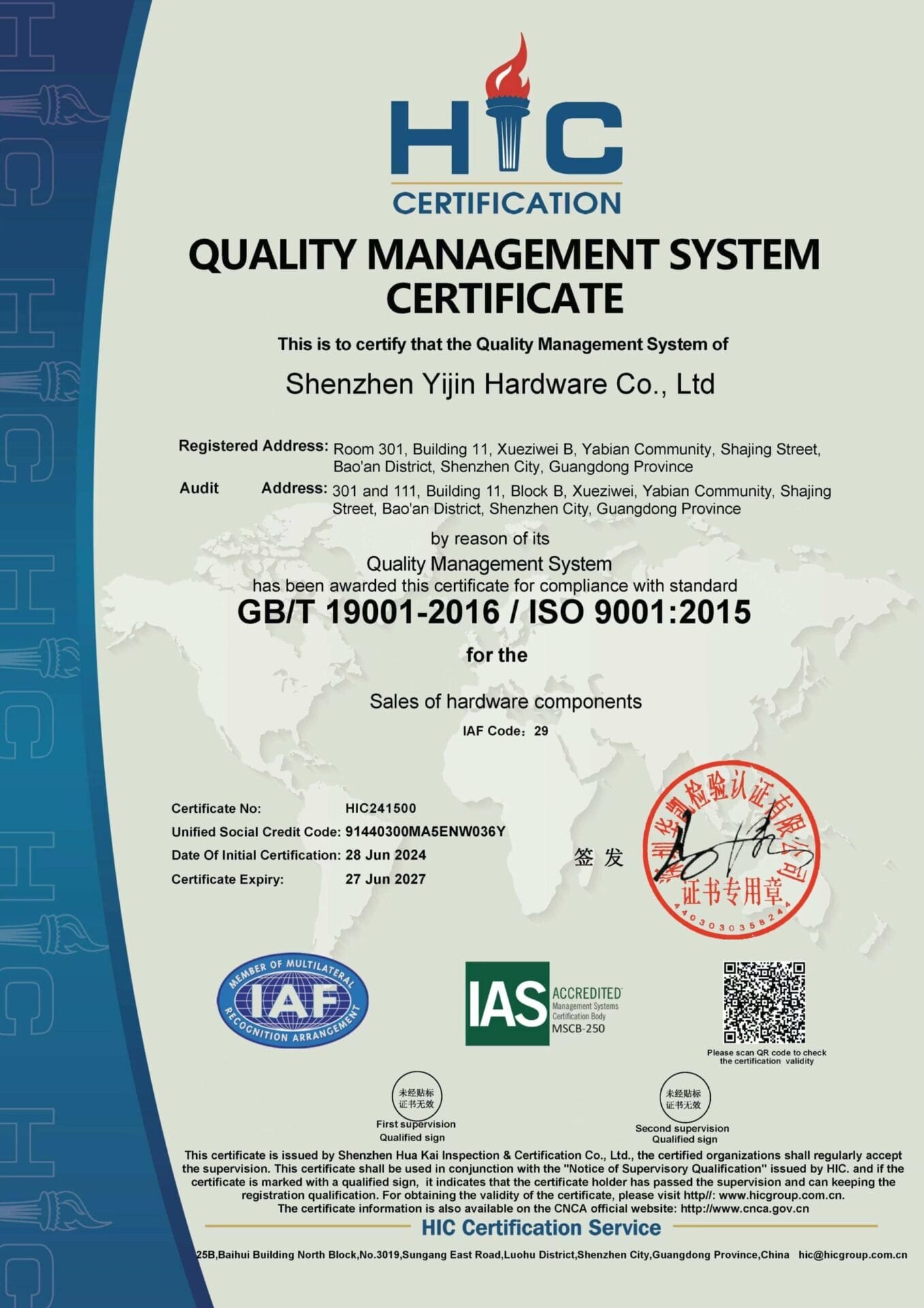
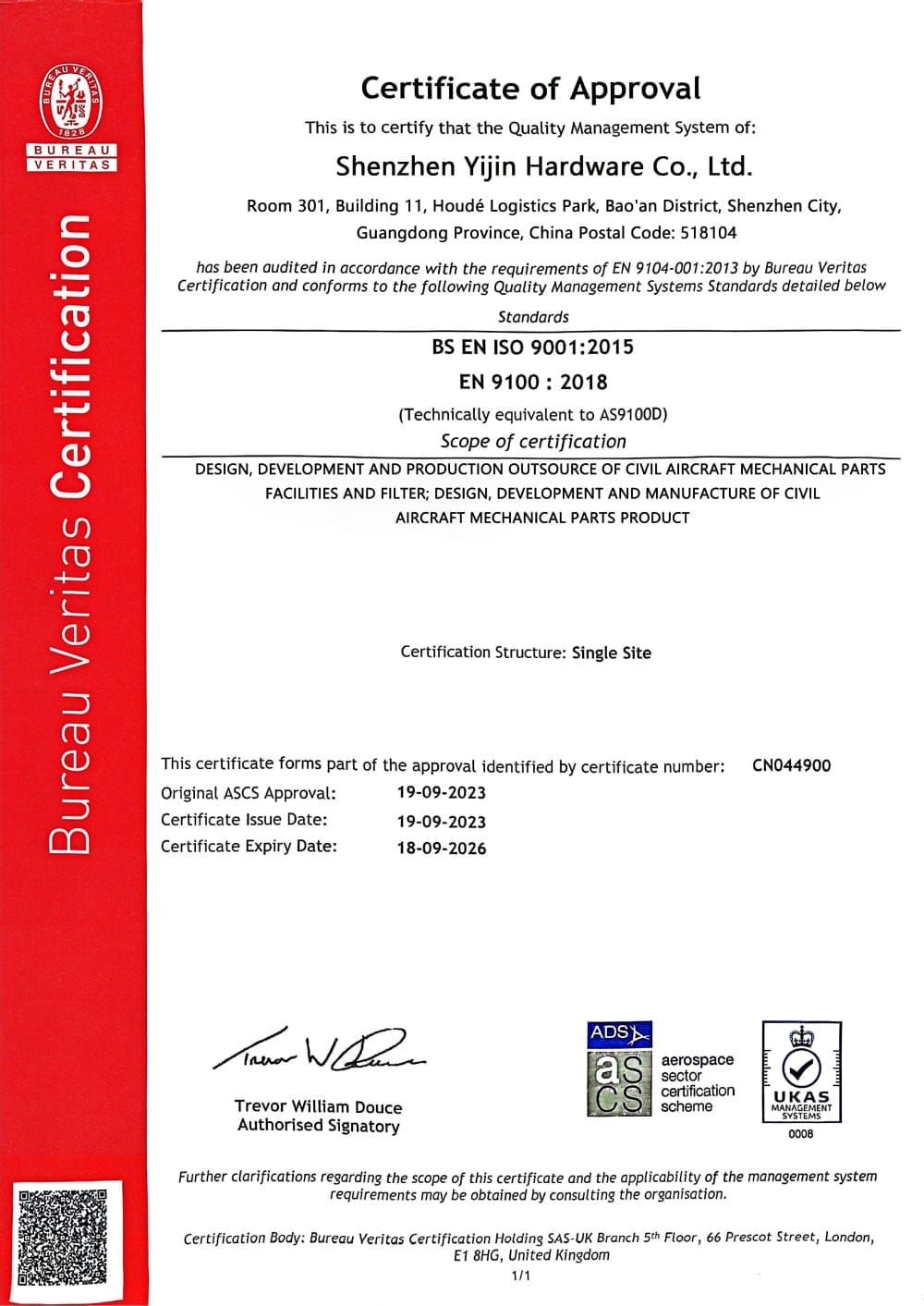
- Certificación ISO 9001
Join 3000+ companies who work with Yijin Solution


Passivation with Yijin Solution
Yijin Solution applies passivation in-house on the parts we manufacture, so corrosion protection is built into the production schedule rather than arranged separately. Parts move directly from machining, fabrication, or welding into passivation with no third-party handoffs and a single point of accountability from raw material to finished part.
We offer citric acid and nitric acid passivation for 300-series and 400-series stainless steel, precipitation-hardened grades, duplex stainless steel, and selected nickel and titanium alloys. The method and bath chemistry are matched to the alloy and the applicable standard – ASTM A967, AMS 2700, or customer specification – confirmed at the DFM review stage. Verification testing, including copper sulfate, high-humidity, and salt spray, is available to confirm passive layer formation before shipment.
Passivation Capabilities
The table below summarizes our passivation specifications, confirmed against the applicable industry standard at the quote stage.
| Parámetro | Especificación |
|---|---|
| Passivation methods | Citric acid, nitric acid |
| Compatible alloys | 300-series stainless steel, 400-series stainless steel, 17-4 PH, duplex stainless steel. Inconel and titanium subject to confirmation. |
| Tolerance impact | No material removal. No dimensional change. |
| Verification testing | Copper sulfate, high-humidity, or salt spray testing. Test method confirmed at quote stage based on part requirements. |
Citric Acid Versus Nitric Acid Passivation
Both citric acid and nitric acid passivation restore the chromium oxide layer on stainless steel. The choice between them depends on the alloy, the application, and the applicable specification.
| Factor | Citric Acid | Nitric Acid |
|---|---|---|
| Resistencia a la corrosión | Comparable to nitric for most 300-series alloys | Established baseline |
| Environmental profile | Lower toxicity, easier waste treatment | Requires neutralization and hazardous waste handling |
| Alloy compatibility | Suitable for most stainless steel grades | Wider range, including free-machining grades with sulfur content |
| Processing temperature | Typically, room temperature to 60°C | Typically, room temperature to 55°C |
| Industry preference | Medical devices, food processing, and pharmaceutical | Aerospace, defense, legacy specifications |
Citric acid passivation suits medical, food, and pharmaceutical work that prioritizes lower toxicity and simpler waste handling. Nitric acid passivation applies to aerospace, defense, and legacy specifications that name a nitric method.


Níquel
Corrosion resistance and wear resistance. Versatile across most substrates and commonly used as an underlayer for chrome or gold.

Chrome
Hard chrome for wear surfaces such as hydraulic cylinders and valve bodies; decorative chrome for cosmetic applications including consumer hardware and automotive trim.

Zinc
Cost-effective corrosion protection for steel parts, often paired with chromate or trivalent passivation.

Zinc-Nickel
High-performance corrosion protection for aerospace fasteners and structural fittings, and the modern replacement for cadmium plating.

Gold
Electrical conductivity and contact reliability for connectors, semiconductor components, and aerospace electronics.

Cobre
Undercoat for adhesion and uniformity, or standalone for EMI shielding and electrical conductivity.

Tin
Solderability and corrosion resistance for electronic component leads and food-contact hardware.

Silver
High electrical and thermal conductivity for specialized electronic and aerospace applications.
Materials We Passivate
Passivation works across austenitic, martensitic, precipitation-hardened, and duplex stainless grades, plus selected nickel and titanium alloys. The bath chemistry and method are matched to the alloy rather than applied uniformly.
300-Series Stainless Steel (304, 316, 316L)
Standard passivation restores the chromium oxide layer after machining. This is the most common substrate for passivation.
400-Series Stainless Steel (410, 416, 440C)
Passivation improves corrosion resistance on these grades, which have lower chromium content and inherently less corrosion resistance than 300-series alloys.
Precipitation-Hardened Stainless (17-4 PH, 15-5 PH)
Passivation after heat treatment and machining. Common in aerospace and medical applications.
Duplex Stainless Steel (2205, 2507)
Passivation restores corrosion resistance after welding or machining in demanding chemical or marine environments.
Nickel Alloys (Inconel 625, Inconel 718, Hastelloy)
Passivation removes iron contamination introduced by machining tools and fixtures. Scope subject to confirmation.
Aleaciones de titanio
Passivation per ASTM B600 or customer specification. Scope subject to confirmation.
Our Passivation Process
Our passivation workflow runs in eight stages, from quote through shipment. For integrated orders, passivation follows directly from part manufacturing, so it adds no separate finishing queue.
- Quote and DFM review on uploaded CAD files. Passivation method, alloy grade, and applicable standard are confirmed at this stage.
- Part manufacturing (machining, sheet metal fabrication, or welding) if ordered as an integrated service.
- Pre-cleaning. Degreasing and removal of machining oils, coolant residues, and surface contaminants that would interfere with passivation.
- Passivation. Immersion in citric or nitric acid bath at controlled concentration, temperature, and duration per the applicable standard.
- Rinsing. Thorough water rinse to remove all acid residue.
- Verification testing. Copper sulfate, high-humidity, or salt spray testing to confirm the passive layer is formed. The test method is confirmed at quote stage based on part requirements.
- Inspection, drying, and packaging.
- Shipment from Shenzhen or Florida facility.
Industries and Applications
Passivation supports parts across regulated and corrosion-exposed sectors. The list below outlines the most common applications and what passivation contributes to each.
Surgical instruments, instrument components, and device housings machined from 316L or 17-4 PH stainless steel. Passivation supports cleanability, reduces ion leaching, and meets the corrosion-resistance requirements for patient-contact surfaces.
Structural fittings, fasteners, and hydraulic components in stainless steel and nickel alloys. Passivation per customer specification.
Processing equipment components, fittings, and valves in 304 and 316 stainless steel. Passivation prevents product contamination and meets sanitary surface requirements.
Ultra-clean gas delivery components and chamber parts. Passivation removes iron contamination that can cause particle shedding in cleanroom environments.
Exhaust system components, fuel system parts, and sensor housings in stainless steel. Passivation extends service life in corrosive operating environments.
Valve bodies, pump components, and piping fittings in duplex stainless and nickel alloys for oil and gas, chemical processing, and power generation applications.
Why Choose Yijin Solution for Passivation
Passivation outcomes depend on how well finishing is coordinated with the upstream manufacturing steps. The points below explain how we manage that coordination.

In-house passivation runs alongside our CNC machining, fabricación de chapa metálica, and welding. No third-party handoffs, shorter lead times, and a single point of accountability from raw material to finished part.

Nuestra free DFM review at the quotation stage identifies passivation-related design risks early, supporting better corrosion resistance and surface uniformity before production begins.

Citric acid and nitric acid passivation processes available, supporting corrosion-resistance requirements for stainless steel components across medical, aerospace, food-processing, and industrial applications.

ISO 9001 certified quality management system, with Zeiss CMM inspection available for dimensional verification before and after finishing. Dual-location support with Shenzhen production and Florida operations for North American customers.
Gallery of Passivated Parts
Passivated parts produced across medical, aerospace, food and beverage, semiconductor, automotive, and energy applications.
FAQs on Passivation Services
These answers cover the questions buyers raise most often at the quote stage. For anything specific to your part, our engineering team can confirm details on request.
Does passivation change part dimensions?
No. Passivation is a chemical treatment that removes free iron from the surface without removing base material. There is no measurable dimensional change to the part.
How much does passivation cost?
Passivation cost depends on part volume, alloy, and the verification testing required. We quote it within the overall part quote rather than as a separate line item, so the cost stays predictable across the order. Send your part details for a firm figure.
Is there a minimum order quantity for passivation?
Minimum order quantity depends on part size and bath setup rather than a fixed unit count. Prototype and low-volume runs are accepted alongside production orders. Confirm your quantity at the quote stage.
What is the difference between passivation and electropolishing?
Passivation restores the chromium oxide layer without removing material or changing the surface finish. Electropolishing removes a thin layer of material to smooth the surface and improves corrosion resistance at the same time. Contact our engineering team to determine which process fits your requirements.
Can you passivate parts for medical device applications?
Yes. We provide passivation for surgical instruments, device housings, and implant-grade components machined from 316L and 17-4 PH stainless steel under our ISO 9001 quality system. Confirm ISO 13485 coverage for finishing scope with our engineering team at the quote stage.
What is the typical lead time for passivated machined parts?
Lead time depends on order volume, part complexity, and the finishing schedule. For most orders, passivation runs in parallel with the manufacturing schedule rather than adding a separate finishing queue. Confirm the timeline with our engineering team at the quote stage.
Do you offer passivation as a standalone service, or only with manufacturing orders?
Passivation is an add-on finishing service. You choose whether to apply it to your finished parts based on project needs. We run it alongside machining, fabrication, and welding orders.

How to Find a Manufacturer in China: A Buyer’s Vetting Checklist
Finding a CNC machining manufacturer in China is not hard. Finding the right one is hard. A quick search will

What is Passivation of Stainless Steel?
Stainless steel can still rust if its surface is not clean enough. During machining, grinding, tumbling, or handling, small iron

What is Bead Blasting?
Engineers often need a part that looks clean and even, without the shine or tool marks left by machining. Which
Request a Passivation Quote
Passivation extends the service life of stainless steel parts by restoring the chromium oxide layer after machining, fabrication, or welding. Yijin Solution provides passivation as part of our in-house finishing, so corrosion protection is planned and verified alongside the part.