
Услуги по 3D-печати на металле
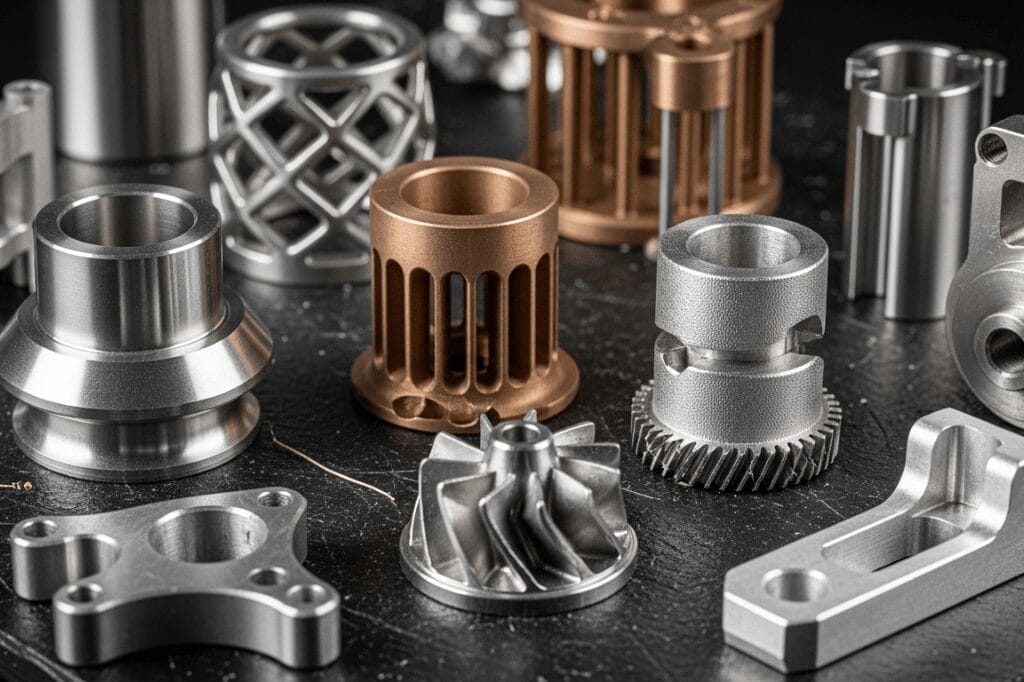
Metal 3D printing builds complex components one layer at a time straight from your CAD files, creating shapes and internal structures that traditional machining just can’t do. We use Direct Metal Laser Sintering (DMLS) and Binder Jetting to print parts in aluminum, stainless steel, titanium, and Inconel alloys with consistent strength in all directions.
The best part? No tooling costs for our metal printing services. You can design topology-optimized structures that turn what used to be multipart assemblies into single, lighter 3D printed parts.
- ⬤Сервис
- ⬤Ваши данные
- ⬤Отправить


What is Metal 3D Printing and How does it Work?
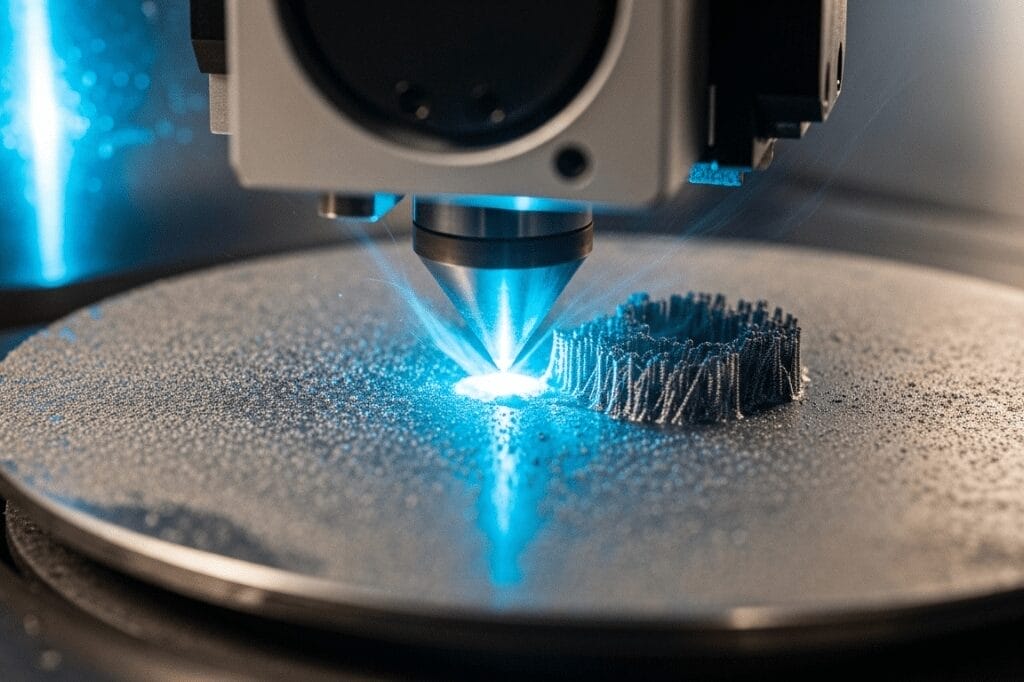
Metal additive manufacturing uses powder bed fusion or binder jetting metal processes to build parts by selectively melting or binding fine metal powder layer by layer. DMLS and Selective Laser Melting (SLM) direct high-powered lasers onto metal powder beds, fusing metal particles at temperatures exceeding 1400 °C. Binder Jetting deposits liquid binding agent onto each layer of powder, then sinters parts in furnaces at 1100-1300 °C.
В отличие от Обработка на станках с ЧПУ, which removes материал, this additive manufacturing process builds near-net-shape parts with minimal waste and no tooling. Metal 3D-printed parts exhibit isotropic strength, equal mechanical properties in all directions, superior to cast components showing directional weaknesses.
Primary Technologies and Materials
- Laser Powder Bed Fusion (LPBF): Uses fiber lasers at 200-400 W power to selectively melt metal powder in 20-60 μm layers with ±0.1 mm tolerance.
- Electron Beam Melting (EBM): Employs electron beam in vacuum for faster build rates with titanium alloys and reduced residual stress.
- Direct Energy Deposition (DED): Combines welding with additive manufacturing for large-scale repairs and mixed-material applications.
- Струйная обработка связующего: Deposits binding agent onto powder bed, followed by furnace sintering for cost-effective production.

Our Metal 3D Printing Services: DMLS and Binder Jetting
We provide DMLS for аэрокосмическая промышленность-grade functional parts requiring full density and Binder Jetting for functional metal prototypes and production parts. DMLS uses a fiber laser to melt metal powder in 20-60 μm layers, achieving ±0.1 mm dimensional accuracy and Ra 6-10 μm surface roughness. Our stainless steel 3D printing service binds 420 stainless powder with bronze infiltration.
DMLS Material Specifications
| Материал | Прочность на разрыв | Предел текучести | Приложения |
|---|---|---|---|
| AlSi10Mg | 460 МПа | 270 MPa | Aerospace heat exchangers |
| Ti6Al4V | 1170 MPa | 1100 МПа | Medical implants, high-performance parts |
| 316L Stainless | 640 MPa | 580 MPa | Corrosion resistance applications |
| Нержавеющая сталь 17-4 PH | 1310 MPa | 1240 МПа | High-strength aerospace fittings |
Additional Material Options
- Инконель 718: Nickel-chromium superalloy for high-temperature end-use parts up to 700 °C with excellent toughness.
- Cobalt Chrome: Biocompatible metal alloys for medical implants with superior wear resistance.
- Maraging Steel: Tool steel achieving 2000 MPa high tensile strength after age hardening for injection mold inserts.
- Инструментальная сталь: H13 hot work steel for dies requiring thermal fatigue resistance.
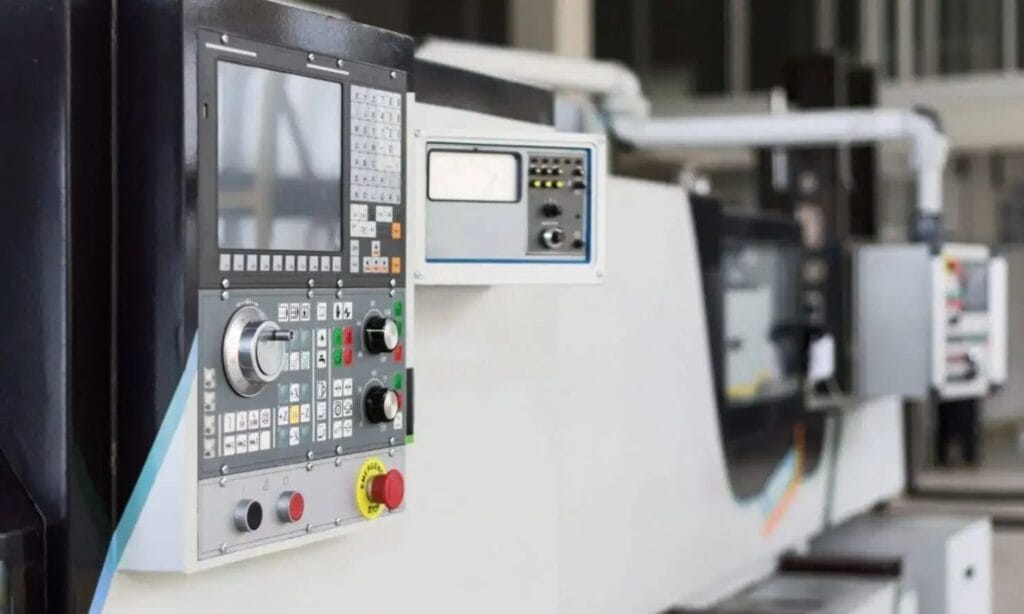
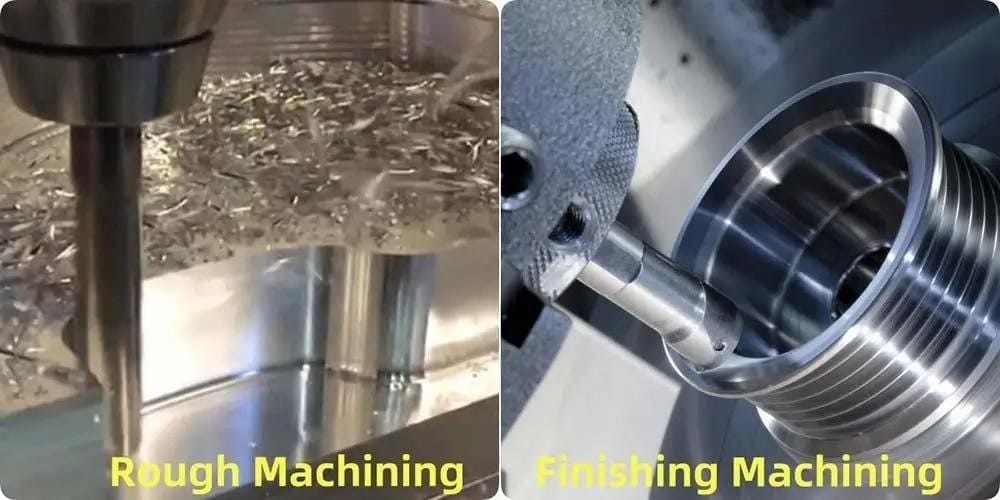
We integrate metal printing with CNC machining for hybrid manufacturing—printing complex internal features then machining critical surfaces to ±0.01 mm.
How do DMLS and Binder Jetting Compare for Your Application?
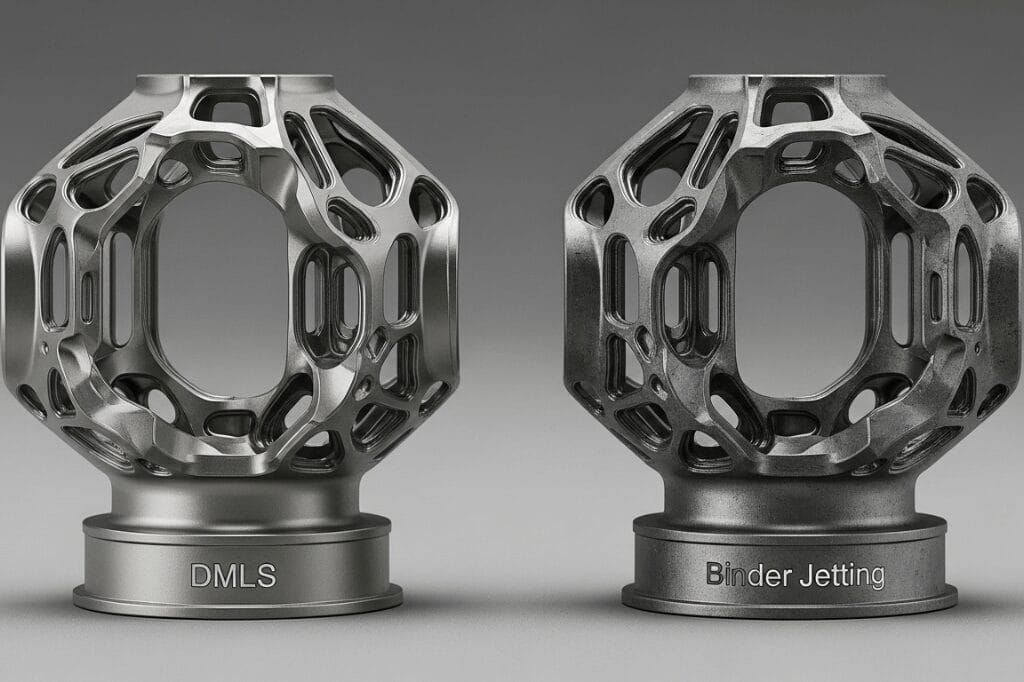
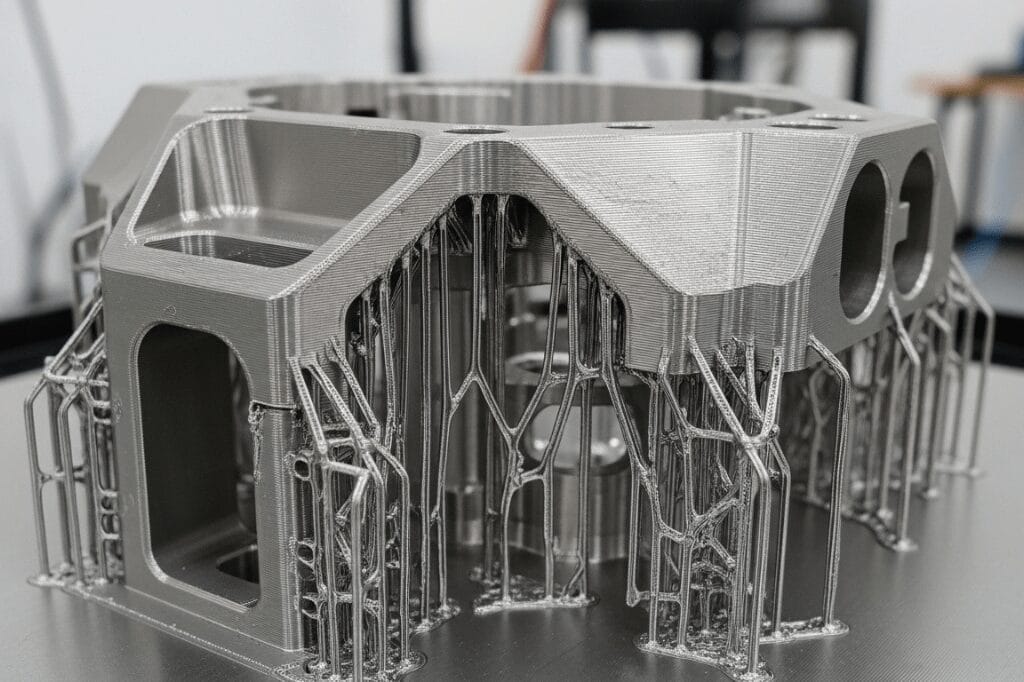
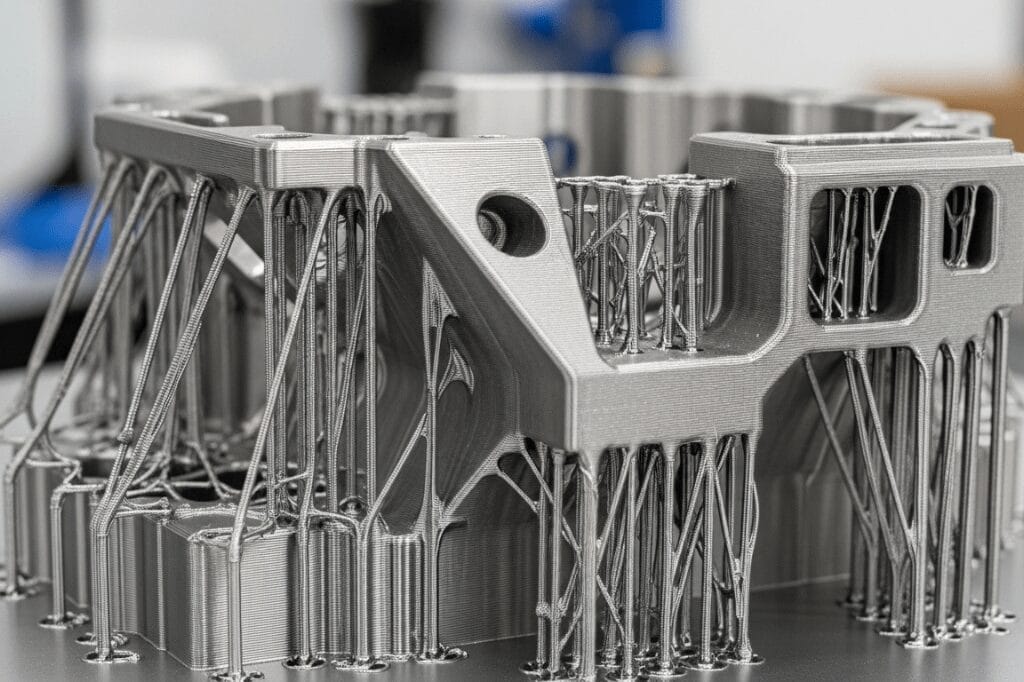
DMLS produces fully dense parts with superior strength and durability for structural aerospace applications, while binder jetting metal achieves lower cost for metal prototypes and production parts. DMLS requires support structures for overhangs exceeding 45° from vertical, needing wire EDM removal. Binder Jetting self-supports overhangs in loose powder, eliminating support removal but introducing shrinkage requiring CAD compensation.
Process Selection Framework
Choose DMLS when:
- Parts require hermetic sealing
- AS9100D aerospace certification needed
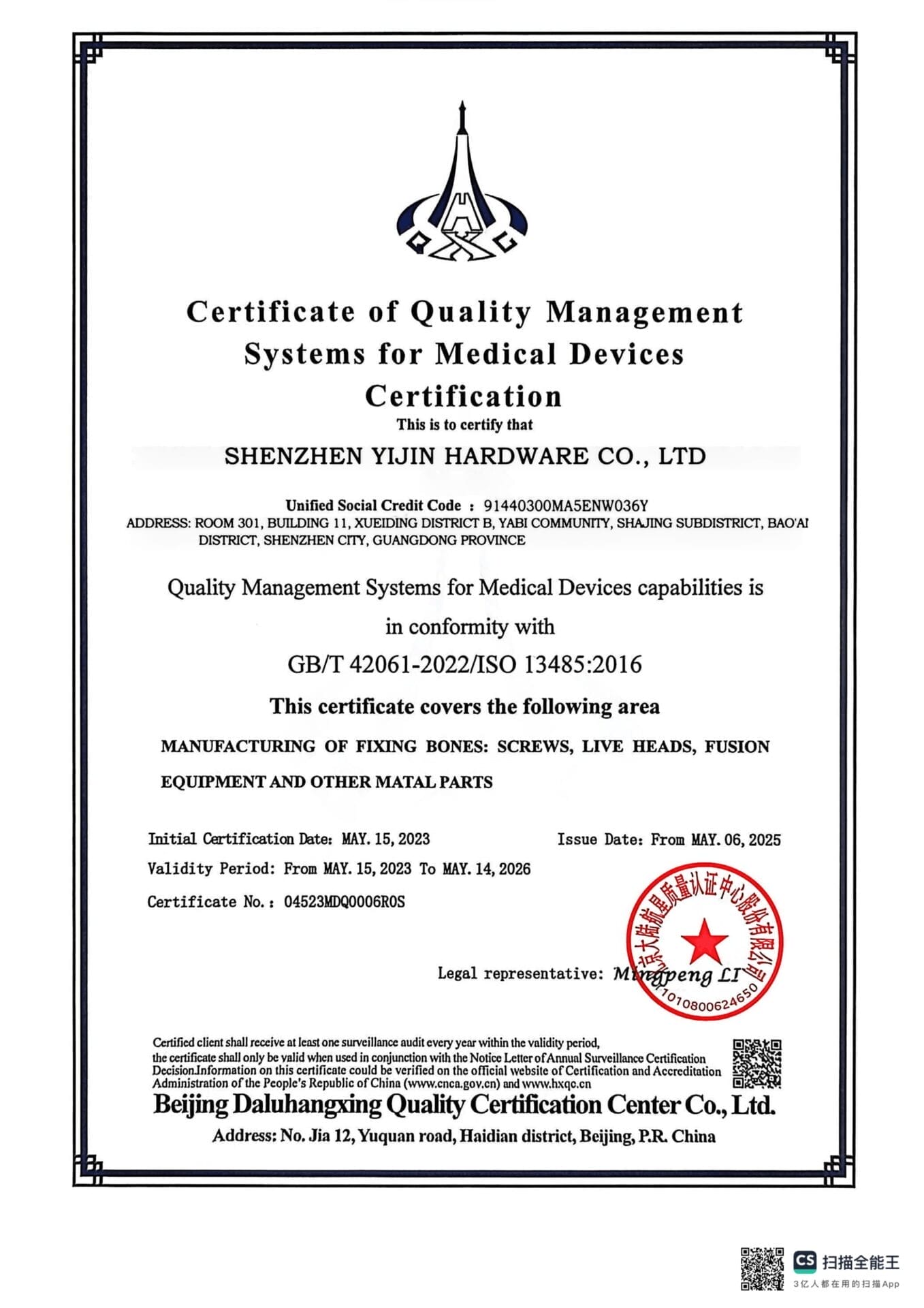
- Медицинские изделия need ISO 13485 compliance
- Structural components face fatigue loading
Choose Binder Jetting when:
- Production quantities exceed 20 units
- Complex geometries with multiple overhangs
- Industrial 3D tooling applications
- Functional parts for design validation
DMLS scan speeds reach 1200 mm/s with 60 μm layers, versus Binder Jetting at 100 mm/s print speed with 50 μm layers.
What Industries and Applications Use Metal 3D Printing?
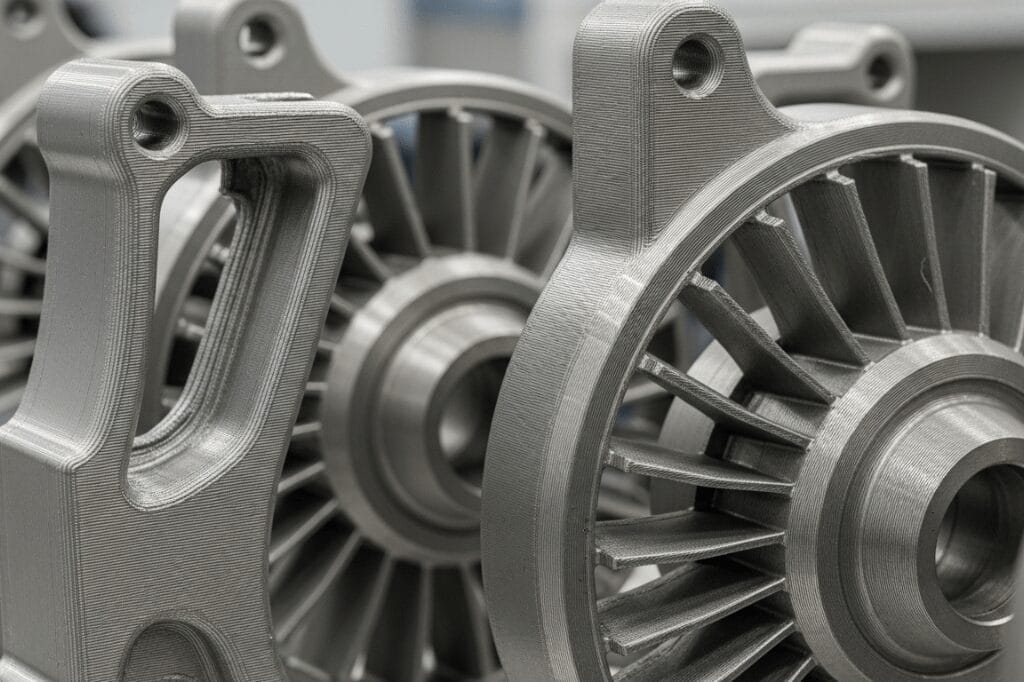
Metal 3D printers serve aerospace, автомобильный, medical device, and power generation industries requiring custom parts, weight reduction, and rapid prototype development. Aerospace companies produce turbine blades, aluminum heat exchangers, and Inconel 718 fuel nozzles through topology optimization. Automotive manufacturers create exhaust manifolds, engine mounts, and restoration parts.
Industry-Specific Applications of Metal 3D Printing
Aerospace Applications:
- Turbine blades with internal cooling channels
- Fuel nozzles with complex spray patterns
- Lightweight structural brackets
- Heat exchangers with good thermal properties
Medical Device Applications:
- Patient-specific titanium hip implants
- Dental prosthetics and surgical guides
- Porous structures encouraging bone ingrowth
Industrial Tooling:
- Conformal cooling for injection molds
- Custom jigs and fixtures
- Wear-resistant dies
- Cutting inserts with chip breaker geometries
Выработка электроэнергии:
- Turbine components for thermal efficiency
- Pressure vessels with integrated features
The 3D printing process consolidates multi-piece assemblies into single metal part designs, eliminating fastener failures. Lattice structures maintain stiffness while reducing weight.
What Design Considerations Apply to Metal 3D Printing?
Creating metal components requires minimum wall thickness 0.4 to 0.8 mm, depending on material. DMLS self-supporting angles reach 45° from horizontal, while shallower overhangs need removable supports. Design for Additive Manufacturing enables topology optimization, reducing part weight through organic lattice geometries.
Критические параметры конструкции
Geometric Constraints:
- Minimum hole diameter: 0.5 mm for powder evacuation
- Fillet radius: 0.5 mm minimum for stress reduction
- Support angle: 45° threshold for self-supporting features
- Powder escape holes: 3-5 mm diameter
Точность размеров:
- DMLS: ±0.1 mm standard, ±0.05 mm with post-processing
- Binder Jetting shrinkage: 1-2% requiring compensation
- Surface roughness: Ra 6-10 μm DMLS, Ra 10-15 μm Binder Jetting
Orient parts to minimize supports. Combine assemblies to eliminate fasteners. Specify heat treatment for optimal strength and hardness. Plan surface finish requirements, machined critical faces, as-built non-critical surfaces.
What Quality Standards Govern Metal 3D Printing?
We follow ASTM F3303 for qualification of metal additive manufacturing technology machines, establishing Installation Qualification (IQ), Operational Qualification (OQ), and Performance Qualification (PQ) protocols. Parts undergo coordinate measuring machine (CMM) inspection. Material certification includes mill test reports per ASTM E1479 and tensile testing per ASTM E8.
Сертификация и соответствие
Управление качеством:
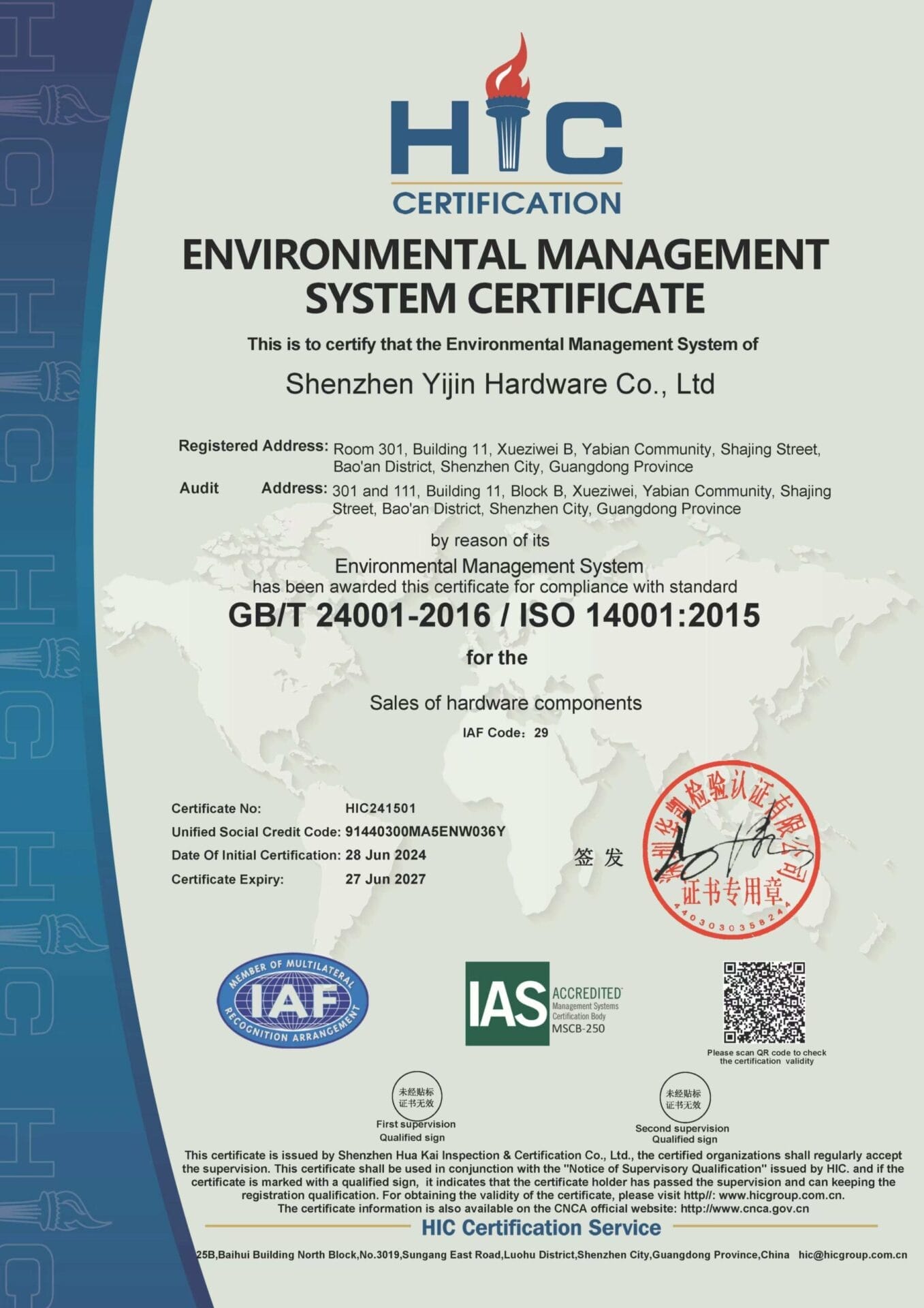
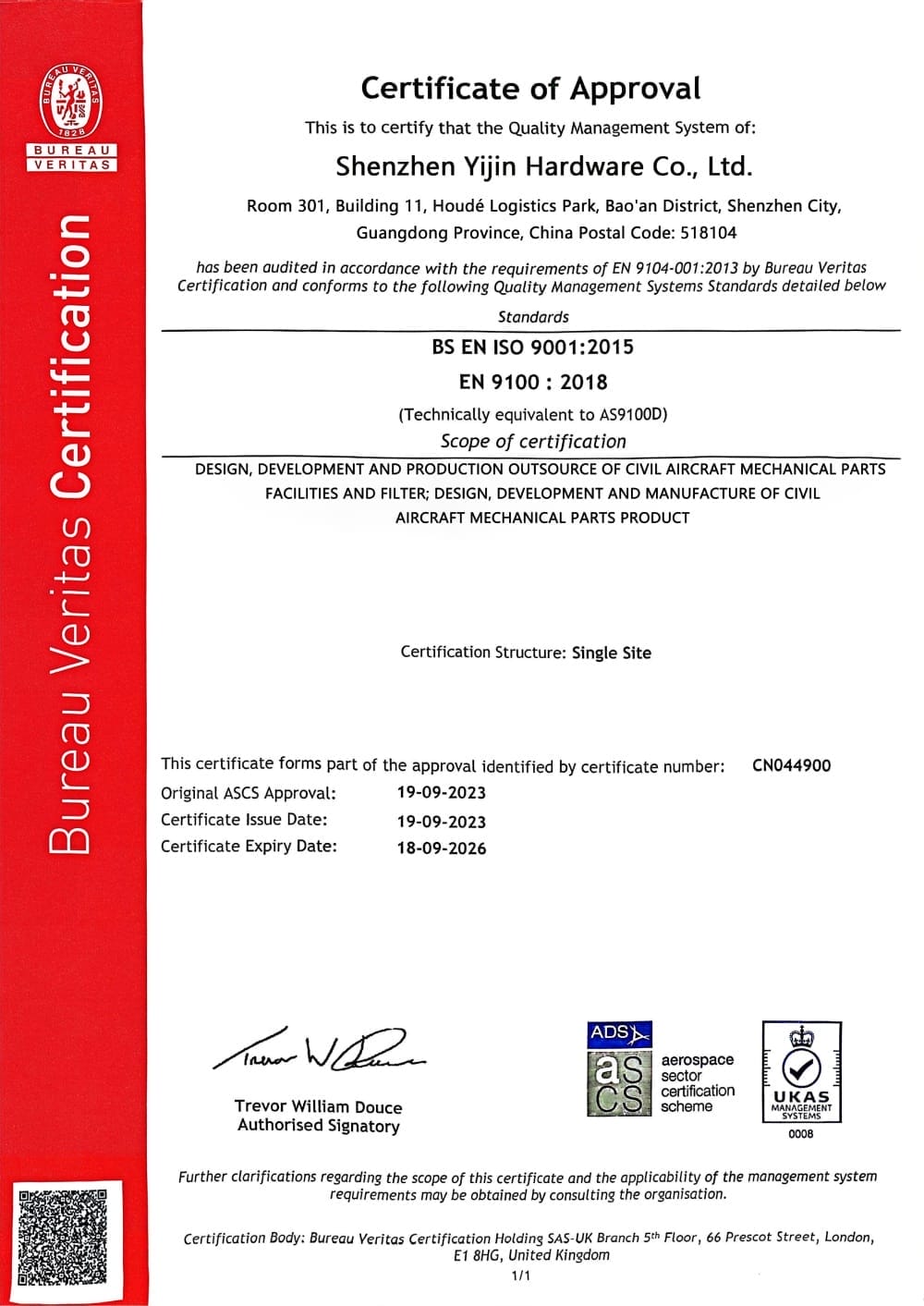
- ISO 9001:2015 for powder-to-part traceability
- AS9100D for aerospace heat treatment
- ISO 13485 for medical device manufacturing
- IATF 16949:2016 for automotive quality
Standards:
- ASTM F3303 for powder bed fusion qualification
- ISO/ASTM 52900 for terminology
- ASTM E8 for tensile testing
- ASTM E1479 for chemical composition
Heat Treatment Specifications
Material-Specific Protocols:
- 17-4 PH: Solution annealing at 1040 °C, age hardening at 480 °C
- AlSi10Mg: T6 temper at 160 °C for 12 hours
- Инконель 718: Solution treatment at 980 °C plus double aging
- Stress relief: 650 °C for 2 hours
Non-destructive testing includes liquid penetrant inspection and CT scanning for internal porosity. We maintain separate build chambers for reactive materials like titanium to prevent cross-contamination.
Why Choose Yijin Solution for Metal 3D Printing Service?
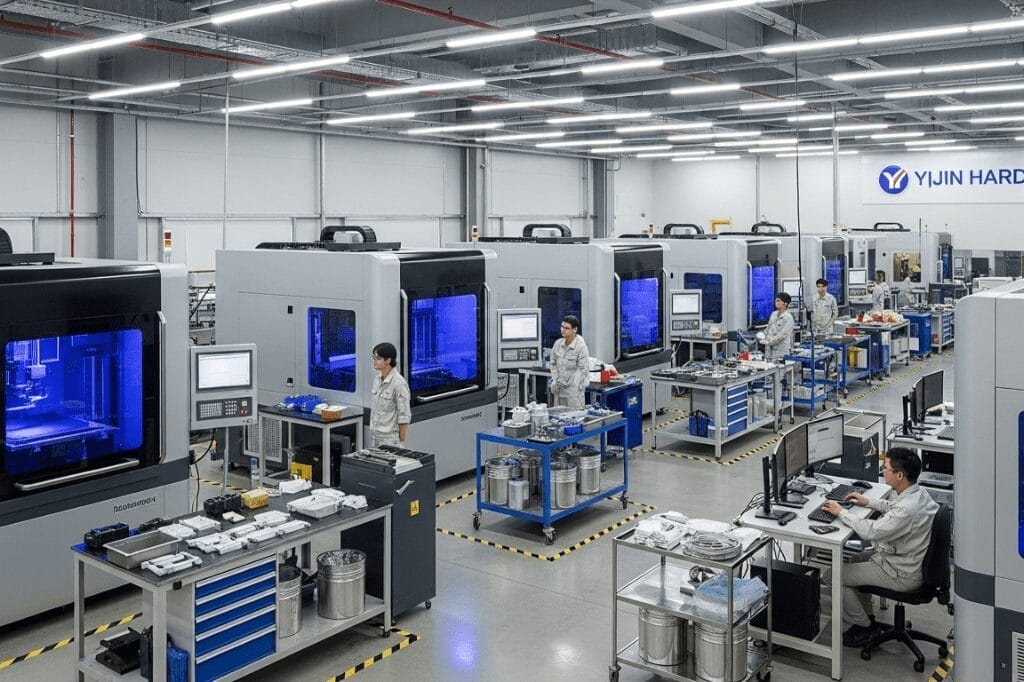
We combine metal 3D printing material expertise with comprehensive machining for hybrid manufacturing, delivering quality metal parts with precision-machined features. Our engineers provide design consultation, identifying part consolidation opportunities and cost savings. With ISO 9001:2015 and AS9100D certifications, we maintain quality from powder qualification through inspection, helping get products to market faster.
Our facility enables rapid iteration between 3D printing projects and machined production. We stock DMLS powders including AlSi10Mg, Ti6Al4V, 316L, 17-4, Inconel 718, cobalt chrome, and maraging steel. Post-processing capabilities including heat treatment, Hot Isostatic Pressing (HIP), bead blasting, and CMM inspection deliver complete quality parts. Get an instant quote for your custom 3D metal printing needs through our online system.
Что говорят наши клиенты




Metal 3D Printing Services FAQs
Metal 3D printing proves cost-effective for parts requiring complex geometries like conformal cooling channels or consolidating assemblies. The technology eliminates tooling costs and long lead times. For simple geometries, machining remains economical at higher volumes.
Support removal adds labor and produces a rougher finish than machining. Parts show residual stresses requiring heat treatment. Build failures from contamination waste significant time.
Surfaces angled less than 45° from horizontal require supports in powder bed fusion to prevent collapse. Surfaces exceeding 45° self-support as layers bond to sufficient underlying material. Violating this creates rough finish or failures.
Ресурсы ЧПУ
How to Use Yijin Solution Online Quoting Platform
Getting a custom part quoted should not feel complicated. If you already have a drawing or 3D file ready, Yijin
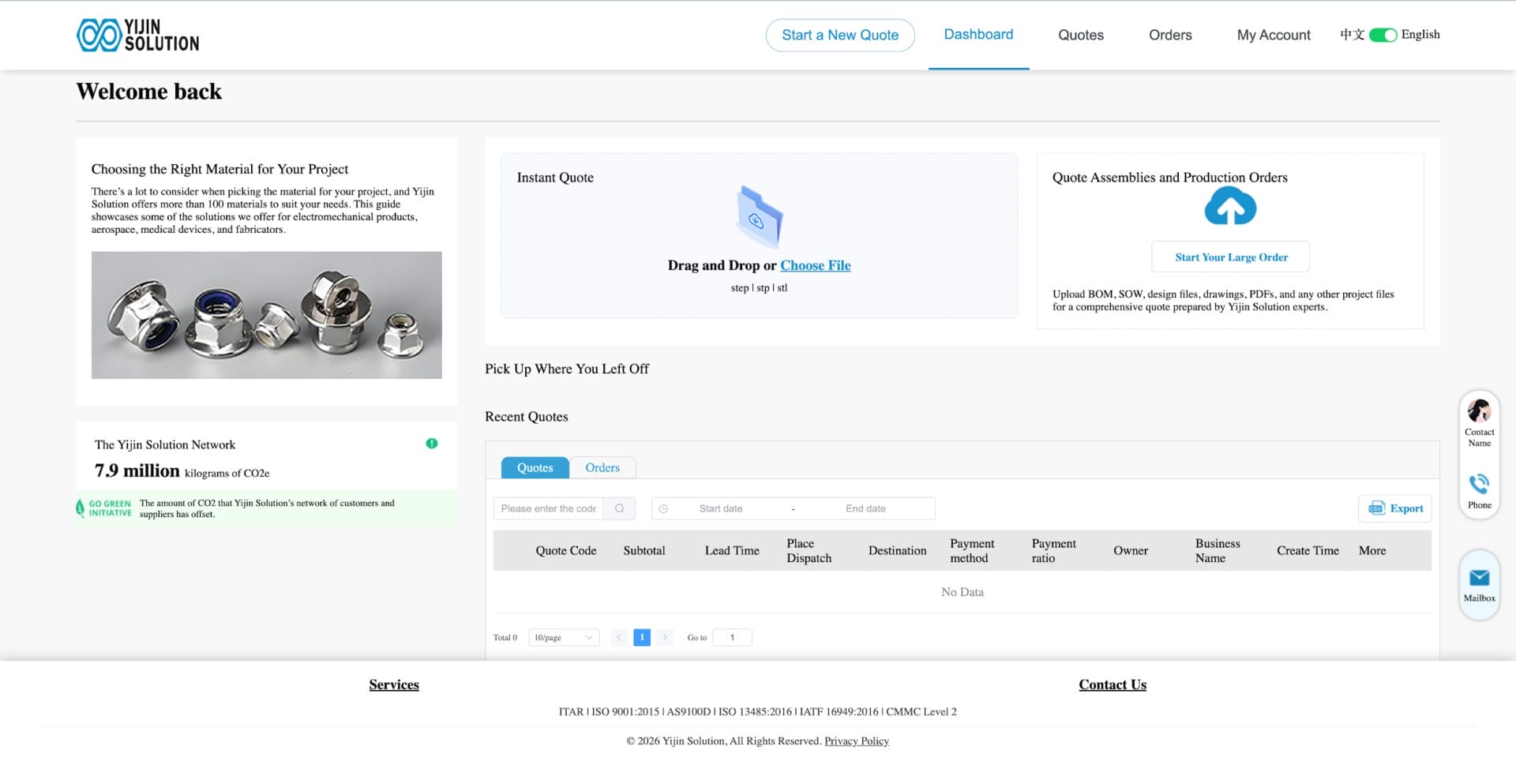
Yijin Solution Launches an Online Quoting Platform
Yijin Solution has launched its new Online Quoting System, giving customers a simpler way to upload files, review pricing, and
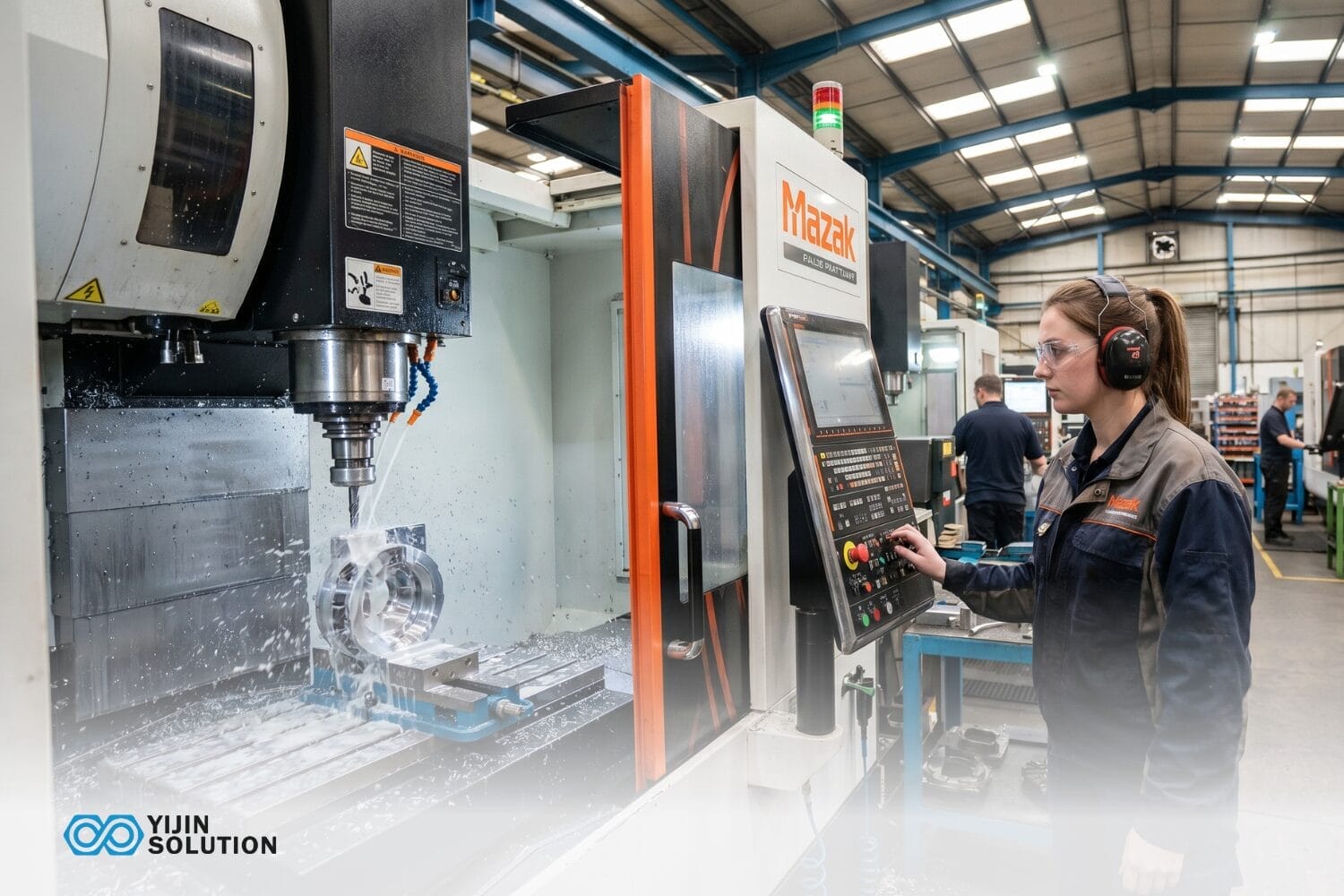
What is a CNC Machining Certification? Types, Requirements & Industry Standards
A CNC machining certification is a documented standard that defines how a machining supplier operates. It covers process control, material
Начните сегодня. Быстрое изготовление деталей.
Бесплатное проектирование механически обработанных деталей для ваших проектов с быстрыми сроками выполнения.