



A quote for ten machined parts does not always add up to ten times the price of one, and that is not an accident. Machining carries a block of cost that does not care how many parts follow it.
Programming and setup happen once per run, and only the first part gets inspected, whether it is the only part or the first of 500. Spread across a single unit, that block makes the price look steep, and spread across 100, it nearly disappears.
Where that block sits governs how a low-volume order gets specified, quoted, and scaled, and which supplier suits the job.
Why Low-Volume CNC Pricing Behaves the Way It Does

Low-volume CNC pricing behaves as it does because machining is split into fixed and repeating work. Fixed work is paid once per run or per revision. Repeating work is paid per part. The ratio between the two sets the unit price at any given quantity.
The costs that do not scale with quantity
Programming, setup, fixturing, and first article inspection are paid once and then divided. A part needing three setups carries roughly three times the setup burden of a single-setup part at the same quantity. That burden is close to invisible at 500 units and dominant at 5.
Setup is the item buyers underestimate most often. Loading a job, dialing in workholding, proving the first part, and adjusting offsets consume machine hours before any sellable part exists.
The costs that do scale with quantity
Cycle time, raw material, and finishing all move with quantity. Cycle time is the honest one. It reflects how long the tool is actually cutting, and it shifts only with geometry, material, and tooling choices.
Material behaves less predictably. Stock arrives as bar or plate, so a 5-piece order and a 30-piece order may be drawn from the same purchase. Finishing frequently carries its own batch minimum, which means per-unit finishing cost steps down at a threshold rather than sliding down smoothly.
Why the absence of hard tooling changes the math
Tooling costs for molded and cast components are front-loaded and need to be recovered throughout the manufacturing process. Machining carries no equivalent. Fixtures and programs cost something, typically an order of magnitude below hard tooling, and they can be revised when the design moves.
That single difference is what keeps machining viable at 10 units and what costs it ground at 10,000.
Freight sits in the same category for buyers sourcing from China. Air freight on a 5-piece order carries a per-part share that a consolidated 500-piece shipment never sees. Early cost models frequently omit that line entirely.
Table 1. Where the cost sits in a low-volume CNC order
| Cost bucket | What drives it | How it behaves from 1 to 500 units |
|---|---|---|
| CAM programming and process planning | Part complexity, feature count, and the number of faces that need tool access. | Charged once per revision. Its share per unit falls fastest between 1 and 25 units, then flattens. |
| Machine setup | Number of operations, workholding changes, tool changes, and proving the first part. | Fixed per production run rather than per part. A repeat run on a proven program typically carries a shorter setup. |
| Fixturing and workholding | Whether soft jaws suffice or the geometry calls for a dedicated fixture. | A one-time build in most cases. Reuse across repeat orders is where the savings appear at production volumes. |
| First article inspection | Number of dimensions on the drawing, tolerance callouts, and the level of report required. | Fixed per revision. A full dimensional report carries a large per-unit share at quantities under 10 units. |
| Durée du cycle | Material removal volume, tool paths, and the feeds and speeds the material allows. | Scales close to linearly with quantity. It becomes the dominant driver as volumes approach 500 units. |
| Raw material | Stock size, alloy grade, and how much of the billet is machined away. Some grades carry purchase minimums. | Scales with quantity. Buying bar or plate in larger lots commonly lowers per-unit material cost by roughly 100 units. |
| Finition de surface | Finish type, masking requirements, and whether the work runs in-house or with a finishing partner. | Often carries its own batch minimum. Per-unit cost tends to step down at that threshold rather than fall smoothly. |
| Freight and packaging | Part size, weight, and shipping mode. | Falls with consolidated shipments. Air freight on a 5-piece order carries a share that a consolidated 500-piece shipment does not. |
What the Price Curve Looks Like From 1 to 500 Units
The curve falls steeply and then flattens. Most of the drop arrives before 100 units, which tends to surprise buyers who expect the savings to show up at higher volumes.
1 to 10 units, where setup dominates
At a single unit, programming, setup, and inspection typically account for most of the price. Moving from 1 to 10 units produces the sharpest reduction on the whole curve, because the same fixed work now divides ten ways.
For a milled aluminum part with two setups and moderate cycle time, a 10-piece order commonly lands between a third and a half of the single-unit price. Parts with long cycle times fall less, because the fixed share was smaller to begin with.
10 to 100 units, where amortization does the work
Buyers sourcing CNC parts from China in the 10 to 100 unit range sit in the most negotiable part of the curve. The fixed block is largely absorbed by this point, and fixture reuse starts to matter.
A dedicated fixture built for the first run is already paid for. A repeat order against that fixture carries only the setup, which is why second orders often price better than buyers expect.
100 to 500 units, where cycle time and material take over
Above roughly 100 units, the fixed block has thinned to a small share, and the price starts tracking machine hours. Shaving 30 seconds of cycle time matters more here than anything a buyer can do to the setup.
Material bought in larger lots can produce a further step down. Finishing batch minimums can flatten the same band in the opposite direction, so the curve is rarely as smooth as a chart suggests.
Table 2. Indexed unit cost across the volume range
| Volume band | Indexed unit cost | Dominant cost driver | What moves the number |
|---|---|---|---|
| 1 unit | 100 | Programming, setup, and first article inspection together account for most of the price. | A part needing 3 setups sits well above a single-setup part on this index. |
| 10 units | 35 to 45 | Setup amortization. The same programming and setup spread across 10 parts. | Parts with long cycle times fall less, because the fixed share was smaller to begin with. |
| 100 unités | 20 to 28 | Fixture reuse and material purchased in lots. | A finish carrying its own batch minimum can flatten this band. |
| 500 units | 15 to 20 | Cycle time and material. Fixed costs are largely absorbed by this point. | Below this floor, tooling-based routes such as die casting or injection molding usually take over. |
Illustrative figures. The index describes a milled aluminum part with 2 setups, moderate cycle time, and no hard tooling, priced at 1 unit as 100. Actual quotes move with geometry, material, tolerance, finish, and schedule.
Prototype to Production Without Switching Factories
The highest hidden cost in a low-volume program is not the prototype. It is the move to production, when that move happens somewhere else.
What requalification costs when the supplier changes
A new supplier reprograms the part, builds fresh workholding, and produces a new first article. Dimensions that sat mid-tolerance comfortably at one shop can land near a limit at another, because tool paths, fixturing, and machine dynamics all differ.
The scheduling cost usually exceeds the unit cost. Requalification adds weeks, and it adds them at the point in a program where weeks are hardest to find.
Design freeze and how revisions are handled between builds
Low-volume programs iterate by design, so revision discipline matters more here than in a settled production run. Each revision resets some portion of the programming and inspection work.
Batching design changes rather than releasing them one at a time is the practical approach. Two revisions handled together typically cost less than the same two handled a week apart.
Freezing the design before the production run is the other half of the discipline. A run committed while the model is still moving tends to produce parts that arrive correct against a revision nobody is building to anymore.
What stays fixed when volume rises
Programs, fixtures, inspection methods, and the quality system are the assets that carry across. When they stay put, a production run inherits a proven process instead of starting a new one.
The market has been moving this way for some time. Mordor Intelligence puts the product prototyping market at USD 25.75 billion in 2026, growing at 11.41% annually to 2031. The same analysis notes that rapid tooling and small-batch production now blur the line between prototyping and manufacturing.
Solution Yijin runs prototyping and production inside the same Shenzhen facility under one ISO 9001 quality system. Prototyping typically takes 3 to 7 days, and production typically takes 2 to 4 weeks. Parts scaling within that structure keeps their programs and fixtures stable and consistent.
When Low-Volume CNC is the Right Call, and When it is Not
Machining is not the answer to every low-volume part. The routes below overlap, and the sensible choice usually turns on geometry, material fidelity, and how settled the design is.
Table 3. Low-volume routes compared
| Route | Volume band where it earns its cost | Material fidelity | Lead-time profile | Compromis |
|---|---|---|---|---|
| Usinage CNC | 1 to roughly 500 units, extending higher on simple geometry | Production-grade metals and engineering plastics. Properties match the end part. | Prototyping typically 3 to 7 days. Production typically 2 to 4 weeks. | Geometry is limited by tool access. Internal undercuts and deep pockets add setups. |
| Impression 3D | 1 to roughly 20 units where geometry is complex | Printed polymers and metals. Mechanical properties are usually direction-dependent. | Typically 2 to 5 days. | Tolerance bands and surface finish are wider than machining. Anisotropy matters in load-bearing parts. |
| Fabrication de tôles | 1 unit upward for parts that suit flat stock and bends | Same alloys as the end part. | Prototyping typically 3 to 7 days. | Suits enclosures, brackets, and panels. Solid or deep-pocket geometry sits outside the process. |
| Moulage par injection | Typically above 1,000 units for tooling to pay back | Production polymer matching end-part properties. | Tooling and samples typically 25 to 35 days, then 5 to 15 days per run. | Upfront tooling cost and a design freeze before steel is cut. |
| Moulage sous pression | Typically above 1,000 units | Production aluminum and zinc alloys. | Tooling and samples typically 25 to 35 days, then 7 to 15 days per run. | Upfront tooling cost. Wall thickness and draft rules constrain the design. |
Lead times are typical ranges under normal capacity and vary with part size, finish, and schedule.
Impression 3D
3D printing takes the win on geometry freedom and speed at very small counts. Machining takes it on material fidelity and tolerance, since the part is cut from the same stock the production part will use.
The comparison is often settled by what happens after the part leaves the machine. Support removal, polishing, and heat treatment can account for 30 to 40% of total additive prototype spend. That share narrows the cost gap that drew buyers to printing in the first place.
Tolerance is the other separator. Machined features hold tighter bands more repeatably, and printed parts carry mechanical properties that usually vary with build direction. Parts under load, or parts that mate to something already in production, tend to end up machined for that reason.
Against waiting for injection molding or die casting tooling
Tooling-based routes deliver a lower unit price at volume, and they require tooling spend and a design freeze up front. Machining suits the window where the design is still moving, or the volume does not yet justify cutting steel.
The crossover is not a fixed number. It moves with part size, cavity count, and how much the design is expected to change after the first production run.
Sheet metal deserves a mention alongside both. Enclosures, brackets, and panels that suit flat stock and bends come out faster and cheaper as fabrications than as machined solids, and the alloys match the production part.
What Makes a Low-Volume Quote Fast and Accurate?

A low-volume quote is an estimate built from incomplete information. The completeness of the drawing package determines how long that estimate takes and how well it holds once the job reaches the floor.
The drawing package
A 3D model sets geometry and allows cycle time to be estimated. A 2D drawing carries what the model cannot hold, which are tolerances, datums, thread callouts, and finish specifications. Packages arriving with only one of the two commonly add a day or more to the quote.
Tolerances that earn their cost
ISO 2768 defines general tolerances in four classes for dimensions carrying no individual callout. The common designation on machined drawings is ISO 2768-mK, where medium class allows roughly ±0.3 mm on a dimension between 30 and 120 mm.
Naming a general class and then tightening only the dimensions that carry function is the approach that holds cost down. Blanket tight tolerances raise the price of every feature, including the ones nothing mates to. Work bound for North American acceptance may also specify metrology calibrated to the ASME B89 series, which is worth stating in the RFQ rather than assuming.
Material, finish, and acceptable substitutes
Full grade designation drives stock purchase, machinability, and cycle time. ISO 513 groups workpiece materials into six classes, from steels through to hardened materials above 45 HRC, and the class largely determines tooling and how fast the tool can move.
Naming an acceptable substitute alongside the preferred grade gives a supplier room to quote against stock actually on hand, which sometimes removes a week of procurement.
Quantity breaks worth requesting
Asking for three quantities in one RFQ shows the slope of the curve before any commitment. For a low-volume program, 10, 100, and 500 units give a usable picture of where the price stops falling.
Table 4. What a low-volume RFQ needs
| RFQ item | Why it moves the quote | What to send |
|---|---|---|
| 3D model | Sets geometry and allows cycle time to be estimated. Quoting without one commonly adds a day or more. | STEP or IGES at the current revision. One file per part number. |
| 2D drawing | Carries the tolerances, datums, threads, and finish callouts that a model does not hold. | PDF drawing with the revision level and a completed title block. |
| Revision level | Keeps the quote tied to the geometry that will actually be machined. | Revision marked on both the model filename and the drawing. |
| Quantity breaks | Shows the shape of the price curve before any commitment is made. | At least 3 quantities. For a low-volume program, 10, 100, and 500 units give a usable picture. |
| Material and grade | Drives stock purchase, machinability, and cycle time. | Full grade designation such as Aluminum 6061-T6 or Stainless Steel 316L. Note any acceptable substitutes. |
| Critical tolerances | Tight callouts add operations and inspection time. Blanket tight tolerances raise the price of every feature. | Identify the dimensions that carry function. Leave the remainder to ISO 2768 general tolerances where suitable. |
| Finition de la surface | Finish type and masking change the routing and can trigger a batch minimum. | Finish specification per surface, with masked areas marked on the drawing. |
| Inspection requirements | Dimensional reporting adds measurable hours per batch. | State whether a first article report, a full dimensional report, or CMM data is required. |
| Application notes | Gives the engineering team enough context to suggest cost-reducing changes at the DFM stage. | One or two lines on function, load, mating parts, and operating environment. |
DFM Notes That Reduce Cost at Low Volume
Design choices move low-volume cost more than negotiation does, because most of the price sits in fixed work that the design itself creates.
The savings are available early and get progressively harder to capture. Once a program is quoted and fixtured, most of these choices are already locked.
Feature choices that add setups
Every face requiring tool access is a candidate for another setup. Features on five faces typically cost more than the same features arranged across two, even where the machining time is similar.
Deep pockets and internal undercuts push the same way. Deep pockets call for long tools and lighter cuts, and undercuts often call for a dedicated tool or a fifth axis.
Callouts that add operations
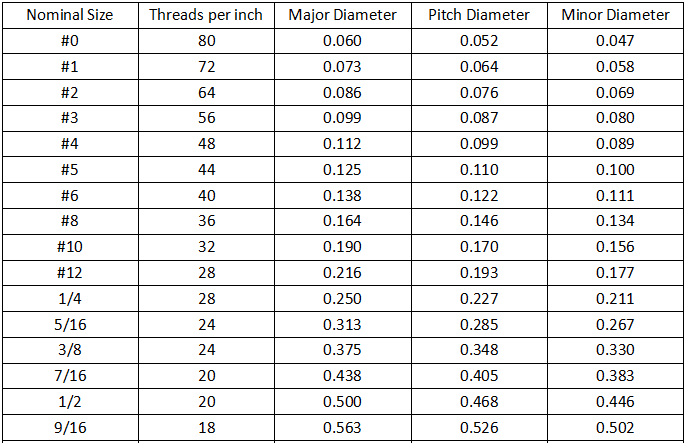
Surface finish specification, thread type, and edge condition each add operations that are easy to specify and slow to produce. A finish called out across an entire part when only one face is visible is a common source of avoidable cost.
Tolerance callouts that add inspection time
Blanket tight tolerances raise cost even on features that carry no functional requirement, since every toleranced dimension adds time to the first-article report. Naming a general tolerance class and tightening only the features that mate to something else keeps inspection scope proportional to what the part actually needs.
Tool life and estimate margins
Tool life sits behind these choices, and it is less settled than it looks. ISO 8688 defines a standardized milling tool-life test, using an average flank wear of 0.3 mm as the end-of-life criterion. Independent comparative data against that method remains scarce, so most published tool-life figures come from tool manufacturers testing under their own conditions. Estimates built on them deserve a margin.
Low-volume machining rewards buyers who know where the fixed cost sits and who keep the prototype and the production run under one roof. Yijin Solution machines low-volume and prototype orders in Shenzhen and carries the same programs, fixtures, and inspection methods into the production run.
Engineers holding a current model and drawing can send their drawing package to see where the part lands on the cost curve and confirm that the same program scales into production without a requalification step.
FAQs on Low-Volume & Prototype CNC Machining in China
What is the minimum order for prototype CNC machining in China?
Most established China machining suppliers accept single-piece orders, since no hard tooling stands in the way. The practical minimum is set by economics rather than policy, and single pieces of complex parts sometimes price close to a batch of five.
How long does a CNC prototype take when it is machined in China?
Machining time for a prototype commonly runs 3 to 7 days at suppliers holding stock and open capacity. Finishing and international freight sit on top of that, and freight is the variable buyers most often leave out of the schedule.
At what quantity does CNC machining stop being the cheaper route?
For parts suiting molding or casting, the crossover commonly appears above 1,000 units. Parts with simple geometry and short cycle times can stay competitive well past that, because the machining price keeps tracking a low hourly figure.
Can the same supplier scale a prototype to 500 units without requalification?
Yes, where the prototype and the production run share one facility, one quality system, and one inspection method. Scaling across separate vendors, or across a broker network, reintroduces the first article step that a single-facility route avoids.
What tolerances are realistic on a prototype part?
A first article typically sits closer to nominal than the parts that follow, because it receives individual attention and offset adjustment. Buyers reading a first article report as representative of a 500-piece run are reading it slightly optimistically, which is why capability across a batch matters more than one measured part.
Does a China supplier need the 2D drawing when a 3D model is supplied?
Yes, for anything carrying tolerances or finish requirements. A model defines shape alone. Sending the model without the drawing shifts interpretation onto the supplier, and interpretation is where quoted assumptions and delivered parts drift apart.
How many quantity breaks should a low-volume RFQ include?
Three is usually enough to reveal the shape of the curve. Requesting a single quantity returns a single number with no context, and requesting six adds quoting time without adding much information the middle three do not already show.
Retour en haut de la page : Low-Volume & Prototype CNC Machining in China






 English
  Spanish
  German
  French