


CNC machining for electronics is a precision manufacturing process that uses computer-controlled cutting tools to fabricate components for modern electronic devices. The global CNC machining industry has become indispensable to modern electronics manufacturing, driven by its unparalleled precision, scalability, and adaptability. Yijin Hardware provides reliable electronics CNC machining services for this industry, which makes us an authority on this expansive topic.
The growth in this market is fueled by advancements in automation, material science, and the integration of Industry 4.0 technologies, enabling manufacturers to meet escalating demands. We’ve created this comprehensive guide to examine how CNC machining revolutionizes electronics manufacturing, the specific components it produces, and the advanced techniques that deliver the precision modern electronic devices demand.
Key Takeaways
- CNC machining delivers the high precision and repeatability required to reliably produce intricate electronic components for modern devices.
- Its rapid prototyping, mass production capabilities, and customization options enable efficient and scalable manufacturing while reducing lead times.
- It plays a critical role in consumer, aerospace, and medical electronics by handling advanced materials and complex designs that meet strict industry standards.
What is the Role of CNC Machining in Electronics Manufacturing?
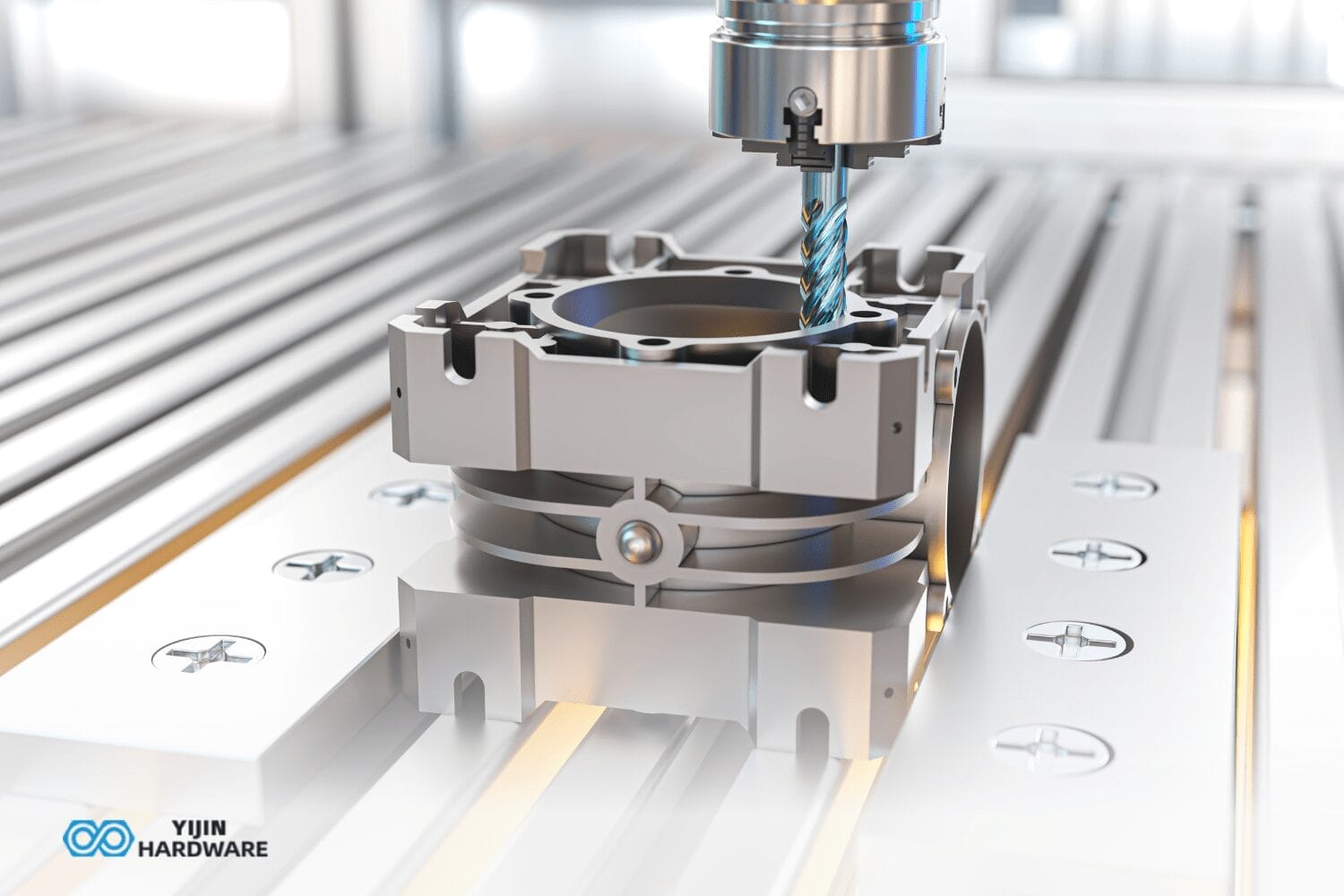
The role of CNC machining is to make electronic parts that meet strict standards, which is essential for different electronic applications. This process creates the intricate components needed for many electronic devices like smartphones. Precision CNC machining is essential for modern electronics manufacturing.
From prototyping and production to mass production, CNC machining delivers consistency and repeatability. Electronics manufacturers use it for casings and enclosures of various electronic components. Electronic devices like smartphones rely on CNC-machined parts for durability.
What are the Benefits of CNC Machining in the Electronics Industry?
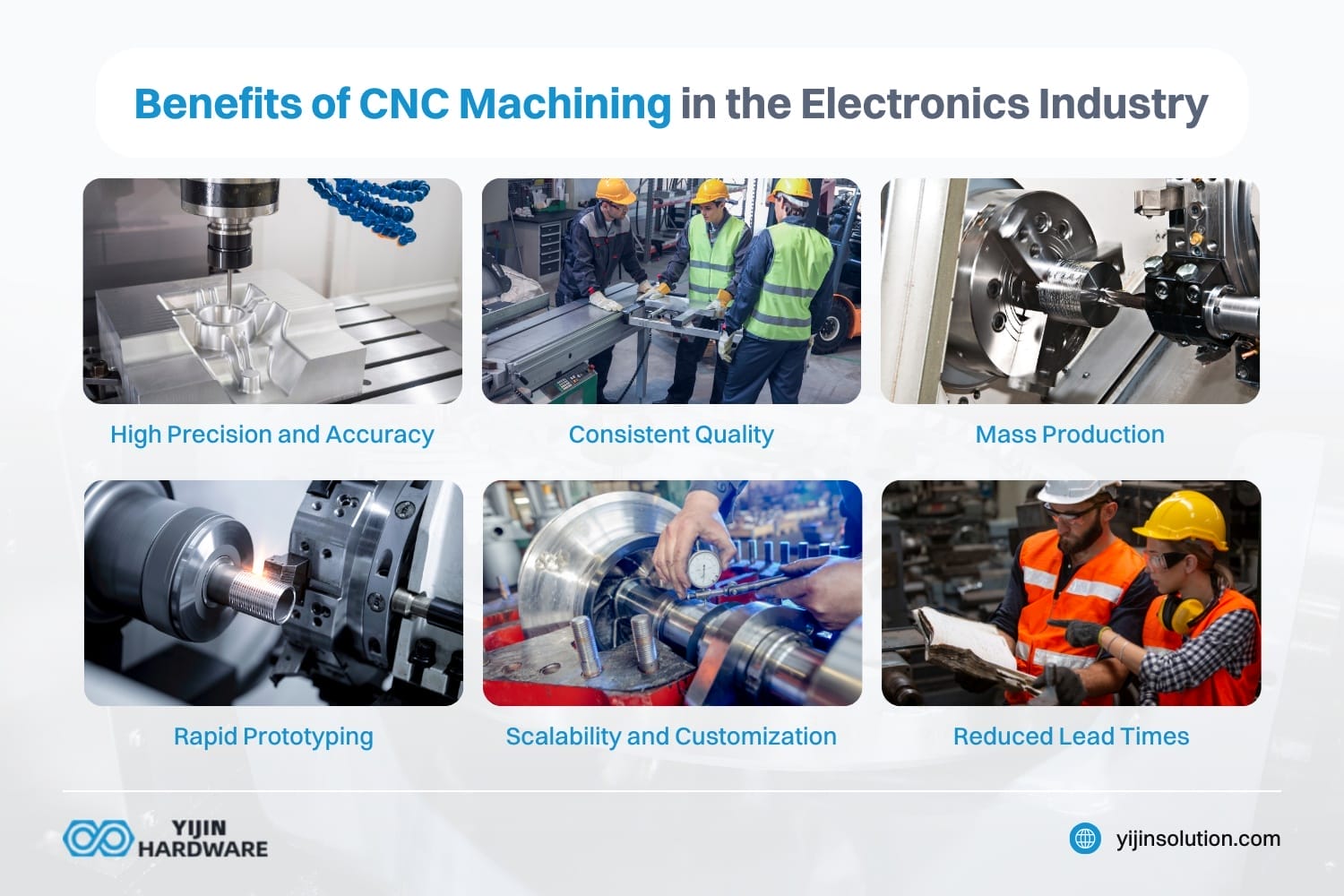
CNC machining is crucial for producing precise electronic components with precision and quality. It delivers consistent quality, rapid prototyping, and scalability for electronics manufacturers. These advantages are vital for electronics manufacturers.
High Precision and Accuracy
CNC technology guarantees tight tolerances and detailed accuracy. It is essential for small electronic components with electronic and electrical properties. CNC machining ensures the precision of CNC for electronics and the aerospace industry.
Consistent Quality
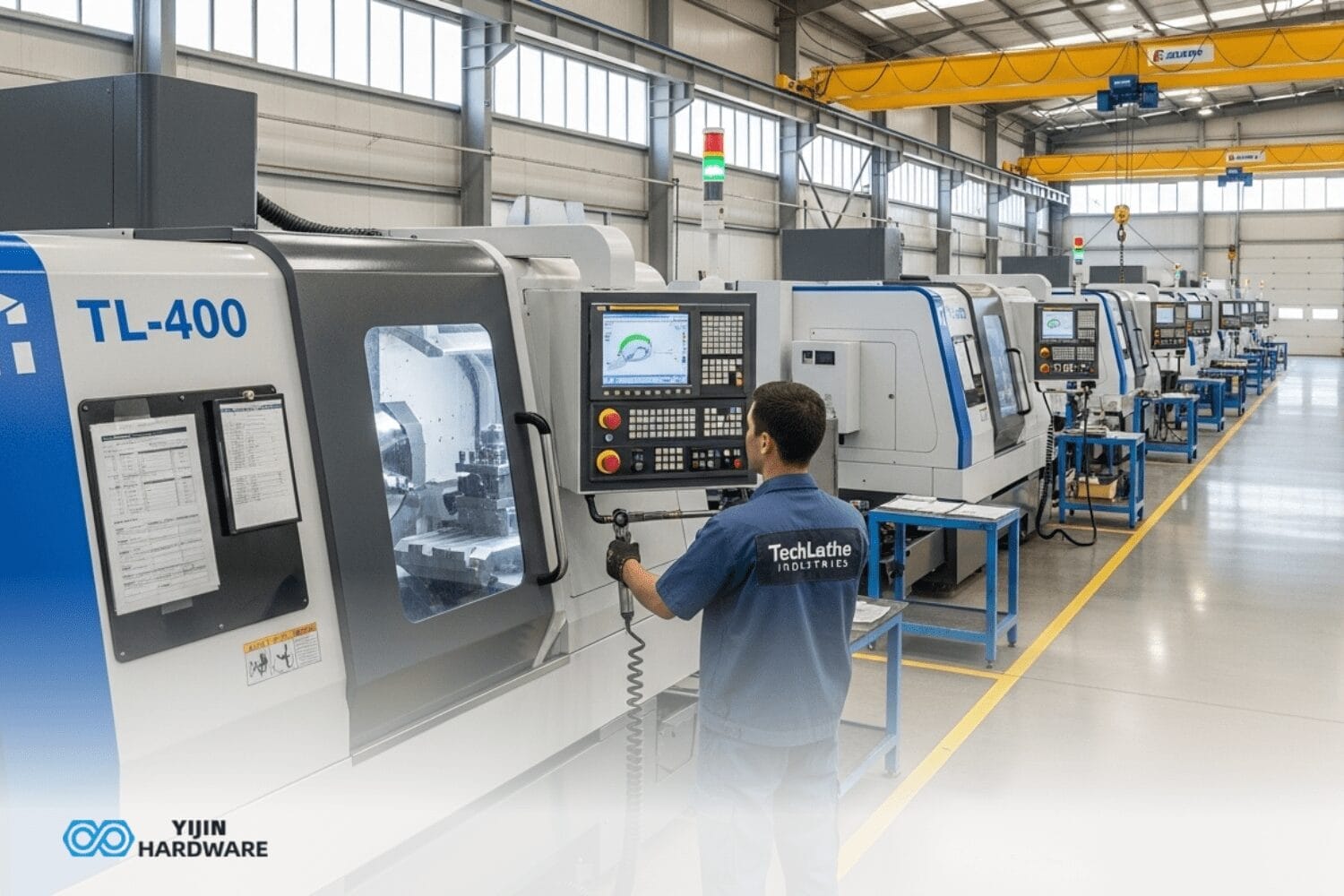
Automation ensures electronic component machining with precision CNC machining. The machining process leads to reliability and repeatability in the manufacturing process. This guarantees the creation of various electronic components where precision is crucial.
Mass Production
CNC machining enables the production of parts in large volumes for electronics manufacturers. Electronics manufacturers use this scalability for mass production and prototyping and production. It allows them to produce large volumes efficiently with repeatability.
Rapid Prototyping
CNC electronic parts machining supports quick testing of components like connectors. It allows optimization of electronic device designs with extraordinary precision. When developing complex electronic assemblies, combining CNC capabilities with prototype metal fabrication enables comprehensive testing of both machined and formed components simultaneously. The production of parts is fast and efficient for machining for electronics
Scalability and Customization
Production can be adjusted to business needs and electronic products. The machining capabilities can create custom parts for components for electronic needs. CNC machining ensures flexibility in electronics manufacturing.
Reduced Lead Times
CNC machining delivers parts quickly. It reduces the time to market for electronic products and electronic devices like smartphones.
What are the Applications of CNC Machining in Electronics?
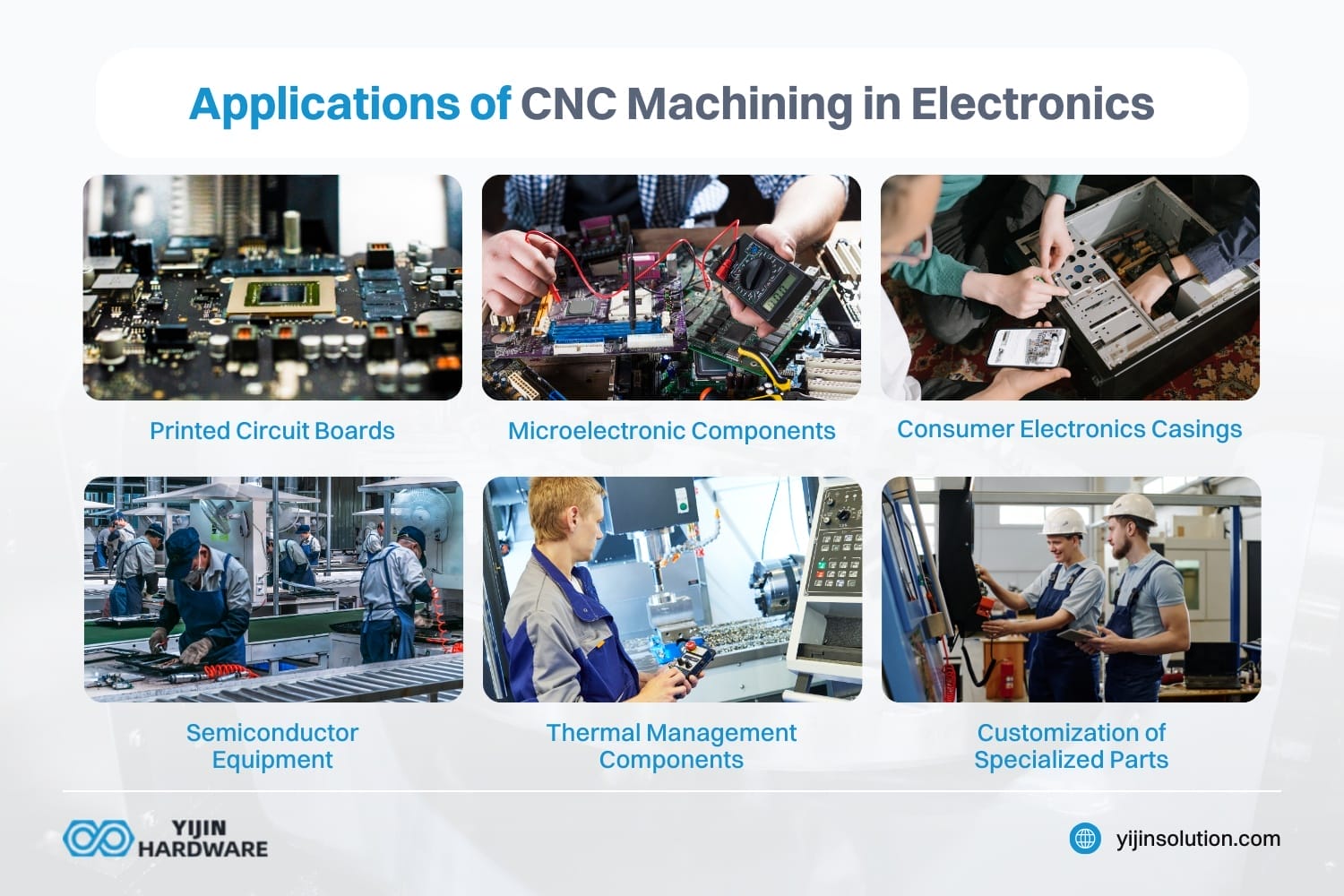
CNC machining is used for printed circuit boards, microelectronic parts, electronics casings, semiconductors, and even specialized parts. CNC machining plays an integral part in bringing to life many of the important components used in the electronics industry. Let’s take a closer look at how CNC machining is involved in the examples we’ve mentioned.
- Printed Circuit Boards (PCBs): CNC drills create holes and traces on printed circuit boards. CNC machining ensures precision for intricate layouts and is crucial for reliable electronic parts.
- Microelectronic Components: CNC tools create connectors and heat sinks for various electronic components. These are essential components for electronic devices and electronic device reliability.
- Consumer Electronics Casings: CNC milling machines produce casings and enclosures. Materials include aluminum and plastics for consumer electronics components.
- Semiconductor Equipment: CNC tools make parts for semiconductor production. High precision is crucial here for quality CNC and components, where heat dissipation is key.
- Thermal Management Components: Heat sinks are created through CNC machining and are components where heat dissipation is key. They are essential for various electronic components and devices.
- Customization of Specialized Parts: Unique connectors are produced using CNC, specifically designed for the components for electronic parts. Adapters and components for specialized electronics are created to precise specifications.
Which Materials Perform Best for CNC-Machined Electronic Components?
Conductive alloys, thermoplastics, and composite materials are the most popular choice for CNC-machined electronic components because they perform the best. Your selection of materials for CNC machining electronic components depends on the specific application requirements, including electrical properties, thermal characteristics, mechanical strength, and environmental resistance.
How do Conductive Alloys Enhance Electronic Components?
Key conductive alloys used in electronic component machining include Aluminum 6061, C110 Copper, and Tungsten-Copper (WCu). Aluminum 6061 dominates 80% of CNC-machined enclosures and can be anodized to achieve 500V dielectric strength, making it ideal for protective casings.
C110 Copper, with its exceptional 85 IACS conductivity, is machined at 0.5 mm/min feed rates for accurate busbars and electrical connections. Tungsten-Copper alloys, with their 16.5 g/cm³ density and 400 W/mK thermal conductivity, excel in RF package applications where heat dissipation is critical.
These materials collectively offer excellent electrical conductivity for signal integrity, superior thermal management, corrosion resistance for long-term reliability, and structural integrity for protective enclosures.
What Engineering Thermoplastics Work Best for Electronic Applications?
Advanced polymer materials commonly used in electronics include PEEK, Ultem 2300, and PTFE. PEEK withstands continuous operating temperatures of 140 °C with minimal moisture absorption (0.5%), making it ideal for socket connectors in demanding environments.
Ultem 2300, with its UL94 V-0 fire rating, is preferred for 5G antenna radomes where thin-walled structures (0.3 mm ribs) must maintain dimensional stability. PTFE’s exceptional low friction coefficient (0.03) enables precision slide bearings machined to ±0.05 mm flatness, critical in mechanical interfaces.
What Specialty Composites are Emerging for Advanced Electronic Applications?
Cutting-edge composite materials are revolutionizing electronic component performance. Cu-Mo-Cu laminates with 7 ppm/K coefficient of thermal expansion enable power modules that can be diamond-turned to 0.2 μm surface roughness, ensuring perfect thermal interfaces.
SiC-Al composites delivering 180 W/mK thermal conductivity allow for 5-axis profiled heat management substrates with unmatched performance-to-weight ratios. Graphite-Copper composites reduce weight by 40% in EDM electrodes used for connector mold manufacturing while maintaining conductivity.
Common CNC Machining Challenges in Electronics
While CNC machining provides numerous benefits, some key challenges are specific to the electronics industry, such as miniaturization and thermal management.
| Challenge | Description | Potential Solutions |
|---|---|---|
| Miniaturization | Extremely small components require intricate machines and tooling. | Invest in micro-machining tools and optimize toolpaths with advanced CAM software. |
| Tolerance | Tight tolerances are crucial for proper component function. | Use accuracy CNC machines and rigorous quality control. |
| Surface Finish | Achieving the desired surface finish impacts component performance. | Employ specialized cutting tools and surface finishing techniques. |
| Thermal Management | Heat dissipation requires effective cooling during machining. | Use coolants, optimize cutting, and design efficient heat sink geometries. |
| Complex Geometries | Intricate component designs require advanced multi-axis CNC machines and skilled operators. | Invest in multi-axis CNC machining centers, train operators, and use advanced CAM software. |
| Tool Wear | Maintaining tool life and precision. | Implement tool condition monitoring systems and proactive tool replacement strategies. |
Luckily, many of these challenges are being addressed with the latest technological advancements in CNC machining. According to Grand View Research, the adoption of automated CNC machines is primarily motivated by the need to overcome the challenges posed by the scarcity of skilled labor in various industries.
Which Industries Rely Most on CNC Machining for Electronics?
Consumer electronics, aerospace, and medical electronics rely on the electrical components machined using CNC. We’ve broken down these three industries, how they use CNC-machined components, and which materials they use the most.
Consumer Electronics
Consumer electronics represent one of the largest applications for CNC machined components, spanning from sturdy laptop chassis to sleek smartphone frames and gaming accessories. Smartphone manufacturers produce approximately 700 million CNC-machined aluminum frames annually, with production cycle times as low as 45 seconds per unit.
Precision CNC machining creates the aesthetic appeal and exact specifications needed for wearable devices like fitness trackers and smartwatches, where components must be both compact and durable.
Aerospace Electronics
Aerospace applications demand the ultimate in precision and reliability for electronic components operating in extreme conditions. CNC machining produces critical components including 7075-T6 aluminum avionics trays with 0.05 mm/mm flatness maintained over 300 mm spans, ensuring perfect mounting of sensitive electronics. CFRP (carbon fiber reinforced polymer) radar array panels measuring 500 mm × 500 mm feature waveguide cutouts machined to 0.1 mm tolerances, critical for proper signal propagation.
Satellite systems rely on 50-μm wall PEEK cable clamps that must maintain performance across extreme temperature ranges from -150 °C to +150 °C. The aerospace electronics sector requires this exceptional precision because of extreme operational environments, stringent vibration and shock resistance requirements, zero-failure tolerance in mission-critical systems, and constant pressure to minimize component weight.
Medical Electronic Devices
Medical device manufacturers increasingly rely on CNC machining for their most sophisticated electronic products. Implantable electronics utilize Ti-6Al-4V titanium alloy neural interfaces with electrode channels as small as 50 μm, enabling direct communication with nervous system tissue.
Diagnostic equipment incorporates Ultem 1000 housings that maintain dimensional stability through 300+ autoclave sterilization cycles without distortion. Surgical robotic systems feature 600-series stainless steel gears machined to AGMA 12 accuracy standards, ensuring precise control during procedures.
The medical electronics sector particularly benefits from CNC machining’s biocompatible material processing capabilities, sterilization-compatible component designs, micro-precision features for increasingly miniaturized devices, and the ability to produce custom-fit solutions for patient-specific applications.
Contact us to discuss your electronic component machining and precision machining needs. Our machining services provide top-quality CNC machined electronic parts.
CNC Machining in the Electronics Industry FAQs
What tolerances can you expect from CNC-machined electronic components?
Typical 2- to 5-axis CNC machining delivers tolerances as tight as ±0.01 mm (10 µm) on most metals and plastics. High-precision machines can achieve ±0.005 mm (5 µm) tolerances for critical microfeatures, ensuring perfect alignment of connectors and standoffs.
What post-processing and finishing operations are commonly applied?
Electronic parts often undergo deburring and surface treatments such as anodizing or passivation to improve corrosion resistance. Additional finishing steps include electroless nickel plating for better conductivity and bead blasting or precision polishing to ensure smooth, uniform surfaces.
How is EMI/RFI shielding addressed through CNC machining?
CNC machining creates conductive housings with tight-fit seams and precision grooves that block electromagnetic interference. It can also integrate screw-on RF gaskets into aluminum or copper enclosures to enhance shielding without requiring extra assembly.
Back to Top: CNC Machining in the Electronics Industry Guide




 EN
EN  ES
ES  RU
RU  DE
DE  FR
FR