


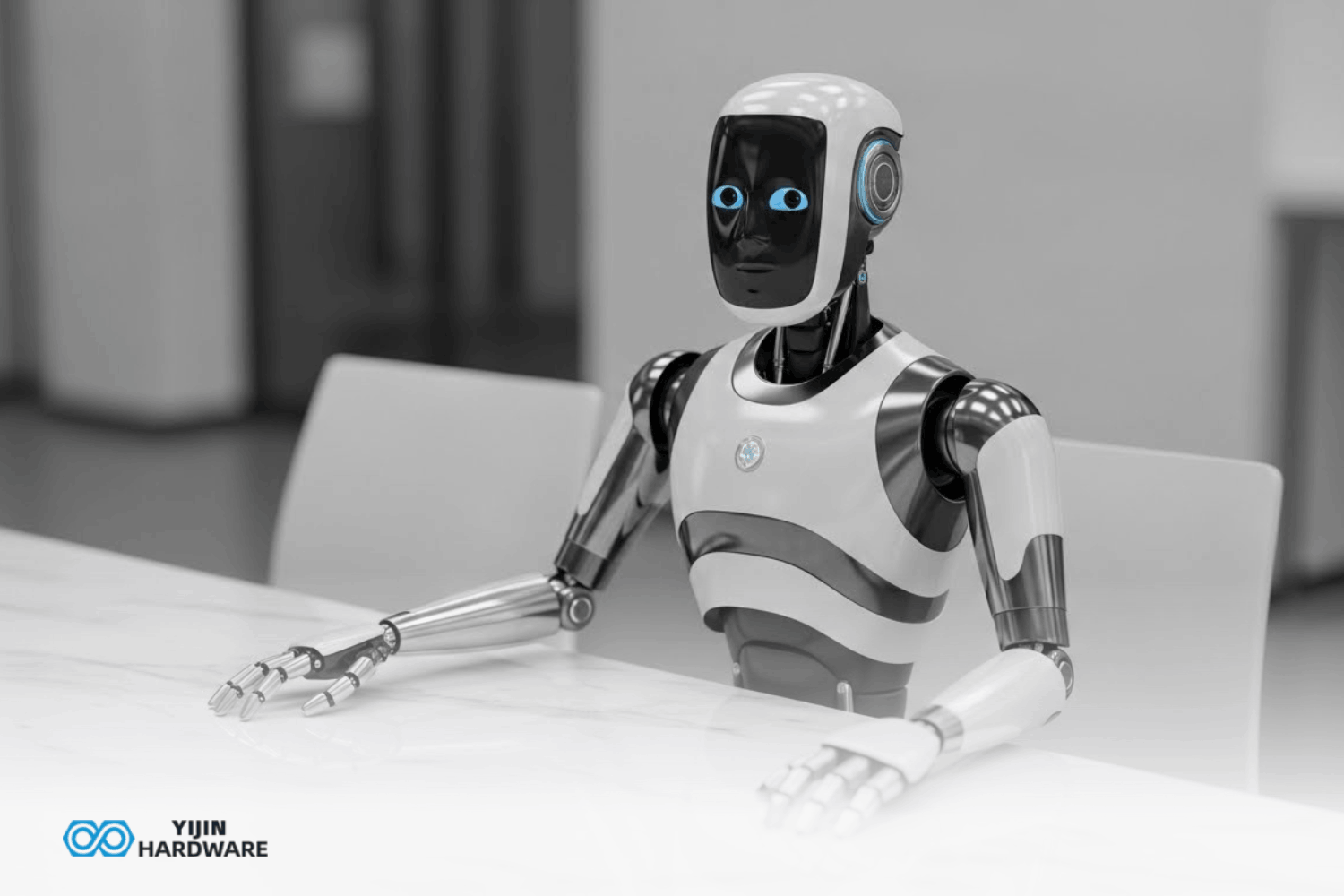
Humanoid robots have moved from science fiction into factories, research labs, and even service industries. But here’s the thing, there’s no single answer to “how much does one cost?” The price swings wildly depending on what you’re building and what capabilities you need. A basic research-grade humanoid might start around $50,000, whilst sophisticated models with advanced AI, multiple sensors, and dexterous manipulation capabilities can easily hit $500,000 or more.
In this guide, we’ll break down what actually drives humanoid robot costs. You’ll see where your budget goes, which components matter most for your application, and how manufacturing choices, like using custom CNC-machined parts from Yijin Hardware, affect both upfront costs and long-term reliability. Whether you’re planning your first humanoid project or looking to optimize costs on your next build, understanding these pricing factors helps you make smarter decisions.
Key Takeaways
- Entry-level humanoid robots start around $5,000, whilst cutting-edge research models push past $1 million
- Your biggest cost drivers are the sensors (vision, touch, balance), actuators that create movement, AI processing power, and the dexterous hands that make manipulation possible
- Budget-friendly options like the Unitree R1 have made humanoid robotics more accessible, though advanced platforms like Tesla Optimus or Unitree H1 command premium prices for their capabilities
- Critical components like precision joints, robust connectors, and responsive actuators determine whether your robot performs reliably. Yijin Hardware manufactures these parts with the tight tolerances humanoid systems demand
What Actually Drives the Price of a Humanoid Robot?
When you’re budgeting for a humanoid robot, three major cost centers dominate: actuators, sensors, and AI integration. Each one contributes substantially to the final price tag, but they’re also what make the robot actually functional rather than just an expensive sculpture.
The Physical Foundation: Frame, Joints, and Actuators
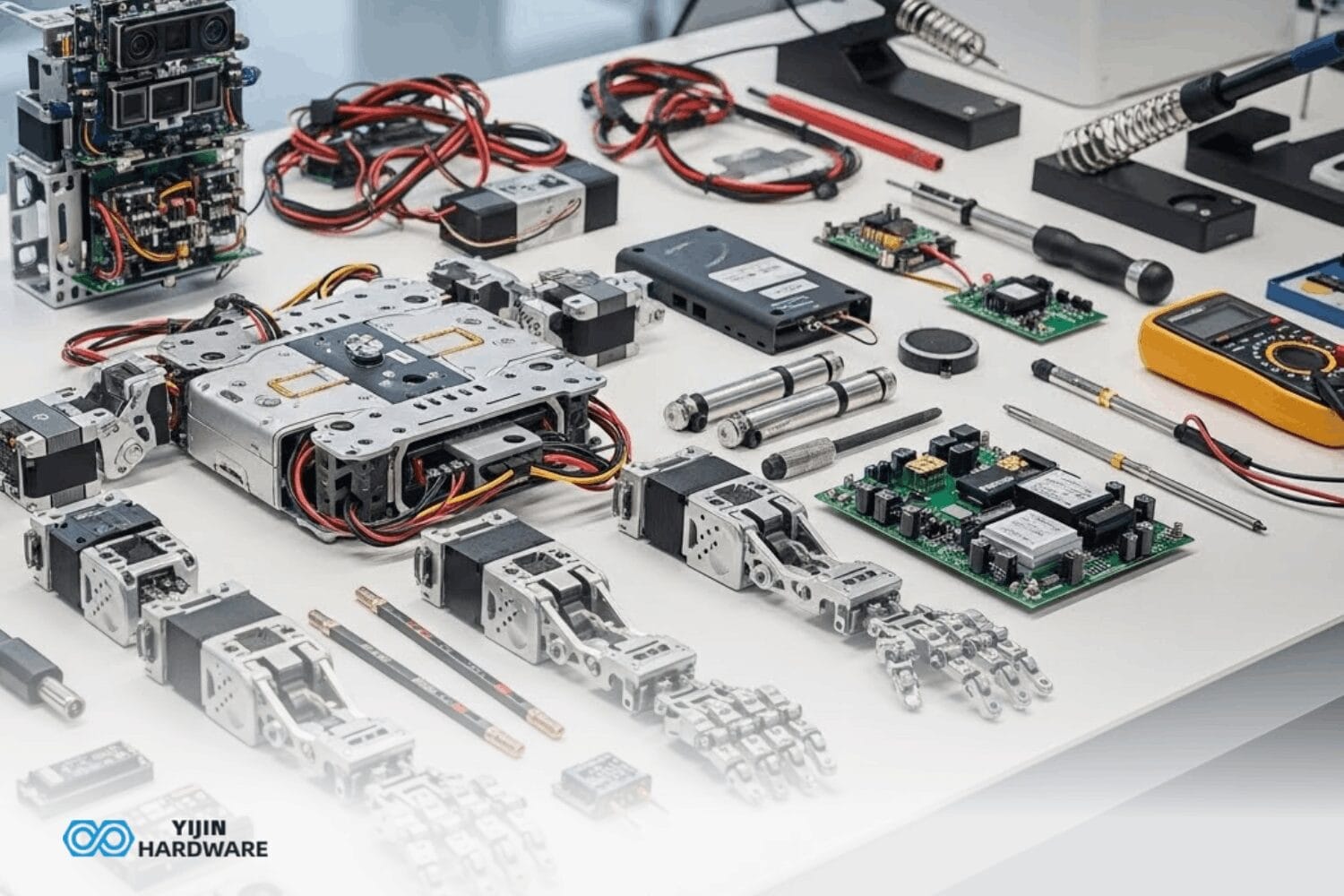
The mechanical skeleton of a humanoid robot represents a massive portion of your investment. Think about what a humanoid robot actually does. It walks, balances, picks up objects, manipulates tools—all movements we take for granted but which require incredibly sophisticated mechanical systems. The actuators alone need to deliver smooth, controllable force across a huge range, from the delicate touch needed to handle an egg to the strength required to lift a heavy box.
At Yijin Hardware, we produce custom actuators, precision joints, and robust connectors specifically for humanoid applications. These components directly impact what your robot can do, whether it’s assembling small electronics, manipulating fragile objects, or performing complex multi-step tasks. The precision we build into these parts isn’t just about making the robot work; it’s about making it work reliably over thousands of operation cycles.
AI Integration & Sensors
AI plays a vital role in humanoid robotics, particularly in models like the Unitree G1 humanoid robot. Advanced AI systems enable robots to learn, adapt, and interact with their environment. For example, robots with machine learning capabilities are better at performing tasks and making real-time decisions.
In addition to AI, sensors such as LiDAR, cameras, and depth sensors allow the robot to navigate and understand its surroundings. A high-quality sensor suite for vision and tactile feedback can significantly raise the robot’s purchase price.
How much do Humanoid Robots Cost by Model?
The cost of humanoid robots can vary widely based on their features and intended applications. Below is a breakdown of popular humanoid robots and their prices:
| Model | Manufacturer | Price Range | Primary Use |
|---|---|---|---|
| Unitree R1 | Unitree | $4,900 to 5,900+ | Education, Basic R&D |
| Unitree G1 | Unitree | $13,500 | Research, General-purpose |
| Unitree H1 | Unitree | $90,000 | Industrial, Logistics |
| Tesla Optimus | Tesla | $20,000 to $30,000 | Industrial & Home Tasks |
| SoftBank Pepper | SoftBank Robotics | $32,000 to $49,900 | Retail & Customer Service |
| Boston Dynamics Atlas | Boston Dynamics | $100,000 to $500,000+ | Research & Industrial |
As you can see, models like the Unitree R1 are relatively affordable humanoid robots that can be used for educational purposes and basic research. On the other hand, advanced models like Boston Dynamics Atlas and Tesla Optimus cater to high-end applications like industrial automation and research.
What are the Key Components that Affect Humanoid Robot Costs?
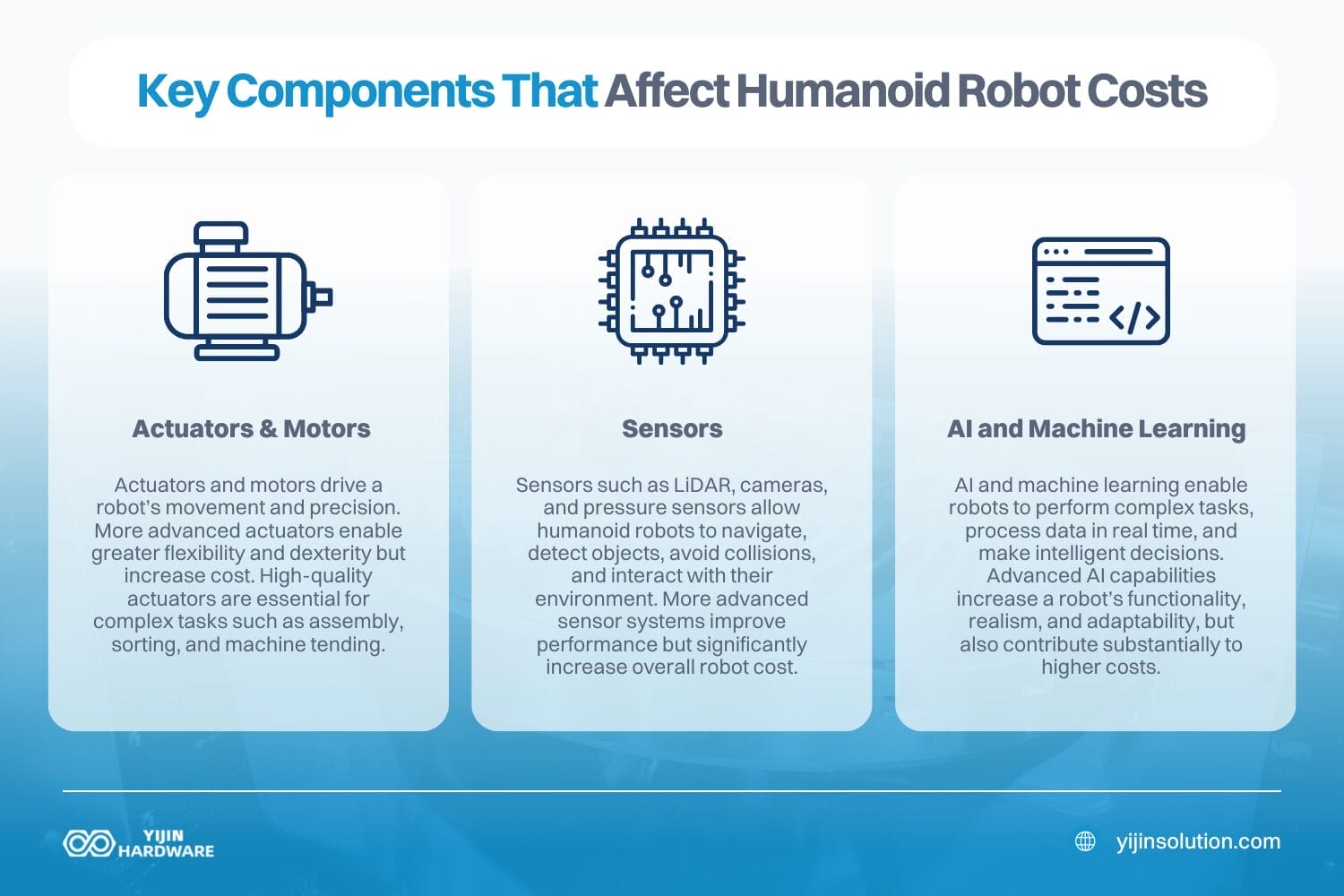
A humanoid robot consists of multiple parts, each adding to the overall price. These include joints, actuators, sensors, and AI integration. Here’s a closer look at these essential components.
Actuators & Motors
The actuators and motors are critical for a robot’s dexterity and movement. The more advanced the actuators, the greater the robot’s range of motion and precision. Robots like the Unitree H1, with six-axis movement, are more expensive than simpler models due to the complexity of their actuators.
At Yijin Hardware, we produce high-quality actuators that provide the flexibility and precision required for humanoid robots. These actuators are essential for tasks like assembly, sorting, and machine tending.
Sensors
Humanoid robots rely heavily on sensors for navigation and task execution. These sensors include LiDAR, cameras, and pressure sensors. The sensor suite enables robots to detect objects, avoid collisions, and interact with the environment. The more advanced the sensors, the higher the cost.
AI and Machine Learning
Advanced AI integration is another key cost factor. Robots equipped with machine learning and AI capabilities are more intelligent and can perform more complex tasks. AI-powered robots can process large amounts of data in real time, allowing them to make decisions, recognize faces, and mimic human-like interactions.
How much does it Cost to Build a Humanoid Robot?
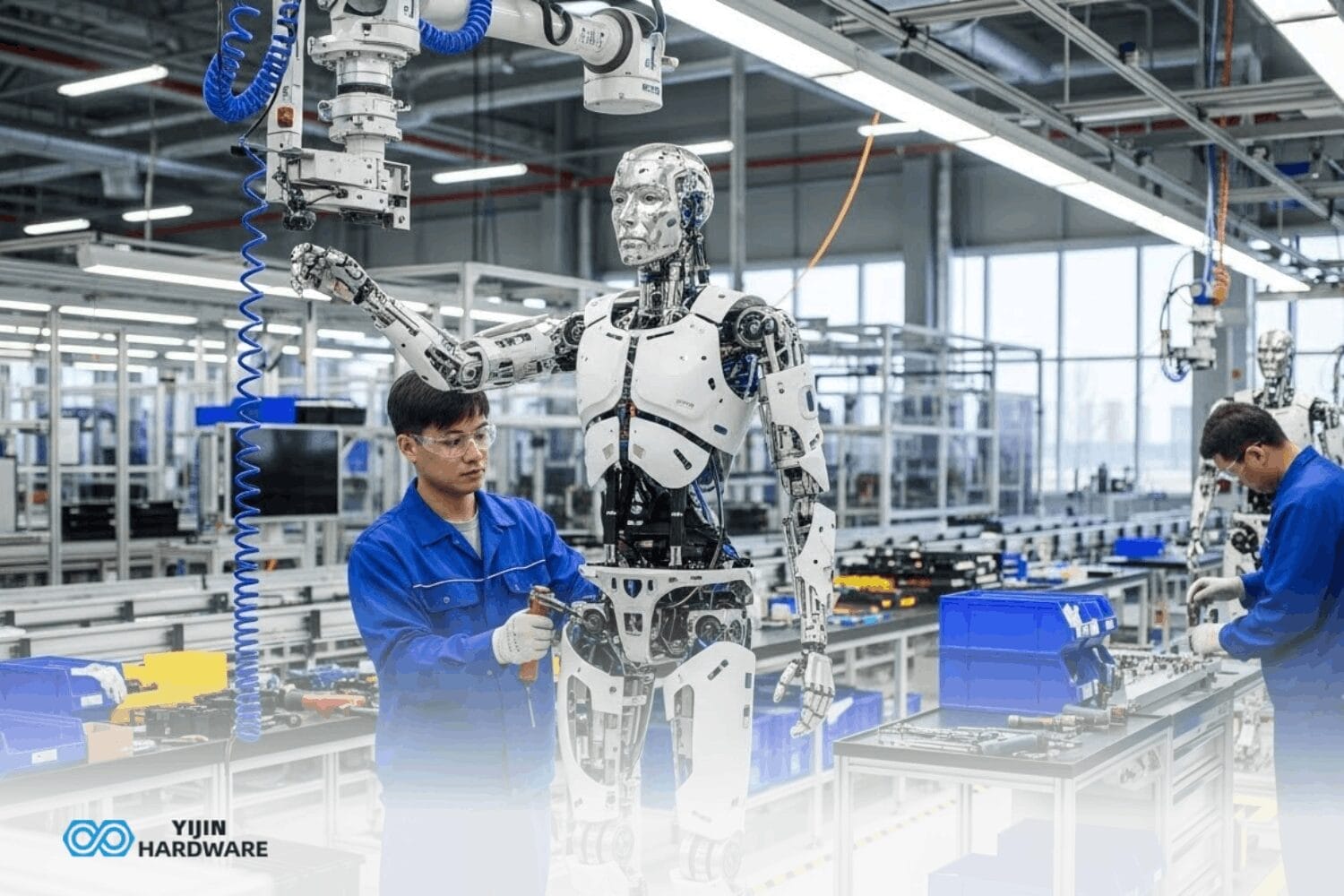
Building a humanoid robot from scratch is expensive and time-consuming. A typical humanoid robot build requires significant investment in both parts and engineering time. Here are some breakdowns:
- Materials: For components like motors, encoders, and actuators, the materials can cost upwards of $15,000 to $25,000 depending on the robot’s specifications.
- Engineering Labor: Professional-grade builds require engineers to design the robot’s control systems, AI integration, and safety features, which can run between $150,000 to $200,000 annually in labor costs.
- Parts: The components like actuators, joints, and sensors will make up a significant portion of the cost. Custom components such as highly dexterous hands and advanced sensors add to the cost.
For most individuals or businesses, purchasing a pre-made robot is a more cost-effective solution, as it comes with testing, certifications, and support.
Parts Made by Yijin Hardware
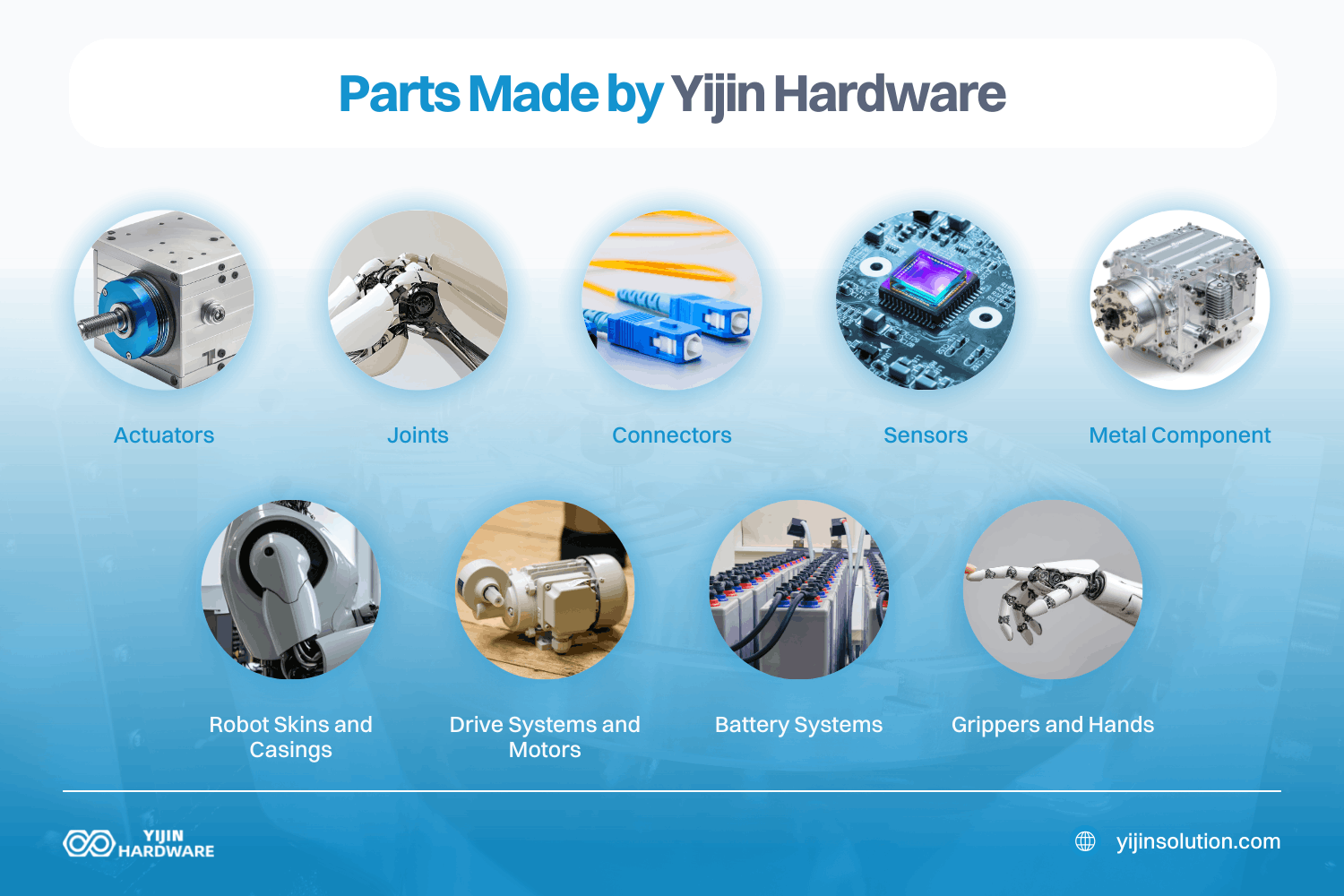
At Yijin Hardware, we specialize in manufacturing a wide range of precision-engineered components for various industries, from robotics and automotive to aerospace and consumer electronics. Below is a concise overview of the key parts we produce for humanoid robots and other advanced systems:
Actuators
Our custom actuators provide high torque and low friction for precise movement and control. These are critical for robots to perform complex tasks with dexterity, such as grasping, lifting, and assembly.
Joints
We produce robotic joints that enable humanoid robots to have multiple degrees of freedom, allowing for human-like movement. These joints are designed for precision and durability, ensuring robots can perform tasks like walking and gripping with high accuracy.
Connectors
Our connectors ensure seamless integration between actuators, sensors, and power systems. These parts are vital for real-time data transmission and efficient robot operation.
Sensors
We manufacture various sensors, including LiDAR, cameras, and pressure sensors, which provide robots with the ability to perceive their environment, avoid obstacles, and perform fine motor tasks.
Metal Components
With our CNC machining and sheet metal fabrication, we produce custom brackets, mounts, and frames that offer strength and flexibility for humanoid robots. These components are crucial for supporting structures and ensuring robot stability.
Robot Skins and Casings
We supply protective skins and casings made from lightweight composites and durable polymers, designed to protect sensitive internal components while maintaining aesthetic appeal for service robots and human-like interactions.
Drive Systems and Motors
Our high-efficiency motors and drive systems power robot movements, from walking to lifting. These components ensure smooth and consistent operation, whether for light tasks or heavy-duty applications.
Battery Systems
We provide high-capacity battery modules that offer long-lasting performance for humanoid robots. These batteries are optimized for weight balance and power density, ensuring robots can operate effectively without frequent recharging.
Grippers and Hands
Our dexterous hands, integrated with force-controlled 3-finger systems, allow robots to handle delicate objects and perform precise tasks. These hands are crucial for applications in industrial assembly, robotic surgery, and product manipulation.
Top Humanoid Robot Parts
Humanoid robots are transforming industries from automation to hospitality. Understanding the costs involved is essential for anyone considering investing in this technology. The cost of humanoid robots depends heavily on their complexity, but advancements in mass production are lowering prices, making them more accessible.
At Yijin Hardware, we offer the high-quality parts that contribute to the success of humanoid robots. If you’re looking to buy a humanoid robot or need components for your robot, contact us to see how our actuators, joints, and connectors can optimize your robot’s performance.
FAQs on How much does a Humanoid Robot Cost?
How expensive are humanoid robots?
Humanoid robots range from $5,000 for basic robots to over $1 million for highly advanced models used in research or industrial settings. The cost depends on the robot’s AI capabilities, actuators, and sensor technology.
How much will an Elon Musk robot cost?
Elon Musk’s Tesla Optimus humanoid robot is projected to cost between $20,000 and $30,000 when mass-produced, making it one of the more affordable options for industrial and personal use.
How much does Sophia the robot cost?
Sophia, developed by Hanson Robotics, is estimated to cost between $100,000 and $200,000 depending on the level of customization and integration required for specific applications.
Back to Top: How much does a Humanoid Robot Cost?




 EN
EN  ES
ES  RU
RU  DE
DE  FR
FR