

- Fabricant de pièces de précision
- Services
- Fabrication de tôles
- Acier inoxydable
Fabrication de tôles en acier inoxydable
Yijin Solution (formerly Yijin Hardware) specializes in custom acier inoxydable Nous fabriquons des tôles pour des applications médicales, agroalimentaires et aérospatiales, des secteurs où la qualité des matériaux est primordiale. Nous travaillons avec les types 304, 316 et 430, ainsi qu'avec des qualités spéciales, en utilisant la découpe laser, le formage par presse plieuse CNC, le soudage TIG et l'électropolissage pour construire des composants complexes qui répondent à vos spécifications exactes.
- ⬤Service
- ⬤Vos coordonnées
- ⬤Soumettre


En quoi la fabrication de tôles en acier inoxydable est-elle différente ?
La fabrication de tôles en acier inoxydable transforme les tôles plates contenant du chrome ≥11% en produits tridimensionnels par des procédés de découpe, de formage, de soudage et de finition. Le chrome forme un film passif d'oxyde de chrome auto-cicatrisant, qui offre une résistance à la corrosion dans les environnements industriels. Nous fabriquons des nuances austénitiques telles que le type 304 et le type 316, des nuances ferritiques telles que le type 430 et des nuances martensitiques telles que le type 410.
Le type 304 présente une limite d'élasticité de 210 MPa lorsqu'il est recuit et de 1050 MPa lorsqu'il est travaillé à froid. Le type 316 ajoute du molybdène 2-3% pour la résistance aux chlorures. Ces matériaux conservent une densité comprise entre 7,5 et 8,0 g/cm³.
Sélection de la qualité des matériaux
| Type de grade | Principales notes | Propriétés | Applications |
|---|---|---|---|
| Austénitique | 304, 316, 310S | Non-magnétique, excellente formabilité | Dispositifs médicaux, cuisines commerciales |
| Ferritique | 430 | Magnétique, résistant à la chaleur | Automobile, appareils ménagers |
| Martensitique | 410, 420 | Haute résistance, magnétique | Outils de coupe, fixations |
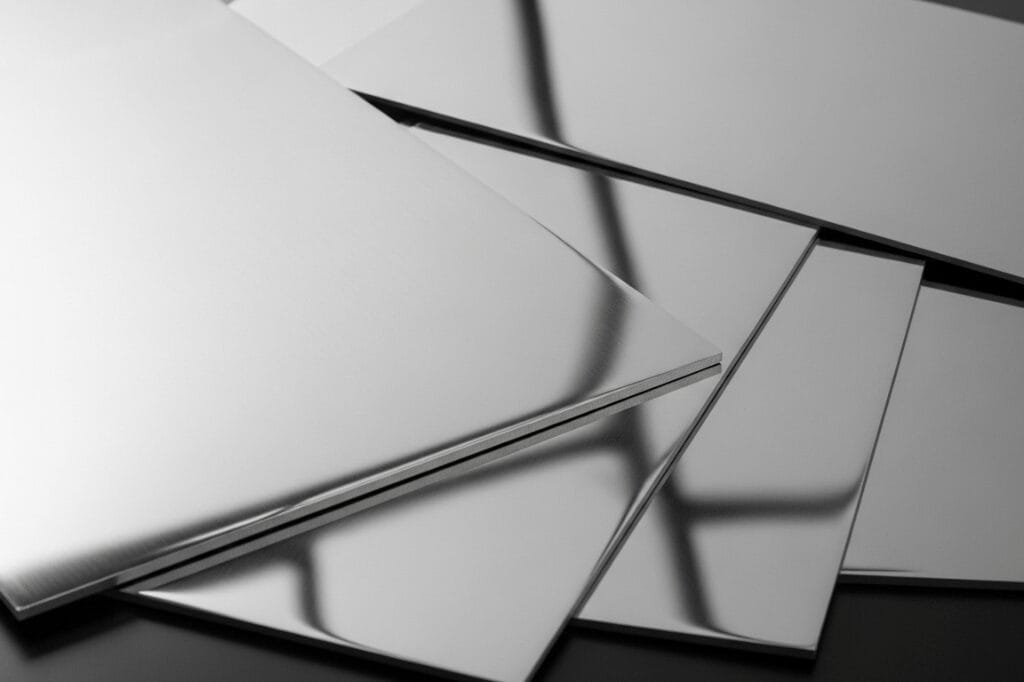

Quels sont les services de fabrication de tôles que nous proposons ?
Nos services de fabrication métallique vont de la découpe aux opérations de finition. Nous traitons des tôles de 0,5 mm à 6 mm d'épaisseur avec une tolérance de ±0,1 mm sur les dimensions critiques.
Opérations de coupe
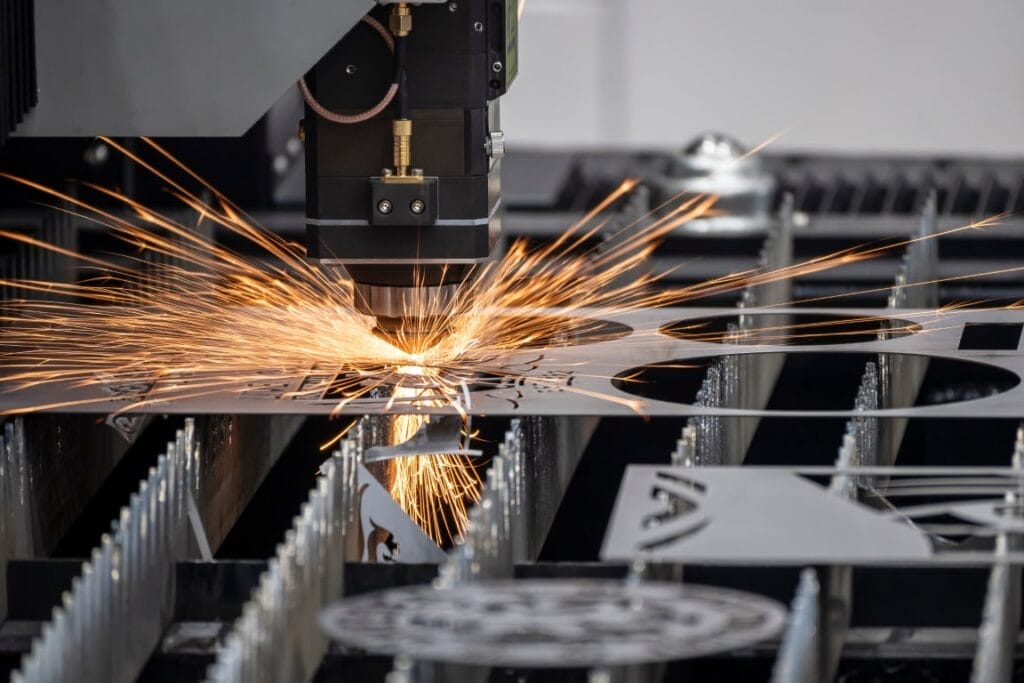
- Découpe au laser: Les systèmes laser à fibre optique découpent des profils complexes avec une précision de ±0,1 mm jusqu'à une épaisseur de 6 mm.
- Découpage plasma: Le plasma à haut ampérage découpe des matériaux de 6 mm à 20 mm pour la fabrication de plaques d'acier.
- Cisaillement: La cisaille guillotine effectue des coupes droites à l'aide des lames supérieures et inférieures.
- Découpe au jet d'eau: Découpe au jet d'eau abrasif à haute pression sans zone affectée thermiquement
Formage et cintrage
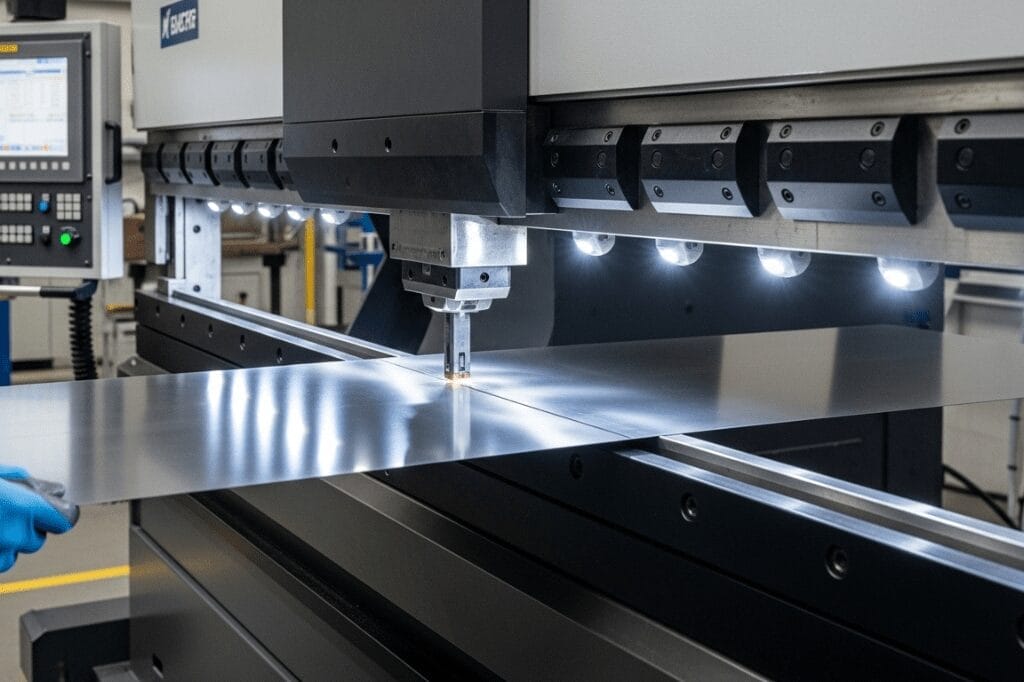
- Pliage à la presse: Les presses plieuses à commande numérique forment des courbes jusqu'à une longueur de 3000 mm avec une précision de ±0,5°.
- Cintrage en rouleau: Crée des formes cylindriques et coniques pour des applications architecturales
- Poinçonnage: Les poinçonneuses à tourelle CNC créent des trous à des taux de production élevés
- Dessin en profondeur: Les matrices progressives permettent de réaliser des formes complexes à partir d'ébauches plates
Soudage et assemblage
Nous utilisons le soudage TIG pour les matériaux minces de 0,5 mm à 3 mm à l'aide d'électrodes en tungstène sous protection d'argon. Le soudage MIG permet de traiter des sections de 3 mm à 12 mm pour une production plus rapide. Les deux procédés respectent les exigences du code de soudage structurel AWS D1.6. L'équipement de notre atelier comprend des fixations pour un alignement précis des soudures et un contrôle de la distorsion.
Options de finition de surface
Finition de la surface Les options sont les suivantes :
- Électropolissage: Enlève la couche de surface de 5-25 μm pour les équipements pharmaceutiques.
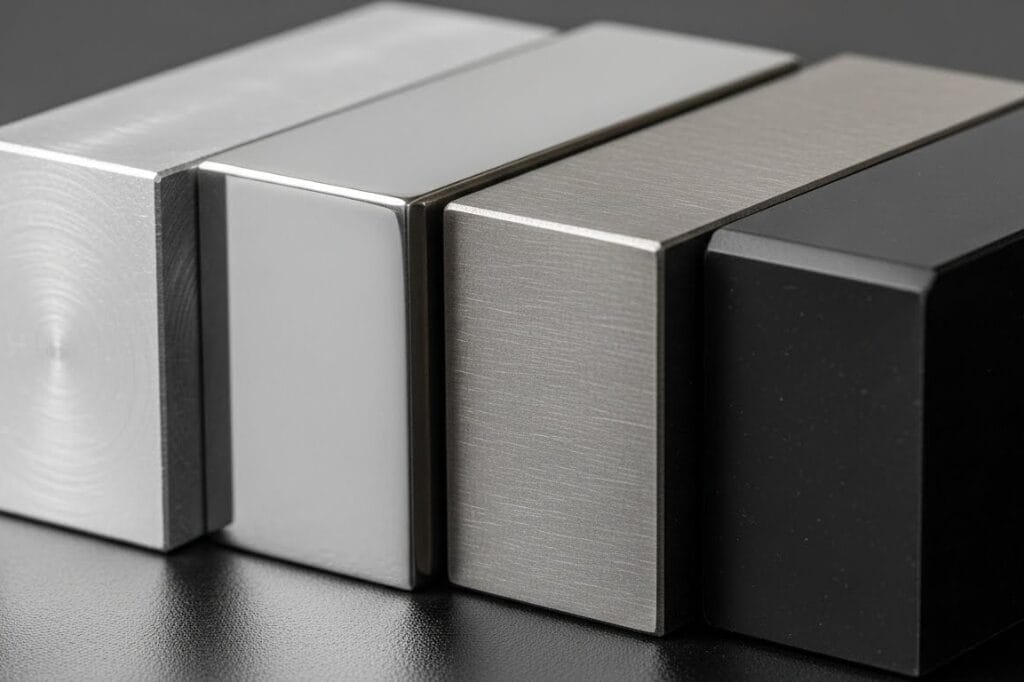
- Polissage mécanique: Crée des finitions miroir avec une rugosité de surface Ra 0,2-0,4 μm.
- Finition de la ligne de démarcation: Produit des motifs de grains directionnels avec des abrasifs de grain 120-180
- Revêtement par poudre: Applique un revêtement protecteur de 50-100 μm dans des couleurs personnalisées.
Comment atteindre la précision dans les géométries complexes ?
Nous contrôlons la précision grâce à des machines programmées par CNC et à des algorithmes de compensation du retour élastique. L'acier inoxydable présente un retour élastique 10-15% plus important que l'acier au carbone en raison d'une limite d'élasticité plus élevée lors des opérations de formage.
Compensation du retour élastique
Notre logiciel de presse plieuse calcule les angles de dépassement en fonction de la qualité, de l'épaisseur et du rayon de courbure du matériau. Le type 304 nécessite un angle supplémentaire de 2 à 4° pour des dimensions finales de 90° dans une épaisseur de 2 mm. Nous mesurons les pièces du premier article et ajustons les paramètres avant le début de la production.
Contrôle de la distorsion de la soudure
Le serrage basé sur un dispositif maintient l'alignement des pièces pendant le soudage en plusieurs passes. Le séquençage symétrique des soudures permet d'équilibrer les contraintes thermiques sur l'ensemble des assemblages. Le soudage par saut alterne entre les emplacements pour répartir l'apport de chaleur. Nous vérifions la qualité des soudures par ressuage et inspection visuelle conformément aux normes AWS.
Quelles sont les industries qui bénéficient de notre fabrication métallique ?
Médical et pharmaceutique
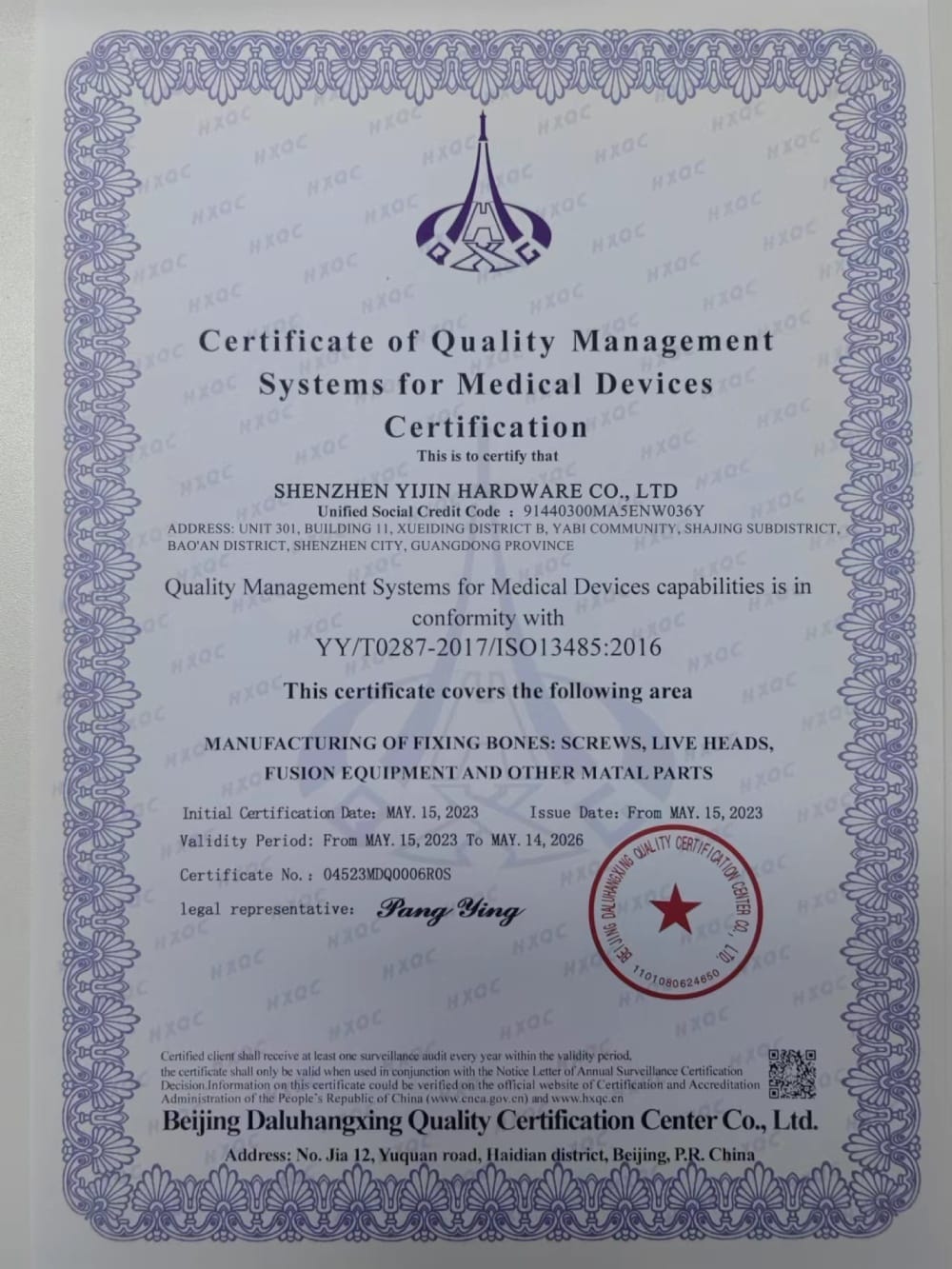
Dispositif médical Les fabricants spécifient le type 316L pour les plateaux d'instruments chirurgicaux, les supports de stérilisation et les équipements de traitement. Nous électropolissons les surfaces pour obtenir une finition Ra 0,4 μm afin de répondre aux exigences de stérilisation. Les composants répondent aux normes de biocompatibilité pour les applications en contact avec les patients.
Transformation des aliments et cuisine commerciale
Les restaurants et les usines de transformation des aliments utilisent le type 304 pour les systèmes de convoyage, les réservoirs de mélange et les enceintes sanitaires. Ce matériau résiste aux acides organiques et aux produits chimiques de nettoyage tout en préservant l'hygiène grâce à des finitions lisses. Nous fabriquons sur mesure des plans de travail, des mains courantes et des équipements de cuisine commerciale conformes aux normes sanitaires 3-A.
Aérospatiale et automobile
Aérospatiale exigent le type 321 pour les composants d'échappement fonctionnant à 815 °C. Automobile Les clients de l'industrie utilisent l'acier ferritique de type 409 pour les boîtiers de convertisseurs catalytiques nécessitant une résistance aux cycles thermiques.
Architecture et construction
Les panneaux de type 316 constituent un revêtement extérieur dans les environnements côtiers où le sel accélère la corrosion. Nous appliquons des finitions brossées avec des motifs de grain 120-240 ou un polissage miroir pour les éléments décoratifs. Notre capacité de fabrication de plaques d'acier comprend des composants structurels conformes aux normes AISC 313-21.
Quelles sont les normes de qualité et les certifications que nous maintenons ?
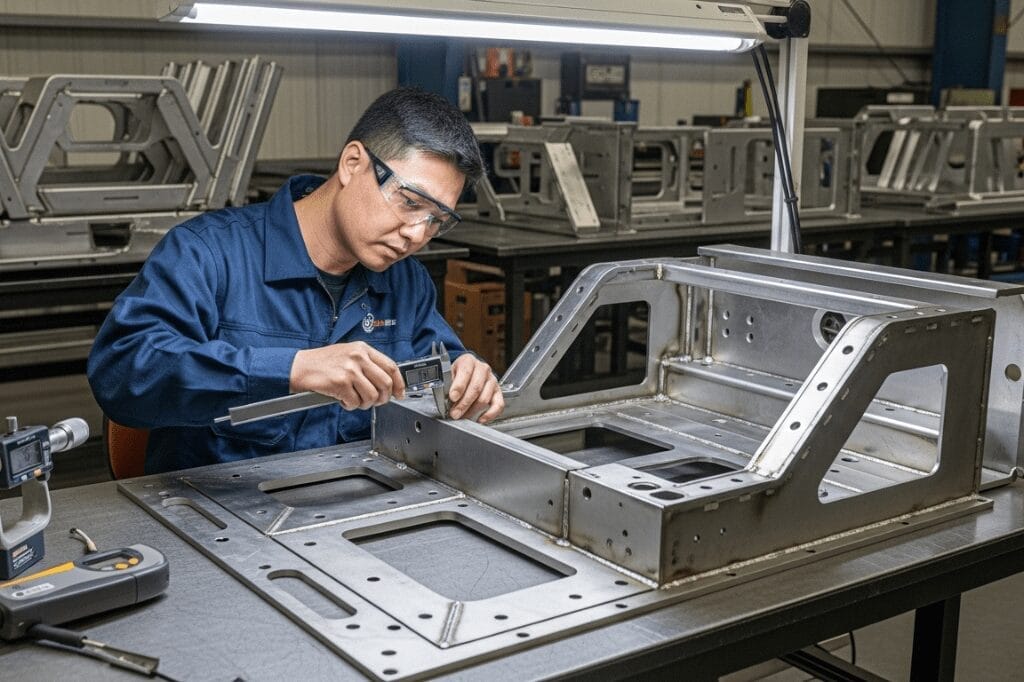
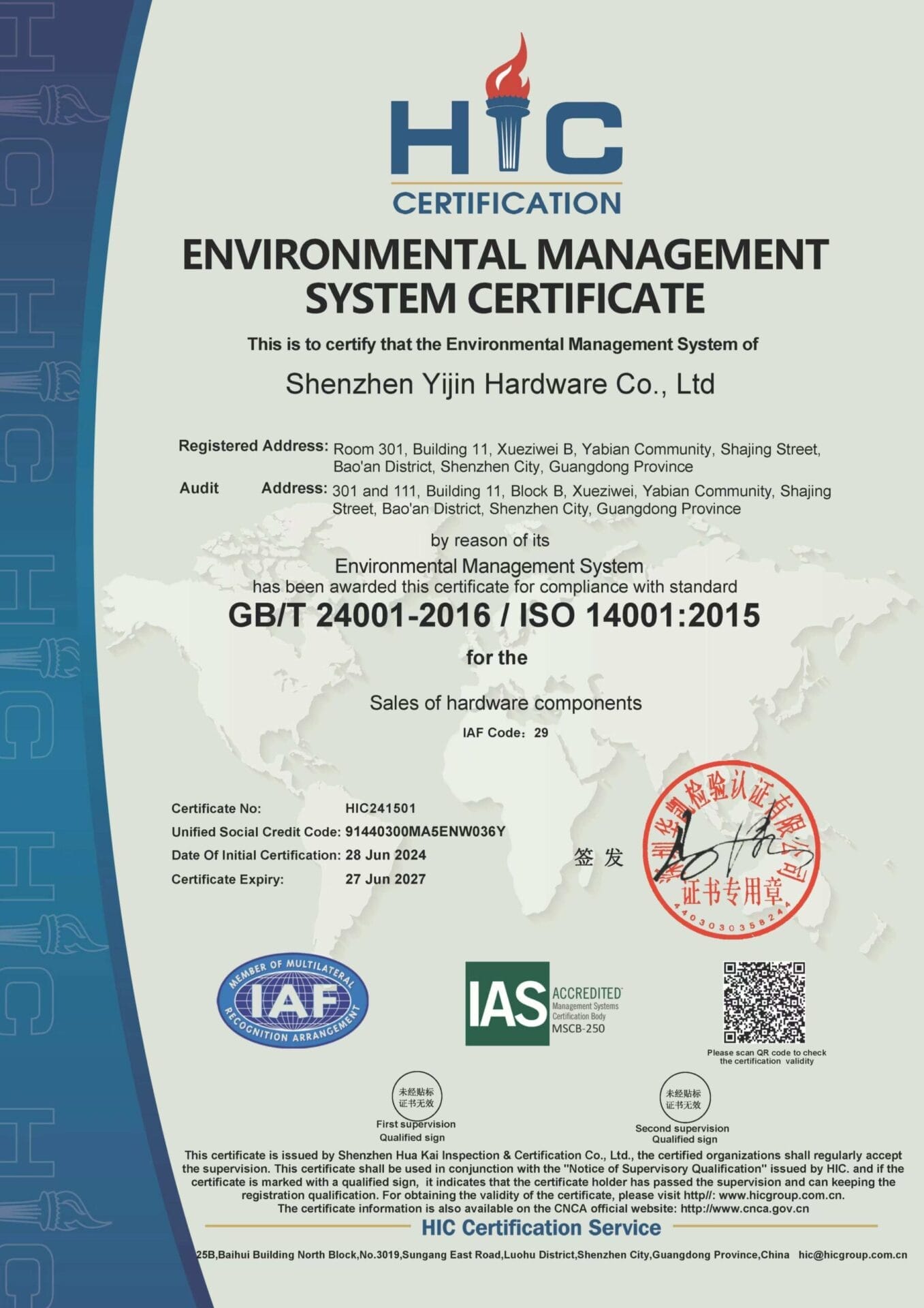
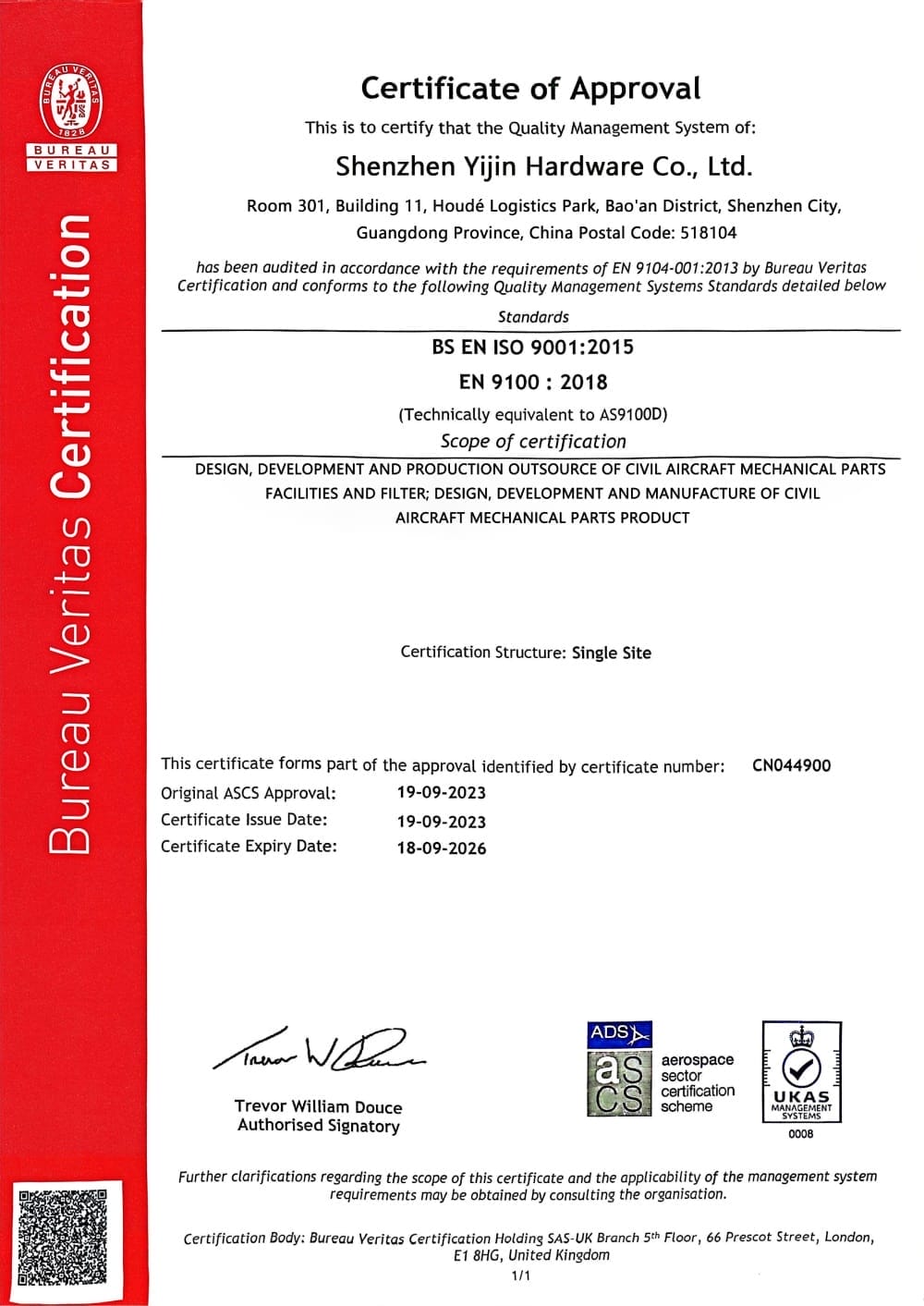
Nous travaillons selon la norme de gestion de la qualité ISO 9001:2015 avec des procédures documentées pour la traçabilité des matériaux, le contrôle des processus et l'inspection. Nos soudeurs certifiés AWS possèdent les qualifications requises par la norme AWS D1.6 pour les travaux structurels.
Conformité des matériaux
| Standard | Application | Vérification |
|---|---|---|
| ASTM A480/A480M | Spécifications des feuilles | Rapports d'essais de l'usine |
| BS EN ISO 3506 | Propriétés des fixations | Analyse chimique |
| ISO 15510 | Limites de composition | Tests de spectroscopie |
Les certificats de matériaux vérifient la composition chimique, les propriétés mécaniques et le traitement thermique de chaque lot de bobines. Nous assurons une traçabilité complète, depuis la certification de l'usine jusqu'à la fabrication finale, avec des numéros de chauffage documentés.
Capacités d'inspection
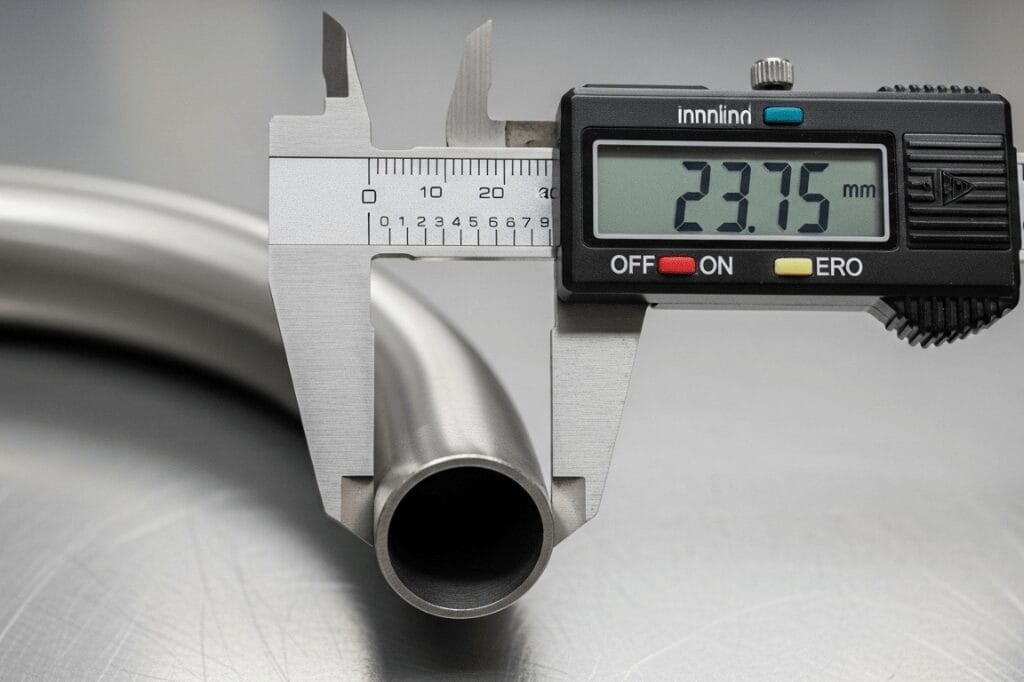
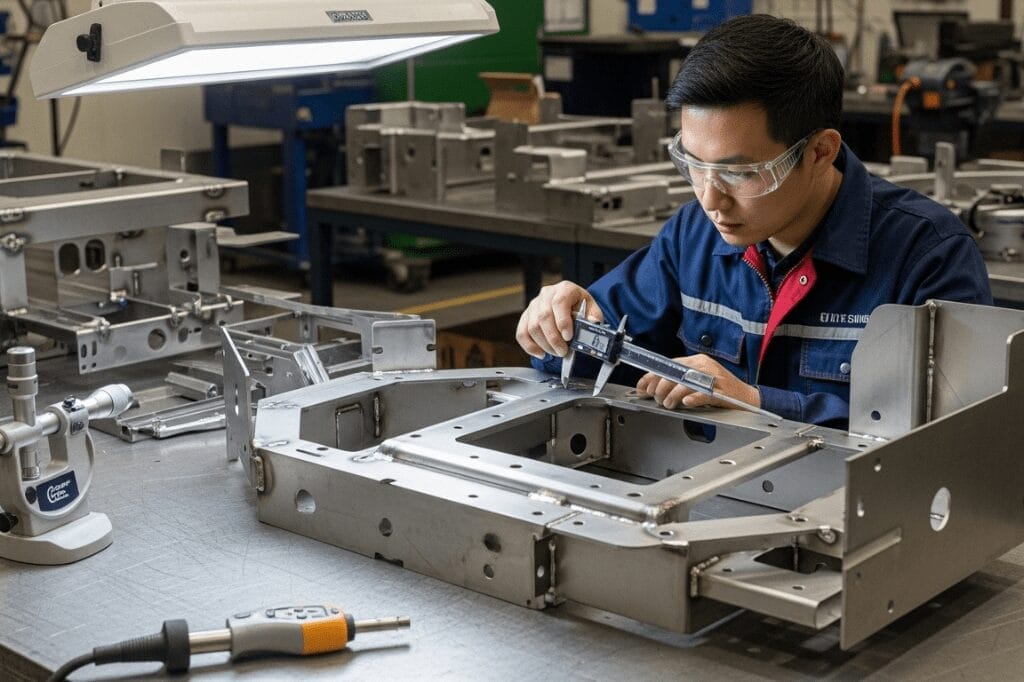
L'inspection dimensionnelle utilise des micromètres étalonnés mesurant jusqu'à ±0,01 mm, des pieds à coulisse numériques jusqu'à ±0,02 mm et des équipements CMM jusqu'à ±0,005 mm. La vérification de l'état de surface s'effectue à l'aide de profilomètres mesurant les valeurs Ra de 0,1 μm à 10 μm. Nous effectuons des essais hydrostatiques à 1,5 fois la pression de conception pour les composants des appareils à pression.
Comment la conception pour la fabrication améliore-t-elle vos pièces ?
Notre processus de fabrication sur mesure comprend l'examen de la conception avant la production du prototype. Nous optimisons la géométrie des pièces pour une fabrication efficace et identifions les problèmes potentiels dès le début du projet.
Lignes directrices pour la conception des cintrages
- Rayon de courbure minimum : 2t pour le type 304, 1,5t pour le matériau recuit (t = épaisseur)
- Découpage de la courbure : Profondeur de 0,5t à 1,0t aux intersections
- Distance du bord du trou : Minimum 2t des lignes de pliage et des bords
- Rayon de l'angle intérieur : Rayon complet au lieu d'angles aigus à 90
Normes relatives aux trous et aux découpes
Les diamètres de trous standard par incréments de 1 mm réduisent les coûts d'outillage. Le diamètre des trous doit être supérieur à 1,2× l'épaisseur du matériau pour le poinçonnage. Nous maintenons une distance minimale de 2 tonnes entre les bords et une épaisseur minimale de 5 mm entre les caractéristiques pour assurer l'intégrité structurelle.
Conception des joints de soudure
Les soudures d'angle requièrent une taille minimale de 3 tonnes, tandis que les soudures de rainure nécessitent 1,5 tonne pour une pénétration complète, conformément à la norme AWS D1.6. Les soudures de rainures en V utilisent un angle inclus de 60° dans les matériaux de 6 mm et plus d'épaisseur avec une ouverture de 1,5 mm à la racine. Les joints d'angle bénéficient de coins intérieurs à rayon complet pour améliorer l'accès aux soudures.
Why Choose Yijin Solution (formerly Yijin Hardware) for Steel Fabrication Service?
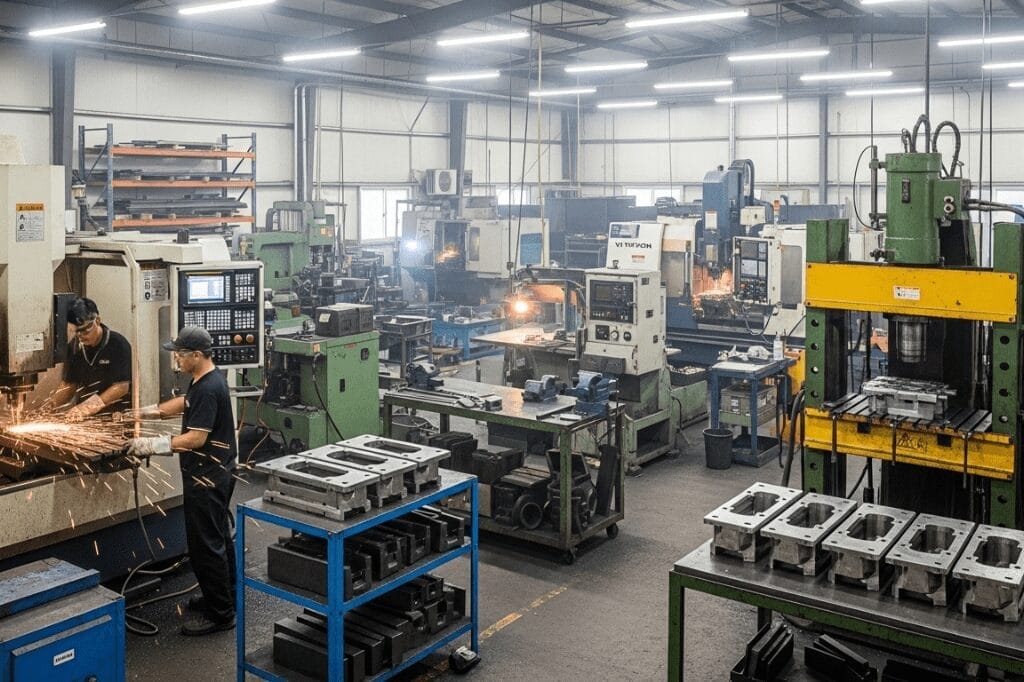
Yijin Solution (formerly Yijin Hardware) operates an ISO 9001 certified facility with integrated laser cutting, press brake forming, TIG welding, and electropolishing capabilities. Our engineering team brings extensive experience in metal plate fabrication across medical, aerospace, and commercial sectors. We work with stainless steel, aluminum, mild steel, and brass materials to manufacture products meeting precise specifications.
Nous livrons des prototypes en 3 à 5 jours et des volumes de production en 2 semaines. Notre système de qualité garantit la précision grâce à l'inspection du premier article, à la vérification en cours de processus et à la documentation finale. En tant que fournisseur de confiance et fabricant d'acier inoxydable, nous fournissons une assistance complète, y compris la sélection des matériaux, l'optimisation des tolérances et la consultation en matière de conception. Contactez notre équipe pour discuter de vos besoins en matière de métallurgie et des détails de votre projet.
Ce que disent nos clients




FAQ sur la fabrication de tôles en acier inoxydable
L'acier inoxydable nécessite un équipement spécialisé en raison des taux élevés d'écrouissage et d'un retour élastique plus important que l'acier au carbone. Le matériau se durcit rapidement pendant le formage à froid, nécessitant 25-40% plus de force qu'une épaisseur équivalente d'acier au carbone. Un outillage et des paramètres de coupe appropriés permettent de fabriquer avec succès de l'acier inoxydable lorsque les opérateurs suivent les procédures établies pour chaque nuance.
Le type 304 permet un soudage plus facile avec un apport de chaleur plus faible et un risque de fissuration à chaud réduit par rapport au type 316. Le type 316 contient du molybdène 2-3% qui augmente la viscosité du bain de soudure, ce qui nécessite un contrôle minutieux des paramètres. Choisissez le type 304 pour la fabrication générale et le type 316 lorsque les applications exigent une résistance supérieure à la corrosion dans les environnements chlorés.
Les trois techniques principales comprennent la découpe pour séparer le matériau à l'aide d'un laser ou d'un plasma, le formage pour plier le matériau à l'aide de presses plieuses, et l'assemblage pour relier les composants à l'aide d'un soudage TIG ou MIG. La découpe permet d'obtenir une précision de ±0,1 mm, le formage crée des formes avec une tolérance angulaire de ±0,5° et le soudage fixe les composants de manière permanente conformément aux codes structurels de l'AWS.
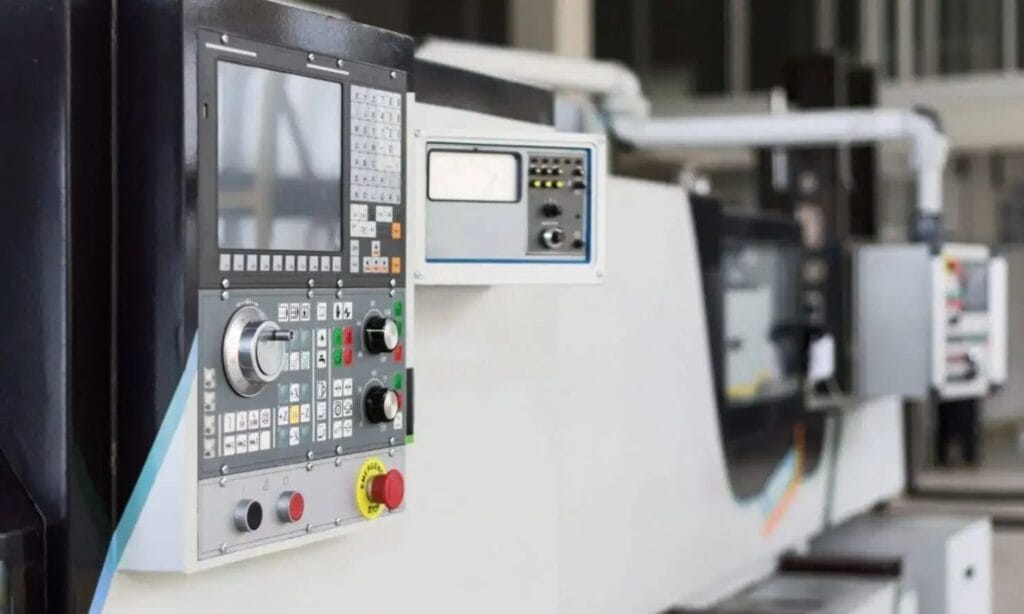
Ressources CNC
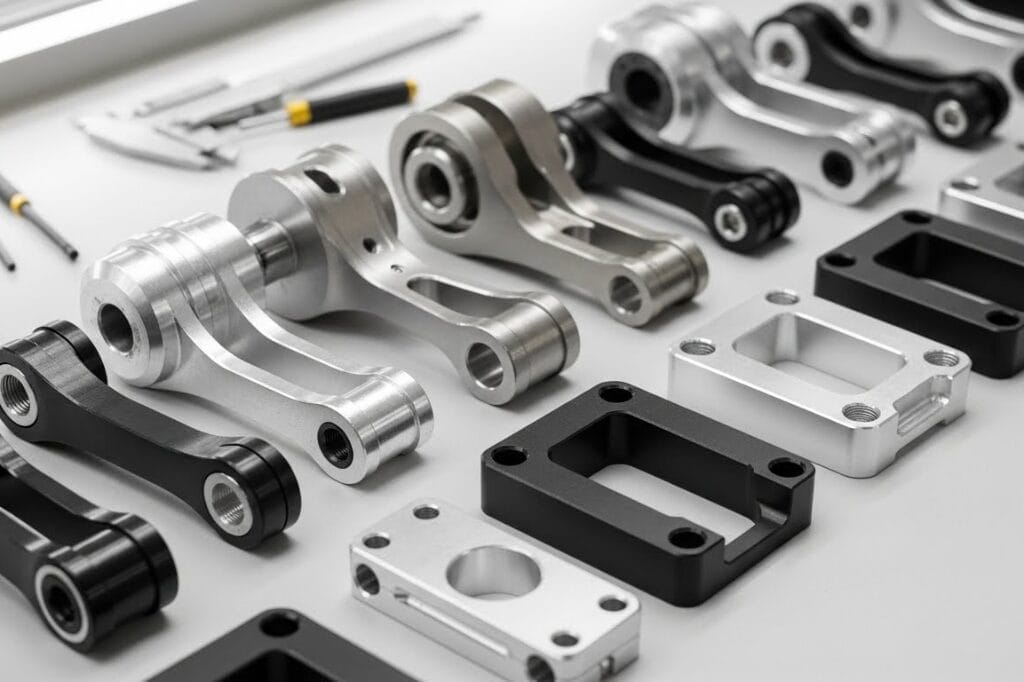
Humanoid Robot Components | What Actually Makes these Machines Work
Humanoid robots aren’t just fancy machines that look human-shaped, they’re complex systems engineered to replicate human-like movement, perception, and decision-making
Advanced Materials for Humanoid Robots | Your Full Guide to the Latest Technology
Building a humanoid robot means choosing materials that balance competing demands—strength without excessive weight, flexibility where needed, and durability to
Humanoid Robot Supply Chain | Why CNC Machining in the Supply Chain Matters More than Ever
Building a humanoid robot isn’t like assembling a phone or a laptop. You can’t source generic components off the shelf
Commencez dès aujourd'hui. Les pièces sont fabriquées rapidement.
Conception gratuite de pièces usinées pour vos projets avec des délais d'exécution rapides.