

CNC machines have totally changed how we manufacture parts, delivering precision, automation, and versatility that manual methods can’t touch. They’re incredibly capable tools that have become essential across countless industries. But every technology has its boundaries, and Usinage CNC is no exception. If you’re not aware of these limitations upfront, they can create expensive headaches—wasted materials, blown budgets, missed deadlines, and designs that simply can’t be produced as drawn.
Yijin Solution breaks down the real-world limitations you’ll face with CNC machines in actual production environments. Understanding where CNC falls short is just as valuable as knowing where it shines—it helps you design smarter, choose the right manufacturing method, and avoid costly mistakes before they happen.
Principaux enseignements
- CNC machine size is limited by the work envelope and tool reach—you can’t machine parts larger than the machine’s physical capacity
- Tool wear, thermal drift, and vibration all affect precision over time, especially on long production runs
- The type of CNC machine impacts what you can produce efficiently—Fraisage CNC machines excel at different tasks than lathes or routers
- Size and material limitations directly impact what CNC machines don’t handle well, affecting both machine shop capabilities and the overall manufacturing process
- Understanding design limitations and advantages and limitations of CNC technology compared to alternatives like 3D printing helps you choose the right process
- Working with CAD software whilst keeping CNC constraints in mind prevents creating designs that look perfect on screen but are impractical or expensive to manufacture
- Knowing your CNC machining services provider’s specific machine limitations helps you avoid costly errors and redesigns after quoting
What are CNC Machines?
CNC machines—which stands for Computer Numerical Control—are automated manufacturing tools controlled by computer programs rather than human hands. They follow precise digital instructions to cut, drill, mill, or turn raw materials into finished parts with accuracy that’s difficult to achieve manually. Think of them as robotic machinists that execute the same operation perfectly every single time without getting tired or distracted.
These machines have become absolutely essential in modern manufacturing because they dramatically reduce human error whilst producing highly accurate parts consistently. A CNC machine reads programmed toolpaths and translates them into physical movements, the cutting tool goes exactly where it needs to go, at the right speed, cutting to the exact depth specified. This level of consistency and repeatability is why CNC has largely replaced manual machining for anything requiring tight tolerances or high-volume production.
Limitations of CNC Machines
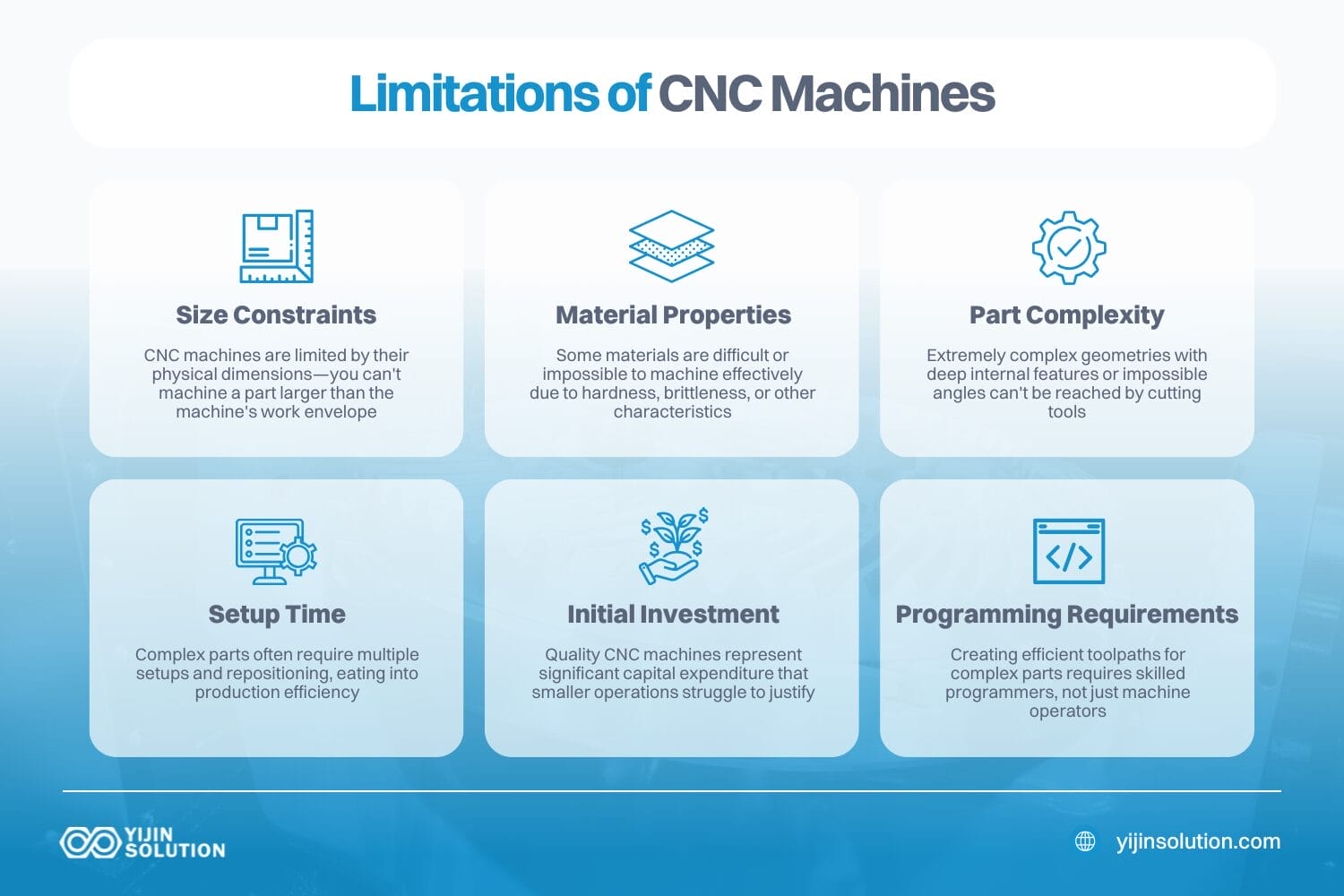
Whilst CNC machines are incredibly powerful tools, they’re not without real constraints that affect what you can produce and how efficiently. Here are the key limitations you’ll encounter:
- Size Constraints: CNC machines are limited by their physical dimensions—you can’t machine a part larger than the machine’s work envelope
- Propriétés des matériaux: Some materials are difficult or impossible to machine effectively due to hardness, brittleness, or other characteristics
- Complexité des pièces: Extremely complex geometries with deep internal features or impossible angles can’t be reached by cutting tools
- Temps de préparation: Complex parts often require multiple setups and repositioning, eating into production efficiency
- Investissement initial: Quality CNC machines represent significant capital expenditure that smaller operations struggle to justify
- Programming Requirements: Creating efficient toolpaths for complex parts requires skilled programmers, not just machine operators
Understanding these limitations helps you design parts that CNC machines can actually produce efficiently rather than creating drawings that look good but are impractical to manufacture.
How do CNC Machine Sizes Affect Their Limitations?
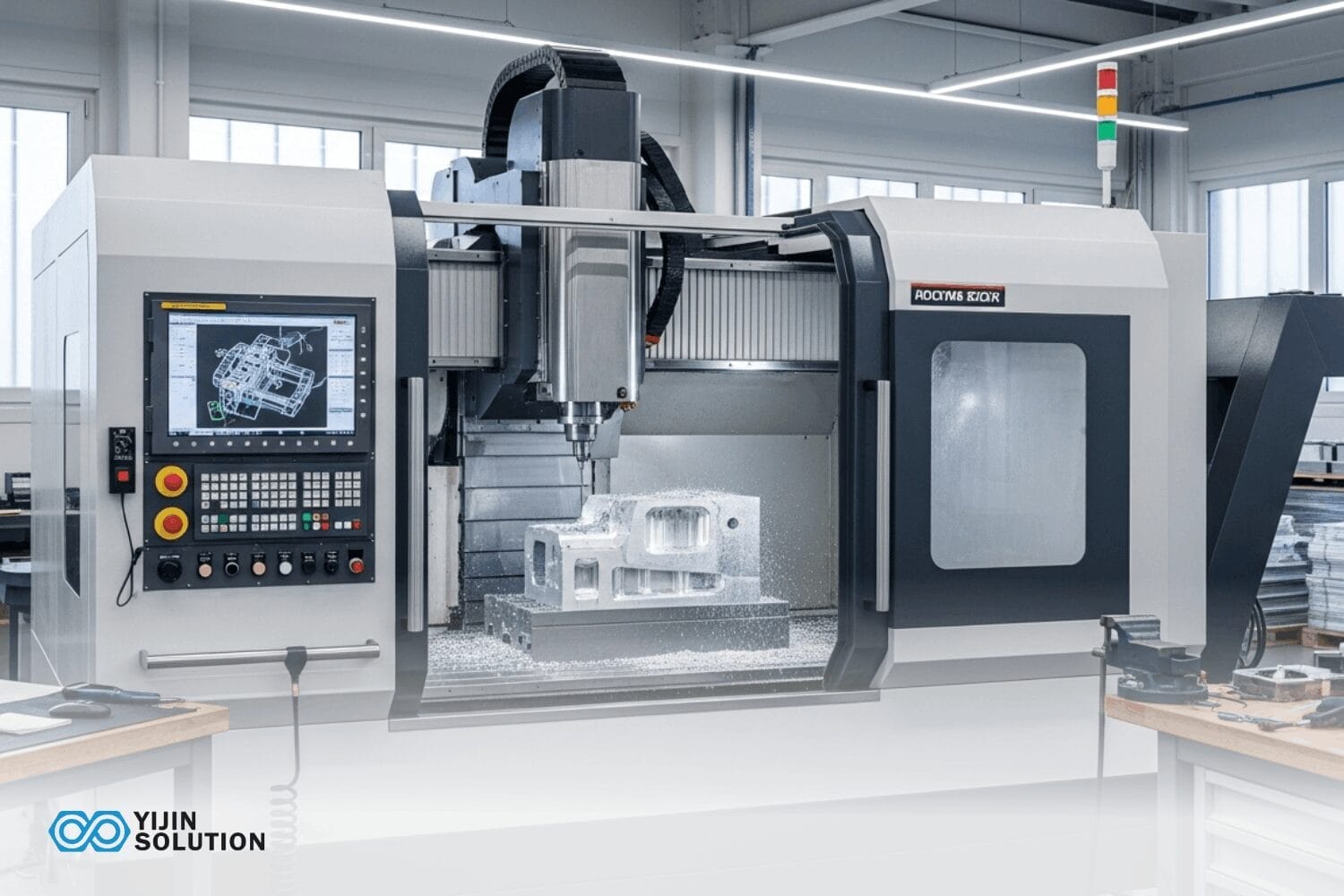
The size of the CNC machine directly influences what can be produced. Every CNC machine has a work envelope, which is the space within which the machine operates. Larger machines can handle larger parts, but they come with their own set of constraints, such as more complex setups. For example, the size of the CNC milling machine’s table may limit how large a part can be milled in a single pass. In contrast, large parts with CNC may require multiple setups, adding time and complexity to the production process. CNC machine sizes are also limited by their axes and the reach of the cutting tool.
What Role do Material Properties Play in CNC Limitations?
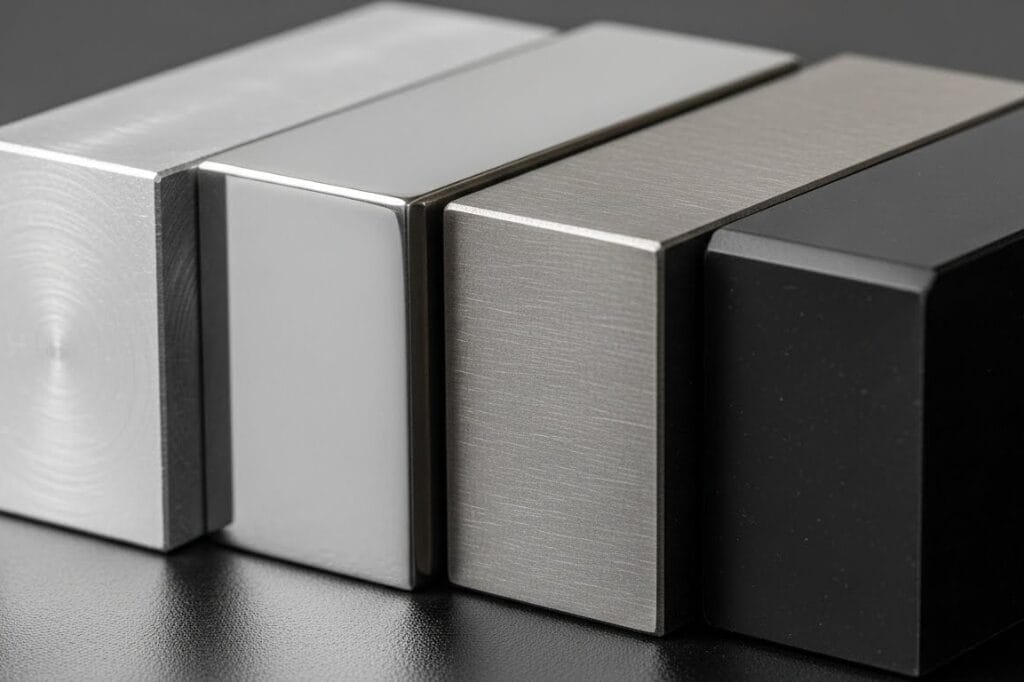
The machining process varies depending on the material being worked with. Hard materials like titane, acier, and certain plastiques are more difficult to machine than softer materials like aluminium. CNC machines are designed to handle specific types of materials, but the difficult to machine nature of certain alloys requires specialized tools and slower cutting speeds. CNC machining technology is continuously evolving to handle different materials, but challenges remain with materials that are too tough or have high wear resistance.
How does Tool Wear Affect CNC Precision?
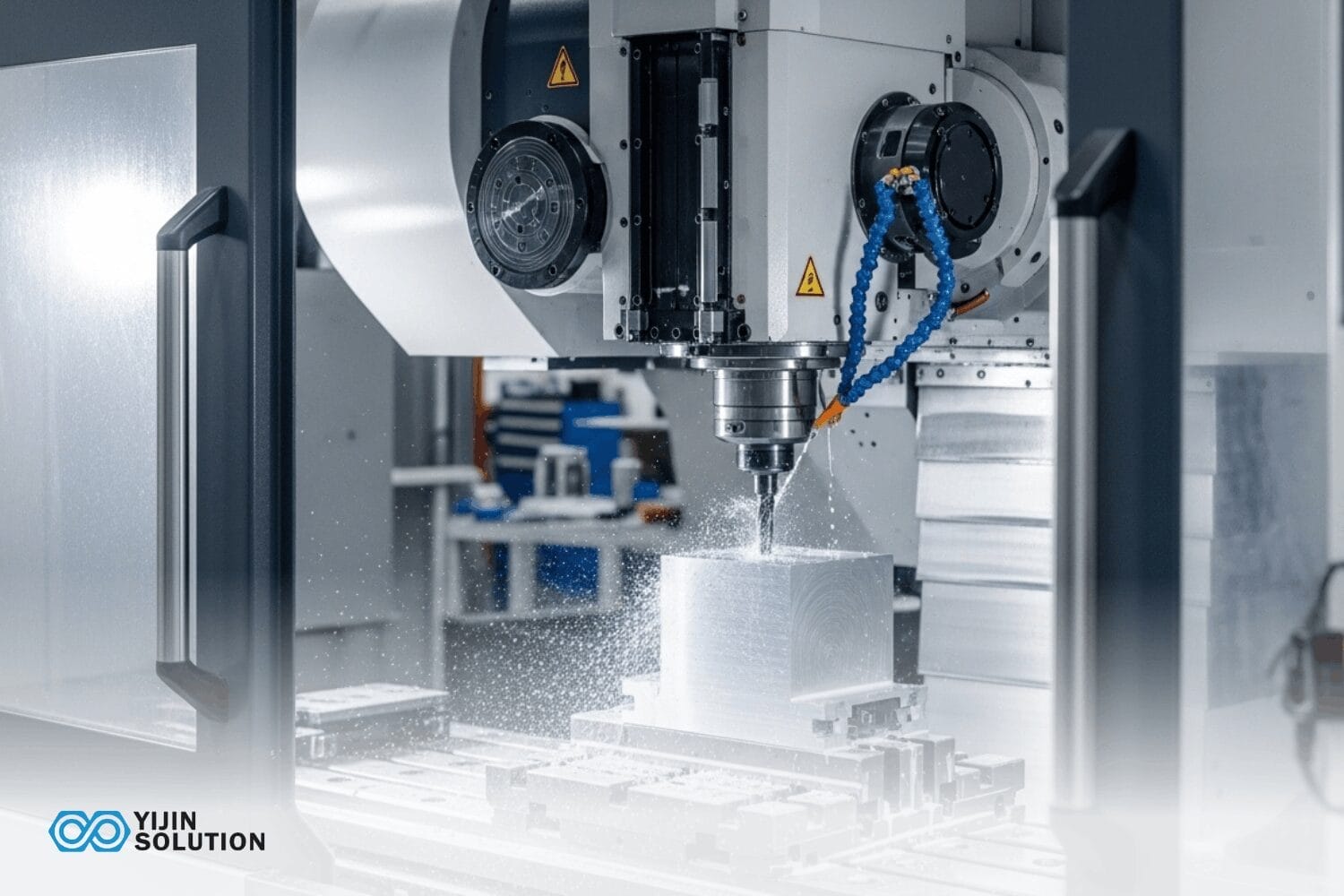
Tool wear is a natural part of the CNC process. Over time, tools used in CNC milling and other machining operations lose their sharpness and can cause a decrease in precision. This issue is more prominent when machining hard materials. CNC machines’ precision can also be affected by cutting tool deflection, especially at high speeds. Regular tool maintenance is essential to ensure that CNC machinery maintains its tolerance and does not impact the finished product.
How do Thermal Drift and Vibration Affect CNC Machines?
Thermal drift occurs when heat from the cutting process causes the machine components to expand or contract, affecting accuracy. In addition, vibration can occur during the machining process, especially when working at higher cutting speeds. Both thermal drift and vibration can lead to dimensional instability, which reduces the overall precision of the part. Cooling systems and machine adjustments are commonly used to mitigate these effects.
CNC Machines vs Traditional Machines | A Quick Comparison
While CNC machines offer superior automation and precision, traditional manual machines still have their place in manufacturing. Here’s a quick breakdown of CNC machines compared to manual machines:
| Fonctionnalité | Machines CNC | Manual Machines |
|---|---|---|
| Précision | High precision with minimal human error | Lower precision due to manual operation |
| Automation | Fully automated | Requires skilled operators |
| Complexité | Can handle complex designs | Better suited for simple designs |
| Vitesse de production | Faster for mass production | Slower for repetitive tasks |
| Coût de la mise en place | High initial cost | Lower initial cost |
CNC machines excel at mass production and handling complex geometries, while manual machines remain an excellent choice for simpler or smaller runs.
How does Workholding Affect CNC Performance?
Workholding is the method of securing a part on a CNC machine. Poor workholding can lead to inaccuracies due to part movement during machining. Machine operators must use specialized fixturing to ensure that parts are securely held throughout the machining process. Small or irregularly shaped parts may be difficult to secure properly, leading to errors in the finished product.
What are the Post-Processing Constraints of CNC Machines?
Once a part is produced on a CNC machine tool, it often requires post-processing, such as coating, finishing, or assembly. However, large parts with CNC may not fit into certain post-processing equipment, such as spray booths or drying ovens. This adds an additional layer of complexity to the overall manufacturing process. Moreover, post-processing increases the time and cost of production.
How does CNC Machining Compare to Traditional Machining?
While CNC machines offer precision and repeatability, traditional machining methods can still be used for simpler parts. Manual machines may be slower and less precise, but they still offer versatility in certain situations. CNC machines are ideal for mass production and parts with complex geometries, whereas traditional machining methods may be better suited for smaller batches or parts that don’t require high precision.
Key Tips for Optimizing CNC Design and Manufacturing
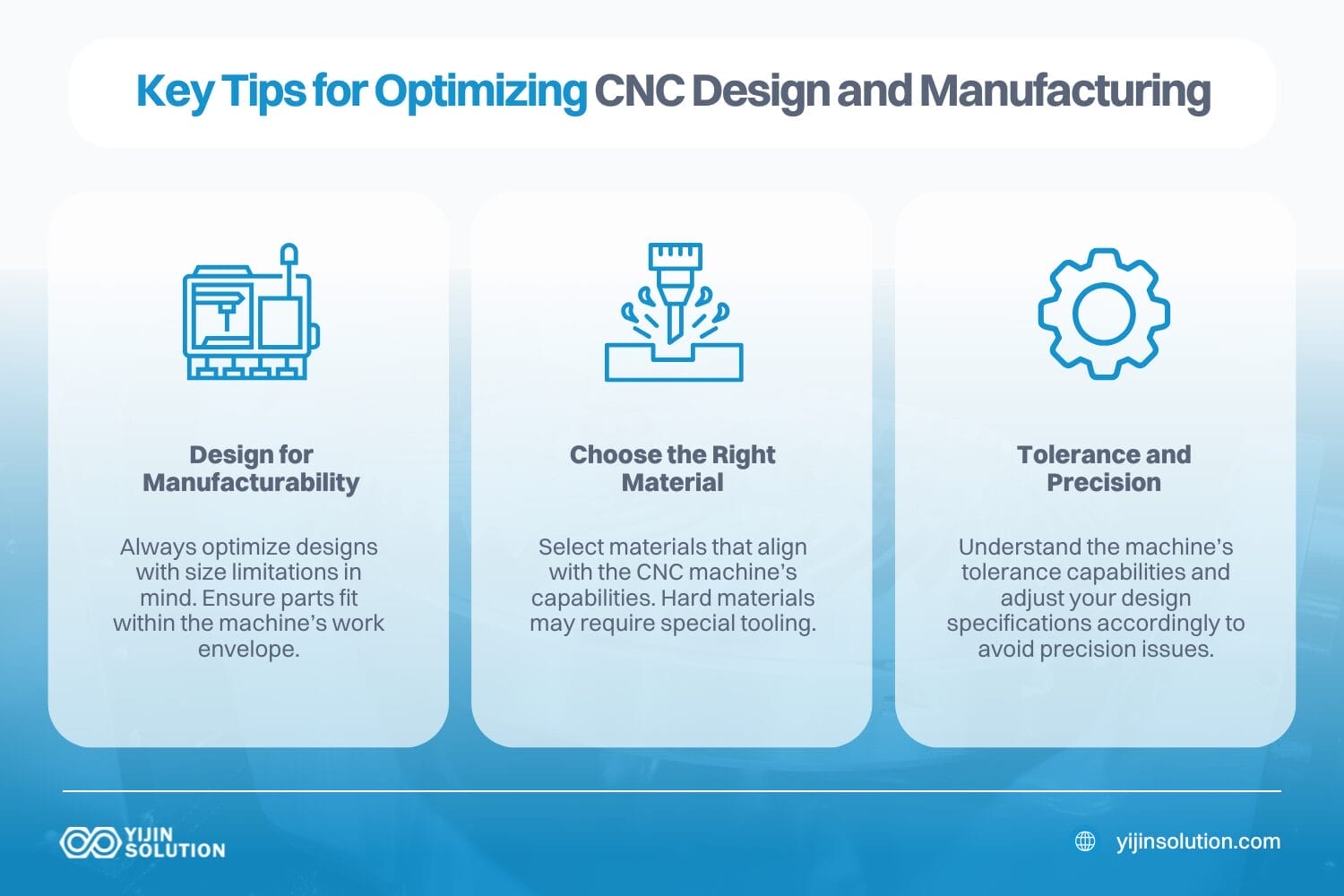
To maximize productivity and minimize mistakes in the CNC process, consider the following design guidelines:
- Conception pour la fabrication: Always optimize designs with size limitations in mind. Ensure parts fit within the machine’s work envelope.
- Choose the Right Material: Select materials that align with the CNC machine’s capabilities. Hard materials may require special tooling.
- Tolérance et précision: Understand the machine’s tolerance capabilities and adjust your design specifications accordingly to avoid precision issues.
This approach will ensure the manufacturing process runs smoothly, reducing costs and production time.
Yijin Solution: Top CNC Capabilities
While CNC machines offer numerous benefits, understanding their limitations is crucial to achieving success in manufacturing. By selecting the right machine tool for the job, optimizing your designs to fit within CNC machine sizes, and understanding the limitations of CNC machining, you can avoid delays and improve the quality of your finished product. If you’re ready to take your designs to the next level and leverage CNC technology, contact us today for a consultation.
Optimize your designs to meet CNC capabilities and improve manufacturing efficiency with Yijin Solution. Let our CNC machining services help bring your ideas to life with precision and speed. Contactez-nous dès aujourd'hui to find out how we can produce parts to your exact specifications, for industries like aérospatiale, automobile, and more.
FAQs on Limitations of CNC Machines
What are the problems with CNC machines?
CNC machines face issues like tool wear, thermal drift, and vibration, which can impact precision and finition de la surface. These problems can increase cycle times and production costs if not properly managed.
What are the advantages and disadvantages of CNC machines?
The advantages of CNC machines include high precision, automation, and the ability to handle complex geometries. However, they are expensive to maintain, require skilled operators, and can be limited by size and material constraints.
What are the limitations of milling machines?
Milling machines have size limitations due to their work envelope and tool reach. They can struggle with deep pockets or complex shapes that require specialized tooling or multiple setups.
Retour en haut de la page : Limitations of CNC Machines | What You Need to Know