

Choosing between a CNC machine and a laser cutter isn’t straightforward, especially when you’re trying to figure out which one genuinely suits your specific needs and budget. Both technologies bring real advantages to the table, but they excel at quite different tasks depending on what material you’re cutting and what your project demands. CNC machines handle thicker materials brilliantly and create intricate 3D cuts that laser cutters simply can’t manage. Meanwhile, laser cutters dominate when you need speed and razor-sharp precision, particularly for detailed cuts on thinner materials.
In this article, Yijin Solution compares Machines CNC et découpeurs laser head-to-head, breaking down their strengths and the key differences that actually matter for your work. We’ll look at material thickness capabilities, precision requirements, and project complexity so you can make an informed decision rather than guessing.
Principaux enseignements
- CNC machines work best with thicker materials and excel at creating 3D cuts that laser cutters can’t handle
- Laser cutters deliver faster cutting speeds and sharper precision for detailed work on thin materials
- The CNC vs laser cutter decision usually comes down to three factors: material thickness you’re working with, precision requirements, and how complex your projects are
- CNC routers handle a broader range of materials than laser cutting machines—they’re more versatile overall
- When comparing CNC vs laser cutter for wood specifically, lasers cut faster and leave cleaner edges, but CNC routers dominate when you’re working with thicker wood or need complex 3D shapes
What is CNC Cutting Anyway?
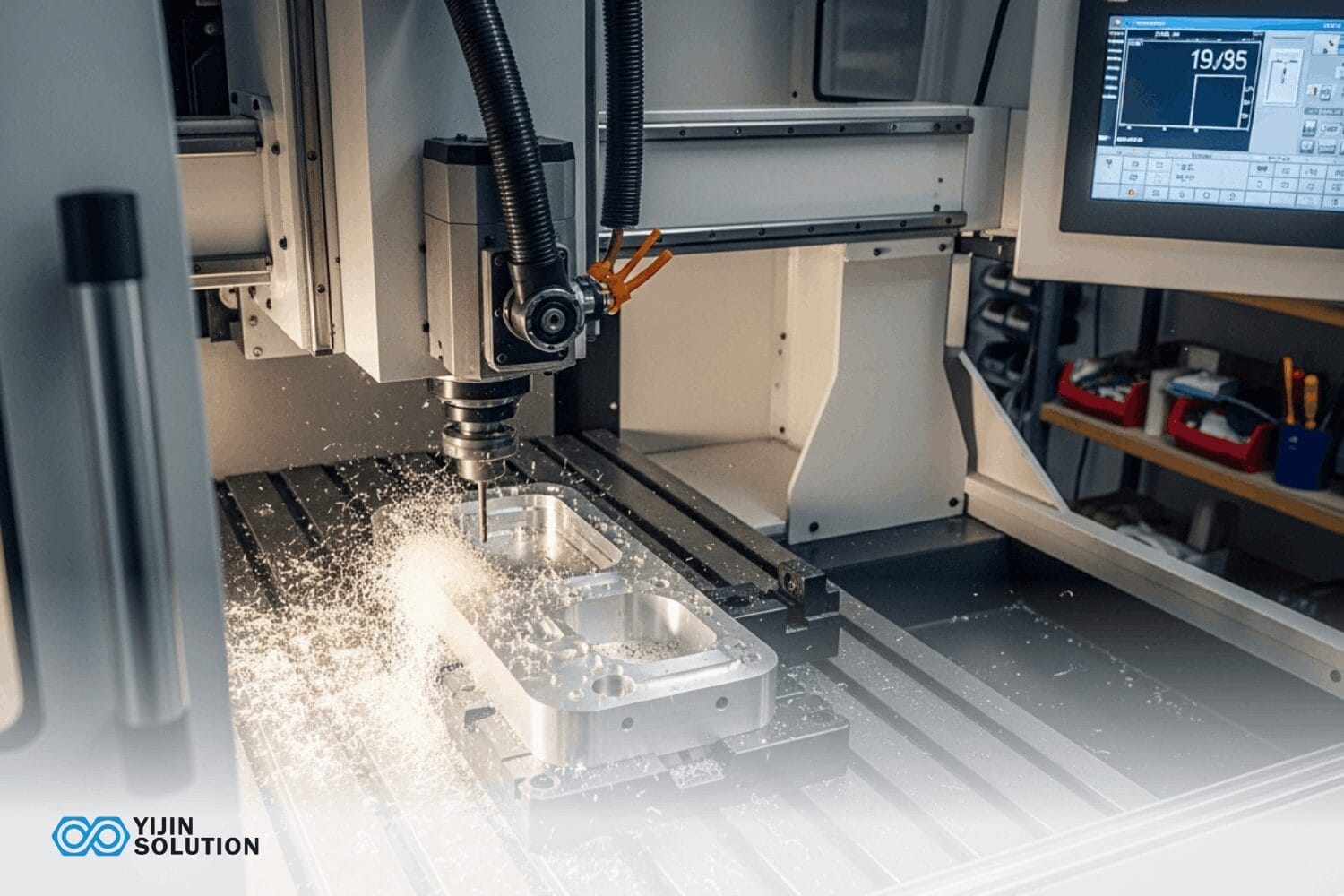
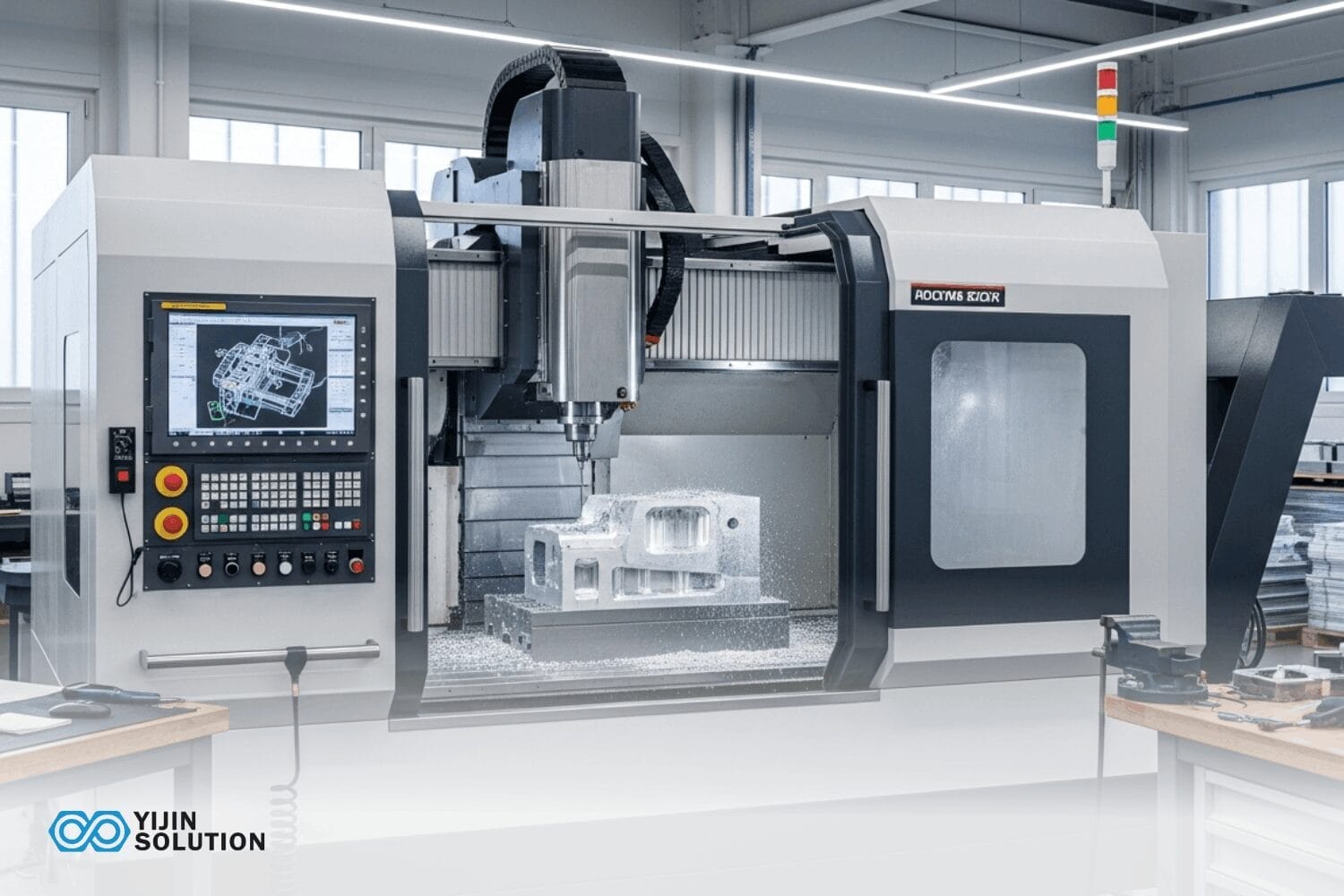
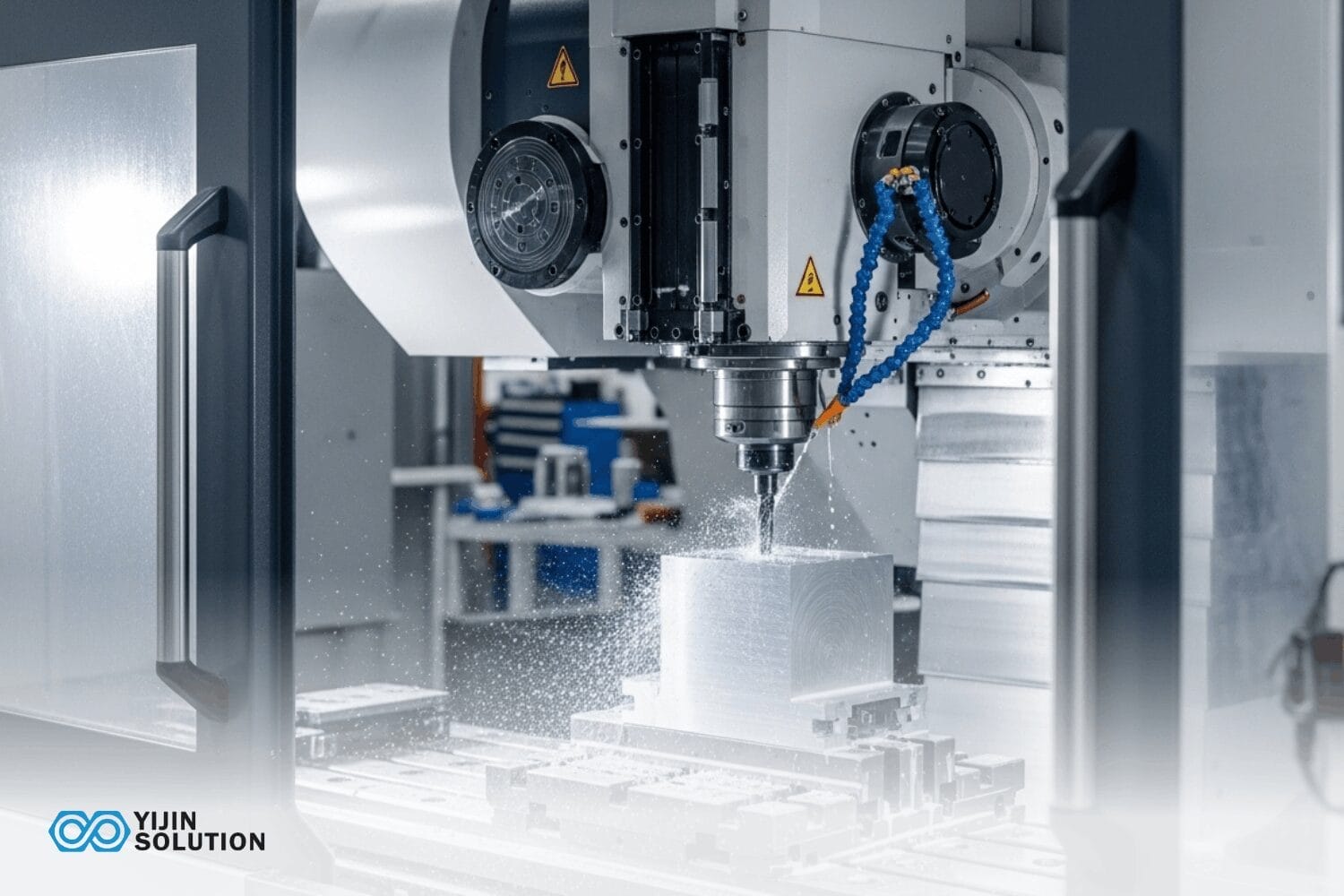
CNC (Computer Numerical Control) cutting uses a spinning bit or cutting tool that physically removes material from your workpiece—whether that’s wood, metal, plastic, or composite materials. CNC machines are programmable systems controlled by CAD software that guides the cutting tool along precise paths. Different CNC machines like Défonceuses CNC et Broyeurs CNC use spindles and various cutting tools to carve, mill, drill, or engrave detailed designs into your material.
Key Components of CNC Cutting
- Spinning Bit: The actual cutting tool that chips away material from the workpiece as it spins
- Broche: The rotating mechanism that powers and controls the cutting tool’s speed
- Code G: The programming language that contains instructions telling the CNC system exactly where to move and how to cut
Yijin Solution’s CNC machines deliver excellent precision, particularly when you’re creating 3D shapes or intricate cuts that require depth control. They’re perfect for cutting thicker materials like metal, composites, or solid wood where a laser wouldn’t penetrate effectively or would take forever to cut through.
What is Laser Cutting?
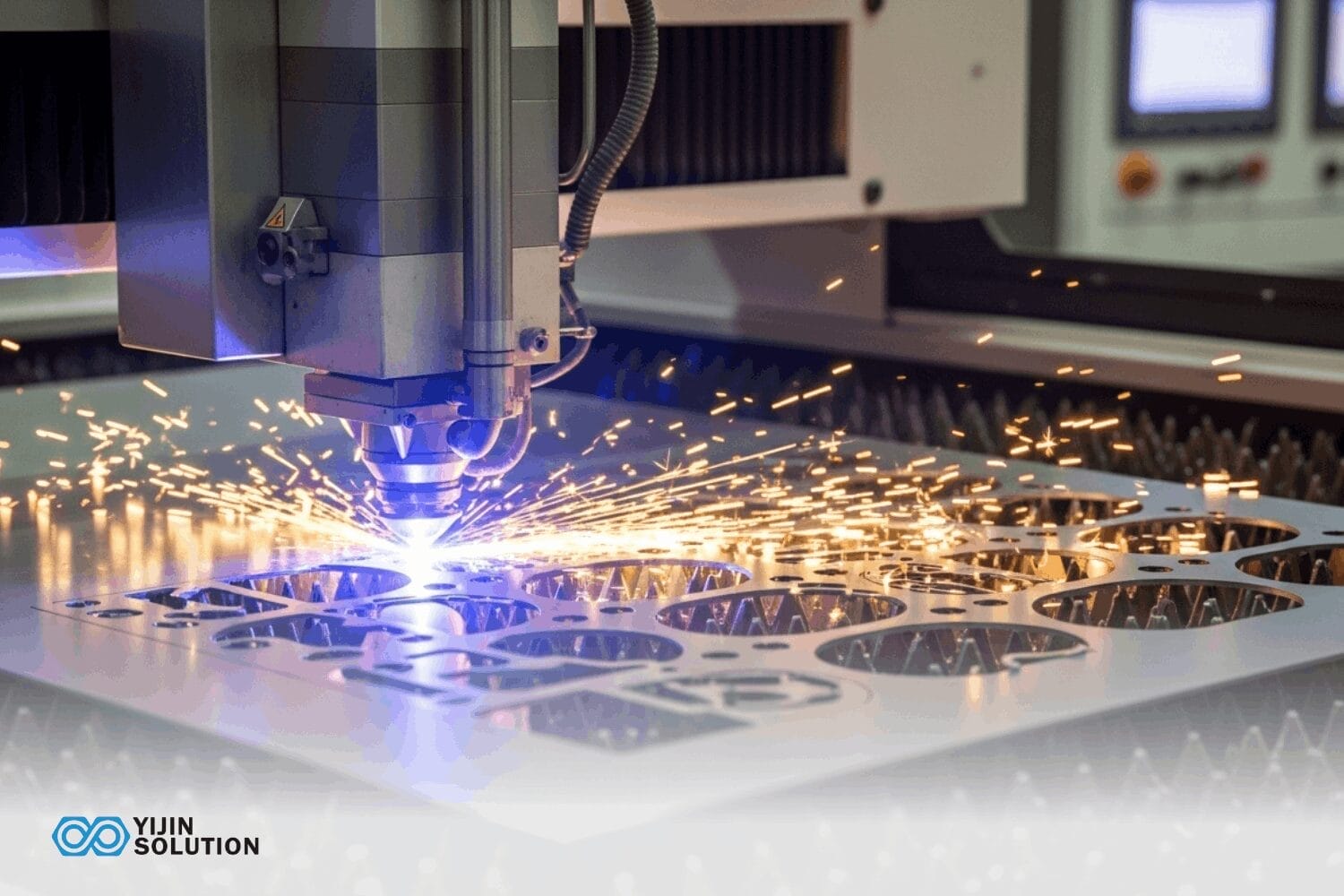
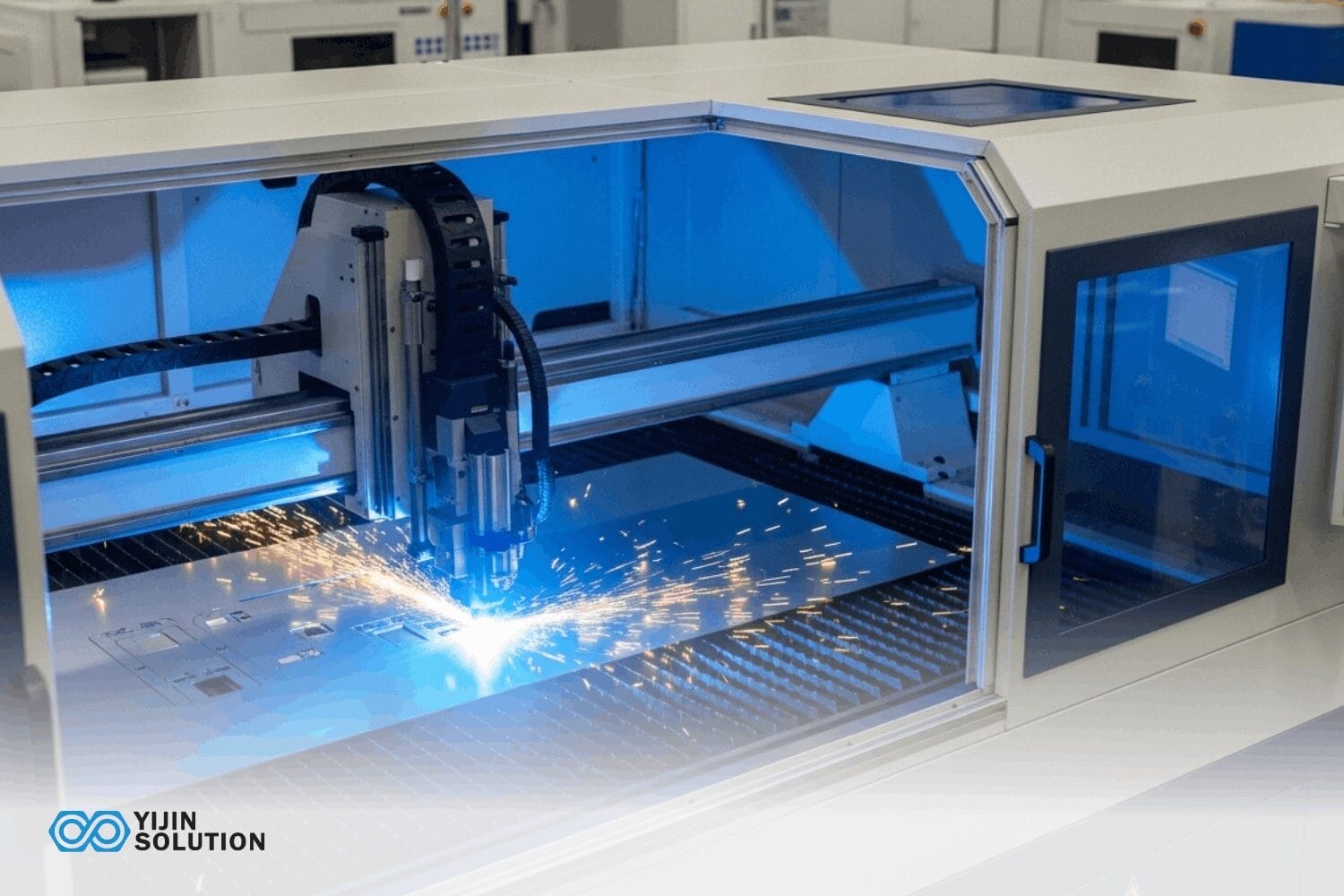
Laser cutting uses a beam of light to cut or engrave materials without making physical contact. The laser beam melts or vaporizes the material along a pre-programmed path. Laser cutters are particularly effective for cutting and engraving thin materials like plastic, wood, and acrylic.
Key Components of Laser Cutting:
- Laser Beam: A focused beam of light that melts, burns, or vaporizes the material.
- Assist Gas: Helps clear debris and cools the cutting surface.
- Focal Point: Determines the precision and cutting depth.
Laser cutting machines are faster and more precise than CNC in many cases, especially when working with thin materials. The wide range of materials that can be cut, along with its speed and precision, make laser cutting an appealing option for signage and artwork.
What are the Key Differences between CNC vs Laser Cutter
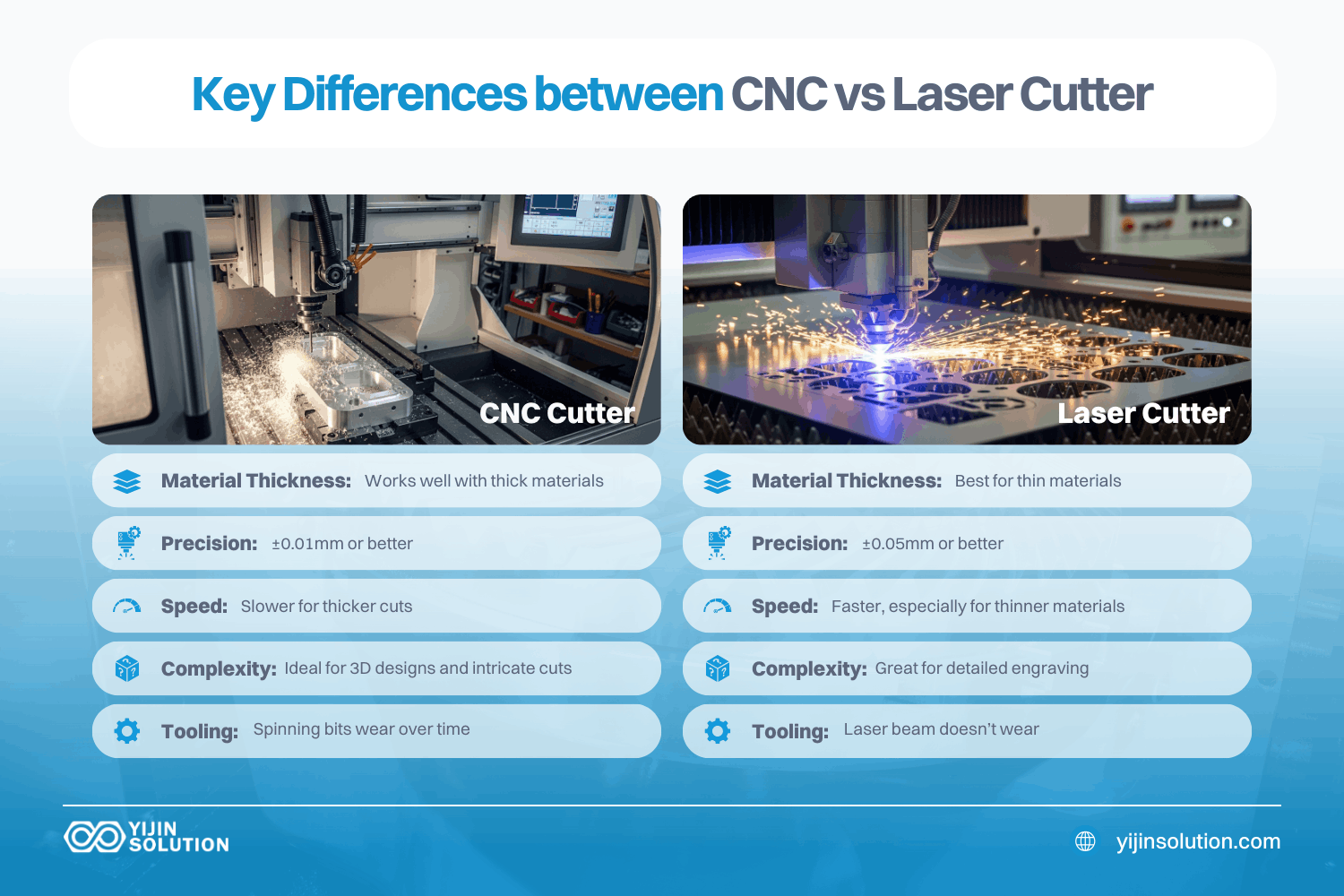
The primary difference between CNC and laser cutters is their cutting mechanism. CNC machines physically remove material using spinning bits, whereas laser cutters rely on a laser beam to melt or vaporize material. Here’s a quick comparison:
| Fonctionnalité | CNC Cutter | Laser Cutter |
|---|---|---|
| Epaisseur du matériau | Works well with thick materials | Best for thin materials |
| Précision | ±0.01mm or better | ±0.05mm or better |
| Vitesse | Slower for thicker cuts | Faster, especially for thinner materials |
| Complexité | Ideal for 3D designs and intricate cuts | Great for detailed engraving |
| Outillage | Spinning bits wear over time | Laser beam doesn’t wear |
Laser cutters are highly effective for detailed cuts on thin materials and high-speed operations, while CNC cutters offer versatility and precision, especially when working with thicker materials.
Which Materials are Best for CNC Cutting?
Laser cutters are highly effective for detailed cuts on thin materials and high-speed operations, while CNC cutters offer versatility and precision, especially when working with thicker materials. Understanding the laser cutter vs CNC comparison and the specific advantages of CNC router vs laser cutter helps you select the right equipment for your workshop and project requirements.
Materials CNC Works Well With:
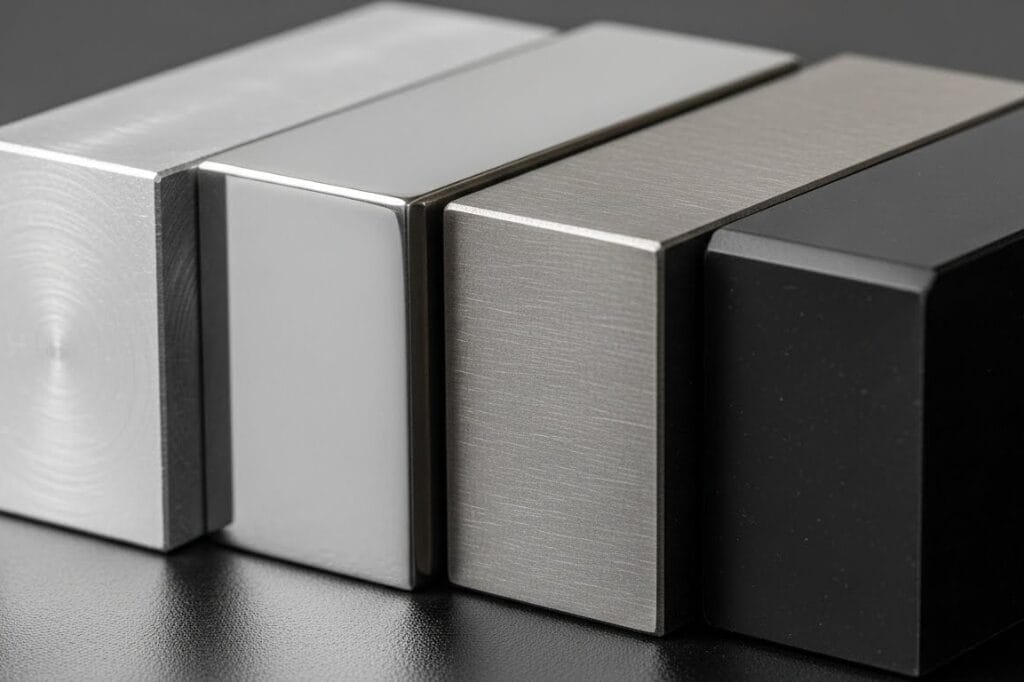
- Métaux: Aluminium, Acier, Titane
- Bois: Hardwood, Plywood, MDF
- Plastiques: Acrylique, Nylon, PVC
- Composites: Fibre de carbone, Fiberglass
For woodworking, CNC routers are ideal because they can handle thicker pieces of wood and create detailed joinery or milling operations. CNC machines offer more control over depth of cut than laser cutters.
Which Materials are Best for Laser Cutting?
Laser cutters perform best with thin materials such as wood, acrylic, and plastics. They offer precision cutting, making them the go-to for applications like engraving, signage, and decorative pieces.
Materials Laser Cutting Works Well With:
- Bois: Thin hardwoods, Plywood
- Acrylique: Clear and colored
- Plastiques: PETG, Polycarbonate
- Caoutchouc: For seals, gaskets
Laser cutting is not ideal for thicker materials, but it excels at producing detailed cuts on materials like wood and plastic.
Which is More Precise: CNC or Laser Cutting?
Laser cutters generally provide higher precision than CNC, especially for intricate designs and fine detail work. A laser beam can achieve precision levels as fine as 0.05mm, while CNC machines can reach ±0.01mm. However, CNC machines offer greater control over depth of cut, making them better for thicker or multi-dimensional cuts.
For engraving, laser machines are particularly effective. For 3D milling or cutting thicker materials, CNC machines are the preferred option.
Which is Faster: CNC or Laser Cutting?
Laser cutting is typically faster than CNC, especially for thin materials. Laser cutting can make precise cuts at speeds of up to 120 inches per minute, while CNC cutting is generally slower, particularly when working with thicker materials. However, CNC systems can outperform lasers when depth of cut or 3D cutting is required.
Costs of CNC and Laser Cutting
The initial cost for a CNC machine is generally higher due to the need for mechanical parts, spindles, and tools. Laser cutters have lower maintenance costs because there are fewer moving parts, but they may be costlier for industrial use depending on the laser type (CO2 vs. fiber).
Laser cutting machines often come with lower operating costs for thin materials but require regular lens replacement. In contrast, CNC machines require bit replacements and tool maintenance more frequently.
Maintenance Requirements for CNC vs Laser Cutters
CNC machines require regular tool changes, machine calibration, and cleaning of debris and dust. Laser cutters need less mechanical maintenance, but optics and gas systems require regular checks to maintain cutting precision. Both types of equipment need environmental management: CNC systems require dust collection, while laser systems need fume extraction.
Safety Considerations for CNC and Laser Cutters
CNC machines involve moving parts, spinning bits, and sharp edges, so it’s essential to wear PPE like goggles and ear protection. Laser cutters, on the other hand, involve high-intensity light, and thus require laser safety glasses and enclosures to prevent exposure to the laser beam.
Proper ventilation and fume management are essential for both types of machines to ensure the safety of the work environment.
CNC Machine vs Laser Cutting: Which One Should You Choose?
Choosing between CNC cutting and laser cutting comes down to project specifics. If your project involves thick materials, intricate 3D designs, or precision milling, then CNC routing or CNC milling is the best choice. For detailed cuts, engraving, and high-speed operations on thin materials, laser cutting is ideal.
CNC cutting provides greater versatility for different material types and thicknesses, while laser cutting offers speed and precision for fine details.
Unsure which cutting method is right for your project? Contactez-nous dès aujourd'hui for a detailed consultation to determine whether CNC or laser cutting is best for your needs, and explore how Yijin Solution can help bring your designs to life!
CNC vs Laser Cutter FAQs
What cannot be cut with a laser cutter?
Laser cutters struggle with reflective metals like aluminum and copper, unless using fiber lasers. They also perform poorly on thick materials and materials that emit harmful fumes, such as PVC.
Is laser cutting better than CNC?
Laser cutting is better for fine detail, speed, and precision on thin materials. However, CNC is preferred for thicker materials, multi-dimensional shapes, and complex cuts.
Is a CNC a laser cutter?
No, CNC machines use rotating bits to physically remove material, whereas laser cutters use a laser beam to vaporize or melt the material. They are both cutting technologies but operate through different methods.
Retour en haut de la page : CNC vs Laser Cutter | Which Technology Actually Fits Your Project?