Teflon CNC Machining | CNC Machining PTFE (Teflon)
CNC Teflon machining transforms polytetrafluoroethylene (PTFE) into precision components through computerized manufacturing processes. This specialized technique creates custom parts that leverage Teflon’s unique properties including chemical resistance, low friction, and thermal stability. Yijin Hardware delivers high-precision PTFE parts for aeroespacial, médico, food processing, and chemical industries with industry-leading tolerance and consistency. As one of the best China CNC Milling providers, we specialize in precision Teflon CNC machining services, overcoming the unique challenges of PTFE to ensure exceptional tolerance and high-quality results.
- ⬤Servicio
- ⬤Sus datos
- ⬤Enviar


What is CNC Teflon Machining, and Why Choose it for CNC Machining?
PTFE (polytetrafluoroethylene), commonly known by the brand name Teflon, is a semi-crystalline fluoropolymer with exceptional corrosion resistance and the lowest coefficient of friction of any solid material (0.05-0.10). Teflon maintains its mechanical properties across an extreme temperature range from -200 °C to +260 °C, making it ideal for harsh environments where other plastic materials would fail. Unlike conventional thermoplastics, PTFE cannot be injection molded due to its extremely high melt viscosity, making the Mecanizado CNC process the preferred manufacturing method for creating precise Teflon parts.
Material Composition and Structure
- Composed entirely of carbon and fluorine atoms (C₂F₄)n
- Semi-crystalline structure provides unique properties not found in other plastics
- Strong carbon-fluorine bonds create an electron-dense shield that prevents chemical attacks
- Linear polymer chains with helical conformation give exceptional sliding properties
PTFE Material Properties Table
| Propiedad | Valor | Test Method |
|---|---|---|
| Densidad | 2.2 g/cm³ | ASTM D792 |
| Resistencia a la tracción | 3,000–5,000 psi | ASTM D638 |
| Coeficiente de fricción | 0.05–0.10 | ASTM D1894 |
| Punto de fusión | 327 °C (621 °F) | ASTM D3418 |
| Water Absorption | <0,01% | ASTM D570 |
| Dielectric Strength | 285 V/mil | ASTM D149 |
Key Performance Advantages
- Extreme chemical inertness (resistant to virtually all chemicals)
- Exceptional electrical insulation across wide temperature ranges
- Non-stick surface prevents material buildup
- Self-lubricating properties reduce maintenance
- UV-resistant for outdoor applications
- Biocompatible for medical applications
- High dielectric constant stability across frequencies (2.0-2.1 from DC to 10 GHz)
- Virtually unlimited shelf life due to resistance to UV degradation and oxidation


Our Teflon CNC Machining Services
Our Teflon CNC Machining Services Yijin Hardware specializes in precision machining services for PTFE using advanced CNC machines and specialized techniques that account for Teflon’s unique material properties. Our comprehensive services address the challenges of machining PTFE, such as its softness, deformation under pressure, and dimensional stability issues. We maintain exceptional tolerance despite Teflon’s challenging characteristics through proper tooling, controlled cutting parameters, and specialized post-processing techniques.
Precision Machining Capabilities
- Fresado CNC: Creates complex geometries with precision using carbide tools with polished top surfaces
- Torneado CNC: Produces cylindrical machine parts with specialized fixturing to overcome Teflon’s slippery surface
- Mecanizado en 5 ejes: Creates intricate geometries with complex undercuts and features
- Micro-Machining: Achieves fine details down to 0.2 mm feature size
- Tight Tolerance Capability: ±0.05 mm on key dimensions for virgin PTFE, ±0.03 mm for filled grades
Advanced PTFE-Specific Processes
- Cryogenic Deburring: Eliminates burrs that commonly occur with soft PTFE materials
- Controlled Stress Annealing: Custom thermal cycles that relieve machining stresses
- Cold-Air Cooling: Uses specialized coolant techniques to prevent heat-related dimensional changes
- PTFE-Specific Fixturing: Custom work-holding solutions that prevent material deformation
- Specialized Cutting Parameters: Optimized speeds and feeds specifically for different PTFE grades
Protocolos de garantía de calidad
- Comprehensive first-article inspection
- In-process temperature-controlled measurements
- Final verification using precision CMM equipment
- Certificación y trazabilidad de materiales
- Full inspection reporting with every order


What Applications Benefit Most from Teflon Machined Parts?
Machined Teflon parts excel in harsh environments where chemical resistance, low friction, and temperature stability are critical requirements. Aerospace applications utilize PTFE components in fuel systems, hydraulic lines, and electrical insulation where reliability under extreme conditions is non-negotiable. The medical industry depends on Teflon’s biocompatibility and chemical inertness for surgical instruments, implant components, and laboratory equipment. Food processing equipment benefits from PTFE’s FDA compliance and non-stick properties.
Aerospace & Defense Applications
- Bushings and bearings for control surfaces
- Hydraulic system seals and gaskets
- Wire harness insulators and spacers
- Fuel system components that require high resistance to chemicals
- Vibration dampening elements
Medical & Laboratory Applications
- Componentes de instrumentos quirúrgicos
- Implantable devices (FDA compliant)
- Laboratory equipment parts
- Pharmaceutical processing components
- Diagnostic equipment elements
Industrial & Food Processing Applications
- Chemical pump components
- Valve seats and seals
- Heat exchanger components
- Mixer and agitator parts for food processing
- High-purity fluid handling systems
Semiconductor & Electronics
- Wafer handling components
- High-purity gas distribution systems
- Aisladores eléctricos
- Microelectronics fixtures
- Clean room processing equipment
Each application leverages Teflon’s unique combination of properties including chemical inertness, low friction, temperature resistance, and electrical insulation properties.
PTFE CNC Machining Materials: Which Grade is Right for Your Application?
When working with Teflon for CNC machining, several specialized grades are available, each engineered for specific performance characteristics. Virgin PTFE provides the highest chemical and corrosion resistance and the lowest coefficient of friction, making it ideal for chemical exposure and non-stick applications. Glass-filled PTFE significantly improves mechanical properties and dimensional stability, reducing creep by up to 80% compared to virgin PTFE. Carbon-filled PTFE enhances wear resistance and thermal conductivity, extending component life by up to 300% in high-wear applications.
PTFE Material Grades Comparison
| Propiedad | Virgin PTFE | 25% Glass-Filled PTFE | 25% Carbon-Filled PTFE | Modified PTFE |
|---|---|---|---|---|
| Densidad (g/cm³) | 2.16 | 2.25 | 2.08 | 2.18 |
| Tensile Strength (psi) | 3,900 | 2,100 | 1,900 | 4,200 |
| Compressive Strength (psi) | 3,500 | 1,000 | 1,700 | 3,800 |
| Hardness (Shore D) | D50 | D60 | D62 | D55 |
| Coeficiente de fricción | 0.05-0.10 | 0.12-0.20 | 0.15-0.25 | 0.06-0.12 |
| Thermal Conductivity (BTU-in/ft²-hr-°F) | 1.7 | 3.1 | 4.5 | 1.9 |
| Machining Precision | Bien | Excelente | Muy buena | Excelente |
Application-Specific Grade Selection
- Procesado químico: Virgin PTFE for maximum chemical resistance
- Heavy Loads: Glass-filled PTFE for improved compression strength
- Wear Applications: Carbon-filled PTFE for extended service life
- Precision Components: Modified PTFE for improved dimensional stability
- Electrical Applications: Virgin PTFE for optimal dielectric properties
- Thermal Management: Carbon-filled PTFE for enhanced heat transfer
Our materials experts will recommend the optimal grade based on your specific operating conditions, performance requirements, and cost considerations. Materials similar to PTFE may also be suitable for certain applications where specific property profiles are needed.


How does Teflon CNC Machining Overcome Material Challenges?
Machining PTFE requires specialized techniques to overcome this fluoropolymer’s unique material challenges. The softness and deformation tendency of Teflon demands extremely sharp cutting tools, controlled cutting parameters, and special fixturing methods to achieve precision. PTFE’s low thermal conductivity requires carefully managed cutting speeds to prevent heat buildup that can cause dimensional issues. Unlike other plastic machined parts, Teflon components are difficult to achieve tight tolerances without specialized knowledge and equipment.
Precision Machining Challenges & Solutions
| Desafío | Impacto | Solución de hardware Yijin |
|---|---|---|
| Material Softness | Deformation during machining | Custom fixturing with distributed clamping pressure |
| Slippery Surface | Workpiece movement during cutting | Vacuum systems and specialized work-holding |
| Sensibilidad al calor | Dimensional changes at high temperatures | Cold-air coolant and optimized cutting parameters |
| Stress Creep | Post-machining dimensional changes | Controlled annealing cycles (500 °F/260 °C) |
| Burr Formation | Poor edge quality | Cryogenic deburring process |
Advanced Machining Parameters
- Cutting speeds 30-50% lower than for conventional plastics
- High rake angle (15-20°) sharp tools for clean shearing
- Rigid toolholders to minimize vibration and chatter
- Continuous chip evacuation to prevent heat buildup
- Minimal depth of cut per pass (0.5-1.0 mm maximum)
- Specialized diamond-polished carbide end mills
These specialized machining techniques and parameters allow us to consistently achieve tolerances of ±0.05 mm on virgin PTFE and ±0.03 mm on filled grades, exceeding industry standards. The machinist must understand the considerations and tips for machining Teflon to achieve optimal results.
What Quality Standards Govern Our PTFE Machining Process?
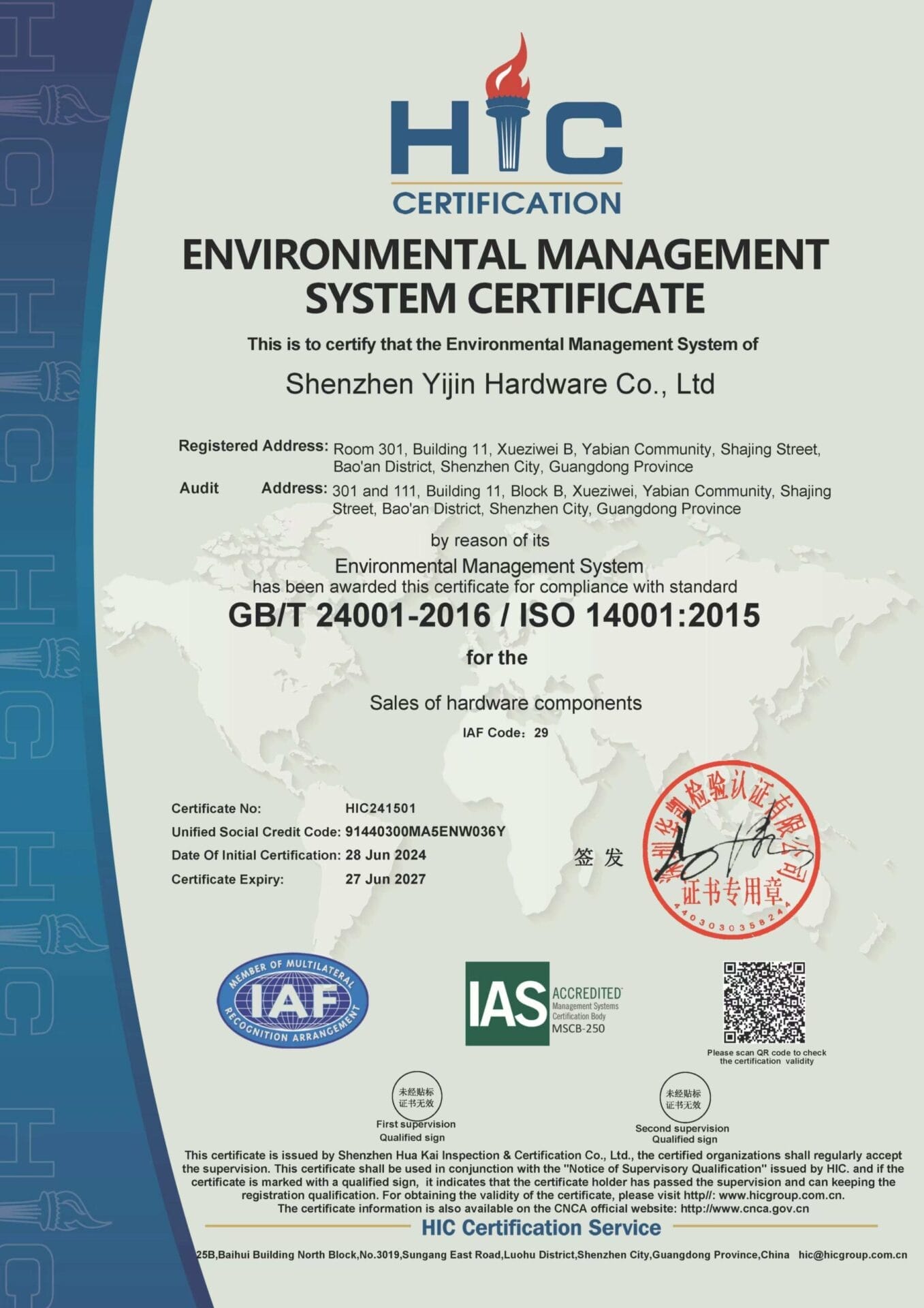
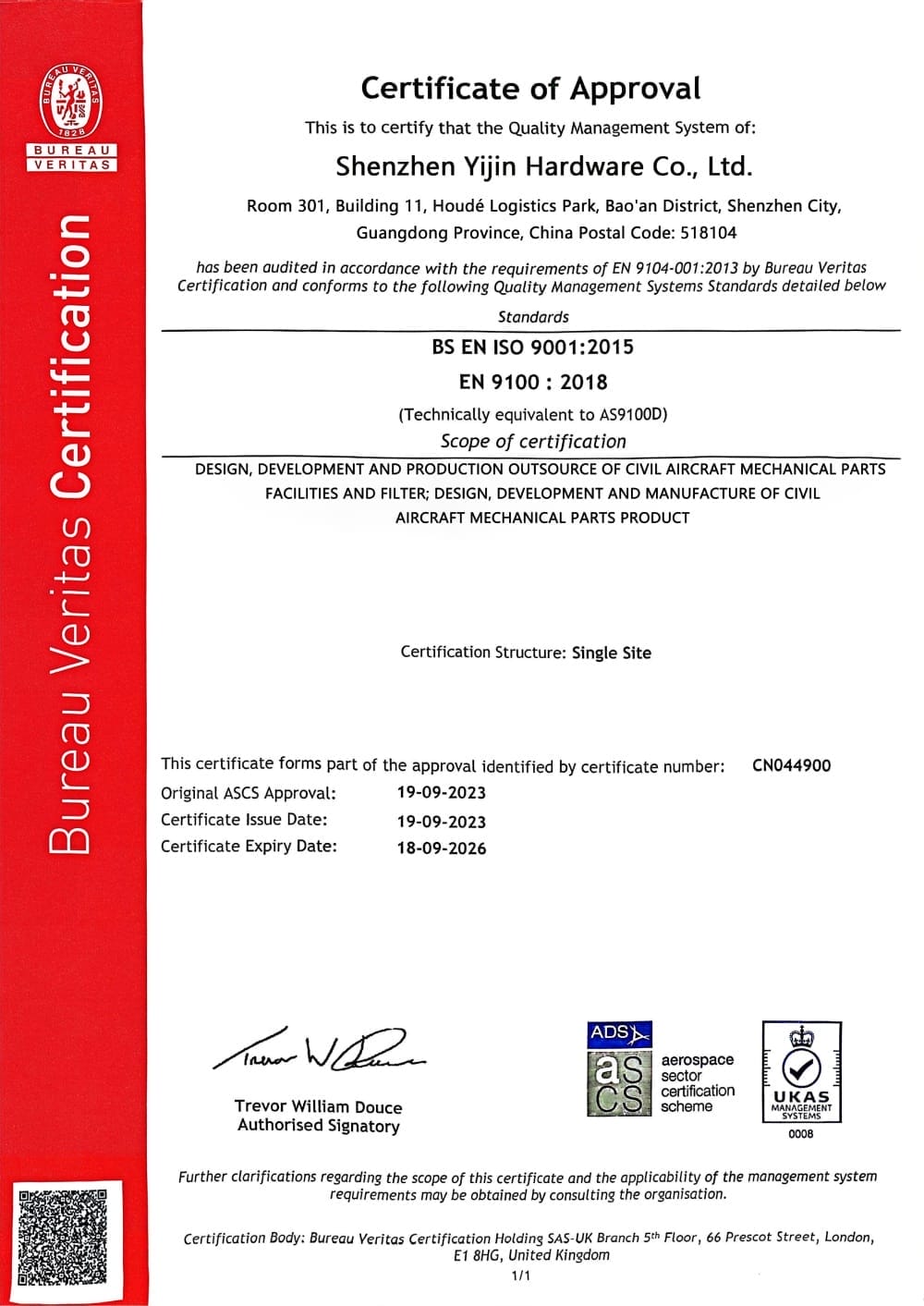
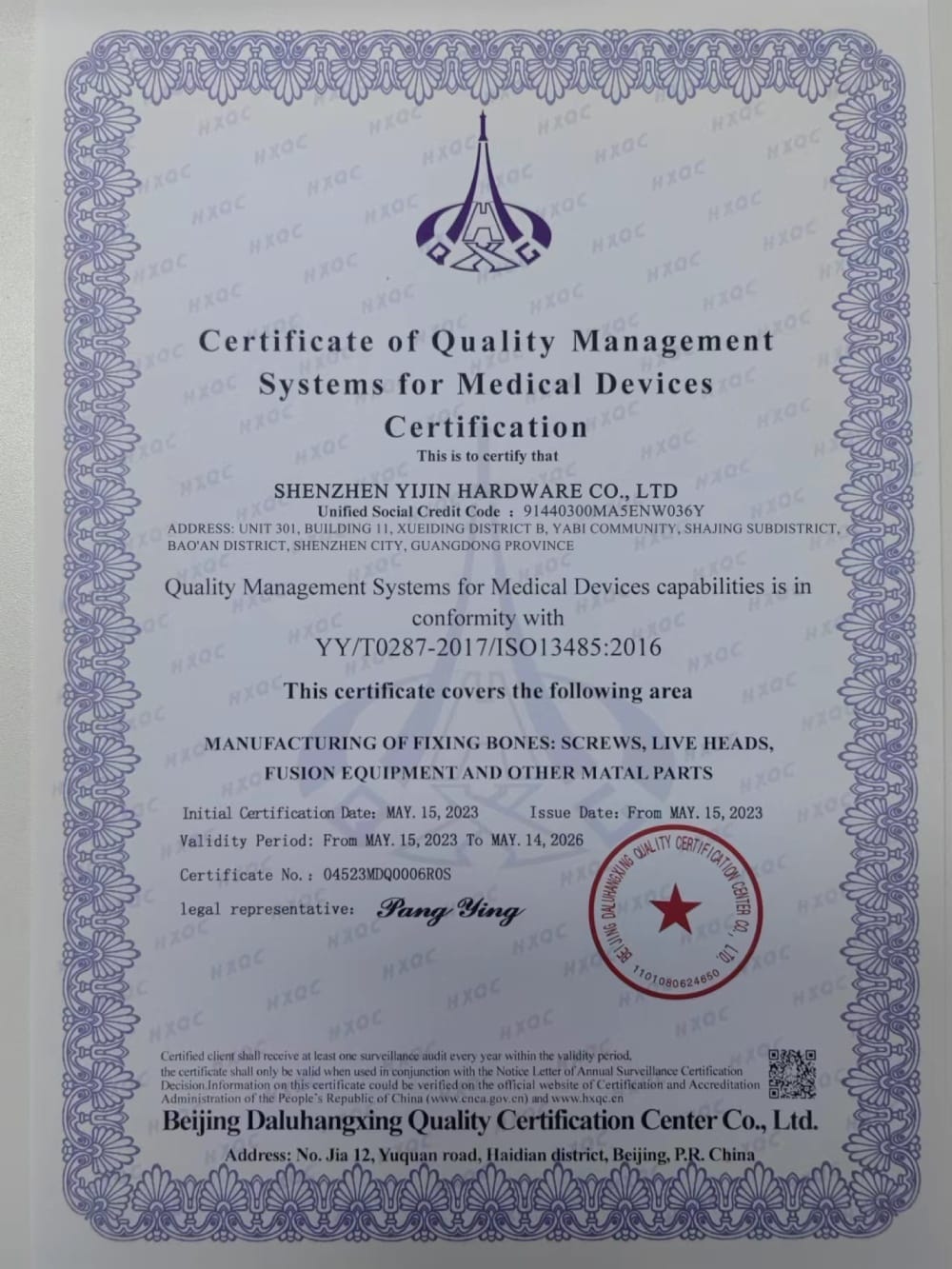
Custom PTFE machined components from Yijin Hardware undergo rigorous quality control processes designed specifically for this material with its unique properties. Every Teflon part is inspected using measurement protocols that account for PTFE’s temperature sensitivity and mechanical properties. Our quality management system ensures consistent results through documented procedures, trained personnel, and calibrated equipment. Material traceability is maintained throughout the manufacturing process, with batch-specific material properties documented for future reference.
PTFE-Specific Quality Procedures
- Temperature-Equilibrated Measuring: All measurements taken at controlled 20 °C/68 °F
- Multi-Point Dimensional Verification: Compensates for PTFE’s elastic properties
- Surface Finish Analysis: Ra measurements specific to PTFE applications
- Certificación de materiales: Complete traceability to original material manufacturer
- Stress-Relief Verification: Testing to confirm effective annealing
Quality Documentation Package
- Material certificates with batch-specific properties
- Dimensional inspection reports with measured values
- Statistical process control data for critical dimensions
- Surface finish verification reports
- Certificate of conformance to your specifications
Continuous Improvement Process
- Statistical analysis of all PTFE machining operations
- Regular calibration of all measurement equipment
- Ongoing PTFE machining technique development
- Process capability studies for critical features
- Structured feedback loop from inspection to production
These specialized quality measures ensure your Teflon parts meet exact specifications and perform reliably in your most critical applications. Unlike PTFE, many materials are easy to machine, but few offer the combination of low coefficient of friction and chemical resistance that make PTFE so valuable for demanding applications.


Why Choose Yijin Hardware for Your Teflon CNC Machining Needs?
Yijin Hardware brings specialized expertise in the process of machining PTFE that addresses the unique challenges this material presents. Our engineers understand the specific cutting parameters, tooling requirements, and post-processing techniques necessary to achieve exceptional results with PTFE parts. Every machinist on our team receives specialized training to work with Teflon, ensuring consistent quality across all projects. Our quality control processes are specifically designed for PTFE’s unique properties.
Our PTFE Machining Expertise
- 15+ Years PTFE Machining Experience: Specialized knowledge of fluoropolymer behavior
- PTFE-Optimized Equipment: CNC machines with parameters calibrated specifically for Teflon
- Material Scientists on Staff: Expert guidance on grade selection and property optimization
- Custom PTFE Machining Tools: Proprietary tool geometries for superior surface finish
- Temperature-Controlled Environment: Maintains consistent PTFE dimensions during machining
Quality Assurance Advantages
- Temperature-compensated measurement systems
- PTFE-specific inspection protocols
- Certificación y trazabilidad de materiales
- First-article approval process
- Documented quality procedures
Manufacturing Process Capabilities
- Prototype to high-volume production
- Quick-turn capabilities for urgent requirements
- Consistent quality across production runs
- Documentación exhaustiva
- Flexible scheduling options
Our streamlined machining processes deliver exceptional quality on even the most challenging PTFE applications. This makes Teflon parts that combine precise dimensions with the material’s low friction and chemical resistance. Yijin Hardware is often used by companies that require high-performance components for critical applications.
Lo que dicen nuestros clientes


FAQs on Teflon CNC Machining | CNC Machining PTFE
PTFE’s softness makes it prone to deformation during machining, requiring specialized techniques to maintain precision. We use extremely sharp tools with specific geometries (15-20° rake angles), controlled cutting parameters (30-50% slower speeds than other plastics), and custom vacuum fixturing to prevent deformation. Additionally, our post-processing annealing cycles at controlled temperatures (500 °F/260 °C) ensure long-term dimensional stability by relieving internal stresses.
Teflon presents several unique machining challenges including its extremely slippery surface, poor thermal conductivity, and tendency to cold-flow under pressure. The material’s slipperiness makes workholding difficult, requiring specialized fixturing solutions. Its low thermal conductivity (1.7 BTU-in/ft²-hr-°F) causes heat buildup during machining that must be managed with cold-air cooling systems. PTFE’s tendency to deform under pressure necessitates distributed clamping and minimal cutting forces.
PTFE machining requires careful temperature control and chip management to ensure environmental safety. We maintain strict temperature control below 500 °F (260 °C) during all machining operations to prevent the release of harmful fluorocarbon gases. Our facility uses specialized dust collection systems that capture 99.9% of PTFE particles, and we implement proper disposal protocols for all PTFE waste. These measures ensure our PTFE machining operations meet all environmental regulations while delivering high-quality components.
Recursos CNC
Las 10 mejores empresas de fabricación de chapas metálicas de precisión (Guía completa)
La fabricación de chapa metálica de precisión no es un trabajo de metalistería al uso: se trata de una fabricación con tolerancias que se miden en milésimas de milímetro.
Los 10 mejores fabricantes de cubiertas metálicas que debe conocer
La elección de un fabricante de techos de metal no es algo que usted quiere conseguir mal, su techo es, literalmente, lo que protege todo por debajo de
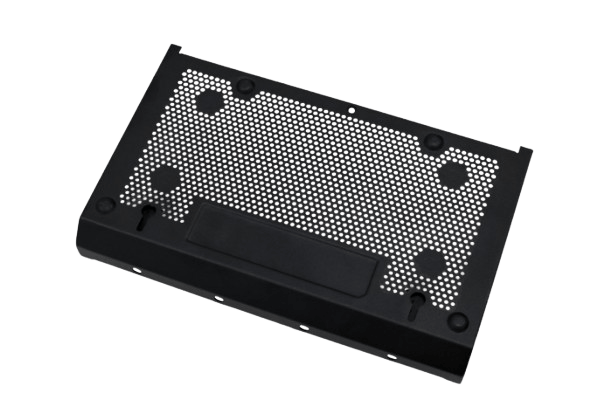
Aceleración de la potencia de cálculo
¿Cómo podemos conseguir una mejora de 15% en la eficiencia de disipación del calor y una reducción de 30% en el ciclo de producción mediante la
Empiece hoy mismo. Consiga piezas rápidamente.
Diseño gratuito de piezas mecanizadas para sus proyectos con plazos de entrega rápidos.
 ES
ES  EN
EN  RU
RU  DE
DE  FR
FR